
Southwest Airlines' Aircraft Limitations Block Premium Cabin Strategy as Competitors Capture Luxury Travel Market
Breaking airline news and aviation industry updates for 2026.

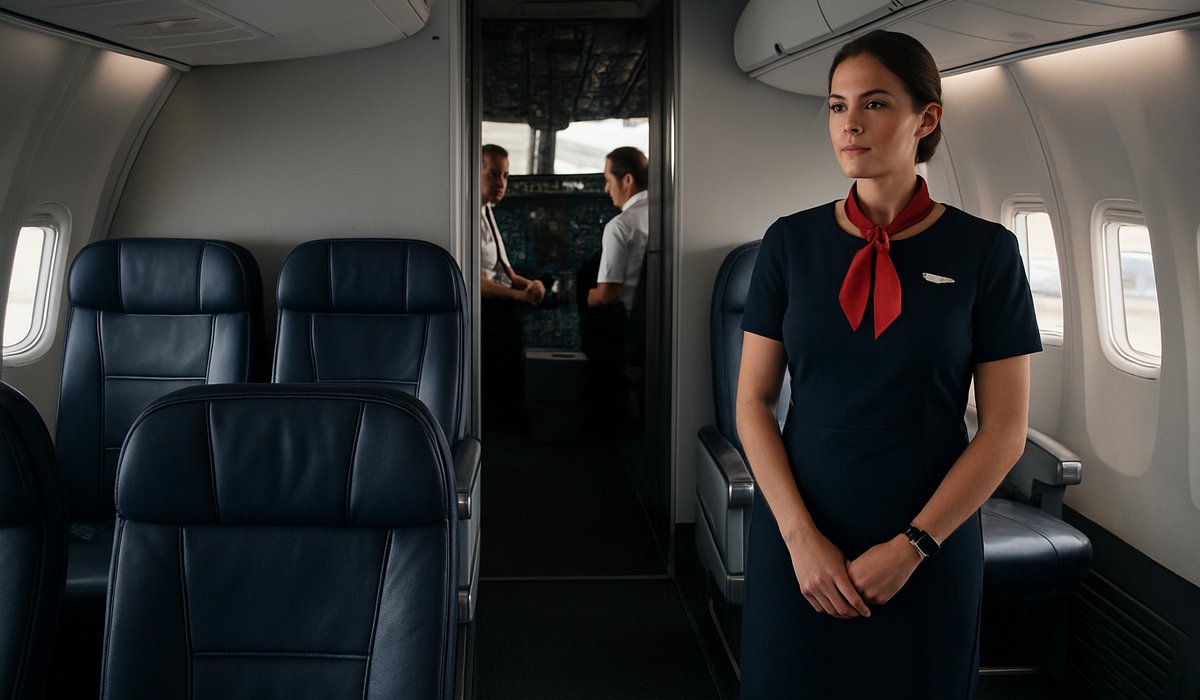
Image generated by AI
Southwest Airlines' Aircraft Limitations Block Premium Cabin Strategy as Competitors Capture Luxury Travel Market
The carrier's all-Boeing 737 fleet presents fundamental design obstacles to first-class expansion, forcing the airline to pursue alternative revenue streams
The Strategic Challenge
Southwest Airlines finds itself at a critical crossroads in its competitive evolution. While major carriers like American, United, and Delta have capitalized on premium cabin demand to drive record revenues, Southwest's fleet composition presents an obstacle that money alone cannot overcome. The airline's exclusive reliance on Boeing 737 aircraft—a narrow-body jet designed for short-to-medium-haul efficiency—fundamentally restricts its ability to introduce first-class seating, leaving the carrier sidelined from one of aviation's most lucrative market segments.
As Southwest attempts to align itself more closely with legacy carrier business models, the physical constraints of its aircraft have emerged as a defining limitation. While competitors have retrofitted wide-body fleets and introduced premium cabin configurations, Southwest's strategic pivot toward premium offerings faces an architectural barrier that underscores the long-term implications of fleet decisions.
Restructuring Without Premium Cabins
The Dallas-based carrier has nevertheless pursued aggressive revenue diversification strategies to compensate. Southwest has introduced tiered fare structures, expanded baggage surcharge policies on economy tickets, and launched new product offerings targeting cost-conscious premium travelers. These moves reflect the industry-wide pressure to capture higher-yielding passengers amid volatile jet fuel prices and post-pandemic demand normalization.
Yet these initiatives address only a fraction of the revenue opportunity. Industry analysts estimate that premium cabin operations—including first and business class—now represent 30-40% of total revenue for major full-service carriers, a gap Southwest cannot currently bridge within its existing fleet parameters.
The Aircraft Dilemma
The Boeing 737's single-deck, narrow-body configuration was engineered for point-to-point efficiency and rapid turnaround times—the operational foundation of Southwest's low-cost model. However, this same design philosophy that enabled Southwest's historical profitability now constrains its ability to compete for premium leisure and corporate travel segments where customers prioritize cabin space, amenities, and service differentiation.
Retrofitting 737s with premium seating would require sacrificing economy capacity, creating an economically unfavorable trade-off. Fleet renewal represents the only viable long-term solution, but such capital-intensive decisions involve multi-year timelines and substantial financial commitments.
Industry Implications
Southwest's predicament illuminates a broader aviation reality: strategic fleet decisions made decades ago continue to shape competitive positioning today. As the industry emphasizes cabin premium segmentation and ancillary revenue optimization, carriers with narrow-body-only fleets face structural disadvantages in capturing high-margin premium demand.
FAQ: Southwest Airlines, Premium Cabins, and Fleet Strategy
Q: Why can't Southwest Airlines simply add first-class seating to its Boeing 737s? A: The 737's narrow-body design limits cabin width and length, making premium seat installation economically inefficient. Adding first-class would require removing economy seats, reducing overall revenue potential.
Q: How much revenue is Southwest missing by not offering premium cabins? A: Industry estimates suggest premium cabins generate 30-40% of major carrier revenues. Southwest's absence from this segment represents a significant competitive disadvantage, though exact figures depend on route networks.
Q: What alternatives is Southwest using to compete for premium passengers? A: Southwest has introduced enhanced fare tiers, baggage surcharges, expanded seating options, and premium amenities within its existing 737 configuration to capture higher-yielding customers.
Q: Will Southwest ever operate wide-body aircraft? A: Any such transition would require substantial capital investment and represent a fundamental shift in operational strategy, making near-term adoption unlikely.
Q: How do jet fuel prices affect Southwest's premium cabin strategy? A: Rising fuel costs intensify pressure to maximize revenue per flight, making premium cabin expansion more strategically urgent—yet technically constrained by current fleet limitations.
Related Travel Guides
- United Airlines Flight UAL1942 From Denver to Austin Makes Precautionary Return to Denver International Airport
- Massive Travel Chaos Paralyzes Charlotte Airport: American Airlines Sparks Severe Airport Disruptions and 33 Flight Cancellations
- Emirates, FlyDubai, Air Arabia, Etihad and More Cancel 26 Flights Across UAE Airports — Major Disruptions to Nairobi, Cairo, Istanbul, Amman, Islamabad, Mumbai, Dammam, Kathmandu, Salalah, Addis Ababa, Male and Key Gulf Connections | Flight Cancellations, Travel Chaos, Aviation Updates
Disclaimer
This article is for informational and educational purposes only. It does not constitute legal, financial, or professional advice. While we strive to provide accurate and up-to-date information, travel policies, regulations, and conditions change rapidly. Always verify information with official sources before making travel decisions. Nomad Lawyer makes no representations about the accuracy, reliability, completeness, or suitability of the information provided. Readers should consult qualified professionals for advice specific to their circumstances. The views expressed in this article are those of the author and do not necessarily reflect the views of Nomad Lawyer.
Kunal K Choudhary
Co-Founder & Contributor
A passionate traveller and tech enthusiast. Kunal contributes to the vision and growth of Nomad Lawyer, bringing fresh perspectives and driving the community forward.
Learn more about our team →