
Why America's Largest Military Transport Plane Still Flies Without Winglets Despite Modern Efficiency Upgrades
Breaking airline news and aviation industry updates for 2026.

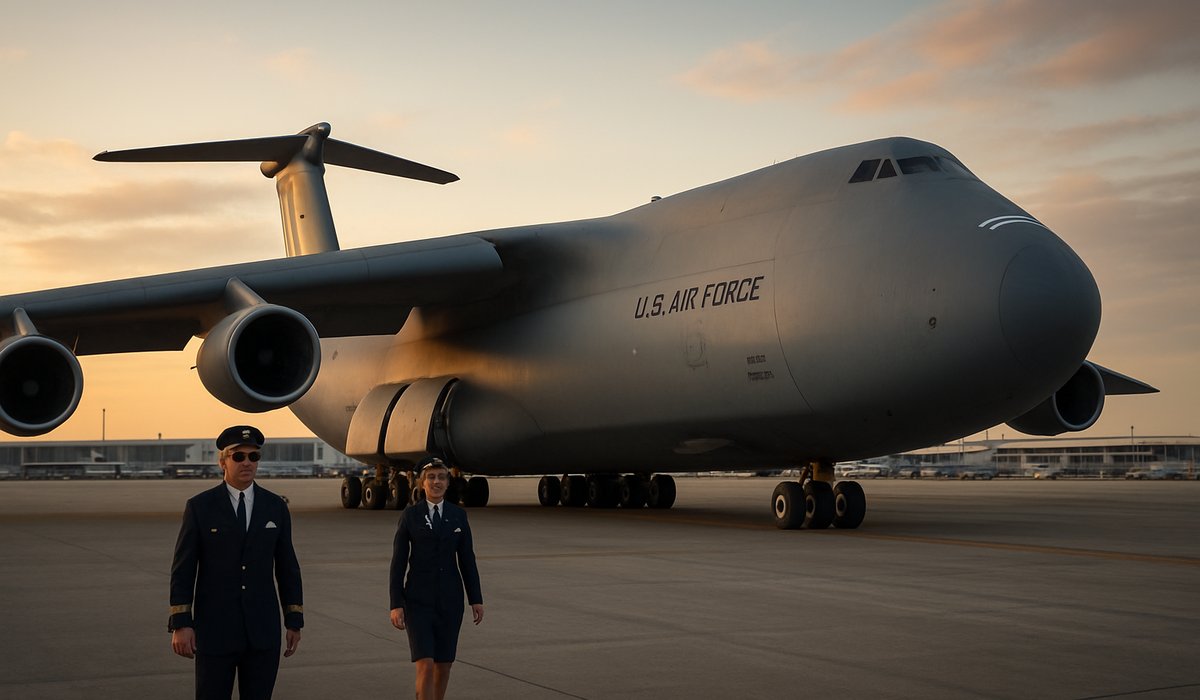
Image generated by AI
Why America's Largest Military Transport Plane Still Flies Without Winglets Despite Modern Efficiency Upgrades
The C-5 Galaxy's design constraints reveal critical trade-offs between cargo capacity and aerodynamic optimization in military aviation
A 1960s Giant Missing a Modern Solution
The Lockheed C-5 Galaxy remains one of aviation's most formidable aircraft, boasting a massive 222-foot wingspan and nearly six decades of operational history since its maiden flight on June 30, 1968. Yet despite comprehensive modernization efforts—particularly the advanced C-5M upgrade program—the U.S. military transport workhorse continues to operate without winglets, a fuel-efficiency feature now standard on contemporary commercial and military aircraft worldwide.
This apparent omission raises critical questions about aircraft design priorities, operational constraints, and the engineering trade-offs that define military aviation strategy in an era increasingly focused on reducing fuel consumption and operational costs.
The Winglet Gap in Military Aviation
Winglets—vertical or angled extensions fitted to wingtip edges—have become ubiquitous across the aviation industry. These devices reduce induced drag, enhance fuel efficiency by up to 5%, and improve aerodynamic performance during takeoff and landing operations. Commercial operators have embraced the technology aggressively, with airlines worldwide retrofitting existing fleets to lower jet fuel expenses and reduce carbon emissions.
The absence of winglets on the C-5M, despite extensive avionics and propulsion system overhauls, underscores a fundamental reality: military transport aircraft operate under distinctly different operational and structural parameters than their civilian counterparts.
Engineering Constraints and Operational Realities
The C-5 Galaxy's design prioritizes maximum cargo capacity and payload flexibility over marginal aerodynamic gains. Adding winglets would require structural reinforcement of the wing root, certification testing, and potential reductions in the aircraft's already-maximized loading envelope—compromising its core military function.
Additionally, the Galaxy operates from diverse airfields globally, many featuring narrow taxiways and restricted apron spaces. The aircraft already pushes dimensional limits at 222 feet in span; winglet additions would further constrain ground operations at forward deployment locations critical to military logistics.
The Modernization Paradox
The C-5M upgrade addressed critical aging systems, installing new engines and digital avionics to extend the fleet's service life through the 2040s. However, retrofitting aerodynamic enhancements to aircraft designed in the 1960s presents diminishing returns compared to purpose-built designs. The cost-benefit analysis for winglet installation—given the aircraft's specialized military mission—likely proved unfavorable.
Industry Implications
This design decision reflects broader military aviation philosophy: operational utility and mission capability supersede incremental efficiency gains achieved through retrofit technologies. As commercial aviation races toward sustainable aviation fuels and carbon-neutral operations, military transport remains tethered to pragmatic operational requirements that prioritize cargo delivery over fuel economy optimization.
FAQ: Winglets and Military Aircraft Design
Q: Why don't winglets automatically improve all aircraft performance? A: Winglets require structural modifications and can affect handling characteristics; benefits vary based on aircraft design, wing loading, and operational profiles.
Q: Could the C-5 Galaxy be retrofitted with winglets? A: Technically possible but impractical; retrofitting would demand extensive re-certification, structural reinforcement, and potential cargo capacity reductions.
Q: Do other military transport aircraft use winglets? A: Some newer designs incorporate aerodynamic enhancements, but legacy platforms like the C-5 prioritize operational constraints over marginal efficiency gains.
Q: How much fuel would winglets save the C-5? A: Estimated 3-5% improvement, but cost and operational restrictions make implementation uneconomical for the aging fleet.
Q: Is the C-5M modernization program addressing fuel efficiency? A: Yes, through engine upgrades and avionics improvements, though winglet technology remains outside the program's scope.
Related Travel Guides
Flight Delay Compensation Guide 2026
Understanding Airline Route Changes
Airport Security Process Updated (2026)
External Resources
Disclaimer
This article is for informational and educational purposes only. It does not constitute legal, financial, or professional advice. While we strive to provide accurate and up-to-date information, travel policies, regulations, and conditions change rapidly. Always verify information with official sources before making travel decisions. Nomad Lawyer makes no representations about the accuracy, reliability, completeness, or suitability of the information provided. Readers should consult qualified professionals for advice specific to their circumstances. The views expressed in this article are those of the author and do not necessarily reflect the views of Nomad Lawyer.
Raushan Kumar
Founder & Lead Developer
Full-stack developer with 11+ years of experience and a passionate traveller. Raushan built Nomad Lawyer from the ground up with a vision to create the best travel and law experience on the web.
Learn more about our team →