
Who Pays After an Uber or Lyft Accident?
Rideshare accidents involve complex layers of insurance policies and driver app status. Learn who pays after an Uber or Lyft crash and how to protect your claim.

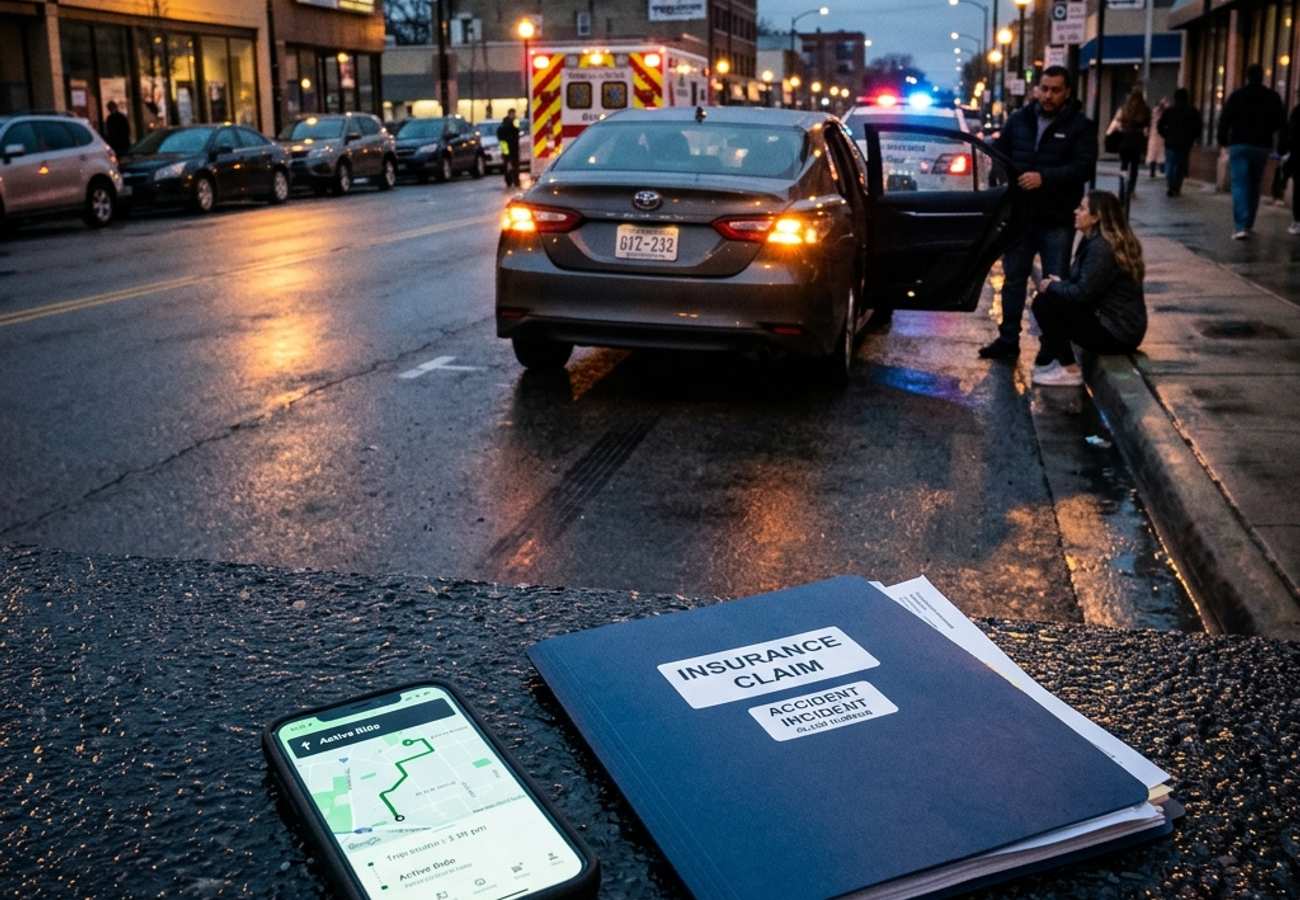
Image generated by AI
Who Pays After an Uber or Lyft Accident?
You might be replaying the ride in your mind. It started like any other trip. You ordered an Uber or Lyft, climbed into the back seat, maybe checked your messages, and then everything changed with one hard impact. Now you are hurt, confused about insurance, and wondering if you should talk to an accident injury lawyer about who is going to pay for your medical bills, missed work, and all the chaos that followed.
If you are feeling overwhelmed or even ashamed that you “don’t know how this works,” that is completely normal. Rideshare crashes are not like simple fender benders. There are multiple insurance policies, different “phases” of coverage, and a lot of finger pointing. The short version is this. Who pays after an Uber or Lyft accident depends on what the driver was doing in the app at the time of the crash, and on the insurance policies in play. You may have a claim against the rideshare company’s policy, the driver’s personal policy, another driver, or even your own coverage.
So where does that leave you right now. You want clear answers about who is responsible for your costs and what to do next, without being buried in legal jargon.
When an Uber or Lyft ride goes wrong, who is actually responsible?
Rideshare companies like to call their drivers “independent contractors.” Because of this, you might wonder whether Uber or Lyft will simply say, “Talk to the driver, not us.” The truth is more layered.
In most situations, there are three possible sources of payment after an Uber or Lyft accident claim.
- The rideshare company’s commercial insurance policy
- The driver’s personal auto insurance
- Another driver’s insurance, if a different vehicle caused or contributed to the crash
The key detail is what the rideshare driver was doing in the app at the moment of the collision. Was the app off. Was the driver waiting for a ride. Were you already in the car with an active trip. Each of these matters.
The National Association of Insurance Commissioners explains that ridesharing has its own insurance rules and gaps. You can read more about those risks in their guidance on the sharing economy and insurance.
How the driver’s “app status” affects who pays after a rideshare crash
To understand who pays, imagine the ride in three stages. Before the driver turns on the app. When the app is on and the driver is waiting for a request. And when there is an active trip in progress.
Here is how those stages usually affect responsibility.
- App off. If the driver has the rideshare app off and is just driving around, Uber or Lyft are usually not involved. The driver’s personal auto insurance is primary. If another driver hits them, that other driver’s policy may pay.
- App on, waiting for a ride. If the app is on and the driver is waiting for a request, some limited rideshare coverage often applies, but it may only step in after the driver’s own policy. This “gap” period is one of the trickiest parts for injured people.
- On the way to pick up a rider or during a trip. Once a driver accepts a ride request and is headed to pick someone up, or you are already in the car, the rideshare company’s larger commercial policy usually kicks in. That is often where people seek payment for serious injuries.
Maryland’s insurance regulator, for example, breaks down these stages and the required coverage for each one in its guidance on ridesharing and insurance. While the details differ by state, the basic idea is similar across many places.
So what does this actually mean for you if you were hurt. It means you may need to sort through multiple policies and fight a blame game between companies that want to pay as little as possible.
Common problems after an Uber or Lyft accident and why they feel so unfair
After a rideshare crash, the stress is not only about physical pain. It is also about uncertainty. Who will cover the emergency room bill. Will your health insurance pay first. Will you get a fair settlement for time off work. You may find that everyone says “Talk to someone else.”
Here are some problems people often face.
- Confusing insurance letters. You may get calls or letters from Uber’s insurance, Lyft’s insurance, the rideshare driver’s insurer, and possibly another driver’s insurer. Each one may ask for recorded statements or medical records, and none of them clearly explains your rights.
- Finger pointing between insurers. One company might say “Our driver was not at fault.” Another may argue that the app was off, so they are not responsible. This leaves you stuck in the middle while your bills keep coming.
- Pressure to settle quickly. Insurers know you need money now. They may offer a fast but low settlement, hoping you will sign before you understand the full impact of your injuries.
- Hidden coverage you do not realize you have. You might have uninsured or underinsured motorist coverage, MedPay, or personal injury protection on your own auto policy that can help. Many people never think to check, especially if they were a passenger and not driving.
Because of this tension, you might wonder whether trying to handle the claim alone is a mistake, especially if your injuries are serious or long lasting.
The NAIC has a helpful piece on how to protect yourself when using Uber or Lyft, which shows just how many moving parts there are. That same complexity is what makes sorting out responsibility after a crash so painful for injured riders.
Should you try to handle a rideshare claim yourself or get help?
You always have the choice to try to manage an Uber or Lyft accident insurance claim on your own. Some people do this when their injuries are minor and their bills are low. Others decide that the risks are too high and they want a personal injury lawyer to manage the process and fight for them.
The comparison below highlights some of the key differences.
| Issue | Handling claim on your own | Working with a personal injury lawyer |
|---|---|---|
| Understanding which insurance applies | You search online and rely on what adjusters tell you. Risk of missing coverage. | Attorney maps out all policies, including rideshare, personal, and your own coverage. |
| Dealing with multiple insurers | You return calls and answer questions yourself. Easier for insurers to pressure you. | Lawyer handles communication and shields you from tactics meant to reduce your claim. |
| Valuing pain, suffering, and future care | Likely to focus on current bills. Future treatment or lost earning capacity may be overlooked. | Attorney considers medical opinions, long term impact, and similar case outcomes. |
| Time and emotional strain | Significant time spent understanding forms and arguing with adjusters. | Legal team manages the process so you can focus on healing. |
| Risk of saying something harmful | Recorded statements can be used against you if you misspeak or minimize your pain. | Attorney prepares you or speaks on your behalf to reduce that risk. |
This is not about scaring you. It is about recognizing that rideshare claims are more complex than a typical two car collision, and the choice between going it alone or getting help has real consequences.
Three practical steps you can take right now
You may not be ready to make big decisions yet, and that is okay. There are still a few concrete steps you can take today to protect yourself.
1. Get medical care and keep every record
Even if you walked away from the crash, see a doctor as soon as you can. Some injuries, like soft tissue damage or concussions, show up hours or days later. Tell the provider that you were in an Uber or Lyft crash so it is clearly documented. Keep copies of every visit summary, prescription, and bill. These records are the backbone of any claim for your injuries.
2. Preserve evidence from the ride and the scene
Do not delete the ride from your app. Take screenshots that show the driver’s name, the route, and the time. If you have photos from the scene, save them in multiple places. If there were witnesses, write down their names and contact information. If you filed a police report, request a copy. The more you preserve now, the harder it is for an insurer to dispute what happened later.
3. Talk to a personal injury lawyer before you talk too much to insurers
Before giving detailed or recorded statements to any insurance company, consider speaking with a personal injury lawyer who has experience with rideshare crashes. Many offer free consultations and work on a contingency fee, which means they are paid from a settlement or verdict rather than upfront. A short conversation can help you understand your options and the likely paths for who will ultimately pay for your losses.
Finding your footing after a rideshare accident
An Uber or Lyft crash can make you feel like your life was split into a before and after. Before the ride, things were normal. After the ride, you are dealing with pain, appointments, and a maze of insurance questions. You do not have to untangle all of this alone.
You deserve clear answers about who is responsible, enough support to cover your medical needs and lost income, and the space to focus on getting better instead of arguing with insurance companies. Reaching out to a knowledgeable advocate in rideshare accident and personal injury law can give you that breathing room and help you move from confusion toward a plan.
You have already made it through the hardest part, which is surviving the crash itself. The next step is making sure the right parties pay what they owe, so you can focus your energy on healing.
Contact an Attorney in Florida
Weber Injury Law
7710 Massachusetts Avenue
New Port Richey, Florida 34653
Disclaimer
This article is for informational and educational purposes only. It does not constitute legal, financial, or professional advice. While we strive to provide accurate and up-to-date information, travel policies, regulations, and conditions change rapidly. Always verify information with official sources before making travel decisions. Nomad Lawyer makes no representations about the accuracy, reliability, completeness, or suitability of the information provided. Readers should consult qualified professionals for advice specific to their circumstances. The views expressed in this article are those of the author and do not necessarily reflect the views of Nomad Lawyer.
Preeti Gunjan
Contributor & Community Manager
A passionate traveller and community builder. Preeti helps grow the Nomad Lawyer community, fostering engagement and bringing the reader experience to life.
Learn more about our team →