
Wheelchair Advocate and Airline Clash Over Missed Flight Responsibility and ADA Compliance 2026
A public dispute between a disability advocate and an airline over a missed flight has reignited the debate on Air Carrier Access Act enforcement and passenger responsibility.

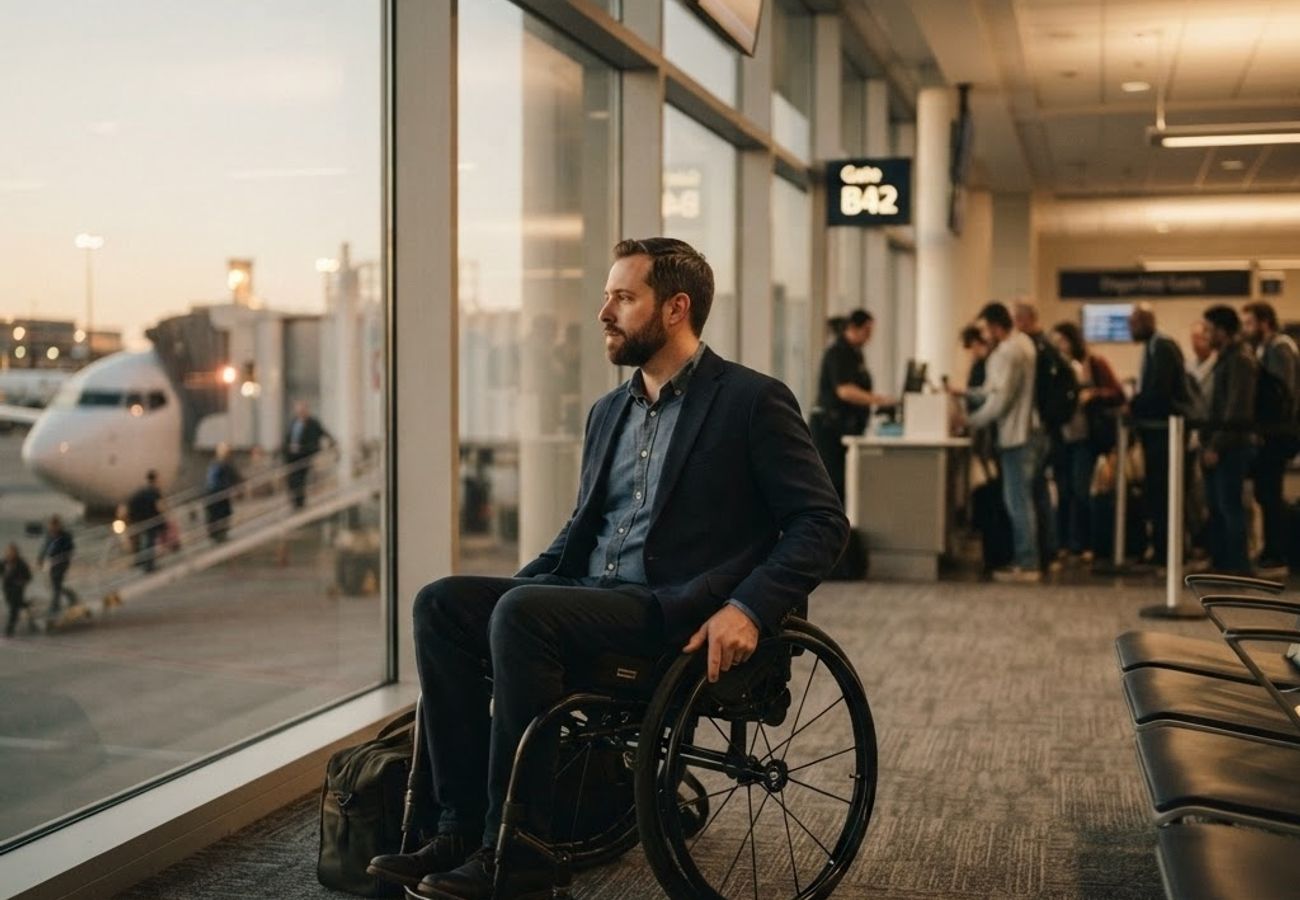
Image generated by AI
A high-profile dispute between a prominent wheelchair advocate and a commercial carrier has sparked a global debate over whether airlines or passengers bear the burden of boarding delays for disabled travelers.
The conflict centers on a wheelchair user who missed his flight after arriving late to the gate. The traveler, a known disability advocate, alleges that slow staff response times and a failure to honor pre-arranged assistance caused the delay. The airline, conversely, maintained that the passenger arrived after the mandatory boarding cutoff and refused to reopen the aircraft doors.
This incident has divided public opinion into two camps: those who view the missed flight as a systemic failure of airline accessibility and those who argue that personal planning and adherence to cutoff times are the passenger's responsibility regardless of mobility needs.
Regulatory Framework and Compliance Gaps
The dispute brings renewed scrutiny to the U.S. Air Carrier Access Act (ACAA) and related federal regulations. These laws mandate that airlines provide timely assistance for boarding and deplaning, ensure the proper stowage of mobility devices, and provide aisle chairs for those unable to walk to their seats.
While the legal framework is clear, advocacy reports indicate a significant gap between policy and execution. Common failures reported to transportation authorities include:
- Extended wait times for aisle chairs after landing.
- Inconsistent handling of custom-built personal mobility devices.
- Passengers being treated as "no-shows" when delays are caused by understaffed assistance teams.
Supporters of the advocate argue that when an airline accepts a request for assistance, they are assuming a contractual and legal obligation to provide the staffing necessary to ensure the passenger reaches the gate before the door closes. Critics argue that safety protocols and strict flight schedules leave gate agents with zero flexibility once a flight is officially closed.
The Conflict of "Cutoff Culture"
Modern aviation operates on a "cutoff culture," where domestic flights typically suggest a two-hour arrival window, yet boarding doors close strictly 15 to 20 minutes before departure. For wheelchair users, this window is often narrower due to the reliance on third-party contractors or airline staff for movement through the terminal.
Many disabled travelers report "padding" their schedules—booking longer layovers and arriving hours earlier than non-disabled passengers—to mitigate the risk of systemic failures. However, advocates argue that forcing the burden of "schedule padding" onto the disabled passenger is a form of systemic inequity, shifting the cost of airline inefficiency onto the individual.
Systemic Impact on Regional Connectivity
The implications of this clash extend beyond a single missed flight. The mishandling of wheelchairs is often categorized by passengers as a life-altering event, as many devices are custom-engineered. When ground staff fail to deliver a device promptly or return it damaged, the traveler's autonomy is compromised.
There are growing calls for airlines to adopt transparency measures similar to those used for on-time performance and baggage loss. Specifically, advocates are pushing for:
- Public reporting of wheelchair-related delays.
- Mandatory tracking of missed connections tied to assistance failures.
- Enhanced training for ground crews on the legal requirements of the ACAA.
Traveler Logistics Guide: Navigating Disability Assistance
From a ground-level perspective, the best way to navigate the current inconsistencies in airport assistance is through aggressive documentation and proactive communication.
Optimal Connection Planning When booking flights requiring wheelchair assistance, avoid "tight" connections. While a 45-minute layover may suffice for an ambulatory passenger, a wheelchair user should aim for a minimum of 90 to 120 minutes. This accounts for the time required to locate an assistant and navigate the distance between gates.
Digital and Physical Documentation To protect yourself in the event of a dispute over a missed flight:
- Timestamp everything: Take photos or screenshots of your arrival at the gate.
- Log the wait: Note the exact time you requested assistance and the time it was provided.
- Written records: If an agent informs you that assistance is delayed, ask for a written note or an email confirmation of the delay.
Customs and Policy Navigation Ensure your mobility device specifications are updated in your passenger profile at least 48 hours before departure. For international travel, verify if the destination airport utilizes digital transit policies (such as Digi Yatra in India or ETIAS in Europe) that might affect the flow of assisted passengers through security checkpoints.
Summary of Accessibility Obligations
| Requirement | Airline Obligation | Passenger Responsibility |
|---|---|---|
| Boarding Assistance | Provide timely transport and aisle chairs | Provide advance notice of needs |
| Equipment Handling | Safe stowage and prompt delivery | Ensure device is properly labeled |
| Gate Access | Facilitate movement to the aircraft | Adhere to airport arrival guidelines |
| Compliance | Follow ACAA/Federal mandates | Document service failures in real-time |
The tension between operational efficiency and accessibility rights remains a critical friction point in the future of inclusive aviation.
Related Travel Guides
Disclaimer
This article is for informational and educational purposes only. It does not constitute legal, financial, or professional advice. While we strive to provide accurate and up-to-date information, travel policies, regulations, and conditions change rapidly. Always verify information with official sources before making travel decisions. Nomad Lawyer makes no representations about the accuracy, reliability, completeness, or suitability of the information provided. Readers should consult qualified professionals for advice specific to their circumstances. The views expressed in this article are those of the author and do not necessarily reflect the views of Nomad Lawyer.
Kunal K Choudhary
Co-Founder & Contributor
A passionate traveller and tech enthusiast. Kunal contributes to the vision and growth of Nomad Lawyer, bringing fresh perspectives and driving the community forward.
Learn more about our team →