
Aviation Safety Protocols: The Critical Role of Cabin Crew and Door Arming Procedures in 2026
Analysis of the hidden safety protocols flight attendants execute after the boarding door closes, focusing on ICAO and IATA standards for cabin safety and emergency evacuation.

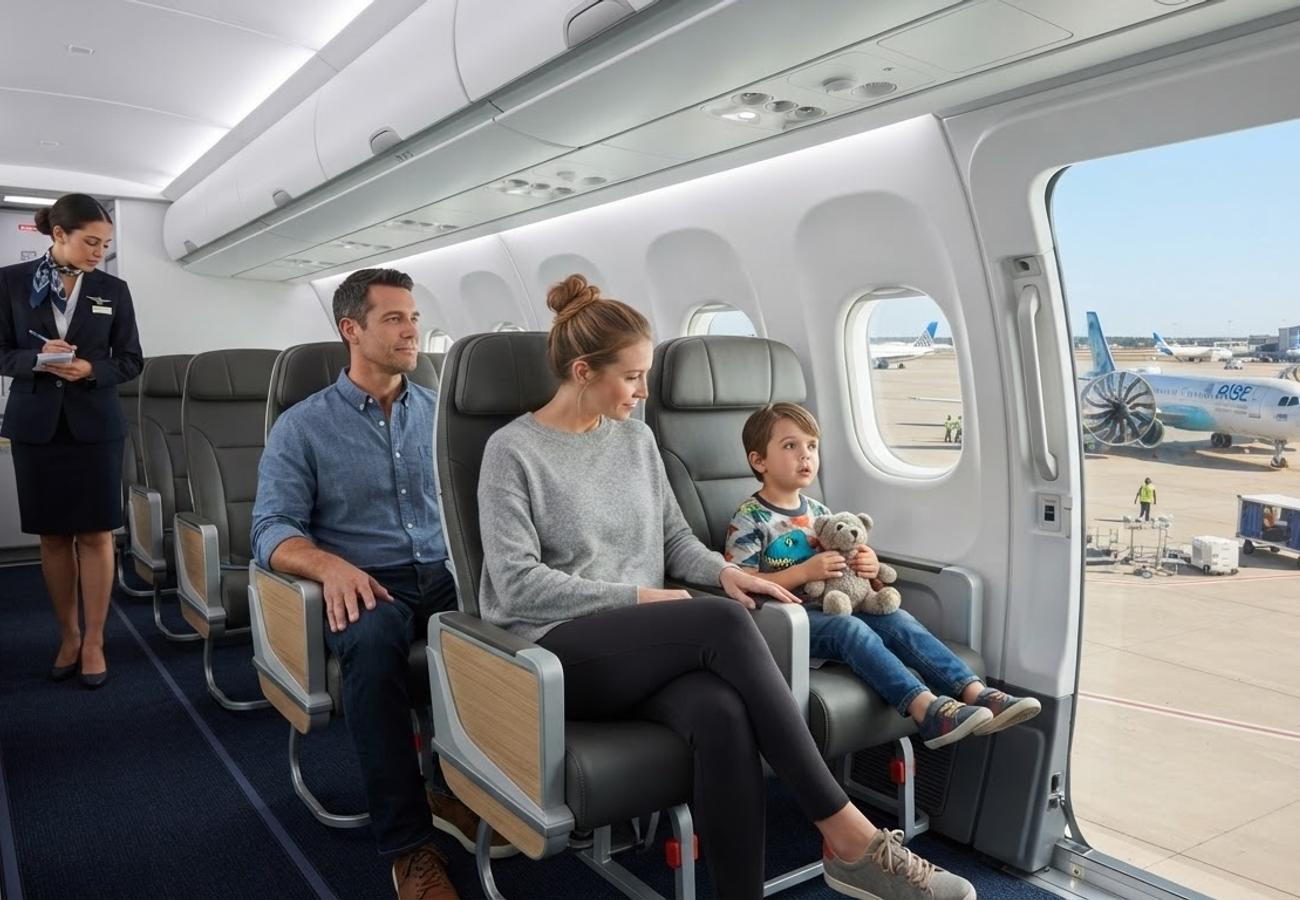
Image generated by AI
The perceived role of cabin crew as service providers masks a rigorous operational mandate: they are primarily onboard as safety professionals trained to manage catastrophic failures.
While passengers focus on comfort and catering, the period immediately following the closing of the aircraft door is dedicated to high-stakes risk management. The transition from boarding to taxiing involves a series of precise, legally mandated actions designed to ensure that the aircraft can be evacuated in under 90 seconds.
The Regulatory Framework of Cabin Safety
Modern cabin safety has shifted from a reactive model—focused solely on evacuation—to a proactive discipline of risk management and hazard identification. This evolution is governed by two primary global entities:
- International Civil Aviation Organization (ICAO): Focuses on the overarching regulations of cabin operations, training qualifications, human performance, and the design of onboard equipment.
- International Air Transport Association (IATA): Provides the Cabin Operations Safety Guide, which serves as the industry benchmark for best practices and operational policies.
Industry observers note that these frameworks transform the cabin crew from "servers" into safety officers responsible for the integrity of the operational environment.
Critical Pre-Flight and In-Flight Safety Mandates
Before passengers even board, crew members perform exhaustive security and safety audits. These checks are not cursory; they involve verifying that every piece of emergency equipment is operable and within its expiration date.
Key Safety Verifications Include:
- Fire Extinguishers: Ensuring the pressure gauge needle is strictly within the green zone.
- Oxygen Systems: Confirming minimum pressure levels in oxygen bottles.
- Emergency Exits: Verifying that all exits and jump seats are unobstructed.
- Communication Systems: Testing the links between the cabin and the flight deck.
Once in the air, the crew maintains constant situational awareness to identify unruly passengers, medical emergencies, or signs of decompression and fire.
The "Arm and Cross-Check" Protocol
The most vital procedure occurs the moment the boarding door closes. When the flight deck announces "Cabin crew, arm the doors and cross-check" (or "doors to automatic"), a precise mechanical sequence begins.
The Arming Process:
- Lever Activation: The crew member moves the arming lever, which attaches the girt bar to the emergency slide.
- Visual Verification: The crew checks aircraft-specific visual indicators on the door or floor.
- The Cross-Check: To eliminate human error, a colleague checks the indicators on the opposite door and verbally confirms "cross-check."
- Command Chain: The senior crew member polls all stations and reports the final status to the pilots.
This ensures that if an emergency occurs, the slides inflate automatically upon opening. Conversely, upon arrival, the "disarm and cross-check" process is reversed. Failure to disarm the door before opening it on the ground can lead to an accidental slide deployment, which poses a risk to ground staff and incurs repacking costs between $25,000 and $50,000.
Operational Safety Standards Summary
| Procedure | Action | Primary Objective | Risk of Failure |
|---|---|---|---|
| Pre-Flight Check | Equipment Audit | Ensure tool readiness | Equipment failure during emergency |
| Arming Doors | Girt Bar Attachment | Automatic slide deployment | Delayed evacuation; manual inflation needed |
| Cross-Checking | Peer Verification | Zero-error confirmation | Human error in door status |
| Disarming Doors | Girt Bar Detachment | Safe passenger disembarkation | Accidental slide deployment; high cost |
Why This Matters: Industry Implication
The distinction between "service" and "safety" is not merely semantic; it is a legal and operational necessity. The requirement to evacuate an aircraft in 90 seconds leaves zero margin for error.
Our analysis indicates that the "cross-check" system is a critical application of "Human Factors" in aviation. By implementing a double-verification loop, airlines mitigate the risk of "single-point failure," where one exhausted or distracted crew member might forget to arm a door. In a high-stress evacuation, the difference between an automatic slide and a manual inflation handle is a matter of seconds that directly correlates to survivability rates.
Industry Outlook
As aircraft technology evolves, we expect to see more integrated digital monitoring of door statuses, potentially augmenting the manual cross-check. However, the reliance on human verification will likely remain a cornerstone of ICAO and IATA standards to provide a fail-safe against electronic malfunctions. The industry will continue to prioritize "situational awareness" training to combat the increasing trend of unruly passenger behavior, which complicates the execution of these safety protocols.
Safety is the primary product of every flight; the service is simply the packaging.
Related Travel Guides
Disclaimer
This article is for informational and educational purposes only. It does not constitute legal, financial, or professional advice. While we strive to provide accurate and up-to-date information, travel policies, regulations, and conditions change rapidly. Always verify information with official sources before making travel decisions. Nomad Lawyer makes no representations about the accuracy, reliability, completeness, or suitability of the information provided. Readers should consult qualified professionals for advice specific to their circumstances. The views expressed in this article are those of the author and do not necessarily reflect the views of Nomad Lawyer.
Raushan Kumar
Founder & Lead Developer
Full-stack developer with 11+ years of experience and a passionate traveller. Raushan built Nomad Lawyer from the ground up with a vision to create the best travel and law experience on the web.
Learn more about our team →