
Airlines' Hidden Costs of Ultra-Long-Haul Expansion: What Qantas and Air New Zealand Aren't Telling Passengers
Breaking airline news and aviation industry updates for 2026.

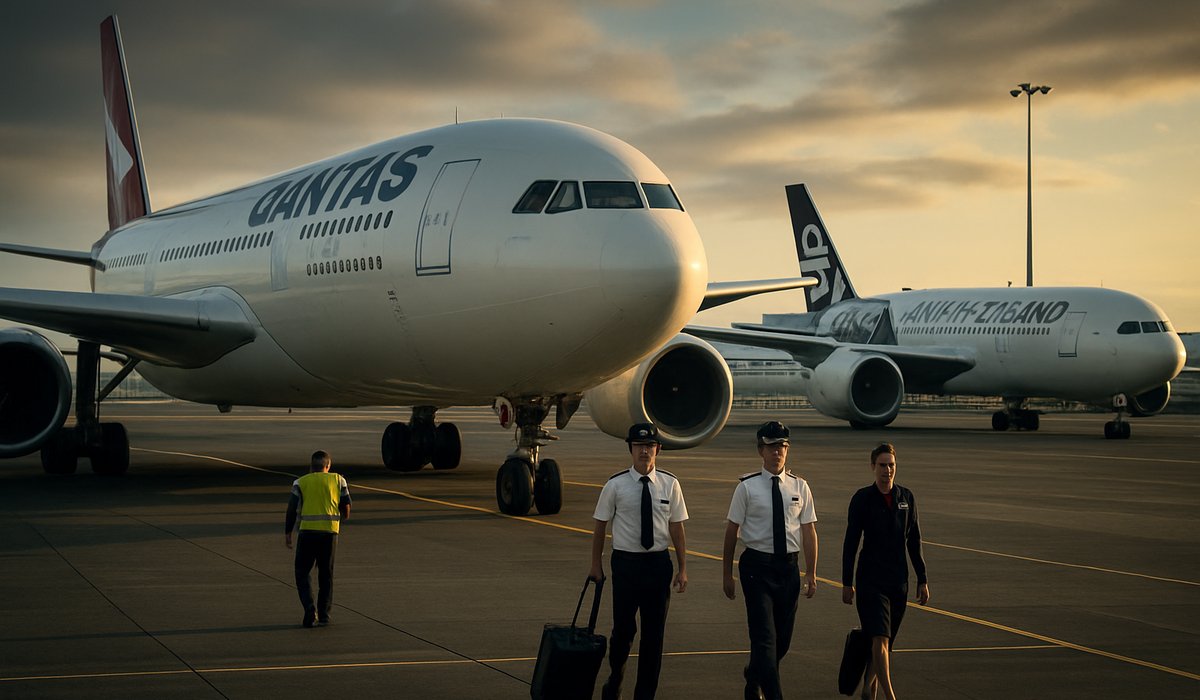
Image generated by AI
Airlines' Hidden Costs of Ultra-Long-Haul Expansion: What Qantas and Air New Zealand Aren't Telling Passengers
The operational realities behind the industry's latest route announcements reveal significant financial pressures that may soon impact traveler wallets
The Ultra-Long-Haul Boom Masks Rising Operational Complexities
The aviation industry is experiencing an unprecedented expansion in ultra-long-haul routes, with carriers like Qantas and Air New Zealand spearheading ambitious connectivity projects that link previously unconnected markets across vast distances. While these announcements generate headlines and capture traveler imagination, the operational and financial realities underlying this expansion tell a more complex story about the true cost of extreme-distance flying.
The surge in ultra-long-haul service correlates directly with the global delivery of fuel-efficient widebody aircraft, particularly the Airbus A350 and Boeing 787 Dreamliner. However, industry analysts caution that the newer generation of aircraft, while offering significant advantages in fuel economy and passenger comfort, comes with substantial infrastructure, maintenance, and crew scheduling challenges that airlines frequently downplay in public statements.
Economic Efficiency Versus Hidden Operational Burdens
Modern ultra-long-haul aircraft represent a dramatic leap forward in operational economics compared to legacy widebodies like the Airbus A340-500 and Boeing 777-200LR. The A350 and 787 consume considerably less fuel per available seat kilometer, theoretically enabling profitable routes that older aircraft could never sustain.
Yet this technological advantage masks several concealed costs that ultimately ripple through to airline fee structures and ticket pricing. Extended flight durations require additional crew rotations, specialized maintenance facilities, and premium fuel surcharges that fluctuate with global crude oil markets. Airlines operating these routes must also invest heavily in ground infrastructure at remote airports, crew rest facilities, and contingency planning for medical emergencies on flights lasting 17-20 hours.
The Transparency Gap and Future Pricing Pressures
Neither Qantas nor Air New Zealand has fully disclosed how revenue from ultra-long-haul services compares against the true all-in operating costs. Industry observers note that while load factors on premium routes may appear healthy, the narrow margins leave little room for fuel price volatility or demand fluctuations—pressures that historically translate into increased baggage charges, fuel surcharges, and ancillary aviation fees.
The competitive race to launch ultra-long-haul routes, driven by both operational capability and market positioning, suggests that carriers are betting heavily on sustained demand. However, if jet fuel prices spike or economic conditions deteriorate, passengers should expect these airlines to recoup losses through expanded fee structures across their entire networks.
What This Means for the Travel Industry
The ultra-long-haul expansion fundamentally reshapes global aviation economics, but the true cost of connecting distant cities remains largely invisible to consumers at the booking stage. Travelers should anticipate that the convenience of non-stop flights from secondary cities will increasingly come with corresponding increases in airline fees and ancillary charges.
FAQ: Ultra-Long-Haul Flights and Aviation Industry Costs
Why are airlines launching so many ultra-long-haul routes right now? Modern aircraft like the Boeing 787 and Airbus A350 are significantly more fuel-efficient than previous generations, making previously unprofitable routes economically viable while maintaining acceptable profit margins.
Will ultra-long-haul expansion increase airline fees for passengers? Yes, likely. The hidden operational costs of extreme-distance flying—including crew rotations, specialized maintenance, and infrastructure—are typically offset through increased baggage charges, fuel surcharges, and premium seat pricing.
How do jet fuel prices affect ultra-long-haul route profitability? Extended flight duration means higher fuel consumption in absolute terms. When crude oil prices surge, airlines operating these routes face compressed margins, often resulting in fuel surcharges or reduced service frequency.
Are newer aircraft like the 787 truly more capable than older widebodies? They're more economical, not necessarily more capable. Older aircraft like the Boeing 777-200LR could fly the same distances; newer planes simply do it with 15-25% better fuel efficiency.
Should I expect better service on ultra-long-haul flights? Not necessarily. While cabin products may be premium, the operational pressures and cost management focus often mean airlines compete on route connectivity rather than service quality.
Related Travel Guides
Flight Delay Compensation Guide 2026
Understanding Airline Route Changes
Airport Security Process Updated (2026)
External Resources
Disclaimer
This article is for informational and educational purposes only. It does not constitute legal, financial, or professional advice. While we strive to provide accurate and up-to-date information, travel policies, regulations, and conditions change rapidly. Always verify information with official sources before making travel decisions. Nomad Lawyer makes no representations about the accuracy, reliability, completeness, or suitability of the information provided. Readers should consult qualified professionals for advice specific to their circumstances. The views expressed in this article are those of the author and do not necessarily reflect the views of Nomad Lawyer.
Preeti Gunjan
Contributor & Community Manager
A passionate traveller and community builder. Preeti helps grow the Nomad Lawyer community, fostering engagement and bringing the reader experience to life.
Learn more about our team →