
Washington Dulles Airport Experiences Flight Disruptions as Mesa and United Cancel Multiple Flights
Washington Dulles International Airport faced operational disruptions as Mesa Airways and United Airlines cancelled multiple flights, creating cascading delays affecting 50+ global destinations. The impact rippled across major hubs in North America, Europe, Africa, and the Middle East.

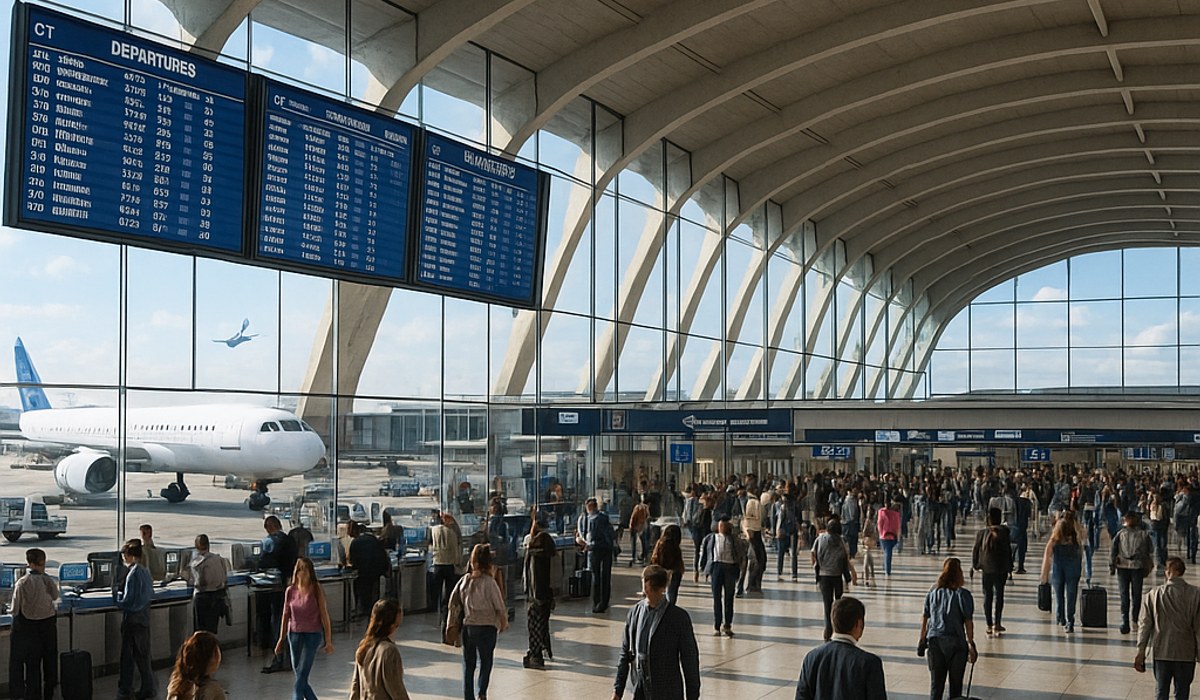
Image generated by AI
Washington Dulles Airport Gripped by Flight Disruptions: Multiple Cancellations Trigger Global Cascading Delays
Quick Summary:
- Mesa Airways and United Airlines cancelled 3 flights total at Washington Dulles International Airport
- United Airlines reported 32 delayed flights; Mesa Airways recorded 3 delayed operations
- Disruptions rippled across 50+ destinations including New York, Reykjavik, Lagos, Toronto, and European hubs
- LaGuardia Airport and Lagos's Murtala Muhammed International Airport experienced the most severe proportional impacts
- Passengers facing extended delays, missed connections, and rebooking challenges
Washington Dulles International Airport ground to a halt as operational disruptions sent shockwaves across the global aviation network. Multiple flight cancellations by Mesa Airways and United Airlines triggered a cascade of delays that spread far beyond the primary hub, affecting major airports and travel routes across North America, Europe, Africa, and the Middle East. What started as a localized operational challenge quickly became an international travel crisis, stranding passengers and forcing rapid rebooking efforts across interconnected flight networks.
The disruptions underscore how modern aviation's interconnected structure means that even limited cancellations at a major hub can trigger widespread connectivity issues affecting dozens of destinations. For travelers caught in the chaos, understanding what happened and knowing how to respond became critical.
Understanding the Scope: Three Cancellations Across Regional and Major Carrier Operations
The flight cancellations, though numerically contained, masked a far more complex operational breakdown. Mesa Airways, operating regional flights on behalf of United Airlines, cancelled two flights while United Airlines itself cancelled one flight from Washington Dulles. These three cancellations represented only a fraction of the day's operations at the airport, which handles hundreds of daily flights across multiple carriers.
However, cancellation numbers tell only part of the story. The broader metric was delays, where operational strain manifested most acutely. United Airlines reported 32 delayed flights at Washington Dulles—a significant number reflecting cascading disruptions as the network attempted to absorb the impact of initial cancellations. Mesa Airways recorded 3 delayed flights, indicating that the regional carrier's operations faced additional pressure beyond the two cancelled services.
The difference between cancellation count and delay volume revealed the nature of the disruption: a small number of operational failures triggering much larger ripple effects across the day's flight schedule. Aircraft that should have departed were late in arriving; crews fell behind schedule; subsequent flights faced compounding delays as equipment repositioned failures accumulated.
Geographic Reach: A Global Impact Across 50+ Destinations
The true scale of the disruption emerged when examining the geographic footprint. Washington Dulles serves as a major international hub for United Airlines, connecting North American passengers to destinations worldwide. When operations stalled at Dulles, the impact reverberated globally.
Affected airports spanned an extraordinary range:
North American Gateways:
- New York (LaGuardia, Newark, JFK)
- Toronto Pearson International Airport (Canada's largest hub)
- Montreal, Ottawa (Canada's major cities)
- Florida destinations (Fort Lauderdale, Orlando, Tampa/Sarasota)
- West Coast hubs (Los Angeles, San Diego, San Francisco)
- Regional centers (Detroit, Charlotte, Nashville, St. Louis, Philadelphia, Seattle, New Orleans, Columbus, Syracuse, Knoxville)
European Destinations:
- London Heathrow Airport
- Frankfurt Airport
- Paris, Madrid, Zurich
- Amsterdam, Dublin, Edinburgh
- Munich, Rome
Atlantic Crossing Point:
- Reykjavik (critical connector for North Atlantic routing)
International Hubs:
- Istanbul, Dubai, Doha
- Toronto, Mexico City
- Lagos (Murtala Muhammed International Airport)
- San Juan, San Salvador
Over 50 cities faced either direct disruption or cascading connectivity failures as passengers missed connections and aircraft ran behind schedule. The disruption wasn't confined to a single region—it was genuinely global in scope, affecting transatlantic passengers, domestic travelers, and regional service participants simultaneously.
Comparing Impact Severity Across Major Hubs
While Washington Dulles served as the disruption epicenter, the proportional impact varied dramatically by airport based on their operational structure and flight frequency. This variation revealed important truths about aviation vulnerability:
Washington Dulles: The Primary Hub The airport recorded the three cancellations, but due to its status as a high-frequency major hub handling hundreds of daily flights, the numerical impact remained relatively modest in percentage terms. However, the absolute delay count (32 United flights) reflected the severity of operational strain.
LaGuardia Airport: Disproportionate Impact LaGuardia received particular strain, with one cancellation from Dulles-related disruptions representing approximately 25% of affected flight frequency to or from that airport on the impacted schedule. This higher proportional impact indicated LaGuardia's tighter scheduling margins—fewer flights meant less operational flexibility to absorb disruptions.
Lagos's Murtala Muhammed International Airport: Critical Vulnerability The most severe proportional impact occurred at Murtala Muhammed International Airport in Lagos, where one cancellation represented approximately 50% of the affected service frequency. This dramatic statistic revealed a harsh truth: regional and lower-frequency routes face exponentially greater vulnerability to aviation disruptions. An airport serving limited daily flights has virtually no margin for error.
Major European Gateways: Resilience Through Scale Frankfurt Airport, London Heathrow Airport, and other major European hubs registered minimal or no direct cancellations. Despite serving as connection points for disrupted passengers, their massive daily flight frequencies allowed them to absorb the impact without cascading failures. Scale provided protection.
How Cascading Delays Propagate Through Interconnected Networks
Understanding why three cancellations triggered 32 delays requires insight into how modern airline operations function. Airlines operate networks where aircraft and crew move sequentially through multiple flights during a day. When one flight is cancelled:
- Aircraft Repositioning Fails: The aircraft scheduled for the cancelled flight isn't available for its next scheduled service
- Crew Rotation Breaks: Flight crews planned for multiple flights face schedule disruptions
- Connection Impacts: Passengers connecting through Dulles miss downstream flights
- Domino Effects: Each subsequent delay compounds, pushing aircraft further behind schedule
- Network Strain: What begins at one airport stresses the entire interconnected system
This cascading failure pattern explains why a single cancelled flight from Washington to New York could delay a subsequent departure to London. Operational discipline broke down in real-time as airlines scrambled to reassign aircraft and crews, rebooking passengers, and restoring schedule stability.
Practical Impact for Travelers: What This Disruption Means
For passengers caught in the disruption, practical challenges dominated immediate concerns:
Missed Connections: Passengers connecting through Washington Dulles faced the highest risk. A delayed flight arrival meant missing downstream connections, requiring emergency rebooking.
Extended Waits: Even passengers whose flights weren't directly cancelled faced hours of delays, compounding journey times and testing passenger patience.
Rebooking Challenges: With multiple carriers affected across 50+ destinations, finding alternative flights proved difficult. Popular routes filled quickly as disrupted passengers sought alternatives.
International Implications: Passengers traveling transatlantic or to distant destinations couldn't easily rebook on alternative carriers, creating situations where travelers remained stranded for extended periods.
Crew Legality Issues: Federal flight duty regulations limit pilot and flight attendant work hours. As delays accumulated, some crews approached maximum legal flight time, accelerating cancellations as crews became legally unavailable to continue operations.
How Airlines and ATC Responded to Restore Operations
Air traffic controllers at Washington Dulles and surrounding facilities implemented procedures to stabilize operations, focusing on:
- Priority clearances for flights carrying connecting passengers
- Ground delay programs to manage departure flow and prevent airspace congestion
- Coordinated communication with affected airlines to sequence aircraft movement
- Contingency routing for flights headed to severely disrupted destinations
Airlines responded with:
- Ground staff expansion to handle increased customer service demands
- Rebooking prioritization for passengers with tight connection windows
- Compensation authorization for eligible passengers under airline policies
- Real-time schedule adjustments as aircraft gradually repositioned and caught up
Despite these efforts, recovery remained gradual—typically 4-6 hours for full schedule normalization after initial disruptions.
What Travelers Should Know About Flight Disruption Protection
Passengers affected by cancellations have rights and options, though these vary by jurisdiction:
EU Regulation 261/2004: Passengers on EU flights cancelled due to airline-controllable issues receive compensation up to €600, plus rebooking or refund options.
US Airline Policy: US carriers aren't legally required to provide monetary compensation for cancellations, but must offer rebooking on the next available flight or a refund. Advanced rebooking often happens automatically.
Action Steps for Disrupted Passengers:
- Monitor airline communications continuously
- Request rebooking to earliest available flight
- Document all expenses (meals, hotel, transportation) for potential reimbursement claims
- Screenshot airline communications for records
- Understand your airline's specific cancellation policy before departure
Lessons From Washington Dulles: Why Small Disruptions Can Become Big Problems
The Washington Dulles disruption illustrates fundamental vulnerabilities in modern aviation networks. When aircraft operate at 95%+ utilization rates, schedule adherence becomes critical. Missing one flight by 30 minutes creates cascading effects throughout the day.
Additionally, smaller airports with lower flight frequency have limited resilience. An airport with 20 daily flights can't absorb a cancellation the way an airport with 200 daily flights can. This explains why Lagos's Murtala Muhammed International Airport experienced such dramatic proportional impact.
Finally, international routes amplify disruption severity. Passengers traveling transatlantic face fewer alternative flight options compared to domestic travelers, creating situations where single-day rebooking becomes impossible.
FAQ: Understanding Washington Dulles Disruptions and Flight Cancellations
Q: What caused the Washington Dulles disruption? A: The article doesn't specify a root cause (weather, mechanical, staffing, etc.), indicating either operational failure details were unavailable or multiple minor issues compounded. Root cause typically emerges in FAA reports within 48-72 hours.
Q: How many flights were cancelled total? A: Three flights were cancelled—two operated by Mesa Airways (United's regional partner) and one by United Airlines directly. However, 32 United flights experienced delays.
Q: Which airports faced the worst impact? A: LaGuardia Airport and Murtala Muhammed International Airport in Lagos experienced the most severe proportional impacts due to limited flight frequency. Washington Dulles, as the disruption hub, absorbed the highest absolute delays.
Q: Will passengers receive compensation? A: Compensation eligibility depends on jurisdiction and airline policy. EU passengers on cancelled flights may qualify for €600 compensation. US passengers receive rebooking or refunds but not mandatory compensation.
Q: How long do cascading delays typically take to resolve? A: Full network recovery from major hub disruptions typically requires 4-6 hours after initial operations normalize, as aircraft and crew repositioning gradually catches up with planned schedules.
Last updated: March 30, 2026. Information sourced from FlightAware operational data, airline statements, and aviation industry reporting. For real-time flight status, consult official airline websites and airport operations centers.
Disclaimer
This article is for informational and educational purposes only. It does not constitute legal, financial, or professional advice. While we strive to provide accurate and up-to-date information, travel policies, regulations, and conditions change rapidly. Always verify information with official sources before making travel decisions. Nomad Lawyer makes no representations about the accuracy, reliability, completeness, or suitability of the information provided. Readers should consult qualified professionals for advice specific to their circumstances. The views expressed in this article are those of the author and do not necessarily reflect the views of Nomad Lawyer.
Raushan Kumar
Founder & Lead Developer
Full-stack developer with 11+ years of experience and a passionate traveller. Raushan built Nomad Lawyer from the ground up with a vision to create the best travel and law experience on the web.
Learn more about our team →