
Washington DC Travel Rise: Supreme Court Story Highlights America’s Political Tourism
Washington DC Travel Rise: Supreme Court Story Highlights America’s Political Tourism

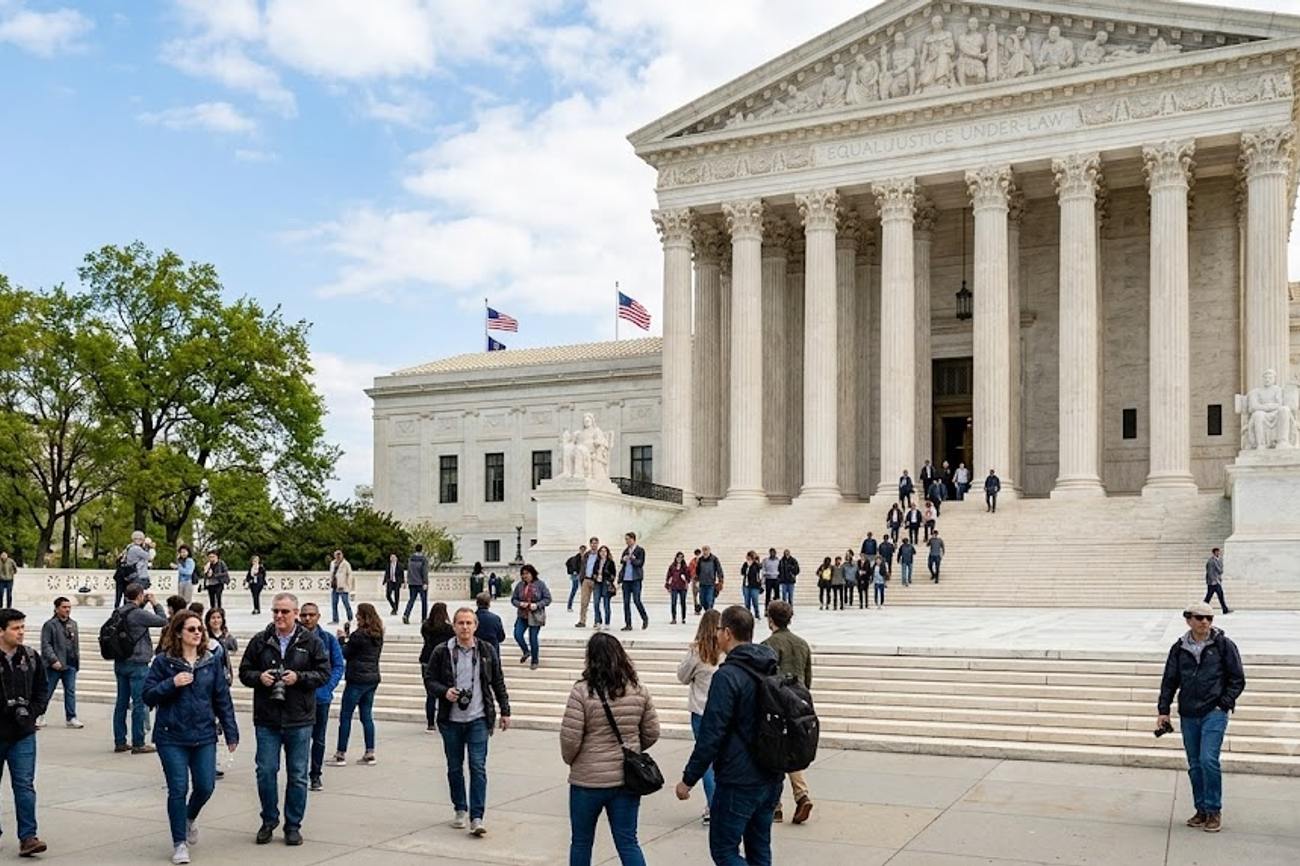
Image generated by AI
Zero restrictions on mail-in voting for the 2026 midterm elections remain in place following a decisive emergency ruling by the U.S. Supreme Court. This judicial intervention, which blocked an administration attempt to tighten postal ballot procedures, has reignited a global fascination with the physical and symbolic architecture of American power in Washington, D.C. While the legal battle centers on the mechanics of the democratic process, the fallout has translated into a renewed surge of "civic tourism," where the city's landmarks serve as the primary classroom for those attempting to parse the tension between the executive and judicial branches.
The Judicial Friction Point and Civic Interest
The current spike in interest regarding the U.S. Supreme Court is not merely a byproduct of legal curiosity but a reaction to a direct confrontation between President Donald Trump and the nation's highest court. The administration's proposal sought to implement specific restrictions on how mail-in ballots are handled and processed, a move that opponents argued would fundamentally impair voter access and disrupt election administration. By issuing an emergency block on these restrictions, the Supreme Court reaffirmed its role as an independent check on executive authority.
For the international traveler, this conflict transforms a static building into a living theater of constitutional law. The Supreme Court building is no longer just an architectural marvel; it is the site of a high-stakes power struggle. This dynamic attracts a specific profile of visitor—the "political tourist"—who seeks to understand the operational reality of the U.S. government by visiting the sites where these decisions are codified. This trend is supported by the city's layout, which allows for a concentrated itinerary including the U.S. Capitol and the National Archives, creating a walkable circuit of democratic institutions.
The Infrastructure of Political Tourism
Washington, D.C. operates on a unique tourism model where heritage, education, and leisure intersect. The visitor economy is heavily reliant on the accessibility of these federal landmarks, which act as anchors for the broader hospitality sector. When political tension rises, these sites often see increased foot traffic, which in turn boosts revenue for local hotels, transport services, and tour operators.
The following table outlines the primary anchors of the D.C. civic tourism circuit and their specific draws for the modern traveler:
| Landmark | Primary Branch/Function | Key Visitor Draw |
|---|---|---|
| U.S. Supreme Court | Judicial | Constitutional law, emergency rulings, judicial independence |
| U.S. Capitol | Legislative | Congressional proceedings, historic architecture, public exhibitions |
| National Archives | Record Keeping | Original Declaration of Independence, Constitution, Bill of Rights |
| Smithsonian Museums | Cultural/Educational | Free admission, global history, aviation and natural science |
| The White House | Executive | Presidential history, diplomatic center, architectural landmark |
The role of the Smithsonian Institution is particularly vital here. By offering free admission to a vast network of museums—including the National Air and Space Museum and the National Museum of African American History and Culture—the city lowers the barrier to entry for international visitors. This creates a tiered experience: travelers can engage with the high-tension atmosphere of the Supreme Court and then pivot to the curated, educational environment of the museums.
Expert Analysis: The "Event-Driven" Tourism Cycle
From a journalistic and analytical perspective, Washington, D.C. is experiencing a shift toward "event-driven" civic tourism. Traditionally, the city was a destination for school groups and history buffs. Now, we see a pattern where specific legal rulings or political disputes act as catalysts for immediate travel spikes.
For travelers booking trips to the capital during election cycles or major judicial disputes, the direct consequence is a shift in the "civic itinerary." The focus moves from the passive observation of monuments to the active pursuit of institutions currently in the headlines. The current dispute over the 2026 midterm voting procedures creates a specific demand for tours that explain the separation of powers.
The pricing pressure this creates is felt most in the short-term rental and hospitality markets surrounding Capitol Hill. When a landmark like the Supreme Court becomes the center of a national controversy, nearby lodging often sees a premium. Furthermore, the "educational" aspect of the trip becomes more urgent. Travelers are no longer just visiting the National Archives to see old parchment; they are visiting to understand the legal foundations that allow the Supreme Court to block a sitting president. This transforms the trip from a leisure vacation into a form of political pilgrimage.
Key Takeaways
- Judicial Precedent: The Supreme Court's emergency ruling ensures that mail-in voting restrictions will not be implemented for the 2026 midterm elections.
- Civic Synergy: The proximity of the Supreme Court, the U.S. Capitol, and the National Archives allows visitors to map the entire U.S. government structure within a single walkable district.
- Economic Driver: Political volatility often correlates with increased interest in "political tourism," benefiting D.C.'s hotels, restaurants, and local tour operators.
- Low-Barrier Access: The Smithsonian's free admission model remains a critical tool for attracting international visitors who balance high-cost travel with free cultural experiences.
- Diversified Appeal: Beyond the "power centers," Washington's growth in international cuisine and riverfront development is decoupling the city's identity from being solely a government town.
FAQ: Washington Civic Travel 2026
Can international visitors enter the U.S. Supreme Court building? Yes, the Supreme Court is a major civic attraction. While access to the courtroom depends on the court's schedule and security protocols, the building is open to the public for educational and architectural tours.
Are the Smithsonian museums actually free for all visitors? Yes, most Smithsonian museums offer free admission to the public. This makes them some of the most accessible high-value attractions in the United States, though some specific exhibitions may require timed-entry passes.
What is the best way to see the National Archives and the Capitol in one day? Because these sites are located in a concentrated historic district, they are best explored on foot or via short rideshare trips. It is recommended to visit the National Archives early to avoid lines for the original founding documents.
How does the 2026 election cycle affect travel to D.C.? Increased political activity often leads to higher hotel occupancy and potential road closures around the Capitol and White House. Travelers should expect larger crowds and stricter security checkpoints near government landmarks.
The intersection of law and leisure continues to make the District a volatile yet essential destination for the global citizen.
Tags: US Supreme Court 2026, Washington DC Tourism, 2026 Midterm Elections, Smithsonian Institution, US Capitol Tours, Civic Tourism USA
Related Travel Guides
- TUI Musement Names Top 30 Castles and Palaces for 2026 Heritage Travel in Europe
- Gatlinburg Teams Up With Mackinac Island and More as Colourful Fall Destinations Draw Global Travellers Across America
- Las Vegas Defies Rising Travel Costs As Tourism Rebounds With 2.7% Visitor Growth And 77.2% Hotel Occupancy
Disclaimer
This article is for informational and educational purposes only. It does not constitute legal, financial, or professional advice. While we strive to provide accurate and up-to-date information, travel policies, regulations, and conditions change rapidly. Always verify information with official sources before making travel decisions. Nomad Lawyer makes no representations about the accuracy, reliability, completeness, or suitability of the information provided. Readers should consult qualified professionals for advice specific to their circumstances. The views expressed in this article are those of the author and do not necessarily reflect the views of Nomad Lawyer.
Naina Thakur
Contributor & Travel Specialist
Travel enthusiast and legal writer covering visa regulations, responsible tourism, and cultural journeys across global destinations.
Learn more about our team →