
Vietnam Holiday Travel Scam Exposes Massive Fake Vacation Network in Hanoi, Prompting Urgent Alerts for Tourists Facing High-Pressure Timeshare Schemes: New Update
A massive Vietnam holiday travel scam involving 27 fake companies in Hanoi has been dismantled by police, exposing high-pressure vacation club schemes.

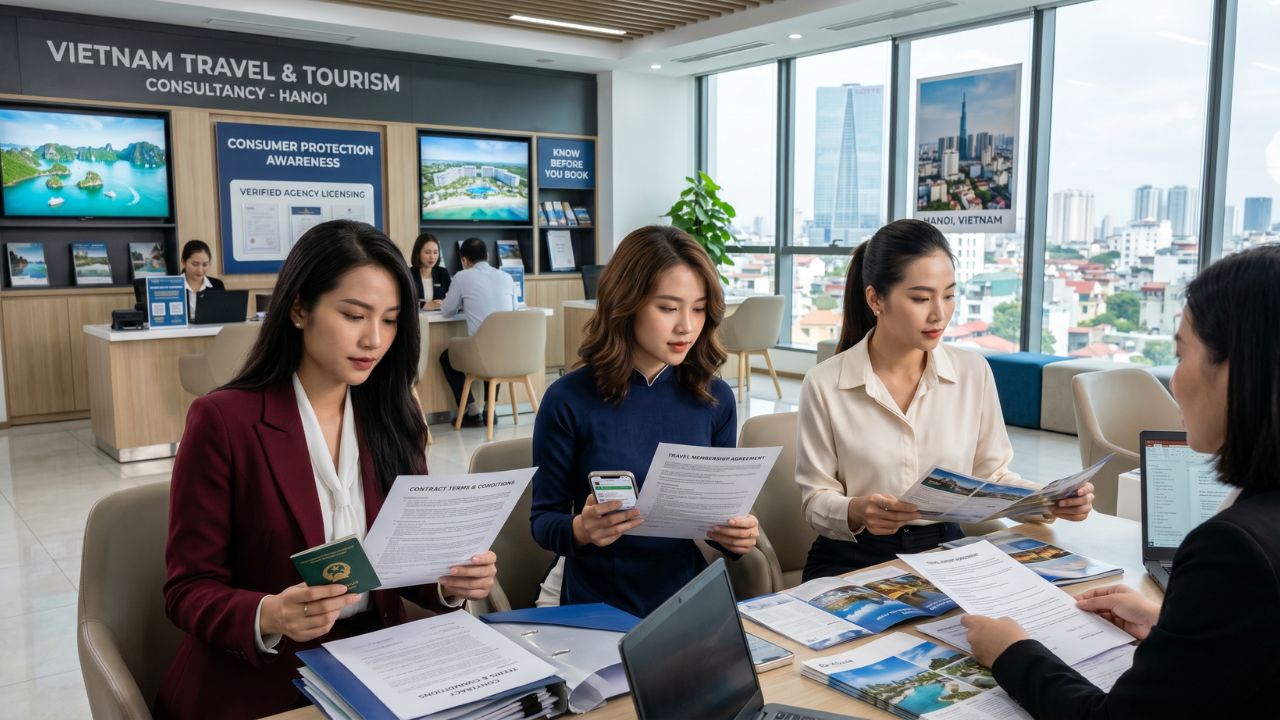
Image generated by AI
Published on June 19, 2026
A sweeping investigation by local authorities has exposed a sprawling Vietnam holiday travel scam operating across a network of 27 interconnected front companies in Hanoi. The fraudulent scheme trapped hundreds of unsuspecting tourists in high-pressure holiday membership and timeshare programs, resulting in losses estimated in the trillions of dong. In response to this massive operation, law enforcement has issued urgent warnings advising both domestic and international visitors to verify all travel promotions and avoid making immediate financial deposits.
Quick Summary
- Fraudulent Web Uncovered: Hanoi Police dismantled a sophisticated syndicate consisting of 27 interconnected companies designed to recruit, sell, and handle disputes under fake names.
- High-Pressure Baiting: Scammers lured travelers using invitations to "free travel seminars" and "complimentary holiday vouchers" with no verbal obligations.
- Millions in Commissions: Sales agents were motivated by aggressive commission structures ranging from 2% to 20% per contract.
- Trillions in Assets Seized: Authorities froze bank balances and confiscated savings books, land-use certificates, 11 vehicles, legal seals, and contract piles.
- Crucial Consumer Warning: Official entities advise travelers to avoid signing immediate contracts and to reject verbal promises of guaranteed resale profits.
The initial investigation by municipal police reveals that the illicit organization functioned as a highly organized network rather than a single corporate entity. According to statements released by the Hanoi Police Department, the enforcement operations focused on tracking down the leaders of these firms, which frequently changed names to evade regulatory detection. The fallout from the case has prompted calls for stricter oversight within the country's travel sector to prevent structured timeshare schemes from misleading consumers.
Event/Incident Details: How the Vietnam Holiday Travel Scam Network Operated
Between 2023 and 2025, the network expanded its reach across the capital city, setting up polished offices and hiring scores of sales representatives. The operation targetted thousands of prospective buyers through digital promotions, luring them to elaborate presentation seminars.
The syndicate operated with distinct internal divisions to maximize efficiency and maintain an appearance of legitimacy. The business structure included:
- Recruitment Teams: Tasked with hiring young, aggressive sales agents.
- Telemarketing Divisions: Responsible for calling targets and distributing invitations to free events.
- Sales Consultants: Trained to use psychological pressure and scripts to close high-value contracts.
- Customer Care Groups: Created specifically to handle complaints, delay payouts, and pacify angry buyers with empty promises.
Sales agents were incentivized with commission structures ranging from 2% to 20% of the total contract value, which encouraged aggressive behavior. During the raids, police seized a vast collection of assets, proving the financial scale of the operation.
| Seized Asset Category | Quantity / Details |
|---|---|
| Interconnected Entities | 27 front companies (frequently renamed and restructured) |
| Seized Vehicles | 11 luxury and operational cars linked to company leaders |
| Financial Reserves | Savings books valued at billions of đồng and frozen bank accounts |
| Operational Records | Thousands of signed contract agreements and payment receipts |
| Official Materials | Company legal seals, corporate registries, and business equipment |
| Estimated Total Value | Trillions of đồng (reflecting payments from hundreds of victims) |
Risk/Impact: High-Pressure Sales Tactics and Vietnam Travel Package Deception
The primary risk associated with this network was the contrast between verbal promises and written agreements. Sales representatives presented the memberships as profitable, long-term lifestyle investments, but the actual paperwork locked buyers into unfavorable terms.
The typical tactics used during the seminars to pressure buyers included:
- Guaranteed Profit Claims: Telling clients they could easily resell their weeks for high returns.
- Immediate Discount Pressures: Stating that special pricing packages were only valid if paid on the spot.
- Resale Assistance Assurances: Promising that the company would manage all future membership transfers.
- Exclusivity Packaging: Designing presentations to look like high-class investment club meetings.
Once the contracts were signed, victims faced rigid, restrictive terms with no viable exit clauses. Written documents included extensive limitations, long redemption timelines, and zero guarantees of resale assistance, rendering the memberships practically worthless.
What Authorities Are Saying: Official Hanoi Police Findings and Crackdown Assets
Police officials confirmed that the crackdown is one of the largest anti-fraud actions in the Hanoi tourism sector. Following coordination sweeps, the Ministry of Public Security of Vietnam launched multi-provincial audits of holiday club providers to identify similar operations.
Investigators noted that the network's structure was specifically designed to insulate the organizers from legal liability. By operating 27 separate entities, the leaders could quickly close a compromised firm and transfer client files to a new brand. Authorities have warned the public that any offer promising free hotel stays in exchange for attending a multi-hour seminar should be treated with extreme caution.
Practical Traveler Advice: Safeguarding Trips Against the Vietnam Holiday Travel Scam
To avoid falling victim to timeshare operations and fraudulent travel packages, visitors should follow these safety guidelines:
- Refuse to Sign on the Spot: Never sign a contract during the initial presentation; insist on taking the paperwork home to review.
- Verify Corporate Registration: Confirm the business license of the provider with the Vietnam National Authority of Tourism (VNAT) before sending funds.
- Analyze Written Terms Carefully: Disregard all verbal promises and verify that every claim is written explicitly in the contract.
- Research Resale Realities: Be skeptical of any travel package marketed as a financial investment or real estate asset.
- Report Suspicious Seminars: If you encounter high-pressure sales rooms, document the company names and report them to local tourism offices.
- Utilize Verified Booking Channels: Purchase travel packages only through established, bonded travel agencies with physical office histories.
Broader Context: Fallout in the Vietnam Tourism Industry and Market Trust
The revelation of the Hanoi holiday travel scam has damaged consumer confidence in the domestic hospitality sector. Legitimate operators promoting vacation ownership programs report that sales have dropped due to the stigma surrounding the case.
The incident highlights a regulatory gap in Vietnam's tourism market, where holiday memberships are sold without clear classification as financial or travel products. Industry groups are now calling for strict regulations on timeshare sales, including mandatory cooling-off periods. Rebuilding trust will require transparent marketing standards and active enforcement against unauthorized vacation clubs.
What to Expect Next / Looking Ahead: Expanded Financial Investigations and Restructuring
The Hanoi Police Department confirmed that the case remains active, with forensic accountants tracing financial transactions across multiple bank networks. Investigators are working to locate hidden assets and recover funds for the hundreds of affected families.
Additionally, the government is expected to draft new guidelines to govern timeshare sales practices in Vietnam. Travelers should anticipate stricter verification requirements for vacation clubs and promotional seminars. In the meantime, public awareness campaigns will continue to educate consumers on identifying fraudulent sales tactics.
Conclusion
The dismantling of this massive fake vacation network serves as a reminder of the risks within the holiday membership market. While Vietnam remains a premier global travel destination, visitors must exercise vigilance when offered packages that seem too good to be true. By verifying operators and reviewing written contracts, travelers can protect themselves from fraudulent schemes.
Related Travel Guides
- Malaysia Tightens Tourist Entry Rules as Selangor Immigration Crackdown Detains 62 Foreign Nationals, Prompting Stricter Border Checks and Mandatory Compliance: New Travel Alert
- Tourism Boards in Chiang Mai, Phuket, Da Nang, Lyon, and Bordeaux Struggle to Secure Direct Long-Haul Flights, Partnering with East Asian Gateway Carriers to Salvage Low-Season Travel: New Travel Alert
- The 10 Best Safety Tips for Avoiding Holiday and Hotel Scams in Vietnam, According to Reddit
FAQ: Vietnam Holiday Travel Scam and Fake Vacation Networks
What is the Vietnam holiday travel scam?
The scam refers to a fraudulent network of 27 companies in Hanoi that lured tourists into signing high-pressure holiday membership contracts using false promises of guaranteed resale profits and free vouchers.
How did the fraudulent travel network lure victims?
The network invited people to seminars and promotional events under the guise of offering complimentary holiday packages, travel vouchers, or free consultations, before pressuring them into buying expensive memberships.
What assets did the Hanoi police seize during the crackdown?
Hanoi police confiscated savings books worth billions of đồng, froze bank accounts, and seized 11 vehicles, thousands of contract files, company seals, and office equipment linked to the trillion-dong scheme.
Can tourists safely buy vacation memberships in Vietnam?
Yes, but buyers must perform due diligence. Verify the company's registry with the Vietnam National Authority of Tourism (VNAT) and avoid signing contracts under high-pressure seminar environments.
What should I do if I suspect a travel offer is a scam?
Do not make any immediate deposits or payments. Obtain a copy of the written contract, verify the business registration independently, and report any suspicious activities to local police or tourism boards.
Disclaimer
This article is for informational and educational purposes only. It does not constitute legal, financial, or professional advice. While we strive to provide accurate and up-to-date information, travel policies, regulations, and conditions change rapidly. Always verify information with official sources before making travel decisions. Nomad Lawyer makes no representations about the accuracy, reliability, completeness, or suitability of the information provided. Readers should consult qualified professionals for advice specific to their circumstances. The views expressed in this article are those of the author and do not necessarily reflect the views of Nomad Lawyer.
Kunal K Choudhary
Co-Founder & Contributor
A passionate traveller and tech enthusiast. Kunal contributes to the vision and growth of Nomad Lawyer, bringing fresh perspectives and driving the community forward.
Learn more about our team →