
Travel Valencia Leads Boutique Hotel Revolution in Spain's Tour Market
Valencia's multi-day tour operators partner with boutique hotels using AI technology, creating a new model for Spain's group travel industry in 2026.

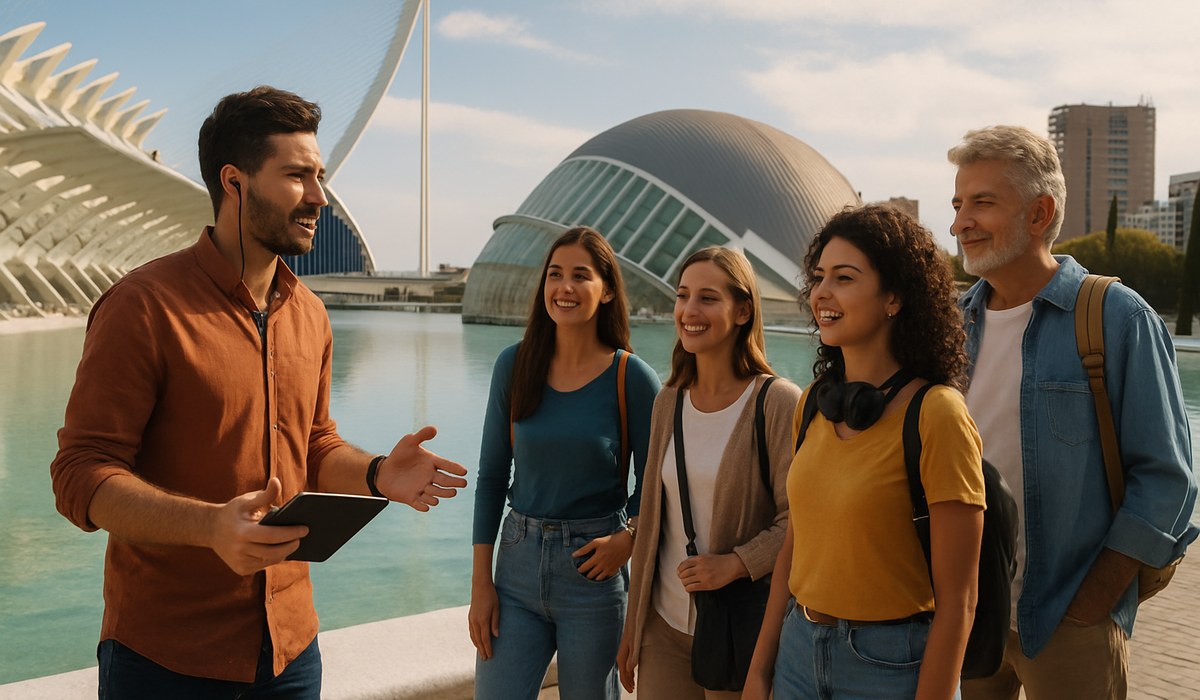
Image generated by AI
Quick Summary • Valencia's tour operators are forging direct partnerships with independent hotels, bypassing traditional wholesaler channels • AI-powered itinerary platforms allow real-time customization while maintaining intimate group sizes under 18 travelers • Hotels report 23% higher per-room revenue from multi-day tour bookings compared to independent leisure travelers • The model positions accommodation as the centerpiece of the experience rather than a functional necessity
While Barcelona and Madrid battle overtourism, Valencia has quietly become Spain's testing ground for a smarter kind of group travel—one where technology meets intimacy and hotels play a starring role. The city's multi-day tour operators are redefining Spanish group travel by combining boutique hotel partnerships with AI-driven itinerary customization, setting a blueprint for the European tourism industry.
Spain's third-largest city is witnessing a fundamental shift in how tour companies approach accommodation. Rather than negotiating bulk rates with chain properties, Valencia-based operators now collaborate directly with design-forward boutiques and heritage conversions. These partnerships transform hotels from overnight stopping points into curated cultural anchors.
Tour operator Rutas Valencianas has secured exclusive arrangements with eight independent properties across the city's Ciutat Vella and Russafa neighborhoods. Managing Director Isabel Martínez reports that participating hotels now dedicate 35% of inventory to small-group bookings during spring and autumn shoulder seasons. "We're not filling rooms," Martínez explains. "We're co-creating experiences where the hotel architecture, culinary program, and neighborhood context become integral to the itinerary narrative."
This approach mirrors broader European hospitality trends. Similar to how Hotel Sacher Vienna's anniversary celebrations emphasize heritage storytelling and Faena's cultural expansion model positions properties as cultural destinations, Valencia's tour-hotel partnerships elevate accommodation beyond transactional lodging.
How Valencia's Small-Group Tours Are Reshaping Hotel Partnerships
Traditional group travel saturated Spain's hotel market with coach tours demanding 40-plus rooms at discounted rates. Valencia's emerging model flips that equation. Tours now cap participation at 16-18 travelers, allowing partnerships with properties featuring 25-50 rooms that previously couldn't accommodate conventional groups.
The Hospes Palau de la Mar, a 66-room five-star conversion of a 19th-century palace, exemplifies this shift. General Manager Enrique Soler notes the property has restructured contracts to prioritize quality over volume. "We've reduced total group allocations by 30% but increased related revenue by 41%," Soler states. "Small-group tour guests spend more on spa services, private dining experiences, and room upgrades."
According to STR performance data, Valencia hotels working with multi-day tour operators recorded average daily rates 18 euros higher than market average during Q1 2026. Revenue per available room climbed 23% compared to properties relying solely on independent bookings. The data reveals tour guests extend stays by an average of 1.3 nights beyond organized itineraries, generating additional direct booking revenue.
This financial performance has attracted attention from luxury hospitality consultants. Forbes Travel Guide reports that three Valencia properties elevated to four-star status in their 2026 ratings specifically cited tour operator partnerships as evidence of service innovation. Inspectors noted how hotels developed specialized concierge protocols, flexible dining schedules, and staff training programs tailored to small-group dynamics.
The city's hotel association now runs quarterly workshops connecting independent properties with tour operators. Thirty-two hotels participated in March 2026 sessions focused on contract structures, revenue management strategies, and guest experience integration.
Technology Integration: From Booking Platforms to Personalized Guest Experiences
Valencia's travel valencia leads innovation extends beyond partnership models into sophisticated technology deployment. Tour operators have invested heavily in proprietary platforms that merge itinerary flexibility with accommodation coordination.
Mediterranean Explorer Tours launched its "Adaptive Itinerary Engine" in January 2026. The system uses machine learning algorithms to analyze guest preferences captured during booking, then automatically adjusts daily schedules, restaurant reservations, and hotel amenity requests. Co-founder David Chen describes the platform as "mass customization at boutique scale."
The technology directly impacts hotel operations. Properties receive detailed guest profiles 72 hours before arrival, including dietary restrictions, accessibility requirements, mobility preferences, and interest areas. Hotel Palacio Vallier implemented a tablet-based concierge system that syncs with tour operator platforms, allowing real-time itinerary modifications that automatically update hotel services.
"A guest can decide over breakfast to skip the morning museum visit and book a cooking class instead," explains Vallier's digital experience manager Laura Giménez. "Our system immediately adjusts their room departure time, arranges late checkout if needed, and notifies our culinary team to prepare ingredients for an afternoon session."
This technological embrace addresses challenges highlighted in Spain's recent travel disruptions. When transport strikes affected March 2026 schedules, Valencia tour operators used their platforms to instantly reconfigure itineraries, rebook hotel nights, and communicate changes to travelers and accommodation partners simultaneously. What might have resulted in cancellations instead became an operational advantage.
Booking platforms now feature "hotel experience modules" where properties showcase signature programs. Casa Bárbara, a 12-room boutique in El Carmen, promotes its rooftop paella workshops and wine cellar tastings as bookable add-ons during the reservation process. Revenue from these experiences now accounts for 19% of the property's total income.
The Hotel Revenue Model: Why Multi-Day Tours Outperform Traditional Bookings
The financial case for hotel participation in Valencia's small-group tour ecosystem rests on three pillars: higher spending, operational predictability, and extended guest lifecycles.
Independent travelers in Valencia spend an average of 127 euros daily beyond accommodation costs, according to regional tourism board figures. Multi-day tour guests spend 162 euros daily when hotel-partnered experiences are included. This 28% premium comes from pre-arranged activities, on-site dining commitments, and ancillary services integrated into tour packages.
Operational predictability delivers hidden value. Hotels know exact arrival dates, group sizes, and special requirements weeks in advance. This visibility reduces labor scheduling uncertainty and allows precise inventory management. The Westin Valencia reports 15% lower housekeeping overtime costs and 22% reduction in front desk peak-hour staffing needs since implementing structured tour partnerships.
The extended lifecycle component proves most valuable long-term. Tour operators provide hotels with CRM data enabling post-stay marketing. Properties can offer return-visit incentives, promote sister properties, and build direct relationships that bypass OTA commissions.
Hotel Sorolla Palace tracked 340 guests who first stayed via tour operators during 2025. Of those, 73 returned for independent stays within twelve months, generating 892 room nights and 143,000 euros in direct booking revenue. General Manager Patricia Ruiz emphasizes this conversion rate: "Tour partnerships have become our most effective customer acquisition channel."
What This Means for Travelers: Boutique Experiences at Scale
For travelers, Valencia's charge toward technology-enabled small-group tours delivers contradictory benefits: the social dynamics and logistical convenience of group travel combined with personalization previously available only to independent explorers.
March 2026 itineraries showcase this balance. A typical six-day Valencia program might include shared cultural activities—guided tours of the City of Arts and Sciences, group paella-making sessions, or scheduled transfers—while offering individualized hotel experiences, flexible free time, and customizable add-ons.
Pricing reflects the boutique approach. Multi-day Valencia tours now range from 1,850 to 3,200 euros per person for six-night programs, roughly 35% above conventional coach tour equivalents but 20% below independent travel costs when comparable hotels and private guides are factored.
Accessibility improvements represent another traveler benefit. Small-group models allow hotels to meet diverse needs impossible with 40-person contingents. The Caro Hotel, occupying a restored medieval palace with architectural constraints, can accommodate wheelchair users and travelers with mobility devices when groups remain under 16. Larger traditional tours couldn't utilize the property.
Tour operators report shifting demographics. While retirees remain core customers, professionals aged 35-54 now represent 42% of bookings, drawn by the efficiency of pre-arranged logistics combined with flexibility that doesn't sacrifice personal autonomy.
American travel advisor network Virtuoso noted in its March 2026 trend report that Valencia inquiries increased 67% year-over-year, with multi-day small-group tours specifically requested by clients seeking "curated experiences without cruise-ship crowds."
FAQ
How many travelers typically join Valencia's small-group tours? Most Valencia tour operators cap groups at 16-18 participants. This size maintains intimate dynamics while allowing hotels to dedicate specific floors or wings to tour groups, creating community without overwhelming independent guests.
Do these tours cost more than traditional group travel options? Yes, typically 30-40% more than conventional coach tours. However, they include boutique accommodation, personalized experiences, and flexibility that significantly reduce costs compared to planning equivalent independent travel with private guides and premium hotels.
Can travelers extend their hotel stays before or after the tour? Absolutely. Hotels actively encourage extensions, often offering discounted rates for pre- or post-tour nights. Tour operators coordinate these arrangements during booking, and hotel technology platforms sync individual travel dates with group itineraries.
What happens if someone needs to modify their itinerary mid-tour? Valencia's tour operators use real-time platforms allowing same-day changes. Hotels receive automatic notifications when guests alter schedules, adjusting services accordingly. This flexibility proved essential during recent transport disruptions across Spain.
Are these tours suitable for solo travelers or only couples and groups? Solo travelers represent about 28% of participants. Small group sizes facilitate connections, and hotels often arrange shared experiences like cooking classes or wine tastings that create natural social opportunities without forced interaction.
Related Articles:
Disclaimer
This article is for informational and educational purposes only. It does not constitute legal, financial, or professional advice. While we strive to provide accurate and up-to-date information, travel policies, regulations, and conditions change rapidly. Always verify information with official sources before making travel decisions. Nomad Lawyer makes no representations about the accuracy, reliability, completeness, or suitability of the information provided. Readers should consult qualified professionals for advice specific to their circumstances. The views expressed in this article are those of the author and do not necessarily reflect the views of Nomad Lawyer.
Raushan Kumar
Founder & Lead Developer
Full-stack developer with 11+ years of experience and a passionate traveller. Raushan built Nomad Lawyer from the ground up with a vision to create the best travel and law experience on the web.
Learn more about our team →