
Car-Free Autumn Foliage Guide 2026: Scenic Amtrak Routes, Hudson River Trains, and Urban Forest Escapes

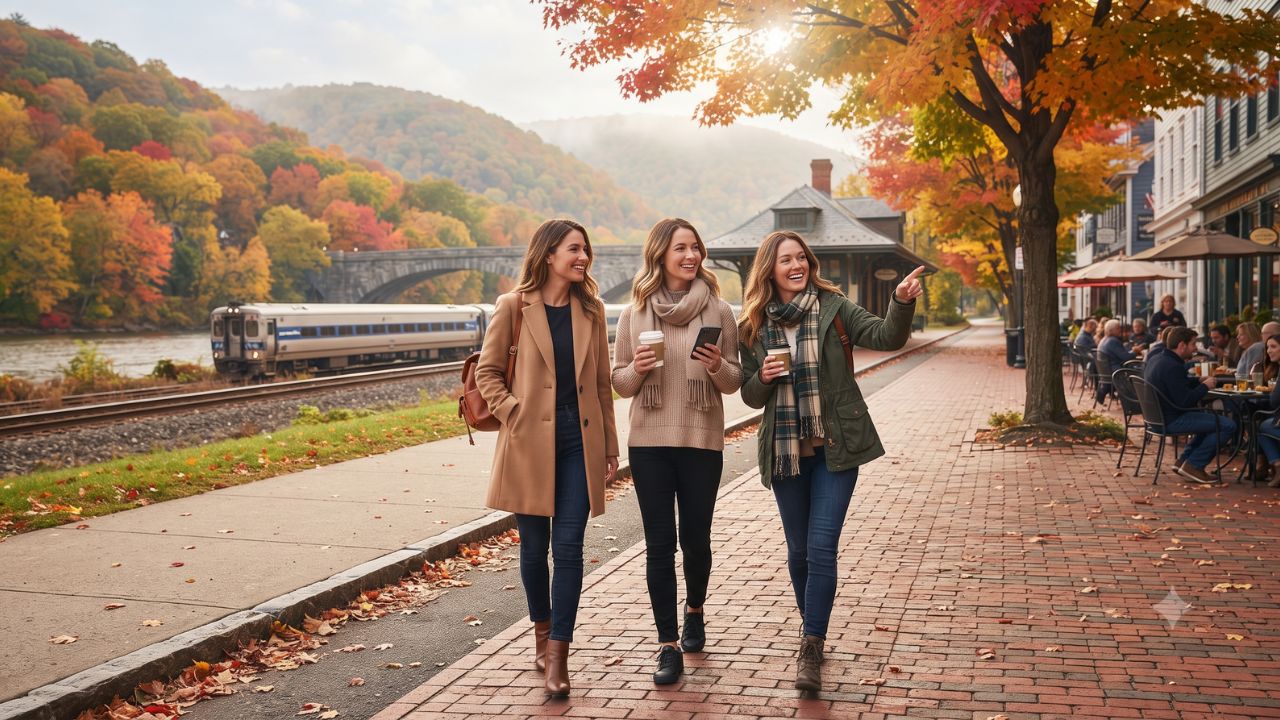
While millions of travelers assume experiencing peak New England and Hudson Valley autumn foliage requires fighting highway gridlock and rental car surcharges, America's most vivid seasonal corridors are directly accessible via historic commuter rails and intercity train lines. Stepping aboard a passenger car in Manhattan, Boston, or Philadelphia allows travelers to swap bumper-to-bumper mountain traffic for panoramic window views of golden river valleys, forested gorges, and walkable historic villages without once getting behind the wheel.
Relying on public transit for seasonal leaf-peeping is not simply an exercise in budget efficiency—it fundamentally changes the rhythm of autumn travel. Instead of navigating winding mountain passes or circling overcrowded trailhead parking lots, train-based travelers glide directly into riverside depots where Main Street cafés, historic iron foundries, and contemporary art galleries sit within comfortable walking distance. From the Hudson Highlands to the rolling hills of Vermont and coastal Maine, strategic rail planning unlocks rich seasonal experiences across the eastern and western United States.
The Transit Transformation: Rail Corridors Connecting Urban Hubs to Autumn Forests
The traditional American autumn getaway has long been synonymous with highway road trips. However, expanding transit schedules and integrated regional bus networks have made car-free autumn journeys one of the most rewarding ways to experience the seasonal canopy. Major rail operators like Amtrak and regional authorities such as the Metropolitan Transportation Authority (MTA) operate lines where the journey itself delivers breathtaking views of turning sugar maples, scarlet oaks, and yellow birches.
In New York, the Metro-North Hudson Line provides the quintessential car-free escape from Grand Central Terminal. Hugging the eastern bank of the Hudson River, trains pass beneath steep granite cliffs and fiery forested hills. Passengers disembarking at Cold Spring step out within yards of the waterfront, gazing across the river at Storm King Mountain before strolling down a historic 19th-century Main Street packed with independent coffee roasters, antique shops, and the woodland trails of the West Point Foundry Preserve. One stop further north, the city of Beacon pairs riverside foliage with world-class contemporary art at Dia Beacon, located inside a converted Nabisco box-printing factory a short stroll from the platform.
Heading deeper into New England, the daily Amtrak Vermonter links Washington, D.C., New York City, and Massachusetts with the Green Mountain State. The train terminates in northern Vermont, stopping along the way in Brattleboro. Positioned along the Connecticut River, Brattleboro features a compact, pedestrian-friendly downtown anchored by the Brattleboro Museum & Art Center and the historic Art Deco Latchis Theatre. International and domestic visitors alike can take the train directly into town, avoiding vehicle rental fees while watching farm valleys and wooden covered bridges drift past their window.
USA CAR-FREE AUTUMN FOLIAGE TRANSIT MATRIX 2026
| Entity / Facility | Delays | Cancellations | Details |
|---|---|---|---|
| Destination | State / Region | Transit Line / Station | Walkable Highlights |
| Cold Spring | New York (Hudson) | Metro-North Hudson Line | Main St, Foundry Preserve |
| Beacon | New York (Hudson) | Metro-North / Loop Bus | Dia Beacon, galleries |
| Brattleboro | Vermont | Amtrak Vermonter | Main St, Latchis Theatre |
| Portland | Maine | Amtrak Downeaster | Old Port, Eastern Prom |
| Old Orchard & Saco | Maine (Coast) | Amtrak Downeaster | Quiet seaside & trails |
| Wissahickon Valley | Pennsylvania | SEPTA Rail / Route 9 Bus | Forbidden Drive, bridges |
| Arnold Arboretum | Massachusetts | MBTA Orange Line (Forest H) | Global tree collections |
| Laurelhurst Park | Oregon (Portland) | TriMet Light Rail / Bus | Urban canopy, Hawthorne |
| The 606 Trail | Illinois (Chicago) | CTA Blue Line (Damen/West) | Elevated trail, dining |
What Makes Regional Train Foliage Routes Distinct
Further north along the Atlantic coast, the Amtrak Downeaster departs Boston's North Station and curves through coastal New Hampshire into Maine, stopping at the Portland Transportation Center. From the station, local transit buses and rideshares connect visitors to Portland's historic Old Port district. Travelers can spend the morning walking along cobblestone wharves, sampling fresh Maine lobster rolls, and taking in panoramic harbor foliage along the Eastern Promenade before boarding a Casco Bay Lines ferry to view colorful island shorelines from the water.
Major metropolitan centers also offer immersive forest escapes that require nothing more than a subway swipe. In Boston, the Arnold Arboretum of Harvard University is directly accessible via the MBTA Orange Line at Forest Hills station. Covering 281 acres of curated botanical collections, the free-admission arboretum showcases thousands of tree species from around the globe, allowing visitors to combine historic city sights with vibrant autumn nature on the same afternoon.
In Philadelphia, SEPTA regional trains and the Route 9 bus deliver travelers directly to Wissahickon Valley Park. The park features Forbidden Drive, a car-free gravel path winding beside forested schist cliffs, historic stone arch bridges, and rushing creeks that feels completely removed from the surrounding metropolis. Out west, Portland, Oregon, connects travelers via TriMet light rail to Laurelhurst Park and surrounding tree-lined neighborhoods, while Chicago's elevated rail trail, The 606, accessed via the CTA Blue Line at Damen or Western, offers elevated views of turning urban canopies connecting Wicker Park and Logan Square.
Visitor Insider Tips
- Booking Peak Weekend Train Seats: High-demand foliage departures on the Amtrak Vermonter and Metro-North Hudson Line sell out weeks in advance for mid-October weekends. Book off-peak morning departures on Tuesdays or Thursdays to secure quiet window seats on the river side of the train.
- Navigating Rural Trailheads Without Cars: While villages like Cold Spring and Brattleboro are fully walkable, mountainous trailheads outside town limits lack frequent bus services. Stick to centrally accessible nature paths, such as the West Point Foundry Preserve in Cold Spring or the Eastern Promenade in Portland, unless you have scheduled a local taxi in advance.
- Monitoring Leaf-Peeping Windows: Peak color shifts annually depending on seasonal rainfall, nighttime frost, and wind. Check official state foliage tracking maps 48 hours prior to departure rather than relying on historical averages, and adjust your rail itinerary north or south accordingly.
- Pack for Changing Microclimates: Valley floors and shaded riverbanks experience rapid temperature drops once the sun dips behind the hills. Carry a compact insulated layer, a waterproof shell, and sturdy walking shoes suitable for damp, leaf-covered paths.
Cultural and Environmental Context
Choosing train travel over private motor vehicles reduces the seasonal environmental footprint on small rural communities. During peak foliage weeks, historic New England and Hudson Valley towns face severe road congestion, parking shortages, and vehicle emissions that strain local infrastructure.
Rail-based tourism directs visitor spending straight into downtown businesses, historic theatres, and local family-run eateries while leaving delicate mountain roads clear. Furthermore, state conservation agencies and regional park trusts rely on visitor awareness to protect historic landmarks, maintain trail corridors, and preserve mature forest ecosystems that support regional biodiversity against climate pressures.
FAQ: Visiting USA Foliage by Train 2026
What is the most scenic train route for autumn foliage in the Northeast?
The Metro-North Hudson Line from New York City to Poughkeepsie and the Amtrak Vermonter through Connecticut, Massachusetts, and Vermont offer the most scenic rail foliage views in the country.
Are the parks and arboretums along these transit lines free to enter?
Yes. The Arnold Arboretum in Boston, Wissahickon Valley Park in Philadelphia, and The 606 trail in Chicago are completely free to access year-round.
How do I get to Dia Beacon without a car?
Take the Metro-North Hudson Line from Grand Central Terminal to Beacon Station. Dia Beacon is located just a five-minute walk from the station exit.
Can I bring a bicycle on foliage trains?
Metro-North, Amtrak Downeaster, and Amtrak Vermonter permit bicycles onboard with specific bike reservations or off-peak bicycle passes, making rail-and-trail cycling seamless.
Riding the rails through fiery river valleys proves that the most serene way to witness America's autumn transformation is from the quiet comfort of a train window.
Related Travel Guides
- Miami Cruise Theme Parks Guide 2026: Rollercoasters and Five-Year Passenger Data
- St. Pete-Clearwater Travel Guide 2026: Paid Creator Residency and Cultural Escapes
- USA Winter Sun Travel Guide 2026: Florida, Hawaii, and Desert Getaways
- Las Vegas Travel Guide 2026: The Haunted Inn at Palms and Desert Escapes
Disclaimer
This article is for informational and educational purposes only. It does not constitute legal, financial, or professional advice. While we strive to provide accurate and up-to-date information, travel policies, regulations, and conditions change rapidly. Always verify information with official sources before making travel decisions. Nomad Lawyer makes no representations about the accuracy, reliability, completeness, or suitability of the information provided. Readers should consult qualified professionals for advice specific to their circumstances. The views expressed in this article are those of the author and do not necessarily reflect the views of Nomad Lawyer.
Raushan Kumar
Founder & Lead Developer
Full-stack developer with 11+ years of experience and a passionate traveller. Raushan built Nomad Lawyer from the ground up with a vision to create the best travel and law experience on the web.
Learn more about our team →