
Severe US Weather Triggers Mass Flight Disruptions: 200 Cancellations, 2,285 Delays Impact Thousands
Severe thunderstorms, damaging winds, and hail disrupt thousands of US passenger flights as major airlines cancel 200 flights and delay 2,285 more across LaGuardia, Chicago O'Hare, Atlanta, and other key hubs.

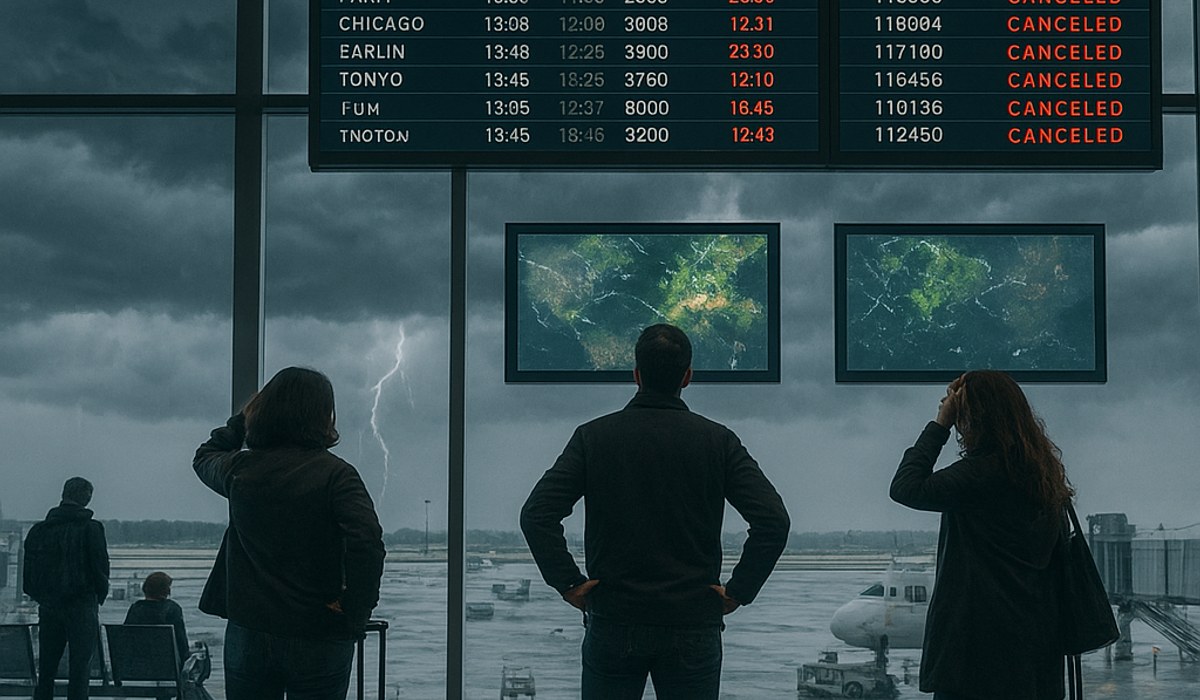
Image generated by AI
QUICK SUMMARY
- Severe weather triggers massive disruptions across US airports with 200 flight cancellations
- 2,285 flight delays reported as thunderstorms, hail, and damaging winds spread nationwide
- LaGuardia leads cancellations with 136 cancelled flights and 195 delays
- Southwest Airlines most affected with 285 flight delays; Republic Airlines reports 72 cancellations
Widespread Weather Crisis Grounds Hundreds of Flights Across America
Severe weather conditions have brought air travel chaos to the United States, forcing carriers to cancel 200 flights and delay thousands more. Thunderstorms featuring large hail, violent wind gusts, and isolated tornadoes are battering major aviation hubs from coast to coast. For travelers, the disruptions mean hours of waiting, rebooking nightmares, and significant travel delays during what should be routine journeys across the country.
The National Weather Service has issued multiple severe storm warnings as atmospheric conditions continue deteriorating across the nation. Ground delays, runway obstructions, and equipment challenges at key airports have compounded the crisis, leaving passengers stranded and frustrated.
The Scale of Disruption: By the Numbers
The numbers paint a stark picture of the operational crisis unfolding across American aviation infrastructure.
Total Impacts:
- 200 flights cancelled nationwide
- 2,285 flights experiencing delays
- Disruptions affecting all major US carriers
- Impact spanning East Coast through the Southwest
The disruptions began spreading as weather systems moved across multiple regions simultaneously. No single airport bore the entire burden—instead, the crisis scattered across a geographic network, making recovery difficult. Airlines scrambled to reposition aircraft, rebook passengers, and manage cascading delays that extended well beyond the initial storm windows.
Which Airports Are Hardest Hit?
LaGuardia Airport in New York dominates the cancellation statistics with 136 flights cancelled and 195 additional delays. The airport's congestion, combined with unfavorable weather approaching from the west, created perfect conditions for operational failure. Chicago O'Hare reported 12 cancellations paired with 199 delays—demonstrating the city's status as a major connecting hub where weather impacts propagate across the entire network.
Major Airport Impact Summary:
| Airport | Cancelled | Delayed |
|---|---|---|
| LaGuardia (LGA) | 136 | 195 |
| Chicago O'Hare (ORD) | 12 | 199 |
| Boston Logan (BOS) | 16 | 84 |
| Fort Lauderdale (FLL) | 13 | 109 |
| Charlotte/Douglas (CLT) | 8 | 104 |
| Raleigh-Durham (RDU) | 12 | 37 |
| Hartsfield-Jackson Atlanta (ATL) | 6 | 87 |
| Philadelphia (PHL) | 5 | 49 |
Secondary airports including San Francisco (59 delays), Denver (42 delays), and Newark (27 delays) also experienced significant disruption. The geographic spread demonstrates how modern aviation networks amplify individual weather events into national crises—when one hub backs up, connecting flights throughout the system feel the ripple effects.
Which Airlines Are Suffering Most?
Specific carriers absorbed disproportionate damage based on operational patterns and fleet positioning.
Republic Airlines faces the worst cancellation ratio with 72 cancelled flights against 84 delays. The regional carrier operates routes many major airlines depend on for their networks—meaning disruptions to Republic cascaded beyond their direct passengers. Spirit Airlines reported 17 cancellations with 85 delays, while Endeavor Air (operating as Delta Connection) cancelled 37 flights.
Airline-by-Airline Breakdown:
| Airline | Cancelled | Delayed |
|---|---|---|
| Republic | 72 | 84 |
| Endeavor Air | 37 | 33 |
| Spirit | 17 | 85 |
| United | 10 | 194 |
| Southwest | 7 | 285 |
| Alaska | 7 | 69 |
| Delta | 5 | 140 |
| American | 4 | 281 |
| Frontier | 5 | 34 |
| JetBlue | 2 | 75 |
Southwest Airlines accumulated the highest delay count with 285 delayed flights, reflecting the carrier's high-frequency operation model. American Airlines similarly reported 281 delays despite only 4 cancellations—suggesting crews pushed through despite weather challenges. United's 194 delays indicate the carrier's reliance on connecting architecture where individual airport closures multiply impacts across the system.
Specific Airport Delay Reasons Explained
Different airports faced distinct operational challenges driven by weather manifestations and infrastructure limitations.
LaGuardia experienced 207-minute ground delays due to runway and taxiway flooding from heavy precipitation. The airport's aging infrastructure and limited expansion capacity made recovery slower than modern hubs. Orlando International issued 15-minute departure delays tied to terminal operations—suggesting weather-related passenger congestion more than direct runway impact. Miami International faced runway obstructions requiring debris clearance before safe aircraft movement.
San Francisco reported 48-minute ground delays from ongoing runway construction combined with 15-minute departure delays. The airport's constrained runway layout meant that storm-related capacity reductions had outsized effects. San Diego International imposed 60-minute departure delays from compressed demand—the airport's single arrival runway meant that delays cascaded as new aircraft were prevented from landing.
What This Disruption Means for Travelers
Passengers caught in today's chaos face multiple immediate challenges: rebooking backlogs, hotel accommodation searches at peak demand, and uncertain timeline predictions. Most airlines' automatic rebooking systems became overwhelmed when 200-plus flights cancelled simultaneously.
Immediate Actions Affected Travelers Should Take:
- Monitor real-time updates: Flight tracking apps and airline websites provide more current information than customer service phone lines
- Contact airlines directly: Social media, app chat functions, and text alerts often connect faster than phone systems (which experience hour-long wait times during crises)
- Document everything: Screenshot cancellation confirmations and delay notifications for potential compensation claims
- Consider alternate airports: Flying out of less-impacted hubs 50-100 miles away sometimes enables onward connections within hours rather than days
- Manage expenses: Most US airlines now provide hotel and meal vouchers for weather-related delays exceeding specific thresholds
Weather-related disruptions fall under "acts of God" provisions in airline contracts, meaning carriers have no legal compensation obligations under US regulations. However, airlines often provide meals, hotel stays, and transportation during extended weather delays to manage customer relations.
How Weather Impacts Aviation Infrastructure
Modern commercial aviation operates on razor-thin margins. Airports schedule flights based on theoretical maximum capacity during perfect weather. When storms reduce visibility, crosswind limits tighten, or precipitation complicates braking distances, runways immediately operate below theoretical capacity.
Overnight reduction from 100% to 60% runway capacity forced 40% fewer aircraft movements, but the flying public's expectations remained unchanged. Every delayed inbound flight means an outbound aircraft sitting idle—crew limits kick in, spare aircraft get consumed, and within hours, the entire network becomes congested.
What Comes Next?
The National Weather Service predicts continued severe weather potential through the next 48 hours. Airlines are already planning selective flight cancellations to preserve network integrity rather than cancelling flights reactively as disruptions cascade. Some carriers are waiving change fees, allowing passengers to rebook on different dates without penalties.
Recovery Timeline:
- Immediate: 24-48 hours for severe weather to clear
- Short-term: Airlines will require 18-36 hours to reposition aircraft and catch up on cancellations
- Full recovery: Expect 3-5 days before schedule normalization
Passengers with flexibility should strongly consider delaying travel to April 2-3, when weather systems clear and airlines restore normal operations. Those unable to delay should arrive at airports extremely early and maintain patience through inevitable queues.
FAQ: Traveler Questions About Weather Disruptions
Q: Am I eligible for compensation if my flight is cancelled due to severe weather? A: No. US Department of Transportation regulations classify severe weather as force majeure—airlines have no legal compensation obligations when weather causes cancellations. However, carriers must provide meals, hotels, and transportation during extended delays (policies vary by airline).
Q: Can I get a refund instead of rebooking on another flight? A: Airlines typically offer rebooking before refunds during weather events. You can request refunds, but carriers often require formal requests and may process them over weeks or months.
Q: What if my connecting flight is missed due to a weather delay? A: The airline must rebook you on the next available flight to your destination, even if it's with a competing carrier. Provide documentation of the original weather delay to speed processing.
Q: Are standby/standby pass rates better for weather-disrupted routes? A: Yes—disrupted routes often see lower fares 1-2 days post-weather as airlines add extra flights and seats to recover schedule. Monitor fares 36-48 hours after conditions clear for better prices.
Severe weather remains one of aviation's most disruptive forces, capable of cascading impacts far beyond the specific regions experiencing thunderstorms. As weather patterns grow more volatile, travelers flying through the US should increasingly plan buffer time between connections and monitor meteorological forecasts before committing to tight schedules.
Disclaimer
This article is for informational and educational purposes only. It does not constitute legal, financial, or professional advice. While we strive to provide accurate and up-to-date information, travel policies, regulations, and conditions change rapidly. Always verify information with official sources before making travel decisions. Nomad Lawyer makes no representations about the accuracy, reliability, completeness, or suitability of the information provided. Readers should consult qualified professionals for advice specific to their circumstances. The views expressed in this article are those of the author and do not necessarily reflect the views of Nomad Lawyer.
Raushan Kumar
Founder & Lead Developer
Full-stack developer with 11+ years of experience and a passionate traveller. Raushan built Nomad Lawyer from the ground up with a vision to create the best travel and law experience on the web.
Learn more about our team →