
US National Parks Campfire Ban 2026: Black Hills Joins Yosemite, Yellowstone, Olympic, Mount Rainier and North Cascades in New Fire Restrictions as Wildfire Risk Hits Critical Levels
Black Hills National Forest has joined a growing coalition of US national parks enforcing strict campfire bans as dry conditions, human negligence, and rising wildfire risk force authorities to act. Here is everything adventure tourists need to know.

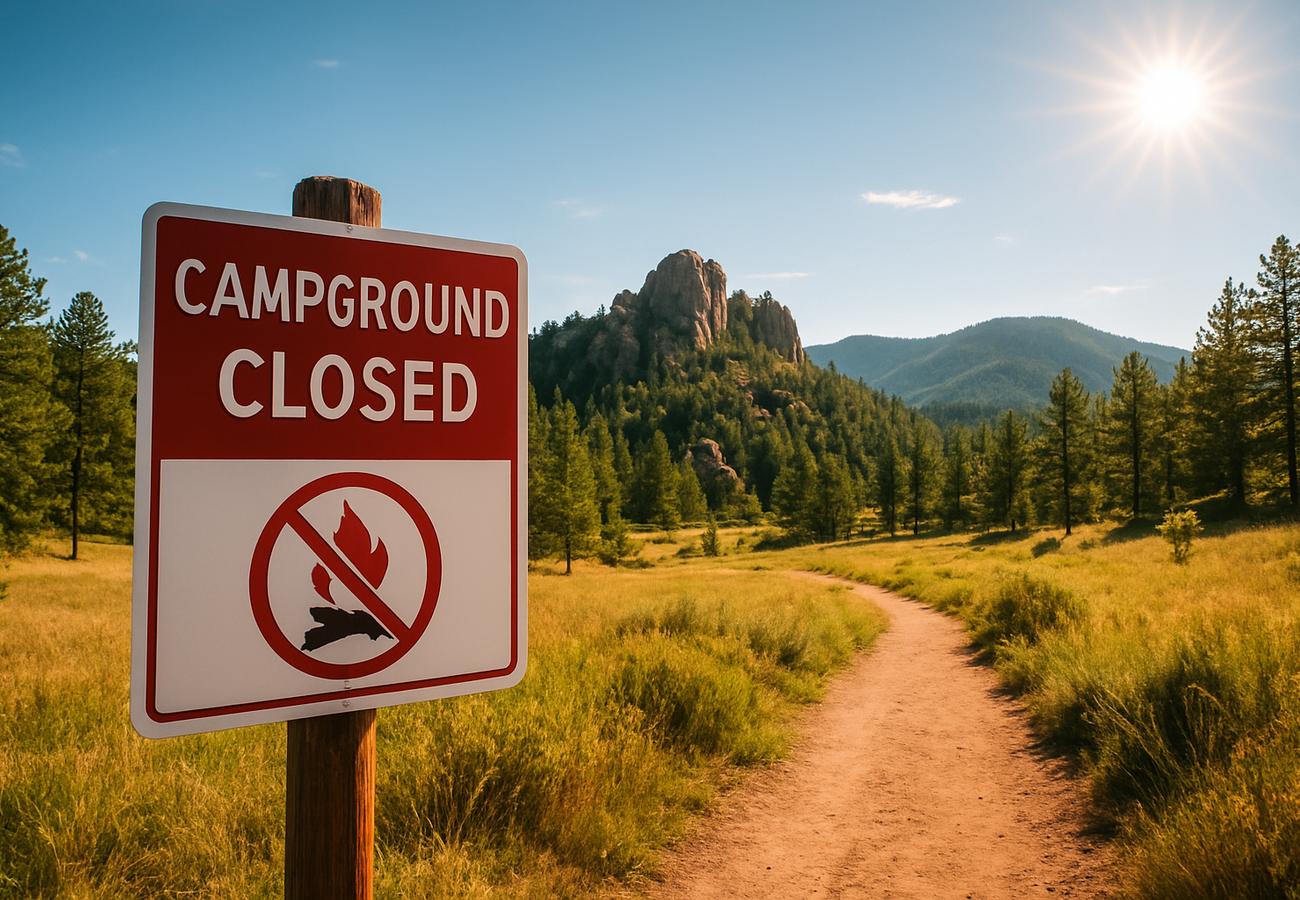
Image generated by AI
US National Parks Campfire Ban 2026: Black Hills Joins Yosemite, Yellowstone, Olympic, Mount Rainier and North Cascades in New Fire Restrictions as Wildfire Risk Hits Critical Levels
Adventure Tourists Face Sweeping New Rules as Human Activity and Dry Conditions Push Authorities Across America's Most Beloved Parks to Issue Urgent Fire Bans Before Peak Season
RAPID CITY, South Dakota — The summer of 2026 is shaping up to be one of the most strictly regulated wildfire seasons in the history of American national parks. Black Hills National Forest has officially joined a rapidly expanding coalition of US national parks and forests enforcing firm campfire restrictions, as dry vegetation, shifting climate conditions, and a troubling surge in human-caused ignitions have pushed fire authorities to intervene before the peak travel season ignites — literally. From the granite valleys of Yosemite to the geothermal wilderness of Yellowstone, and now into the rugged pine highlands of South Dakota's Black Hills, park authorities are sending a unified message to the millions of adventure tourists planning summer visits: the rules have changed, and compliance is not optional.
!A No Campfires warning sign posted at the entrance of Black Hills National Forest, surrounded by dense pine trees under clear blue skies. Fire restriction signs are going up across Black Hills National Forest as 2026 wildfire season approaches.
Why Black Hills Is Now Enforcing Campfire Restrictions
The Black Hills National Forest Fire Protection District has implemented strict campfire restrictions following a sharp escalation in human-caused fire incidents. Officials monitoring fire activity through the US Forest Service confirm that dry vegetation and seasonal climatic conditions are creating an unusually volatile wildfire environment across the region.
The primary culprits are depressingly familiar: unattended campfires, improperly discarded cigarette butts, vehicle exhaust heat igniting dry grass, and sparks from poorly maintained equipment or unsecured trailer chains.
According to the US Forest Service, even something as minor as a malfunctioning spark arrester on a vehicle can trigger a catastrophic wildfire in these conditions. The risks are not theoretical — fire officials are responding to ignition incidents at a pace that has demanded immediate action.
What Visitors Are — and Are Not — Allowed to Do
For travelers visiting Black Hills National Forest in 2026, the rules are clear:
- Campfires ARE permitted only in designated areas equipped with established metal grates or fire rings within the Black Hills Forest Fire Protection District.
- Open fires outside designated zones are strictly prohibited — no exceptions.
- Visitors must follow all guidelines issued through the National Wildfire Coordinating Group for safe recreational practices.
- All campfires must be completely extinguished — cold to the touch — before leaving the site. Residual heat can reignite a fire hours later.
Additional requirements include avoiding parking vehicles in tall grass, verifying that all machinery has proper spark control systems, and consulting fire safety checklists available through Smokey Bear fire prevention resources before entering forest land.
The Penalties for Non-Compliance Are Severe
Violating campfire restrictions carries consequences that have been deliberately designed to deter negligence. Offenders face:
- Significant financial fines
- Potential imprisonment
- Personal liability for all wildfire damage costs
Enforcement authority is backed by regulations maintained by the US Department of Agriculture, and park officials have made clear that rangers will be actively patrolling high-risk zones throughout the season.
Why Campfire Bans Are Spreading Across All Major US National Parks
Black Hills is not acting alone. The campfire restriction wave is a national phenomenon, driven by three compounding pressures.
Climate Change and Prolonged Drought: Extended dry seasons are desiccating forest undergrowth that would otherwise be too moist to ignite easily. The National Park Service confirms in its latest official updates that human-caused fires remain the dominant threat to park ecosystems, exacerbated by increasingly extreme and unpredictable drought conditions.
Surging Visitor Numbers: Post-pandemic travel demand has pushed visitor counts to record highs across parks like Yosemite and Yellowstone. More visitors mean a statistically higher risk of accidental ignitions from unattended flames or improperly discarded embers.
Ecosystem Fragility: The combined pressure of climate stress and record visitation is making forest ecosystems increasingly vulnerable. Park authorities are no longer treating restrictions as a temporary measure — they are becoming a permanent feature of responsible park management.
!Yosemite Valley with a faint haze of wildfire smoke drifting across El Capitan and Half Dome, amber sunlight filtering through the smoke. Wildfire smoke has become an increasingly common sight over iconic Yosemite Valley during summer months.
US National Parks Campfire Restrictions — 2026 Reference Table
| National Park | Fires Allowed? | Where Permitted | Key Restrictions | Primary Reason |
|---|---|---|---|---|
| Black Hills NF | Limited | Designated metal rings/grates only | All open fires outside zones banned | Dry conditions, human ignitions |
| Yosemite NP | Limited | Designated fire rings in campgrounds | Banned above 9,600 ft; restricted near water | Alpine ecosystem protection, wildfire risk |
| Yellowstone NP | Limited | Campgrounds and picnic areas only | Must be attended; cold to touch before leaving | High forest fire vulnerability |
| Olympic NP | Restricted | Below 3,500 ft; some beaches only | Seasonal bans; most backcountry prohibited | Dense forests, summer dryness |
| Mount Rainier NP | Often Restricted | Developed campgrounds only | Frequent seasonal or full bans during fire season | Rising wildfire frequency |
| North Cascades NP | Limited | Designated areas only | Backcountry fire bans common | Remote terrain, fire response challenges |
| Crater Lake NP | Often Restricted | Campgrounds (when permitted) | Total bans during drought or high danger | Dry climate, volcanic terrain |
| Rocky Mountain NP | Limited | Developed campgrounds only | Backcountry mostly banned; wind risk high | High elevation dryness, strong winds |
| Lassen Volcanic NP | Limited | Fire rings and grates only | Restrictions vary by weather/fire danger level | Active volcanic landscape, dry summers |
How Yosemite and Yellowstone Are Enforcing the Rules
The two most visited national parks in the country serve as the template for how fire management is evolving in 2026.
Yosemite limits campfires to designated fire rings and prohibits them entirely above 9,600 feet elevation and near water bodies. With much of Yosemite's backcountry accessible only by trail, firefighting access is severely limited — making prevention the only viable strategy.
Yellowstone requires that fires in its developed campgrounds and picnic areas be monitored continuously. Ashes must be cold before departure, full stop. Rangers conduct regular inspections, and the park has zero tolerance for unattended or improperly extinguished fires.
Olympic National Park enforces elevation-based bans and seasonal restrictions, reflecting how geography directly shapes fire risk — the denser and drier the forest, the more stringent the rules.
!A designated metal fire ring in a Yellowstone National Park campground, completely extinguished with cold white ash, surrounded by forest and a wooden picnic table. The designated fire ring — cold ash, no exceptions — is now the visual symbol of responsible camping in Yellowstone.
What Travelers Are Facing: A New Layered Restriction System
Travelers heading to US national parks in 2026 will encounter a multi-tiered restriction system unlike anything seen in previous seasons:
- Location-based bans: Fires prohibited in backcountry, wilderness, and high-elevation zones regardless of conditions.
- Seasonal bans: Automatic restrictions during peak summer months in fire-prone parks.
- Dynamic bans: Real-time restrictions triggered by weather thresholds — zero notice, total enforcement.
- Complete prohibitions: During the most dangerous conditions, even charcoal grills and propane fire pits may be banned. Gas stoves become the only option.
The US Forest Service publishes real-time fire restriction updates that travelers should check immediately before and during any visit. Conditions can change within hours.
The Future of Campfire Culture in America's National Parks
The tightening of campfire restrictions represents more than a seasonal safety measure — it signals a permanent cultural shift in how Americans experience their national parks.
The traditional campfire, long the centrepiece of outdoor adventure and family holidays, is being gradually but deliberately replaced by a more controlled, regulation-driven model of park access. This is not a sentimental loss but a pragmatic response to environmental reality.
As sustainable tourism principles become embedded in park management policy, the protection of ecosystems is increasingly prioritised over visitor convenience. For the long-term health of forests that millions of people depend on for recreation, clean water, and breathable air, this trade-off is not just defensible — it is essential.
Essential Safety Rules Every Visitor Must Follow
Before entering any national park or forest this season, every traveler should internalise these non-negotiable rules:
- Never leave a fire unattended. Not even for a minute.
- Extinguish until cold. Pour water, stir the ash, pour more water. If it's warm, it's not out.
- Check restrictions before you go. Visit Recreation.gov or the park's official site for current fire status.
- Avoid parking in tall grass. Vehicle heat can ignite dry vegetation underneath the chassis.
- Carry a gas stove. During total bans, it is the only legal option for cooking.
- Report unattended fires immediately. Call 911 or contact the nearest ranger station.
Conclusion: Compliance Is the Only Option
The campfire bans spreading across Black Hills, Yosemite, Yellowstone, Olympic, Mount Rainier, North Cascades, and beyond are not bureaucratic inconveniences — they are urgent, evidence-based responses to a growing national wildfire emergency.
Adventure tourists planning visits to these iconic landscapes in 2026 must adapt their expectations, check real-time conditions before every outing, and treat every fire restriction as an absolute rule, not a suggestion. The forests that make these parks extraordinary are irreplaceable. Once lost to wildfire, they take decades to recover.
Plan smart. Camp responsibly. Check fire restrictions before every trip at your park's official website or at readyforwildfire.org.
FAQ: US National Parks Campfire Bans 2026
Q: Are campfires completely banned in all US national parks in 2026? A: Not entirely. Most parks permit campfires only in designated areas equipped with metal fire rings or established grates. Many backcountry and high-elevation zones face total bans. Restrictions vary by park and update in real time based on weather conditions.
Q: Why is Black Hills National Forest banning campfires? A: Authorities cite a sharp rise in human-caused fire incidents, including unattended fires, discarded cigarettes, and vehicle sparks igniting dry vegetation. Seasonal drought conditions are making the forest exceptionally combustible in 2026.
Q: What happens if I violate campfire restrictions in a national park? A: Violations can result in fines, imprisonment, and personal financial liability for all costs associated with any wildfire caused by the violation. Enforcement is active and strict.
Q: How do I check current campfire restrictions before my visit? A: Visit the official website for your specific national park, the US Forest Service at fs.usda.gov, or Recreation.gov. Fire restriction status updates in real time — always check the day before and the morning of your visit.
Q: Can I use a gas stove during a total campfire ban? A: In most cases, yes — gas-powered camp stoves are generally permitted even during complete fire bans. However, always verify with the specific park authority, as rules can vary during extreme fire danger periods.
Disclaimer
This article is for informational and educational purposes only. It does not constitute legal, financial, or professional advice. While we strive to provide accurate and up-to-date information, travel policies, regulations, and conditions change rapidly. Always verify information with official sources before making travel decisions. Nomad Lawyer makes no representations about the accuracy, reliability, completeness, or suitability of the information provided. Readers should consult qualified professionals for advice specific to their circumstances. The views expressed in this article are those of the author and do not necessarily reflect the views of Nomad Lawyer.
Raushan Kumar
Founder & Lead Developer
Full-stack developer with 11+ years of experience and a passionate traveller. Raushan built Nomad Lawyer from the ground up with a vision to create the best travel and law experience on the web.
Learn more about our team →