
US-Iran Peace Deal Temporarily Halts Gulf Travel Chaos as Australia, Qatar, and UAE Overhaul Travel Warnings to Prevent Massive Flight Cancellations: Latest Airline News
As airlines brace for potential airspace closures, a fragile US-Iran peace understanding triggers a massive travel advisory overhaul across 13 nations to prevent systemic global airport disruptions.

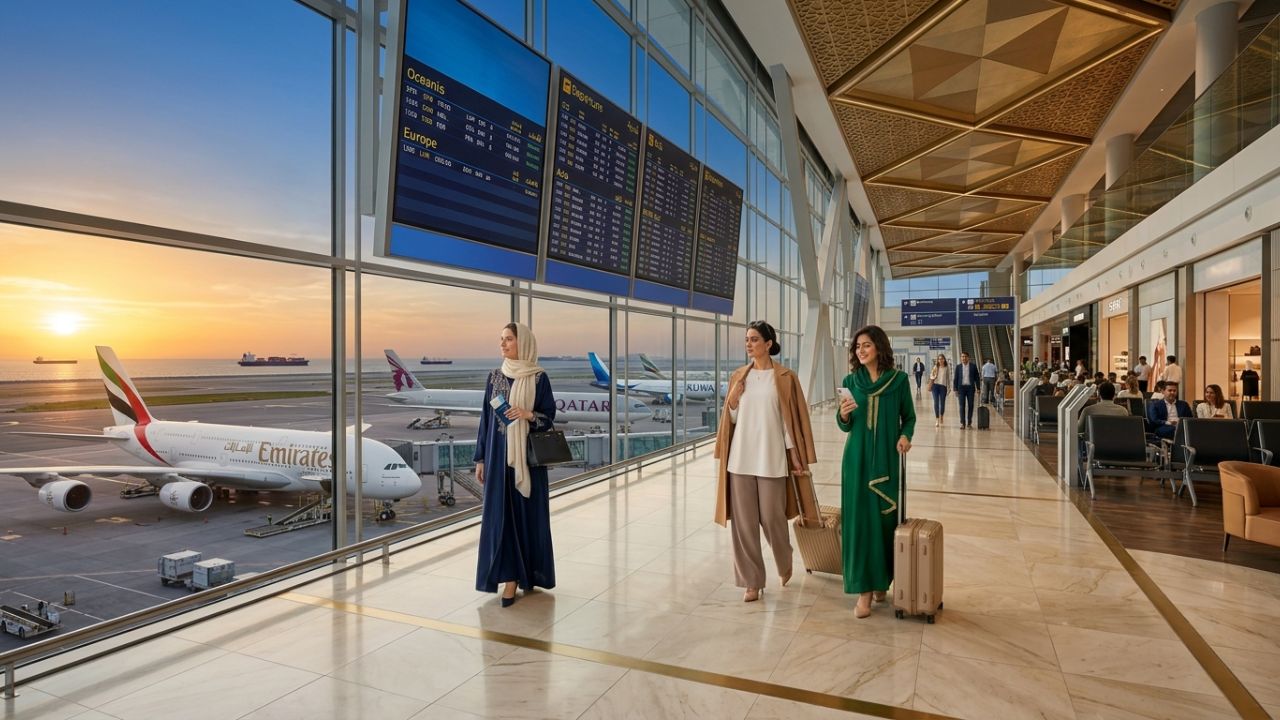
Image generated by AI
In a massive, coordinated diplomatic maneuver explicitly designed to prevent catastrophic travel chaos and systemic global flight cancellations, Australia has formally joined a coalition of nations—including Israel, Lebanon, the UAE, Bahrain, Qatar, and Kuwait—in executing a high-impact travel warning overhaul. The catalyst for this unprecedented geopolitical recalibration is a fragile US–Iran peace understanding that has temporarily stabilized the highly volatile Gulf region. For the global aviation industry, this delicate diplomatic shift is the only barrier holding back catastrophic airport disruptions. Airlines operating massive long-haul networks between Europe and Asia remain on high alert; should this fragile calm collapse, sudden airspace closures over strategic chokepoints like the Strait of Hormuz will force immediate, highly expensive rerouting, dominating today's breaking airline news and essential geopolitical aviation updates.
By introducing direct passenger coordination and dynamic scheduling backups, the regional aviation hubs target growing passenger demand across vital commerce sectors. The choice to coordinate flight departures in phases helps to manage gate capacity, supporting the country's broader regional transportation network.
Context: The Threat of Airspace Closures and Rerouting
For the millions of global travelers and corporate executives reliant on the Middle Eastern aviation grid, the political tension between the United States and Iran represents the ultimate catalyst for travel chaos.
Historically, when military escalation threatens the Gulf, commercial aviation is the first casualty. If conflict erupts near the Strait of Hormuz, international aviation authorities immediately mandate total airspace closures. This forces airlines to execute desperate, last-minute flight cancellations or undertake grueling flight rerouting protocols that add hours to transit times and burn massive amounts of fuel. The recent easing of travel warnings across 13 nations does not indicate permanent stability; rather, it reflects a recalibrated risk perception based on early signals of a US-Iran negotiation framework. Security agencies are acutely aware that the Middle East remains in a highly sensitive phase. Airlines are using this fragile window not to relax, but to desperately review their flight routing, layover planning, and insurance coverage policies to survive the airport disruptions that will instantly trigger if diplomatic efforts fail.
To view live flight schedules, verify specific airspace restrictions, or confirm the status of Gulf transit corridors, travelers must consult official international aviation directories. For direct booking access into heavily protected carriers operating within these sensitive zones, travelers should check the official portals for major Gulf carriers like Qatar Airways and Emirates. To explore live flight tracking and monitor the exact severity of the regional airspace bottlenecks causing potential flight cancellations, passengers can consult the official FlightAware tracking service.
Section-Wise Breakdown of the Strategic Risk Corridors
The Critical Chokepoint: The Strait of Hormuz
The Strait of Hormuz remains the absolute core of the global risk corridor. While primarily known for handling a massive share of global oil shipments, the airspace directly above and adjacent to this narrow maritime passage is a critical artery for Europe-to-Asia commercial flights. Even minor escalations in regional naval tensions can instantly impact commercial shipping and trigger aviation insurance premiums to skyrocket. Airlines are deeply reliant on the current US-Iran de-escalation to keep this corridor open and prevent the devastating financial cost of rerouting.
The Transit Hubs: UAE, Qatar, Bahrain, and Kuwait
For the mega-hubs of the Gulf—Dubai, Doha, and Manama—the advisory adjustment reflects a cautious optimism. The UAE and Qatar operate some of the largest long-haul transit networks in the world. While their overall risk levels have eased slightly, allowing a resumption of normalized scheduling, authorities continue to monitor regional spillover risks. If the peace understanding collapses, these airports will face catastrophic airport disruptions as inbound European flights are forced to hold or divert.
The Volatile Borders: Israel, Lebanon, and Iraq
Despite the broader diplomatic momentum, Israel and Lebanon remain under incredibly strict monitoring due to ongoing security tensions and border sensitivities. Flight operations into these zones are highly susceptible to sudden cancellations. Similarly, Iraq remains highly sensitive due to its geographic proximity to key conflict zones, forcing airlines to carefully thread their flight paths to avoid unexpected military airspace closures.
Technical Roster: Advisory Overhauls and Operational Threats
To ensure absolute factual accuracy regarding the specific nations involved in this advisory overhaul, the country-by-country security postures, and the massive operational threats facing global airlines, the following tables detail the exact integration data:
Nations Included in the Coordinated Travel Advisory Framework
| Region | Involved Nations |
|---|---|
| Middle East / Gulf | Israel, Lebanon, United Arab Emirates, Bahrain, Qatar, Kuwait, Iran, Saudi Arabia, Oman, Iraq, Jordan |
| International Players | Australia, United States, Switzerland |
Country-by-Country Security and Travel Impact Assessment
| Nation | Current Security Posture and Aviation Impact |
|---|---|
| Israel | Closely monitored; border regions remain under strict caution with unpredictable security developments. |
| Lebanon | High-risk zone due to ongoing military activity in southern regions; sustained caution for aviation operators. |
| United Arab Emirates | Major hub; overall risk levels eased slightly, but highly vulnerable to maritime spillover risks. |
| Bahrain | Advisory reflects improved stability, but wider Gulf political tensions continue to influence assessments. |
| Qatar | Moderated advisory shift; strategic position keeps the Doha hub under continuous security observation. |
| Kuwait | Aligns with broader Gulf reassessments; cautious optimism paired with high awareness of volatility. |
| United States | Central diplomatic role shaping the peace negotiations and global responses to Middle East stability. |
| Iran | Critical geopolitical actor; actions directly impact maritime routes, energy security, and aviation risk. |
| Saudi Arabia | Deeply connected to regional security, particularly through proximity to the Strait of Hormuz. |
| Oman | Strategic diplomatic role; acts as a quiet mediator contributing heavily to de-escalation discussions. |
| Iraq | Highly sensitive due to internal security dynamics and proximity to key conflict zones; high caution required. |
| Jordan | Relatively stable but actively affected by regional spillover risks from neighbouring conflict zones. |
| Switzerland | Serves as a diplomatic hub, hosting or facilitating international discussions related to peace negotiations. |
Aviation and Travel Industry Operational Threats
| Operational Concern | Impact on Global Travel Chaos |
|---|---|
| Sudden Airspace Closures | Triggers immediate, massive flight cancellations and stranding of transit passengers |
| Flight Rerouting | Airlines forced to use safer, longer corridors, ruining connecting itineraries |
| Insurance Restrictions | Travel insurers tighten coverage exclusions for conflict-related incidents in high-risk zones |
| Operational Costs | Higher costs due to massive risk premiums are directly passed to consumers via higher airfares |
Passenger Impact: Navigating the Fragile Calm
For the everyday international tourist transiting to Asia and the corporate executive flying into the Gulf, this fragile diplomatic environment requires extreme logistical caution.
The immediate passenger impact is the constant, looming threat of a "broken journey." While the US-Iran understanding has currently paused the threat of immediate flight cancellations, passengers flying over the Middle East are effectively traveling through a geopolitical tripwire. If diplomatic relations break down while a passenger is mid-flight from London to Singapore, their aircraft may be forced into an emergency diversion to avoid a sudden airspace closure. Furthermore, the travel insurance landscape has hardened significantly; passengers may find that standard policies contain strict exclusions for conflict-related incidents, meaning that if travel chaos erupts, the passenger is entirely financially responsible for their own repatriation and emergency accommodation.
Industry Analysis: The Financial Toll of Geopolitical Risk
Aviation industry analysts view the coordinated advisory overhaul across 13 nations as proof that geopolitical risk is the single largest threat to global airline profitability in 2026.
Analysts note that modern widebody aircraft are incredibly efficient, but their profitability relies on flying the most direct routes possible. The Strait of Hormuz and the broader Iranian airspace offer the fastest corridors between Europe and Asia. When governments issue high-impact travel warnings, airlines are forced by their insurers to fly circuitous routes over Egypt or Saudi Arabia, burning massive amounts of jet fuel. The industry consensus is that while the current US-Iran negotiations provide a "fragile calm," airlines cannot plan long-term schedules based on diplomatic whims. To survive, carriers are proactively raising base fares on Europe-Asia routes to build a financial war chest capable of absorbing the extreme operational costs that will trigger the moment the peace deal falters and the airspace is shut down.
Actionable Advice for Surviving Middle East Transit
If you are an international traveler seeking to navigate the Gulf aviation grid and wish to avoid the severe travel chaos that will trigger if this fragile peace collapses, execute this strategic planning checklist immediately:
- Purchase Specialized Insurance: Standard travel insurance is virtually useless in a geopolitical crisis. Before booking a flight that transits through the UAE, Qatar, or Bahrain, purchase a premium policy that specifically covers "Act of War" airspace closures and emergency repatriation.
- Monitor the Diplomatic Wire: The status of your flight is directly tied to US-Iran negotiations. Actively monitor international news in the 48 hours before your departure. If diplomatic talks break down, contact your airline immediately to discuss preemptive rerouting.
- Avoid Border-Proximity Airports: If you are traveling within the region, avoid booking flights into airports located near the borders of Lebanon, Israel, or Iraq. These zones are the most likely to experience sudden, unannounced airspace closures that trigger massive airport disruptions.
- Prepare for Unscheduled Layover Costs: Assume that flight rerouting through safer corridors will add hours to your journey and likely cause you to miss your onward connection. Pack essential medications and funds in your carry-on to survive a multi-day airport disruption in a secondary transit hub.
FAQ: US-Iran Peace Deal & Gulf Travel Chaos 2026
Why did Australia and 12 other nations overhaul their travel warnings?
The coordinated travel advisory update reflects a recalibrated risk assessment following early signals of a US-Iran peace understanding, which has created a fragile calm and reduced the immediate threat of regional conflict.
How does the Strait of Hormuz impact commercial aviation?
The Strait of Hormuz is a highly sensitive strategic chokepoint; any military escalation in this zone triggers sudden airspace closures, forcing airlines into massive flight cancellations and expensive rerouting protocols.
What are the immediate threats to airlines operating in the Middle East?
Airlines remain on high alert for sudden airspace closures, flight rerouting through safer corridors, increased insurance restrictions, and substantially higher operational costs due to massive risk premiums.
The Supremacy of Geopolitical Stability
The massive, 13-nation advisory overhaul triggered by the US-Iran peace understanding proves definitively that commercial aviation is entirely at the mercy of global diplomacy. By achieving a temporary de-escalation, diplomats have provided airlines with a critical, disruption-free window to operate through the Gulf. However, as strategic uncertainty around the Strait of Hormuz continues to drive precautionary warnings, travelers must accept a critical new reality: avoiding brutal travel anxiety requires acknowledging that the airspace below their aircraft is highly volatile, and that massive flight cancellations and severe airport disruptions remain just one failed negotiation away.
Key Takeaways
- Fragile Calm Achieved: Early diplomatic signals between the United States and Iran have triggered a coordinated travel advisory overhaul across 13 nations, pausing the immediate threat of conflict.
- Massive Airline Relief: The temporary de-escalation has prevented catastrophic airspace closures over the Gulf, saving airlines from executing rolling flight cancellations and expensive rerouting.
- The Hormuz Chokepoint: The Strait of Hormuz remains the core global risk corridor; any breakdown in peace will instantly impact shipping lanes and vital Europe-to-Asia aviation corridors.
- Border Volatility Remains: Despite the broader calm, destinations like Israel, Lebanon, and Iraq remain under strict monitoring due to ongoing security operations and the persistent threat of sudden closures.
- Operational Threats Persist: Airlines are utilizing this fragile window to review their layover planning and prepare for sudden airspace closures, increased insurance restrictions, and higher operational costs.
Related Travel Guides
Global Airline Network Expansion Replaces Point-to-Point Chaos
Qatar Airways Expands to 160 Destinations Bypassing Travel Chaos
Gulf Transit Hacks and Middle East Airspace Strategies on Reddit
Disclaimer
This article is for informational and educational purposes only. It does not constitute legal, financial, or professional advice. While we strive to provide accurate and up-to-date information, travel policies, regulations, and conditions change rapidly. Always verify information with official sources before making travel decisions. Nomad Lawyer makes no representations about the accuracy, reliability, completeness, or suitability of the information provided. Readers should consult qualified professionals for advice specific to their circumstances. The views expressed in this article are those of the author and do not necessarily reflect the views of Nomad Lawyer.
Kunal K Choudhary
Co-Founder & Contributor
A passionate traveller and tech enthusiast. Kunal contributes to the vision and growth of Nomad Lawyer, bringing fresh perspectives and driving the community forward.
Learn more about our team →