
US Replaces Student Visa Duration of Status with Fixed Admission Dates
Beginning September 15, 2026, the US is ending the open-ended Duration of Status (D/S) system for F, J, and I visa holders, capping admissions.
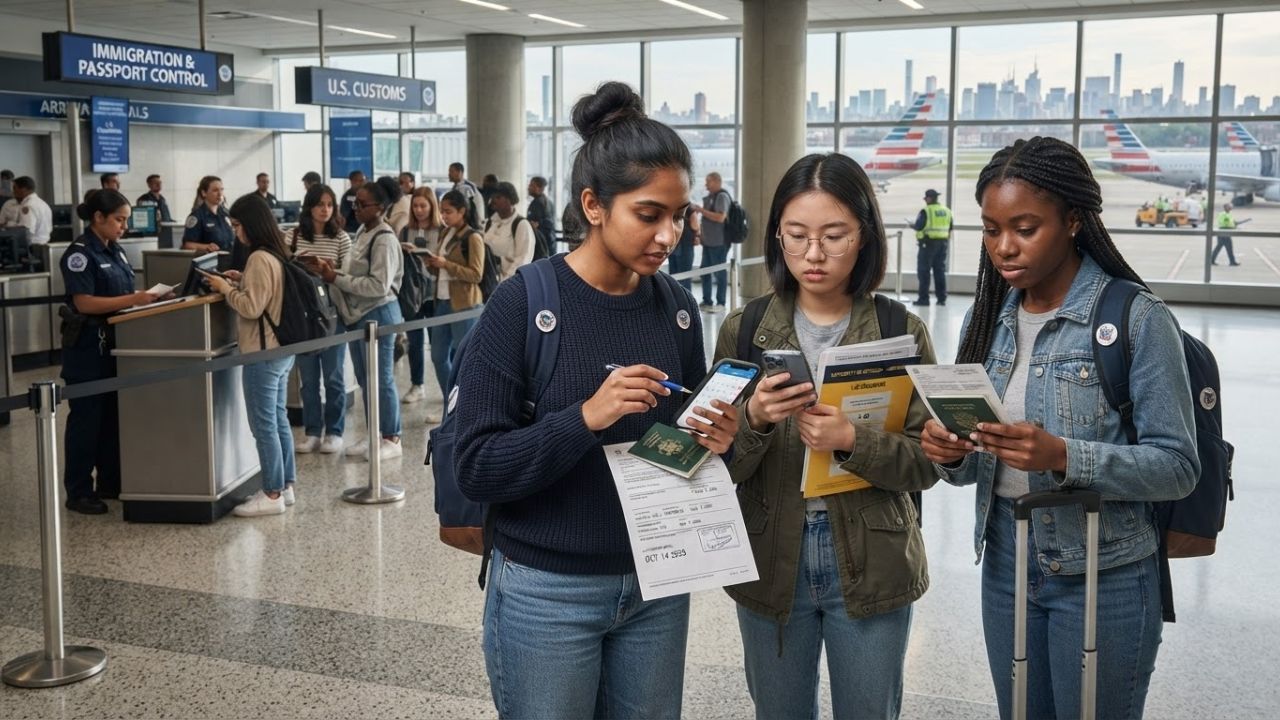
Image generated by AI
Ending a decades-old open-ended policy, the United States will replace the Duration of Status framework for F, J, and I travelers with fixed admission deadlines starting September 15, 2026.
The Core Transit Update
Immigration transit rules and airport border entry protocols are changing for international students and exchange visitors arriving in the United States. Under the final rule published by the Department of Homeland Security (DHS), the historical Duration of Status (D/S) notation is eliminated.
Beginning September 15, 2026, border officials will stamp Form I-94 (Arrival/Departure Record) with a specific authorized departure date. Admissions are capped at a maximum of four years per entry, and the post-programme grace period to leave the US is reduced from 60 days to 30 days for F-1 academic students.
Visa Stay Limits & Transitional Rules
Navigating study itineraries and exchange periods requires verifying your class parameters alongside transitional safeguards. The following tables outline the updated visa parameters and DHS transitional timelines.
| Visa Classification | Max Initial Admission Period | Departure Grace Period | Aggregate Study/Assignment Limits |
|---|---|---|---|
| F-1 (Academic Students) | Capped at 4 years (48 months) | Reduced to 30 days (from 60) | Language study capped at 24 months |
| J-1 (Exchange Visitors) | Capped at 4 years (48 months) | Maintains 30 days | Capped per exchange program DS-2019 |
| I (Foreign Media Reps) | Capped at 240 days | N/A (requires extension) | 90 days for mainland Chinese passports |
US Customs and Border Protection F, J, and I visa admission limits.
| Protected Visa Holder | Transitional Status Expiry Date | Trigger for Fixed-Date System | Expected Annualized Regulatory Cost |
|---|---|---|---|
| F Status (Valid D/S) | November 14, 2030 (capping) | Re-entry after Sept 15, 2026 | US$443.1M – US$448.6M (overall) |
| J Status (Valid D/S) | October 15, 2030 (capping) | Re-entry after Sept 15, 2026 | US$119.9M – US$125.1M (US parties) |
| I Status (Valid D/S) | Case-specific (shorter frames) | Re-entry after Sept 15, 2026 | Enhanced compliance tracking |
US Department of Homeland Security transitional guidelines.
Traveler Logistics Guide
From a ground-level perspective, the best way to navigate this is to log in to the official CBP portal and download your digital Form I-94 immediately after every re-entry to the United States, as the dated deadline stamped on your record takes precedence over your visa's expiration date. Checking your re-entry record is recommended.
To plan your educational and media travel:
- Pre-Book Extensions Early: If your degree or assignment exceeds four years, apply for a stay extension with USCIS at least 90 days before your Form I-94 deadline. Academic delay alone may not qualify without proof of compliance.
- Observe Re-entry Triggers: If you currently hold transitional D/S protection, remember that departing the US after September 15, 2026, will trigger the fixed-date system upon your return.
- Observe language limits: Language-training programs are restricted to a total cumulative limit of 24 months, which includes standard breaks and annual vacation periods.
- Verify I-20 and DS-2019: Make sure your designated school official (DSO) or exchange sponsor registers any changes in your study program or transfer dates, as discrepancies can invalidate your Form I-94.
Infrastructure Impact Assessment
The replacement of the Duration of Status framework targets stronger oversight of international student populations, which saw over 1.8 million F admissions in FY 2024.
While the new system adds substantial administrative compliance costs—ranging up to $448.6 million annually—it provides border enforcement teams with concrete departure deadlines, reducing illegal overstay margins across all major educational transit corridors.
Related Travel Guides
Virginia Unveils Strategic Plan to Target Indian Tourism Growth
Disclaimer
This article is for informational and educational purposes only. It does not constitute legal, financial, or professional advice. While we strive to provide accurate and up-to-date information, travel policies, regulations, and conditions change rapidly. Always verify information with official sources before making travel decisions. Nomad Lawyer makes no representations about the accuracy, reliability, completeness, or suitability of the information provided. Readers should consult qualified professionals for advice specific to their circumstances. The views expressed in this article are those of the author and do not necessarily reflect the views of Nomad Lawyer.