
US Tourism Giants Warn of Travel Chaos Amid Looming Government Funding Deadline
US travel leaders warn that a government shutdown by September 30 could trigger airport delays, TSA staffing shortages, and national park closures.

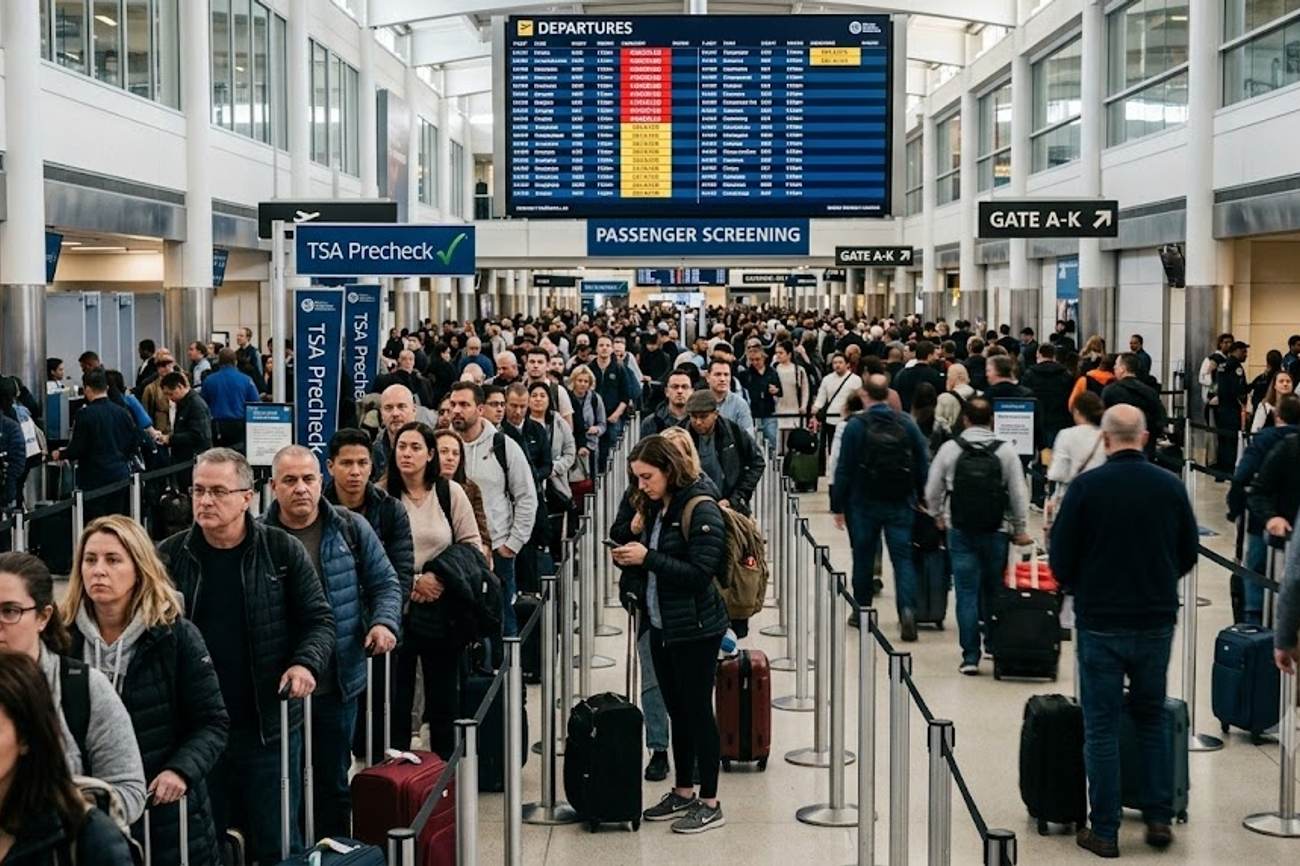
Image generated by AI
Washington, D.C. —
A coalition of the United States' most influential travel and aviation bodies is sounding the alarm over a potential government funding lapse, warning that political deadlock in Congress could trigger a cascade of disruptions for millions of passengers. With a critical deadline of September 30 approaching, industry leaders are calling for immediate legislative action to prevent a shutdown that would jeopardize aviation security, air traffic management, and the broader hospitality economy.
The urgent appeal comes from a united front including the U.S. Travel Association, Airlines for America (A4A), and the American Hotel & Lodging Association (AHLA). These organizations argue that the stability of the nation's travel infrastructure is not a partisan issue but a fundamental economic necessity. For the millions of individuals currently booking domestic vacations, international business trips, or family reunions, the threat of a federal shutdown introduces a volatile variable into an already complex travel ecosystem.
Federal Funding Lapses Threaten Aviation Infrastructure
The primary concern for industry observers centers on the heavy reliance of the US aviation network on federal personnel. The systems that ensure flights depart and land safely are managed by government agencies that require consistent funding to maintain operational standards.
Industry reports indicate that a funding disruption would place immense pressure on the Transportation Security Administration (TSA) and air traffic controllers. While these roles are designated as essential and would likely continue to work, the psychological and financial strain of unpaid or delayed wages often leads to increased absenteeism. When staffing levels drop at critical checkpoints or in control towers, the result is a direct hit to the passenger experience.
Travelers can expect a surge in airport queue lengths and a higher frequency of flight delays. Because the aviation network operates as a tightly integrated web, a staffing shortage at a single major hub can create a "ripple effect," delaying aircraft rotations and disrupting connecting flights across multiple states and time zones.
Airline Operations and Workforce Stability
Airlines for America (A4A) has specifically highlighted the vulnerability of the aviation workforce. Air traffic controllers and security personnel are the invisible backbone of the industry; any uncertainty regarding their compensation creates a risk to the efficiency and reliability of the entire system.
From an operational standpoint, airlines suffer when government-related delays hinder the movement of passengers. When a flight is delayed due to federal staffing issues, it disrupts the airline's entire schedule, affecting crew legalities, gate availability, and passenger connections. For the traveler, this translates to missed connections, overnight hotel stays, and disrupted rental car arrangements.
Furthermore, the industry argues that passenger confidence is a fragile commodity. When news of potential shutdowns dominates the headlines, travelers are more likely to hesitate or cancel bookings, fearing they will be stranded or face grueling delays at the airport.
Hospitality Sector Faces Potential Revenue Collapse
The economic fallout of a government shutdown extends well beyond the tarmac. The American Hotel & Lodging Association (AHLA) warns that the hospitality sector—including hotels, restaurants, and convention centers—is highly susceptible to shifts in travel demand.
When federal uncertainty peaks, leisure travelers often postpone their trips. This reduction in visitor flow has a direct impact on local economies that rely on tourism spending. A drop in hotel occupancy leads to reduced revenue for the establishment and fewer hours for employees, while local restaurants and retail shops see a corresponding dip in foot traffic.
Business travel and large-scale conferences are particularly sensitive to transportation stability. Corporate planners are unlikely to commit to major events in cities if there is a perceived risk that attendees will be unable to reach the destination or return home on schedule.
Economic Stakes for Major US Tourism Hubs
Tourism remains a cornerstone of the US economy, supporting millions of jobs across various sectors, including retail, entertainment, and transportation. The U.S. Travel Association emphasizes that travel is a primary driver of national economic growth.
The risk is most acute in "super-destination" cities that depend on high volumes of international and domestic arrivals. Hubs such as New York, Orlando, Las Vegas, Miami, Los Angeles, and San Francisco rely on the seamless operation of federal border and aviation services to sustain their tourism-driven economies. Any friction at the point of entry or within the airport terminal can lead to millions of dollars in lost economic activity for these municipalities.
Lessons from Previous Federal Shutdowns
Industry leaders are drawing on historical data to justify their current concerns. Previous government shutdowns have served as cautionary tales, demonstrating how quickly a funding lapse can translate into systemic failure.
Past disruptions have resulted in:
- Thousands of cancelled or delayed flights.
- Significant economic losses for small-scale tourism operators.
- Operational bottlenecks at major international gateways.
- Reduced accessibility to government-managed sites.
Because the aviation network is interconnected, a disruption in one region rarely stays localized. A delay in a hub like Atlanta or Chicago can impact a passenger's itinerary thousands of miles away, proving that the stability of federal funding is a national security and economic priority.
Risk to National Parks and Federal Attractions
Beyond the airports, the tourism industry is concerned about the status of government-managed visitor sites. National parks, federal museums, and monuments often face reduced services or total closures during funding lapses.
For many travelers, a visit to a National Park is the primary motivator for their trip. If these sites close or operate with skeleton crews—leading to closed visitor centers and unmaintained trails—the surrounding local economies (hotels, cafes, and guide services) suffer an immediate and sharp decline in revenue.
Why This Matters: The Traveler's Perspective
For the average traveler, this political dispute is not about budget line items; it is about the viability of their travel plans. From a logistical standpoint, a government shutdown creates a "trust deficit." When the TSA is understaffed or air traffic control is strained, the predictability of travel vanishes.
For the business traveler, this means a higher risk of missing critical meetings. For the vacationer, it means the possibility of spending hours in a security line or finding a dream destination's national park closed upon arrival. This situation underscores a critical vulnerability in the US travel system: the total dependence of private-sector commerce on federal operational stability.
Related Travel Guides
Disclaimer
This article is for informational and educational purposes only. It does not constitute legal, financial, or professional advice. While we strive to provide accurate and up-to-date information, travel policies, regulations, and conditions change rapidly. Always verify information with official sources before making travel decisions. Nomad Lawyer makes no representations about the accuracy, reliability, completeness, or suitability of the information provided. Readers should consult qualified professionals for advice specific to their circumstances. The views expressed in this article are those of the author and do not necessarily reflect the views of Nomad Lawyer.
Raushan Kumar
Founder & Lead Developer
Full-stack developer with 11+ years of experience and a passionate traveller. Raushan built Nomad Lawyer from the ground up with a vision to create the best travel and law experience on the web.
Learn more about our team →