
US Aviation Disruption Hits 100-Day Mark as Southwest Records 1,951 Delays Amid July 9 2026 Recovery
The United States aviation network saw a significant decrease in disruptions on July 9, 2026, marking the 100th consecutive day of instability since April 1.

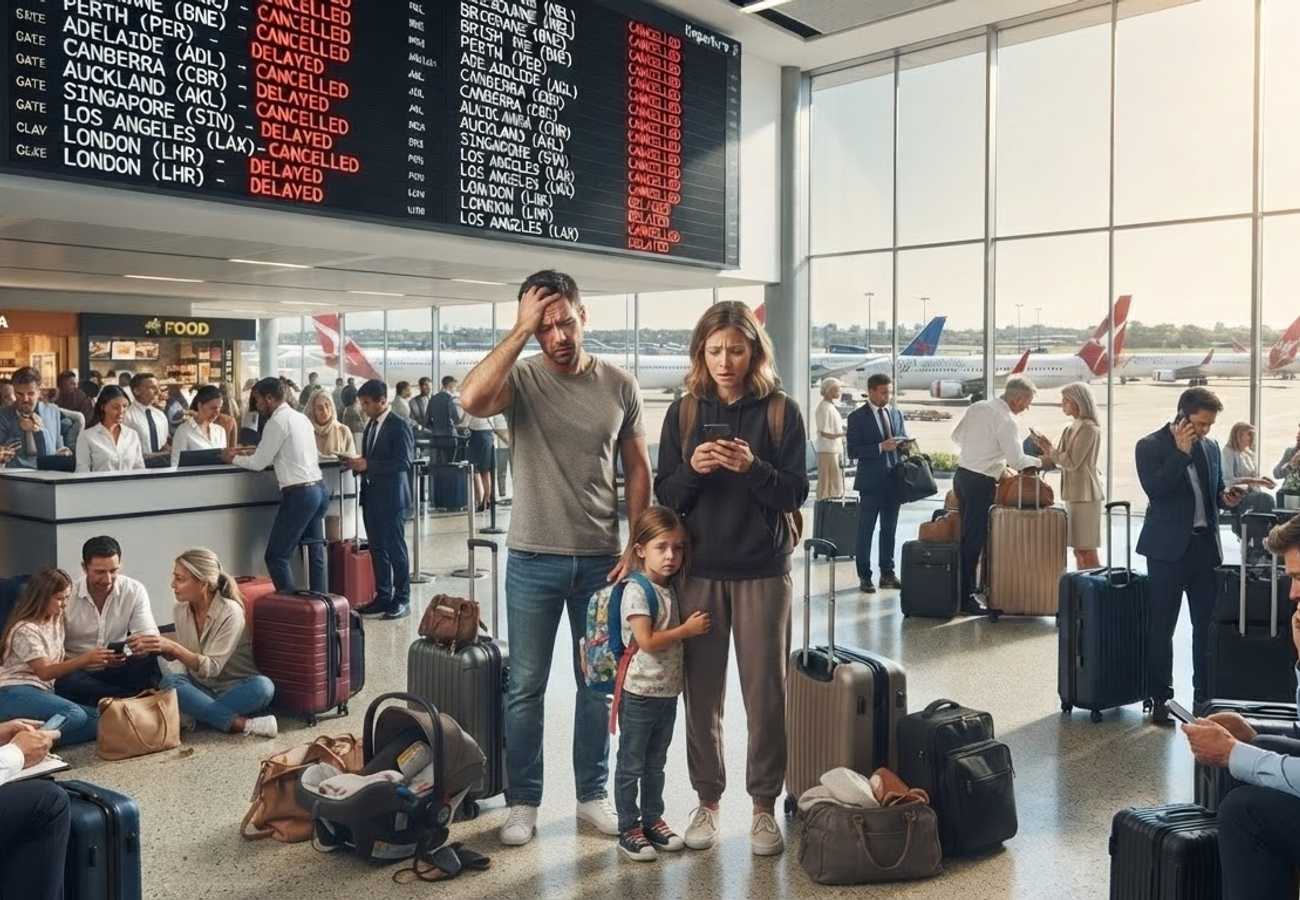
Image generated by AI
[Washington D.C., July 9, 2026] — The United States aviation system reached a critical 100-day milestone of sustained instability today, although flight tracking data indicates the first significant reprieve in over a week. On July 9, the national airspace recorded 2,037 total disruptions, consisting of 1,951 delays and 86 cancellations, a sharp decline from the thousands of disruptions logged earlier in the week.
This period of elevated volatility began on April 1, 2026, creating a prolonged stretch of operational challenges for passengers and carriers alike. While the numbers suggest a downward trend, several major hubs including John F. Kennedy International (JFK), Chicago O’Hare, and Miami remain under pressure, and Southwest Airlines continues to struggle with significant scheduling setbacks.
Operational Trends and the 100-Day Milestone
The scale of today's improvement is most evident when compared to the preceding days of the crisis. On July 6, the network suffered 3,792 disruptions, while July 8 saw 3,209 incidents. The drop to 2,037 disruptions on July 9 represents a nearly 45% decrease in total incidents compared to the previous day, suggesting that the compounding factors contributing to the chaos are finally beginning to decouple.
Industry observers note that the sheer duration of this streak—100 consecutive days—is an anomaly for the US domestic market. The current easing is viewed with cautious optimism, as the system is only now beginning to clear the backlog of delays and cancellations that have plagued the summer travel season.
Comparative Disruption Data: July 6–9, 2026
| Date | Cancellations | Delays | Total Disruptions |
|---|---|---|---|
| July 6, 2026 (Day 97) | 529 | 3,263 | 3,792 |
| July 8, 2026 (Day 99) | 424 | 2,785 | 3,209 |
| July 9, 2026 (Day 100) | 86 | 1,951 | 2,037 |
Major Hubs and Airline Performance Metrics
Despite the overall improvement, specific airports and carriers are still experiencing concentrated levels of disruption. John F. Kennedy International Airport (JFK) recorded the highest number of cancellations for the day with 18 flights scrubbed and 95 delayed. Chicago O’Hare followed closely in terms of total impact, reporting 121 delays and 5 cancellations.
Among carriers, Southwest Airlines emerged as the primary outlier. The airline logged 303 delays—the highest count of any US carrier on July 9—though it managed to keep cancellations low with only two flights canceled. Other airlines experiencing notable operational friction include American, Delta, United, JetBlue, Frontier, and regional operators such as Endeavor Air and Envoy Air.
Airport Impact Snapshot — July 9, 2026
| Airport | Delays | Cancellations |
|---|---|---|
| Chicago O’Hare | 121 | 5 |
| Boston Logan | 103 | 10 |
| JFK | 95 | 18 |
| Miami | 84 | 4 |
| Nashville | 74 | 2 |
| Detroit Metro | 49 | 9 |
| Baltimore/Washington | 46 | 2 |
| Cleveland-Hopkins | 14 | 3 |
Resolution of Key Airspace Flashpoints
The improvement in today's figures is largely attributed to the resolution of two major systemic bottlenecks. First, the fuel-crisis fallout at Boston Logan International Airport, which had caused 539 disruptions on July 7 and 285 delays on July 8, has subsided. On July 9, Boston reported only 103 delays and 10 cancellations, marking its most stable operational day in nearly a week.
Secondly, the congestion at Ronald Reagan Washington National Airport (DCA) appears to have cleared. The airport had been struggling with a massive backlog following the airspace closures associated with the July 3–4 250th anniversary celebrations. Because Reagan National did not appear among the most affected airports today, reports indicate that the recovery process for the D.C. area airspace is largely complete.
Passenger Rights and Compensation Guidelines
As disruptions persist, the US Department of Transportation (DOT) has clarified the rights of affected passengers. Because the majority of the current delays and cancellations are attributed to weather patterns and systemic backlogs—factors generally considered outside the airlines' direct control—cash compensation is not mandated. However, airlines remain obligated to provide rebooking assistance.
Under DOT regulations, passengers are entitled to an unconditional full refund within seven days if their flight is canceled and they choose not to accept a rebooking. For those facing overnight delays, compensation varies by the individual airline's internal policy rather than federal mandate, meaning passengers must negotiate hotel and meal vouchers directly with gate agents.
Summary of Passenger Entitlements
| Situation | DOT Treatment | Entitlement |
|---|---|---|
| Weather/Backlog Delay | Outside Airline Control | Rebooking assistance; no cash payout |
| Any Cancellation | DOT-Mandated | Full refund within 7 days if rebooking is declined |
| Overnight Disruption | Airline Discretion | Varies; must request from carrier |
Why This Matters: The 2026 Aviation Stability Analysis
The 100-day streak of disruption reveals a fragile interdependence within the US hub-and-spoke system. When primary gateways like Boston Logan or JFK experience a "shock"—such as a fuel crisis or a planned airspace closure—the ripple effect is no longer absorbed within 24 to 48 hours. Instead, as seen throughout June and July 2026, these disruptions are layering on top of one another, creating a compounding failure where the system cannot return to baseline before the next event occurs.
The fact that Southwest Airlines continues to lead in delays, even as total numbers drop, suggests a specific vulnerability in their point-to-point operational model during periods of national instability. For the broader industry, this 100-day period serves as a case study in "operational hysteresis," where the time required for a network to recover is significantly longer than the duration of the initial cause. Travelers should recognize that "easing numbers" do not equate to "full recovery," and buffer times remain essential for any transit through Tier-1 US hubs.
Travelers are advised to monitor flight status in real-time and retain all receipts for incidentals during delays exceeding three hours.
Related Travel Guides
Disclaimer
This article is for informational and educational purposes only. It does not constitute legal, financial, or professional advice. While we strive to provide accurate and up-to-date information, travel policies, regulations, and conditions change rapidly. Always verify information with official sources before making travel decisions. Nomad Lawyer makes no representations about the accuracy, reliability, completeness, or suitability of the information provided. Readers should consult qualified professionals for advice specific to their circumstances. The views expressed in this article are those of the author and do not necessarily reflect the views of Nomad Lawyer.
Kunal K Choudhary
Co-Founder & Contributor
A passionate traveller and tech enthusiast. Kunal contributes to the vision and growth of Nomad Lawyer, bringing fresh perspectives and driving the community forward.
Learn more about our team →