
US Flight Chaos 2026: Over 140 Flights Cancelled and 680+ Delayed at DFW, Newark, and SFO
A massive wave of flight cancellations and delays has struck major US hubs on May 11, 2026, with Dallas-Fort Worth, Newark, and San Francisco facing significant operational turmoil.

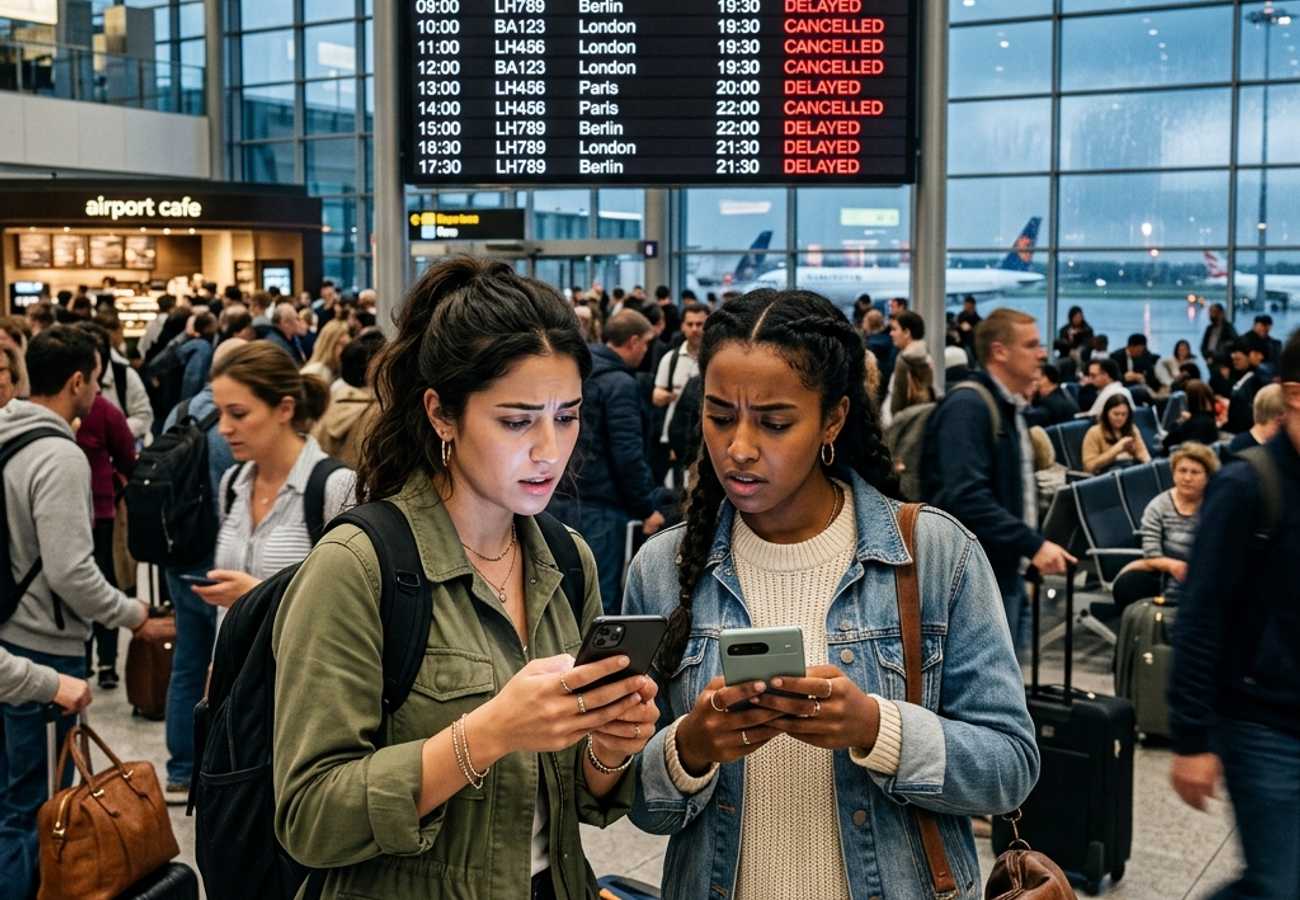
Image generated by AI
US Flight Chaos 2026: Over 140 Flights Scrapped and 680+ Running Behind Schedule as American Airlines, United, and Delta Face Operational Turmoil Across Texas, California, and Newark
A crippling wave of flight cancellations and airport disruptions has left thousands of passengers stranded at Dallas-Fort Worth, Newark Liberty, and San Francisco International, as weather-driven network failures cascade through the North American aviation system.
The aviation industry in North America is currently grappling with a severe operational breakdown today, May 11, 2026, as a surge of flight cancellations and significant travel chaos ripple through the United States' busiest transit corridors. According to real-time airline news data, a staggering 143 flights have been scrapped and over 682 others are running behind schedule within, into, or out of the U.S. This mass disruption has transformed major terminals in Texas, California, New Jersey, and Washington into scenes of passenger frustration, as the "falling dominoes" of hub-dependency expose the fragility of modern scheduling structures.
The epicenter of today’s aviation updates is Dallas-Fort Worth International Airport (DFW), where a staggering 106 flights were canceled and 50 more delayed, primarily affecting American Airlines and its regional feeders. However, the crisis is far from localized; Toronto Pearson, Newark Liberty, San Francisco, and Seattle-Tacoma have all reported varying degrees of instability, leaving thousands of travelers searching for alternate routes amid a systemic network bottleneck.
Dallas-Fort Worth: The Texas Hub Becomes the Epicenter of the Crisis
At Dallas-Fort Worth International Airport, the disruption reached critical levels as 106 total cancellations paralyzed the hub. American Airlines alone accounted for 85 scrapped flights, representing a significant 7% of its daily operation at the airport. When combined with its regional affiliates, PSA Airlines (14 cancellations) and Envoy Air (6 cancellations), the American Airlines ecosystem was responsible for nearly every major schedule failure at the terminal.
This operational collapse suggests a massive synchronization breakdown. Because DFW is a primary connector hub, these cancellations have prevented thousands of passengers from reaching their final destinations across the country. International carriers at DFW, including Lufthansa, Qantas, and Emirates, also reported significant delays, proving that once runway sequencing begins to fail, every airline at the gate feels the pressure.
DFW Operational Disruption Table
| Airline | Cancelled | % Cancelled | Delayed | % Delayed |
|---|---|---|---|---|
| American Airlines | 85 | 7% | 26 | 2% |
| PSA Airlines (AAL) | 14 | 10% | 5 | 3% |
| Envoy Air (AAL) | 6 | 1% | 0 | 0% |
| United | 1 | 1% | 0 | 0% |
| Delta Air Lines | 0 | 0% | 6 | 8% |
| Lufthansa | 0 | 0% | 2 | 100% |
| Emirates | 0 | 0% | 1 | 50% |
| Qantas | 0 | 0% | 1 | 33% |
Toronto Pearson: Regional Feeders Take the First Hit
In Ontario, Toronto Pearson International Airport (YYZ) faced 21 cancellations, almost entirely concentrated within the Air Canada network. Regional carriers Jazz and Air Canada Rouge each scrapped 8 flights, while the mainline carrier reported 4 cancellations and 5 delays. This pattern highlights a common industry tactic: airlines often sacrifice short-haul regional routes during travel chaos to preserve the integrity of their long-haul international rotations.
Newark Liberty: Northeast Corridor Congestion and Instability
At Newark Liberty (EWR), the disruption leaned toward delays rather than total collapse, though 6 cancellations were still recorded. United Airlines, which uses Newark as a primary East Coast hub, recorded 2 cancellations and 5 delays. Given Newark’s dense traffic environment, even these seemingly small numbers can trigger airport disruptions that affect the entire Northeast corridor, from Boston to Washington D.C.
San Francisco and Seattle: International Delays Surge on the West Coast
The West Coast displayed a different disruption profile, leaning heavily toward airport disruptions caused by delays. San Francisco (SFO) reported only 7 cancellations but saw a surge of 22 delays. This primarily affected international transpacific windows, with carriers like British Airways, Cathay Pacific, Singapore Airlines, and KLM all reporting operational friction. Similarly, Seattle-Tacoma (SEA) saw Alaska Airlines recording 2 cancellations and 8 delays, reflecting the tight aircraft rotations typical of the Pacific Northwest.
Passenger Impact: Beyond the Departures Board
For the thousands of travelers stranded today, the impact goes far beyond a red "Cancelled" sign.
- Missed Connections: DFW passengers heading to international destinations have missed their long-haul windows, often resulting in 24-hour delays.
- Financial Strain: While some airlines provide vouchers, many travelers are absorbing the costs of last-minute hotel stays and meals.
- Reputational Damage: Real-time social media documentation of crowded terminals at Newark and DFW is putting immense pressure on airline customer service teams.
Pro-Tip for Travelers: If your flight is scrapped, use the airline's mobile app to rebook immediately rather than waiting in line. Also, check if your credit card provides trip interruption insurance, which can reimburse hotel and meal costs during weather-related events.
Industry Analysis: The Fragility of Hub-Dependency
Today’s aviation updates reveal a deeper structural issue within the industry. Airlines have optimized their schedules for maximum profitability, leaving almost no "recovery margin." When a major hub like Dallas-Fort Worth is hit by weather instability or air traffic flow restrictions, the entire network begins to unspool.
Airlines often prefer early "defensive cancellations"—as seen with American Airlines today—to prevent crews and aircraft from being trapped in a gridlocked system. While this helps the airline recover faster the following day, it leaves passengers at the mercy of a system that prioritizes network stabilization over individual itineraries.
Conclusion: The New Reality of Air Travel
The 143 cancellations and 680+ delays recorded on May 11, 2026, serve as a stark reminder that the modern aviation system is a high-efficiency but low-flexibility engine. As weather patterns become more volatile and hubs more congested, travelers must maintain flexibility and rely on real-time updates to navigate the increasingly frequent periods of travel chaos.
Key Takeaways
- Mass Disruption: 143 total US flight cancellations and 682 delays on May 11, 2026.
- DFW Shutdown: Dallas-Fort Worth is the hardest-hit hub with 106 cancellations.
- American Airlines Crisis: The carrier and its regional affiliates (PSA, Envoy) accounted for over 100 scrapped flights.
- International Impact: Major delays reported at SFO and DFW for carriers like Lufthansa, Qantas, and Singapore Airlines.
- Operational Tactics: Airlines are prioritizing long-haul flights while cutting regional feeder routes to stabilize networks.
Related Travel Guides
Disclaimer
This article is for informational and educational purposes only. It does not constitute legal, financial, or professional advice. While we strive to provide accurate and up-to-date information, travel policies, regulations, and conditions change rapidly. Always verify information with official sources before making travel decisions. Nomad Lawyer makes no representations about the accuracy, reliability, completeness, or suitability of the information provided. Readers should consult qualified professionals for advice specific to their circumstances. The views expressed in this article are those of the author and do not necessarily reflect the views of Nomad Lawyer.
Kunal K Choudhary
Co-Founder & Contributor
A passionate traveller and tech enthusiast. Kunal contributes to the vision and growth of Nomad Lawyer, bringing fresh perspectives and driving the community forward.
Learn more about our team →