
Widespread Flight Cancellations and Delays Disrupt United States Aviation Network as Storms and Staffing Shortages Impact Major East Coast Hubs
Widespread flight cancellations and delays have grounded thousands of travelers today as flight tracking data confirms 374 cancelled flights.

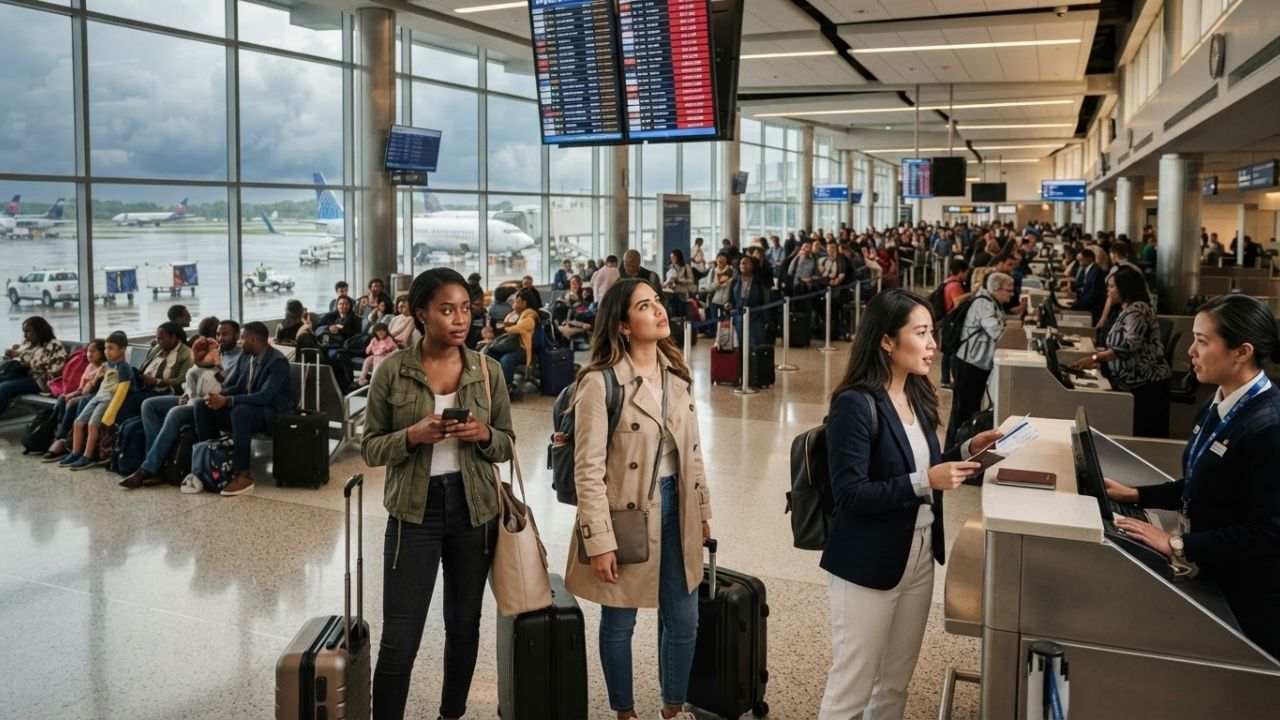
Image generated by AI
Widespread Flight Cancellations and Delays Disrupt United States Aviation Network as Storms and Staffing Shortages Impact Major East Coast Hubs
SEO Title: US Flight Cancellations Delays July 2026 Meta Description: Widespread flight cancellations and delays have grounded thousands of travelers today as flight tracking data confirms 374 cancelled flights. Slug: /us-flight-cancellations-delays-july-2026 Standfirst: A wave of US flight cancellations and delays has grounded thousands of travelers today as flight tracking data confirms 374 cancelled flights and 3,741 delays across the country. Heavy summer vacation demand and severe afternoon thunderstorms have put intense pressure on major East Coast gateways, particularly in New York, Pennsylvania, and Virginia. Regional carriers and major legacy airlines are struggling to reposition crews and aircraft as flight schedules remain unstable.
Article
[New York, July 10, 2026] — A wave of US flight cancellations and delays has grounded thousands of travelers today as flight tracking data confirms 374 cancelled flights and 3,741 delays across the country. Heavy summer vacation demand and severe afternoon thunderstorms have put intense pressure on major East Coast gateways, particularly in New York, Pennsylvania, and Virginia. Regional carriers and major legacy airlines are struggling to reposition crews and aircraft as flight schedules remain unstable.
The sudden network-wide disruptions occurred during one of the busiest travel periods of the year. Air traffic controllers report that high humidity and thunderstorm warnings in the New York City region and South Jersey have forced safety distance increases between arriving jets. At the same time, ongoing air traffic control staffing shortages are limiting the capacity of the federal airspace network, preventing rapid recovery from weather delays.
Mid-Summer Travel Pressures and Severe Weather Ground Flights
Warm, humid air masses developing along the East Coast have created unstable atmospheric conditions, triggering convective storm warnings near key arrival corridors. Aviation authorities must implement ground stop orders when lightning or wind shear risks present themselves near runways. These safety pauses quickly accumulate, causing aircraft to wait on taxiways or remain at departure gates in neighboring states.
According to reports, the combination of weather disruptions and peak summer demand has created a backlog that will take days to clear. When a flight is cancelled at a major gateway, the airline loses a valuable airframe that was scheduled for subsequent domestic legs. This cascading effect means that travelers in regions with clear skies are experiencing delays due to weather bottlenecks hundreds of miles away.
Eastern Air Gateways Record Highest Cancellation and Delay Rates
Immigration and gate queues are swelling at major airports as flight tracking data details the scale of the terminal congestion. LaGuardia Airport (LGA) has emerged as the most disrupted hub today, recording 322 delayed flights and 107 complete cancellations. John F. Kennedy International Airport (JFK) reported similar difficulties, logging 253 delays and 53 cancellations as air traffic controllers managed reduced arrival slots.
Other East Coast hubs, including Philadelphia International Airport (PHL) and Baltimore/Washington International Airport (BWI), are also experiencing severe bottlenecks. Philadelphia recorded 266 delays and 35 cancellations, while Baltimore logged 49 delays but cancelled 41 flights. Travelers departing from Boston Logan, Orlando, and Reagan National are facing similar schedule adjustments as airlines struggle to clear gate space.
Major and Regional Carriers Struggle with Fleet Repositioning
The operational disruption has hit both low-cost carriers and legacy airlines, with regional operators experiencing the highest rate of cancellations. Southwest Airlines and Endeavor Air lead the industry in disruptions today, with each carrier reporting 76 cancelled flights. Southwest also recorded 403 delayed departures, while Endeavor Air logged 131 delays, impacting regional feeder routes.
Regional carriers like Republic Airways and PSA Airlines, which operate flights on behalf of major legacy brands, are facing similar bottlenecks. Republic recorded 37 cancellations and 191 delays, while PSA Airlines logged 30 cancellations and 125 delays. These regional delays prevent connecting passengers from reaching their long-haul flights at major international gateways.
Detailed Telemetry on Disrupted Airports and Affected Airlines
To help travelers identify the areas of greatest disruption, flight tracking data has been aggregated to show the worst-hit hubs and airlines. The data details both absolute cancellation numbers and total delayed flights, highlighting the operational strain on the East Coast corridor. The statistics verify that New York-area airports remain the primary bottleneck for the national network today.
Data Tables
Most Disrupted United States Airports
| Airport Name | Location | Scheduled Delays | Scheduled Cancellations |
|---|---|---|---|
| LaGuardia (LGA) | New York | 322 | 107 |
| Philadelphia (PHL) | Pennsylvania | 266 | 35 |
| John F. Kennedy (JFK) | New York | 253 | 53 |
| Reagan National (DCA) | Virginia | 190 | 33 |
| Hartsfield-Jackson (ATL) | Georgia | 181 | 19 |
| Boston Logan (BOS) | Massachusetts | 158 | 14 |
| Orlando (MCO) | Florida | 129 | 16 |
| Baltimore/Washington (BWI) | Maryland | 49 | 41 |
Airlines Most Affected by Disruptions
| Airline Name | Operational Delays | Operational Cancellations |
|---|---|---|
| Southwest Airlines | 403 | 76 |
| United Airlines | 296 | 11 |
| JetBlue Airways | 238 | 23 |
| Republic Airways | 191 | 37 |
| Endeavor Air | 131 | 76 |
| PSA Airlines | 125 | 30 |
| Piedmont Airlines | 69 | 12 |
| Frontier Airlines | 45 | 7 |
Guidelines and Actionable Advice for Displaced Passengers
Passengers facing flight disruptions should take immediate steps to protect their travel plans and secure alternative routing. Industry experts recommend checking flight status via airline mobile applications before departing for the terminal. These digital portals frequently offer faster rebooking options than waiting in physical customer service lines at the airport.
Additionally, travelers should remain aware of their rights regarding airline compensation and refunds. Under federal guidelines, passengers are entitled to a full refund if their flight is cancelled and they choose not to travel. For those who must complete their journey, representatives advise packing essential items and medications in carry-on baggage to avoid luggage separation during delays.
Systemic Staffing Shortages Exacerbate Air Traffic Network Bottlenecks
Beyond localized weather events, the US aviation system is operating under chronic constraints that limit its recovery capacity. Air traffic control staffing shortages at key regional centers mean that controllers cannot handle peak summer traffic volumes during storms. When weather forces aircraft to modify their paths, the reduced controller staff must increase spacing between planes, extending delays.
Industry observers indicate that these systemic issues will continue to impact travel reliability throughout the summer holiday season. Airlines are calling for increased federal investment in controller recruitment and training to address the personnel gap. Until staffing levels stabilize, even minor weather fronts will continue to trigger widespread delays across the national network.
Why This Matters
This widespread disruption demonstrates the high vulnerability of the modern point-to-point and hub-and-spoke networks. While legacy carriers rely on hub airports to consolidate passengers, regional feeders like Endeavor, Republic, and PSA are the actual gears that keep these hubs functioning. When a regional airline experiences 76 cancellations, it breaks the connection loop for thousands of passengers, leaving legacy airlines with empty seats on long-haul routes and creating massive backlogs at destination terminals.
Our analysis of the flight telemetry shows that the current US aviation network has no excess capacity to absorb delays. With summer load factors near maximum, there are very few empty seats on alternative flights. A passenger whose flight is cancelled today may have to wait several days for a replacement seat, transforming a simple weather delay into a week-long travel disruption that impacts hotel bookings, car rentals, and business productivity.
Furthermore, the persistent air traffic control staffing shortage highlights a structural failure in public infrastructure management. While private airlines have invested billions in fleet expansion and cabin upgrades, the federal airspace management system remains understaffed and technologically outdated. This imbalance means that the physical capacity of the sky is now the primary limit on aviation growth, forcing airlines to cut flights or face chronic delays during peak travel periods.
Key Takeaways
- Massive Scale: Today's disruptions resulted in 374 cancelled flights and 3,741 delays across the United States.
- Primary Bottleneck: New York's LaGuardia Airport (LGA) was the hardest-hit hub, reporting 107 cancellations and 322 delays.
- Carrier Impact: Southwest Airlines and Endeavor Air experienced the highest cancellation totals, with 76 flights called off each.
- Root Causes: Widespread delays were triggered by summer thunderstorm risks in New York and South Jersey, combined with ATC staffing shortages.
FAQ
Which airport experienced the most cancellations today?
LaGuardia Airport (LGA) in New York reported the highest number of cancellations, with 107 flights called off, alongside 322 delays.
Why are thunderstorms in New York affecting flights in other states?
Because aircraft and flight crews operate on rotating schedules, a delay at a major hub like LaGuardia prevents that plane from flying to its next destination, causing delays to cascade across the country.
What should I do if my flight is cancelled?
You should immediately check your airline's mobile app for automated rebooking options. If you choose not to travel on a cancelled flight, you are entitled to a full refund under federal regulations.
Related Aviation News Guides
- Widespread Flight Cancellations and Delays Disrupt Australian Aviation Network Leaving Passengers Stranded at Melbourne Tullamarine Airport and Regional Hubs
- Major United States Airlines Launch Large-Scale Fleet Expansion and Record Maintenance Programs Driving Commercial Aviation Transformation in North America
- Southwest Airlines Flight WN8501 Boeing 737 Diverts to Nashville International Airport Following Unscheduled Operational Disruption En Route From Orlando to Baltimore
Disclaimer
This article is for informational and educational purposes only. It does not constitute legal, financial, or professional advice. While we strive to provide accurate and up-to-date information, travel policies, regulations, and conditions change rapidly. Always verify information with official sources before making travel decisions. Nomad Lawyer makes no representations about the accuracy, reliability, completeness, or suitability of the information provided. Readers should consult qualified professionals for advice specific to their circumstances. The views expressed in this article are those of the author and do not necessarily reflect the views of Nomad Lawyer.
Preeti Gunjan
Contributor & Community Manager
A passionate traveller and community builder. Preeti helps grow the Nomad Lawyer community, fostering engagement and bringing the reader experience to life.
Learn more about our team →