
US Flight Chaos: 249 Cancellations, 1,715 Delays Hit Major Airports From Denver to Miami Today
Nationwide US aviation crisis: 249 flight cancellations and 1,715 delays disrupt major carriers including Spirit, Southwest, United, Delta across Denver, Chicago, Atlanta, Orlando, Miami airports.

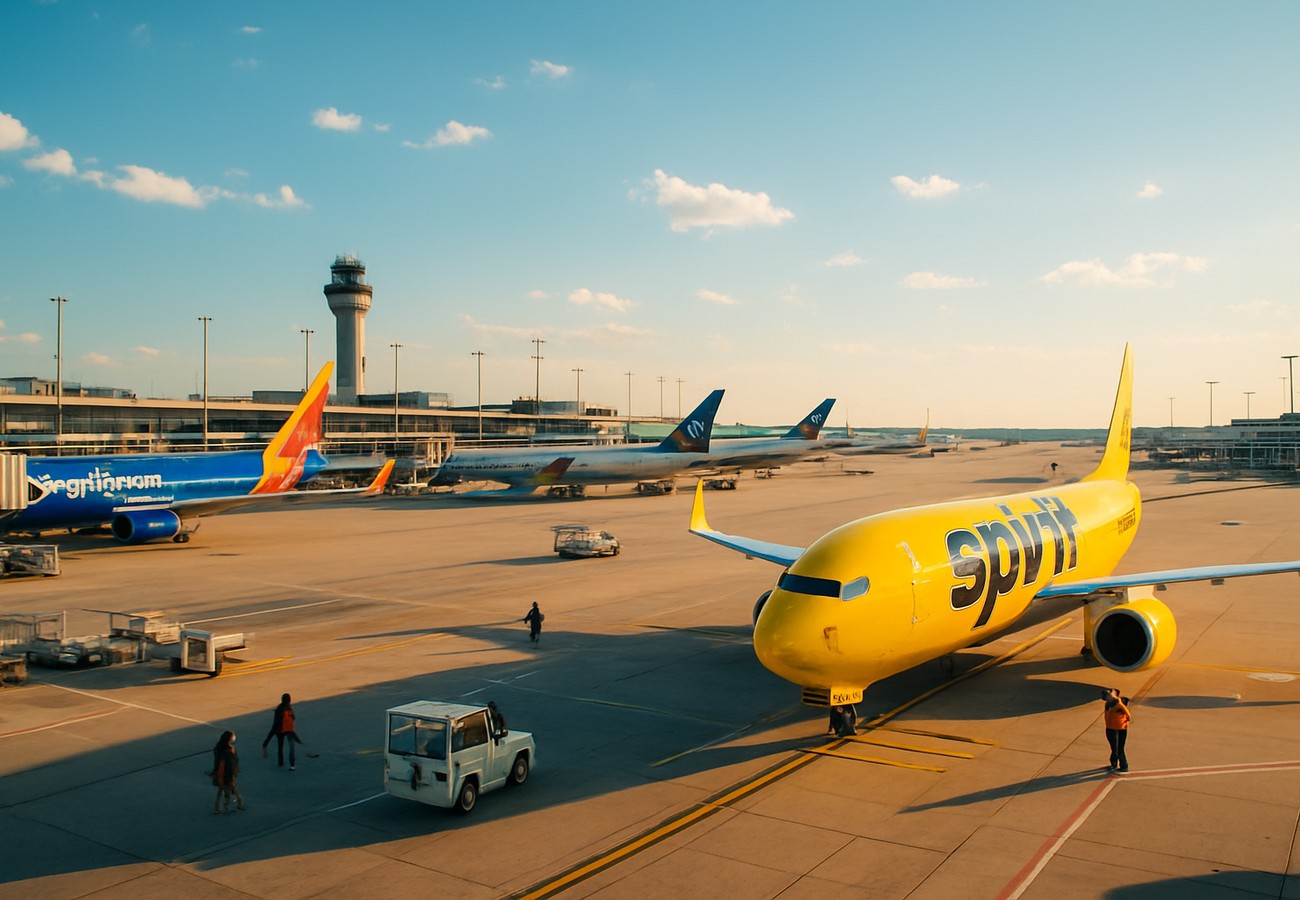
Image generated by AI
US Aviation System Grinds to Halt: 249 Flight Cancellations and 1,715 Delays Cripple Major US Airports From Denver to Miami, Spirit Airlines Halts Operations
Massive operational meltdown impacts travelers across 12 major US hubs as Spirit, Southwest, SkyWest, and big-three carriers face unprecedented disruption
The United States aviation system faced a catastrophic operational breakdown on May 6, 2026, as 249 flights were cancelled and 1,715 additional flights delayed across the nation's busiest airports. The cascading disruptions, affecting carriers from low-cost Spirit Airlines to major network operators United, Southwest, Delta, and American, stranded tens of thousands of passengers and sent shockwaves through connecting hubs from the West Coast to Florida. The crisis appears rooted in Spirit Airlines' operational collapse following the failure of a proposed federal rescue deal, triggering a domino effect of cancellations and delays across the entire US airline ecosystem.
The Scale of Chaos: Nationwide Disruption by the Numbers
The breadth of today's disruption is staggering. With 249 cancellations and 1,715 delays affecting operations across 12 major metropolitan airports, May 6 ranks among the most disruptive days for US commercial aviation in recent years. No corner of the country escaped impact—from Denver in the Rockies to Miami in South Florida, from San Francisco on the West Coast to New York LaGuardia in the Northeast.
The hardest-hit airports reveal a geographic spread indicating systemic failure rather than weather or isolated incidents:
| Airport | Delays | Cancellations | Total Impact |
|---|---|---|---|
| Denver International | 170 | 34 | 204 |
| Chicago O'Hare | 148 | 13 | 161 |
| Atlanta Hartsfield-Jackson | 131 | 14 | 145 |
| Orlando International | 53 | 55 | 108 |
| Fort Lauderdale-Hollywood | 29 | 58 | 87 |
| San Francisco International | 122 | 2 | 124 |
| Los Angeles International | 104 | 5 | 109 |
| Houston Bush Intercontinental | 48 | 16 | 64 |
| Phoenix Sky Harbor | 85 | 5 | 90 |
| New York LaGuardia | 43 | 31 | 74 |
| Austin-Bergstrom | 54 | 3 | 57 |
| Miami International | 35 | 5 | 40 |
The Catalyst: Spirit Airlines' Operational Collapse and Ripple Effects
Spirit Airlines served as the detonator for this nationwide crisis. The Miami-based ultra-low-cost carrier—which had been hemorrhaging money for years—announced a planned shutdown following the collapse of a proposed federal rescue deal. With 156 cancellations representing the single-largest carrier impact, Spirit's exit from operations immediately created a vacuum in regional connectivity and triggered systemic failures across dependent networks.
Southwest Airlines, the nation's largest domestic carrier by fleet size, logged the highest delay count with 394 delayed flights alongside 13 cancellations. The Dallas-based carrier's extensive point-to-point network meant that Spirit's collapse cascaded through Southwest's interdependent scheduling matrix, creating delays that rippled backward through connecting flights.
Regional carriers bore catastrophic operational strain. SkyWest Airlines, which operates regional service on behalf of major carriers, recorded 186 delays and 32 cancellations—crippling loads that forced cascading cancellations of larger aircraft departing from hubs dependent on regional feeders.
Major Carrier Operational Casualties
The "Big Three" network carriers—United, Delta, and American—all faced significant but less catastrophic disruption than Southwest or SkyWest:
- United Airlines: 148 delays, 4 cancellations
- American Airlines: 180 delays, 2 cancellations
- Delta Air Lines: 125 delays, 2 cancellations
- Alaska Airlines: 18 delays, 10 cancellations
- Endeavor Air (Delta subsidiary): 30 delays, 1 cancellation
The relatively lower cancellation counts among major carriers mask the operational pain: each delay represents cascading impacts on subsequent flights, crew scheduling chaos, and exponential increases in passenger frustration.
Geographic Impact: Regional Hubs Become Bottlenecks
Denver International emerged as the single most disrupted airport, with 170 delays and 34 cancellations. As the gateway to the Rocky Mountain region and a major Southwest Airlines hub, Denver's operational constraints created a choke point affecting continental connectivity. United's substantial Denver presence compounded the impact on connections bound for California, Hawaii, and the Mountain West.
Florida airports emerged as disruption epicenters. Fort Lauderdale-Hollywood reported 58 cancellations—the highest among individual airports—alongside 29 delays, decimating Florida's inbound leisure travel on what would normally be a peak Wednesday evening. Orlando International's 55 cancellations, combined with 53 delays, created cascading failures across Florida's tourism corridor during a critical travel window.
Chicago O'Hare, one of the world's busiest airports and a critical American Airlines hub, recorded 148 delays and 13 cancellations. As a primary connection point for transcontinental and international itineraries, O'Hare's disruptions affected travelers throughout the Midwest and Eastern Seaboard.
Atlanta Hartsfield-Jackson, nominally the world's busiest airport by passenger count and a Delta Air Lines fortress, recorded 131 delays and 14 cancellations—suggesting that even megahubs cannot absorb systemic shocks of this magnitude.
Passenger Impact: Real-World Travel Chaos
Travelers faced unprecedented uncertainty throughout the day. A passenger booked on a 3 PM Southwest flight from Denver to San Francisco faced a 6-hour delay, with cascading impacts on connecting flights to Hawaii. Business travelers expecting to reach Chicago O'Hare for evening connections discovered 30-minute gate hold delays, compressing already-tight connection windows and forcing same-day rebooking on overbooked flights.
Fort Lauderdale and Orlando passengers—many heading to or from Walt Disney World, Miami Beach, and Cruise Port Canaveral—encountered 55+ cancellations per airport, forcing multi-day travel delays during peak leisure season. A family of four booked on a cancelled Orlando-bound American Airlines flight faced rebooking on flights 2-3 days out, forcing hotel cancellations at already-prepaid vacation destinations.
International connection failures multiplied the impact. A passenger with a confirmed United connection from Denver to London discovered their Denver-Chicago feeder flight cancelled, forcing them to miss their international departure entirely.
Industry Context: Systemic Fragility in Modern Aviation
Today's disruption exposes structural vulnerabilities in the US airline industry that have been building for years:
Regional Carrier Dependency: Major airlines depend on regional carriers like SkyWest to feed passengers to hubs. When regional carriers face operational collapse (186 delays, 32 cancellations for SkyWest), the network collapses upward.
Ultra-Low-Cost Carrier Volatility: Spirit Airlines' operational collapse demonstrates that ultra-low-cost carriers (ULCCs), operating on razor-thin margins, remain vulnerable to economic shocks. Unlike legacy carriers with diversified revenue streams, Spirit's inability to secure federal rescue funding proved fatal.
Hub Concentration Risk: Denver, Chicago, Atlanta, and Orlando serve as critical connectivity chokepoints. Disruptions at these hubs affect not just local passengers but transcontinental and international itineraries thousands of miles away.
Schedule Fragility: Modern airline schedules operate with minimal buffering. A 4-hour delay in Denver cascades through subsequent aircraft rotations, crew scheduling, and gate availability, creating exponential disruption multipliers.
What Comes Next: Operational Recovery and Industry Fallout
Airlines face a 24-48 hour recovery window as aircraft rotate back into scheduled positions and crews complete duty cycles. However, the operational recovery masks deeper questions:
- Will passengers rebooked on overbooked flights for subsequent days generate cancellations or further delays?
- How will crew scheduling disruptions affect May 7 operations?
- Will aircraft positioned away from home bases due to cancelled flights create mechanical or maintenance delays?
The Spirit Airlines collapse raises existential questions for federal aviation policy. The failed rescue deal signals that even structural bailouts may not save marginal carriers—a precedent with implications for other financially-stressed airlines.
Traveler Advisory and Passenger Rights
Passengers affected by today's cancellations and delays should:
- Monitor Real-Time Updates: Check FlightAware, airline apps, and official airport websites continuously
- Contact Airlines Immediately: Request rebooking on alternative carriers or later flights
- Understand Compensation Rights: Under DOT regulations, passengers are entitled to $400-$750 in compensation depending on delay duration (subject to airline policy exceptions)
- Document Everything: Photograph receipts for meals, hotels, and ground transportation for compensation claims
- Evaluate Flexible Rebooking: Some airlines may offer cash rebates or travel credits in exchange for accepting multi-day delays
- Consider Nearby Airports: Passengers with flexibility may find better availability departing from secondary airports
The Bigger Picture: Aviation System Resilience at Risk
Today's 249 cancellations and 1,715 delays represent more than an operational failure—they signal systemic vulnerability in US aviation infrastructure. When a single regional carrier's collapse triggers cascading failures across the entire network, and when major hubs become instant bottlenecks, the industry confronts uncomfortable truths about schedule design, carrier capacity, and risk distribution.
The recovery will begin within hours. The deeper implications will linger for months.
Key Takeaways
- 249 flights cancelled and 1,715 delayed across US airports on May 6, 2026
- Spirit Airlines' operational collapse triggered cascading failures across dependent networks
- Southwest Airlines logged highest delay count with 394 delays
- Denver International recorded worst disruption with 170 delays and 34 cancellations
- Fort Lauderdale highest cancellations among airports with 58 cancelled flights
- SkyWest Airlines severely impacted with 186 delays and 32 cancellations
- Florida airports (Orlando, Fort Lauderdale) combined for 113 cancellations
- Regional carrier dependency exposed as systemic vulnerability
- Passengers entitled to DOT compensation of $400-$750 for delays exceeding 3+ hours
- Ripple effects will continue into May 7 operations due to aircraft repositioning and crew scheduling
Related Travel Guides
Disclaimer
This article is for informational and educational purposes only. It does not constitute legal, financial, or professional advice. While we strive to provide accurate and up-to-date information, travel policies, regulations, and conditions change rapidly. Always verify information with official sources before making travel decisions. Nomad Lawyer makes no representations about the accuracy, reliability, completeness, or suitability of the information provided. Readers should consult qualified professionals for advice specific to their circumstances. The views expressed in this article are those of the author and do not necessarily reflect the views of Nomad Lawyer.
Kunal K Choudhary
Co-Founder & Contributor
A passionate traveller and tech enthusiast. Kunal contributes to the vision and growth of Nomad Lawyer, bringing fresh perspectives and driving the community forward.
Learn more about our team →