
US Domestic Air Travel Falls 3.1% in December as International Hits Record

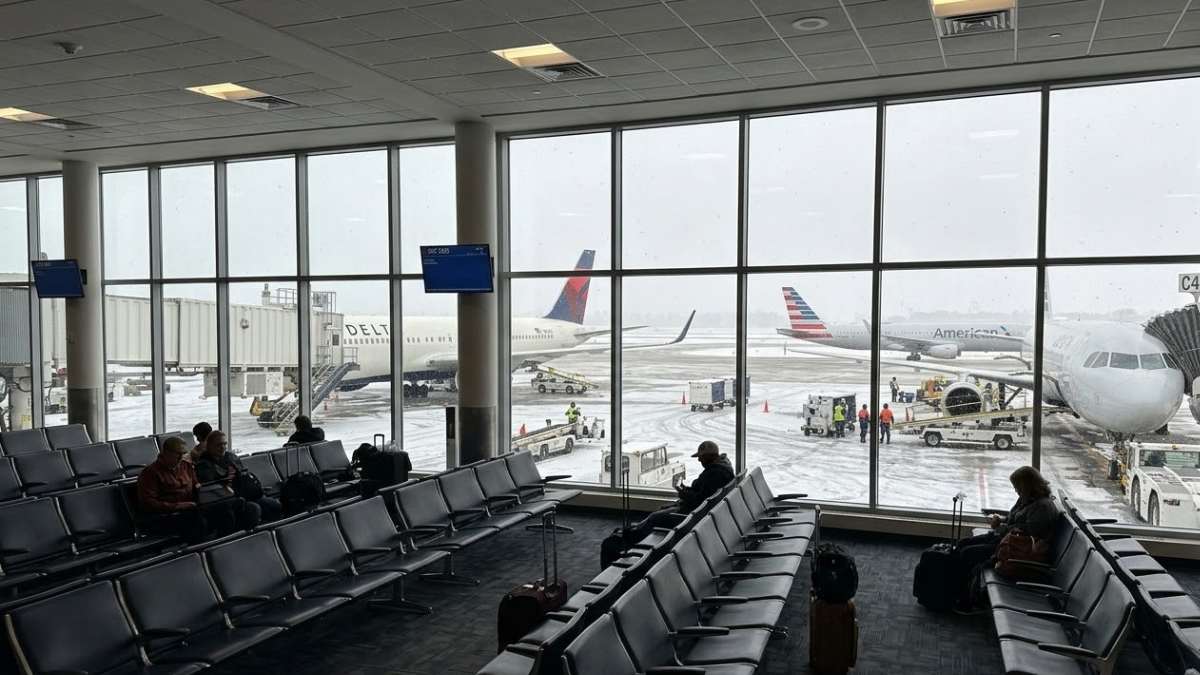
Image generated with AI
📊 Quick Summary
- • US airlines carried 81.2 million systemwide passengers in December 2025 — a 2.6% drop from December 2024's all-time record of 83.3 million
- • Domestic enplanements fell 3.1% year-on-year to 69.9 million, while international traffic hit a record 11.3 million passengers for any December
- • Delta, American, United, Southwest, Alaska, JetBlue, Spirit, and Frontier all contributed to the domestic decline as travelers shifted spending to international trips
- • Canada–US air travel dropped 18.7%, with Canadian-resident return trips to the US by air falling to roughly 470,700 — among the steepest contractions of any international market
US domestic airline passenger numbers fell 3.1 percent in December 2025 compared with the same month a year earlier, according to Bureau of Transportation Statistics (BTS) data, as Delta, American Airlines, United, Southwest, Alaska, JetBlue, Spirit, Frontier, and other major carriers together absorbed weakening domestic demand. The industry carried 69.9 million domestic passengers during the month, down from December 2024's record figure of 72.1 million — a broad-based softening driven by post-pandemic normalization, rising airfares, and a decisive consumer shift toward international travel.
International enplanements moved in the opposite direction, setting a new December record of 11.3 million passengers and helping push the seasonally adjusted total to 81.1 million — up 1.5 percent from November 2025 but still 2.7 percent below the all-time peak of 83.3 million reached in June 2024.
December 2025 US Airline Traffic at a Glance
| Category | Passengers | Year-on-Year Change |
|---|---|---|
| Systemwide enplanements | 81.2 million | –2.6% |
| Domestic enplanements | 69.9 million | –3.1% |
| International enplanements | 11.3 million | Record high |
| Seasonally adjusted total | 81.1 million | +1.5% vs Nov 2025 |
| All-time peak reference (Jun 2024) | 83.3 million | –2.7% vs peak |
Which Airlines Were Most Affected
The 3.1 percent domestic decline reflects a market-wide slowdown rather than the difficulties of any single carrier. Together, the following airlines represent the majority of US domestic capacity and drove the aggregate traffic figures reported by BTS.
American Airlines Group operates the largest US domestic network by passenger volume. Even modest demand shifts across its extensive route map translate into significant total passenger changes.
Delta Air Lines maintains broad domestic hub coverage. While strong international routes partially offset domestic pressure, slowing travel through its major US hubs contributed to the overall decline.
United Airlines serves domestic markets from hubs including Chicago, Denver, and Houston. Domestic softness weighed on its totals even as United's Atlantic and Pacific international traffic expanded.
Southwest Airlines is the most domestically exposed major carrier in the US, operating almost entirely within the country. Its concentration in domestic leisure travel means that any weakening in that segment directly amplifies the aggregate industry decline.
Alaska Airlines depends heavily on domestic West Coast routes. A pullback in domestic leisure travel volumes affected its passenger counts and added to the broader market contraction.
JetBlue Airways draws a significant share of its business from domestic flying out of New York and Boston. Reduced demand in those key markets played a role in the industry-wide result.
Spirit Airlines and Frontier Airlines, both ultra-low-cost carriers focused on domestic leisure routes, are particularly sensitive to budget-travel demand shifts. Pricing pressure and discretionary spending cuts in late 2025 likely affected both carriers' traffic.
Allegiant Air and Hawaiian Airlines round out the picture — Allegiant with its domestic leisure city-pair model, and Hawaiian with its mainland-to-Hawaii corridor — both exposed to the same domestic demand softness visible across the sector.
Six Reasons US Domestic Air Travel Fell in December 2025
1. Post-pandemic demand normalization. Domestic travel surged between 2021 and 2024 as pandemic restrictions lifted. By late 2025 that recovery cycle had matured, leaving year-on-year comparisons against record baselines difficult to beat.
2. Shift to international travel. US travelers increasingly redirected holiday spending to international destinations as global aviation fully reopened. The record 11.3 million international enplanements in December 2025 directly reflect this preference change.
3. Higher airfares. Rising fuel costs and operating expenses pushed domestic ticket prices higher. Price-sensitive leisure travelers — the core of the domestic market — responded by flying less or less frequently.
4. Capacity redeployment to international routes. Airlines moved aircraft from lower-margin domestic services to more profitable long-haul international routes in 2025, reducing available domestic seats on some corridors and contributing to lower absolute passenger counts.
5. Economic pressure on discretionary spending. Inflation, elevated interest rates, and increased household costs throughout 2025 squeezed leisure travel budgets. Short domestic trips are typically among the first travel expenses consumers reduce when budgets tighten.
6. Calendar and seasonal effects. Year-on-year monthly comparisons are sensitive to holiday date shifts and travel pattern timing. Minor calendar differences between December 2024 and December 2025 contributed to part of the measured gap.
Canada–US Air Travel Collapse Added to the Pressure
A sharp contraction in cross-border travel between Canada and the United States quietly compounded the domestic traffic decline. Canadian-resident return trips to the US by air fell approximately 18.7 percent year-on-year to around 470,700 trips in December 2025 — one of the steepest drops among any major international travel market. US-resident arrivals to Canada by air also declined, by approximately 8.9 percent, confirming a bilateral slowdown.
This cross-border weakness directly reduced passenger volumes on US airline flights serving Canadian routes. Strong demand on other international corridors — particularly Europe, Latin America, and parts of Asia — offset much of this drag and pushed overall US international enplanements to the December record, but the Canada–US shrinkage clearly left a mark on the total.
Key Facts
- Total US systemwide passengers, December 2025: 81.2 million (–2.6% YoY)
- Domestic passengers: 69.9 million (–3.1% YoY vs December 2024 record of 72.1M)
- International passengers: 11.3 million (record for any December)
- Seasonally adjusted total: 81.1 million (+1.5% vs November 2025)
- All-time peak: 83.3 million (June 2024 and December 2024)
- Canada–US air travel decline: –18.7% (Canadian-resident US trips, ~470,700)
- US-resident arrivals to Canada by air: –8.9%
- Source: Bureau of Transportation Statistics (BTS)
What This Means for Travelers
The December data confirms a structural shift in how Americans travel, not a crisis for the US airline industry. The softening is concentrated in domestic leisure segments, while international demand is at record levels — meaning flights to Europe, Latin America, and Asia are seeing strong competition for seats, and prices on popular international routes are likely to remain elevated in 2026.
For travelers planning domestic trips, the combination of reduced capacity on some routes and persistent cost pressures means domestic fares are not falling despite lower passenger totals. Booking early on domestic routes, particularly Southwest and frontier markets, remains advisable.
The Canada–US bilateral decline, at 18.7 percent, is the figure that airlines serving transborder routes will be watching most closely as 2026 progresses. If the decline persists, further capacity reductions on US–Canada corridors are likely.
FAQ: US Domestic Air Travel Decline December 2025
How much did US domestic air travel fall in December 2025?
US domestic passenger enplanements fell 3.1 percent year-on-year in December 2025 to 69.9 million, according to Bureau of Transportation Statistics data. This compares with 72.1 million domestic passengers in December 2024, which was a record for the month.
Which US airlines were most affected by the domestic traffic decline?
The decline was broad-based across the industry, with Delta, American Airlines, United, Southwest, Alaska, JetBlue, Spirit, Frontier, Allegiant, and Hawaiian Airlines all contributing to the lower aggregate figure. Southwest, as the most domestically concentrated major carrier, had the greatest structural exposure to weaker domestic demand.
Why did US domestic air travel fall while international travel hit records?
Several factors combined: post-pandemic demand normalization after record 2024 volumes, a consumer shift toward international travel, higher domestic airfares, airlines redeploying aircraft to more profitable international routes, and economic pressure on discretionary leisure spending. International enplanements reached a December record of 11.3 million as travelers redirected budgets to overseas trips.
Did the Canada–US travel slump affect US airline passenger numbers?
Yes. Canadian-resident return trips to the US by air dropped approximately 18.7 percent to around 470,700 trips in December 2025 — one of the steepest contractions of any international travel market. US-resident air arrivals to Canada also fell 8.9 percent, reducing demand on transborder routes operated by US carriers.
Related Travel Coverage
87 Canada Flights Canceled in Winter Storm — Toronto Pearson Hit Hardest
Europe: 815 Flights Canceled as Lufthansa Pilot Strike and Middle East Closures Collide
JFK Airport: 323 Delays and 22 Cancellations Hit Delta, JetBlue, and Lufthansa
Disclaimer
This article is for informational and educational purposes only. It does not constitute legal, financial, or professional advice. While we strive to provide accurate and up-to-date information, travel policies, regulations, and conditions change rapidly. Always verify information with official sources before making travel decisions. Nomad Lawyer makes no representations about the accuracy, reliability, completeness, or suitability of the information provided. Readers should consult qualified professionals for advice specific to their circumstances. The views expressed in this article are those of the author and do not necessarily reflect the views of Nomad Lawyer.
Kunal K Choudhary
Co-Founder & Contributor
A passionate traveller and tech enthusiast. Kunal contributes to the vision and growth of Nomad Lawyer, bringing fresh perspectives and driving the community forward.
Learn more about our team →