
U.S. Customs and Border Protection Increases Scrutiny on Frequent Canadian Border Crossers in 2026
U.S. Customs and Border Protection (CBP) is intensifying inspections of frequent Canadian travelers to identify unauthorized employment and illegal immigrant intent under Section 214(b) of the INA.

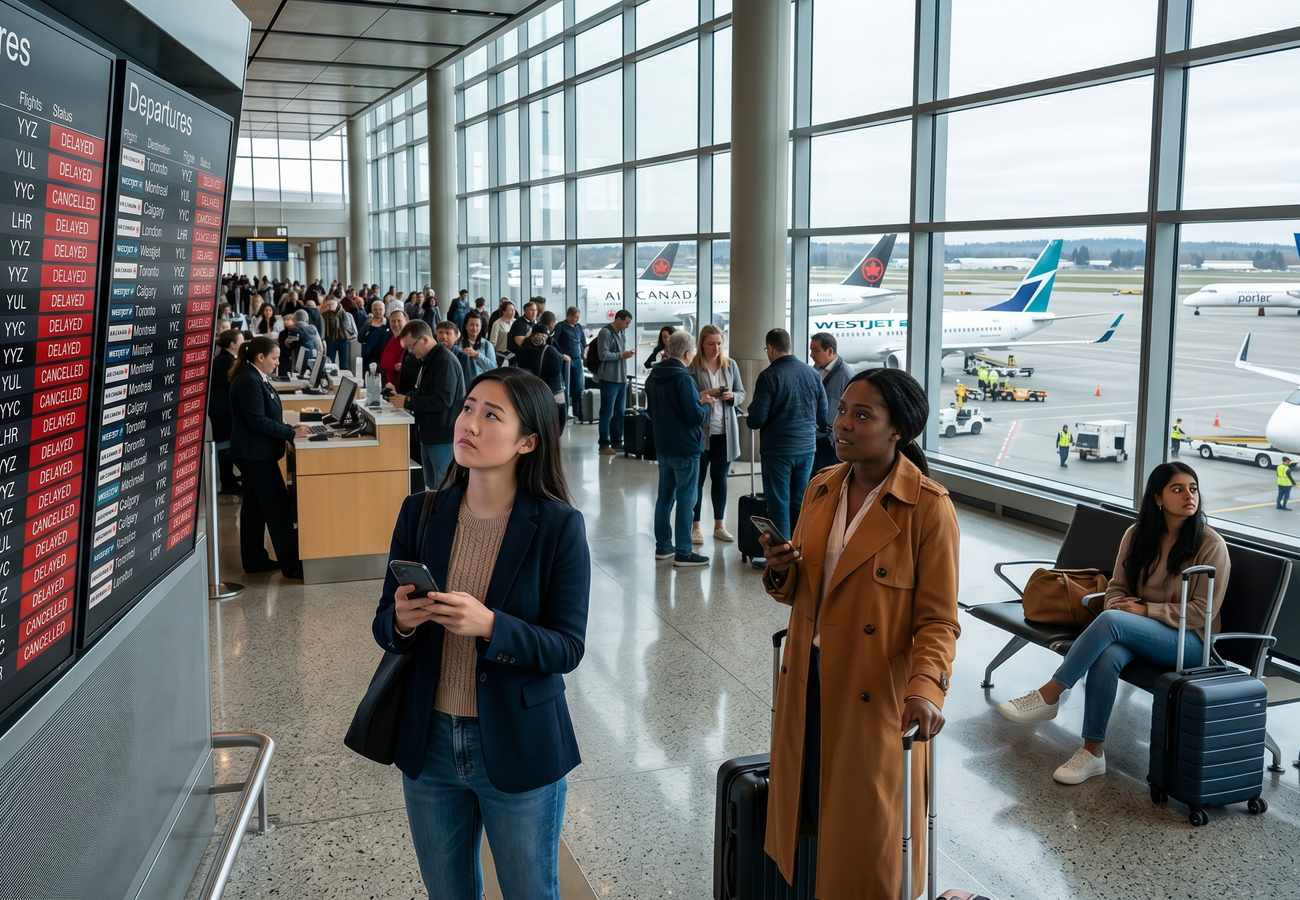
Image generated by AI
U.S. Customs and Border Protection (CBP) is increasingly flagging frequent Canadian travelers for secondary inspection, citing concerns over unauthorized remote work and "immigrant intent."
Despite the visa-exempt status afforded to Canadian citizens, CBP treats every arrival at a port of entry as a brand-new application for admission. A history of successful entries does not grant a legal right to future admission, and algorithmic triggers in Department of Homeland Security (DHS) databases are now identifying patterns that mimic unlawful residency or employment.
The Legal Framework of Border Refusals
Under Section 214(b) of the Immigration and Nationality Act (INA), CBP officers operate under a legal presumption of "immigrant intent." This means every foreign national is assumed to be intending to permanently relocate to the United States unless they can prove otherwise.
For frequent travelers, the burden of proof rests entirely on the individual. If an officer determines that a traveler lacks sufficient ties to Canada or is using short-term visits to effectively live in the U.S., they may be denied entry. In severe instances, officers may issue an expedited removal order under Section 235(b), which carries a mandatory five-year ban from the United States.
High-Risk Travel Patterns and CBP Red Flags
CBP utilizes real-time data to monitor the cumulative number of days spent within U.S. borders. While B-2 visitor status generally allows for visits of up to 180 days per year, staying close to this limit or exhibiting rapid, repetitive crossing patterns can trigger an automatic flag for secondary inspection.
The following patterns are currently identified as high-risk indicators for CBP officers:
| Trigger Category | Specific Red Flag Pattern | CBP Concern |
|---|---|---|
| Frequency | Weekend crossings (e.g., Thursday night to Monday morning) | Potential unlawful employment |
| Duration | High cumulative days in U.S. within a rolling 12-month period | De facto residency |
| Intervals | Short durations spent in Canada between U.S. entries | Using Canada as a "technical home base" |
| Destination | Repeated travel to the same residential address or ZIP code | Strong ties to U.S. over Canada |
| Consistency | Discrepancies between current and past verbal declarations | Fraudulent intent or deception |
The Remote Work and Relationship Trap
Two specific scenarios are significantly escalating the risk of secondary interrogation and device seizure.
1. Unauthorized Remote Employment Under current U.S. immigration guidelines, performing work while physically present on U.S. soil is considered unauthorized employment. This remains true even if the employer is Canadian, the salary is paid in CAD, and the work is performed entirely on a laptop. CBP officers have the authority to search mobile devices and laptops without a warrant at the border. The presence of professional tools, corporate files, or specialized equipment during a "casual" visit can lead to a conclusion that the traveler is working illegally.
2. Significant U.S. Ties While visiting a partner is legal, dating a U.S. citizen or Lawful Permanent Resident is viewed by CBP as a "strong tie" to the United States. This increases the perceived risk that the traveler will seek an adjustment of status or overstay their welcome.
Traveler Logistics Guide: Navigating the 2026 Border Environment
To mitigate the risk of being detained in secondary inspection or facing a formal entry ban, travelers should adopt a proactive documentation strategy.
Essential Documentation for Frequent Crossers Do not rely on the officer's ability to see your history in the system. Carry physical or digital copies of the following:
- Proof of Employment: A recent letter from a Canadian employer confirming your position and the requirement for you to return to work on a specific date.
- Residential Ties: Recent utility bills or a lease agreement in your name located in Canada.
- Return Itinerary: Confirmed round-trip tickets or a detailed travel itinerary.
- Destination Specifics: The exact address and contact information of where you will be staying.
Digital Transit Policies Be aware that CBP officers may request access to your phone to check messages, emails, or calendars to verify your intent. If you are a remote worker, avoid carrying high-volume corporate hardware (such as multiple monitors or specialized servers) during a B-2 visitor entry.
Handling Secondary Inspection If directed to secondary inspection, remain concise and consistent. Discrepancies between your current answers and previous entries logged in the I-94 arrival/departure record are primary drivers for entry denials. If an officer suggests a "withdrawal of application for admission," this is often a preferred alternative to a formal "expedited removal," as it may avoid a long-term ban.
Infrastructure and Connectivity Impact
The shift toward algorithmic enforcement represents a change in how the U.S.-Canada border functions as a transit corridor. The "frictionless" experience previously enjoyed by frequent crossers is being replaced by a data-driven scrutiny model. This is likely to reduce the volume of "border-hopping" for casual employment and may force a shift in how remote workers manage their international transit, potentially increasing the demand for formal work visas (such as the TN visa) over casual B-2 visitor entries.
Failure to demonstrate non-immigrant intent can transform a routine shopping trip into a five-year legal exile.
Related Travel Guides
Disclaimer
This article is for informational and educational purposes only. It does not constitute legal, financial, or professional advice. While we strive to provide accurate and up-to-date information, travel policies, regulations, and conditions change rapidly. Always verify information with official sources before making travel decisions. Nomad Lawyer makes no representations about the accuracy, reliability, completeness, or suitability of the information provided. Readers should consult qualified professionals for advice specific to their circumstances. The views expressed in this article are those of the author and do not necessarily reflect the views of Nomad Lawyer.
Raushan Kumar
Founder & Lead Developer
Full-stack developer with 11+ years of experience and a passionate traveller. Raushan built Nomad Lawyer from the ground up with a vision to create the best travel and law experience on the web.
Learn more about our team →