
US Coast Guard Issues Urgent Jet Ski Safety Alert for Florida and Hawaii as Travelers Survive Airport Disruptions and Flight Cancellations: Latest Airline News
As international tourists battle severe travel chaos to reach premium US coastal destinations, the government issues a critical safety warning regarding the escalating risks of jet ski rentals in Florida and Hawaii.

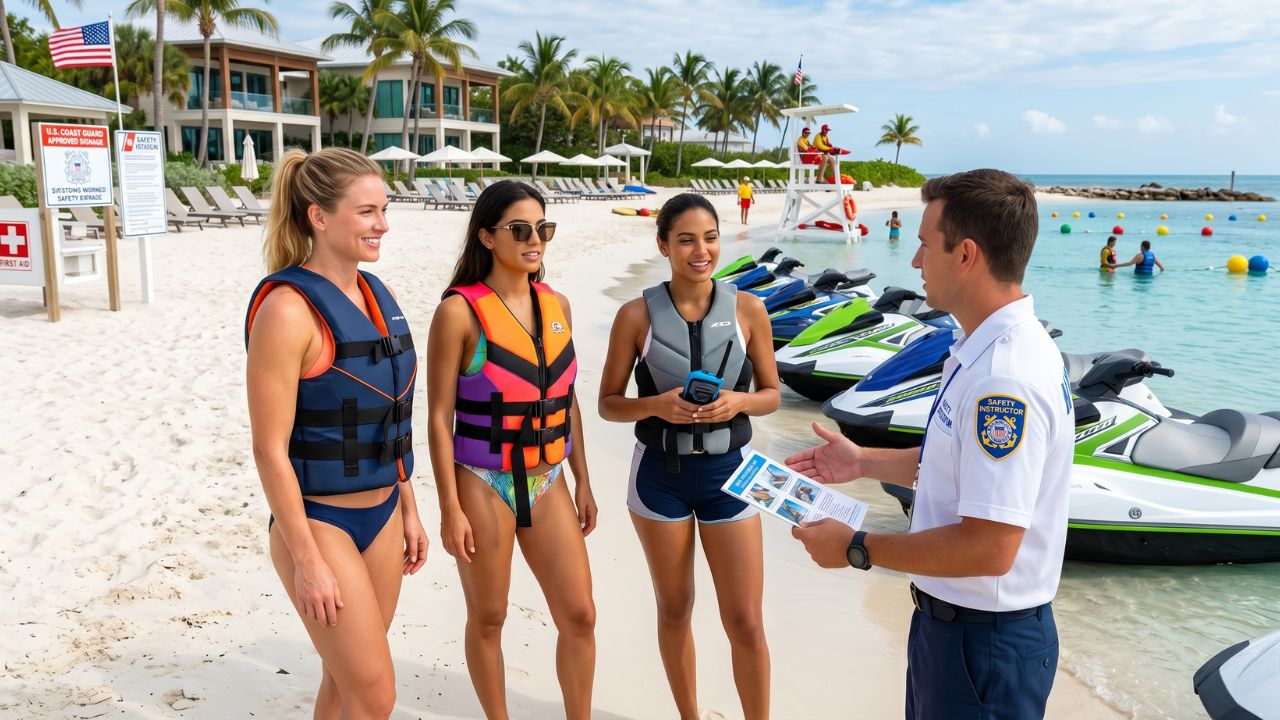
Image generated by AI
In a massive, highly specific regulatory update that directly impacts millions of international tourists currently battling widespread travel chaos to reach premium American coastal destinations, government-linked agencies have issued an urgent safety advisory. While travelers are primarily focused on surviving severe flight cancellations and grueling airport disruptions, the U.S. State Department and the U.S. Coast Guard are aggressively pivoting attention to severe on-the-ground marine risks. Following a surge in water sports accidents across high-traffic tourist beaches in Florida, Hawaii, Puerto Rico, and the U.S. Virgin Islands, authorities have released updated guidance regarding the extreme dangers of unregulated jet ski activities. As arriving passengers finally clear congested airport terminals only to face unpredictable coastal hazards, this critical marine safety intervention represents the premier headline in today's breaking airline news and essential global aviation updates.
By introducing direct passenger coordination and dynamic scheduling backups, the regional aviation hubs target growing passenger demand across vital commerce sectors. The choice to coordinate flight departures in phases helps to manage gate capacity, supporting the country's broader regional transportation network.
Context: Surviving the Terminal, Facing the Shoreline
The modern tourist pipeline is currently defined by severe logistical friction. When international airlines land passengers at major coastal hubs, the relief of escaping the airport is immediately replaced by a new set of physical risks.
Contrary to viral internet claims suggesting a nationwide restriction, the U.S. government explicitly confirms there is no federal ban on jet ski usage. Instead, personal watercraft remain fully permitted across most coastal and inland waterways, subject to state and local regulations. However, the U.S. Coast Guard, alongside the Florida Fish and Wildlife Conservation Commission and the Hawaii Department of Land and Natural Resources, is issuing these advisories precisely because accident data reveals a dangerous trend. Inexperienced tourists—exhausted from travel chaos and unfamiliar with local marine hazards—are renting high-powered personal watercraft and immediately encountering strong ocean currents and overcrowded beach zones. These safety warnings are entirely preventive, designed to ensure that tourists who survived international airline delays do not suffer avoidable injuries upon reaching the water.
To view live flight schedules, real-time terminal maps, or specific coastal weather protocols at primary U.S. gateways, travelers must consult official national directories. For direct booking access to coastal destinations and specific baggage rules, passengers should check the official American Airlines portal or their respective operating carrier. To explore live flight tracking and monitor the exact severity of inbound international routes, passengers can consult the official FlightAware tracking service.
Section-Wise Breakdown of the Targeted Coastal Hubs
Florida: High-Density Danger Zones
Major tourist destinations like Miami, Key West, and Fort Lauderdale are absorbing the absolute bulk of domestic and international flight arrivals. Because these beaches feature incredibly high tourist density, the water traffic risks are exponential. Inexperienced operators frequently cause collisions in crowded beach zones, forcing local marine safety agencies to aggressively police designated water zones and speed limits.
Hawaii: Unpredictable Pacific Hazards
The Hawaiian islands present a completely different risk profile. Tourists arriving via grueling transpacific flights often underestimate the physical power of the ocean. Strong surf, hidden reef structures, and highly unpredictable ocean currents require advanced caution. Local authorities emphasize that jet skis in these waters are incredibly dangerous if operated without strict adherence to proper safety briefings and local marine regulations.
California and the Caribbean
In California coastal zones, highly regulated marine areas severely limit safe jet ski operation to protect local ecosystems. Meanwhile, in Caribbean destinations including Puerto Rico and the U.S. Virgin Islands, tourism-based water sports are a major economic activity. Government tourism boards in these territories actively collaborate with marine safety authorities to ensure that rental operators follow strict safety standards, verifying that arriving passengers utilize only licensed vendors.
Technical Roster: U.S. Jet Ski Safety & Risk Matrix
To ensure absolute factual accuracy regarding the specific hazards tourists face upon escaping airport disruptions, the following table details the core risk factors and official safety recommendations defining the U.S. Coast Guard advisory:
| Marine Safety Factor | Official Risk Assessment / Recommendation | Global Travel Market Impact |
|---|---|---|
| Federal Regulation Status | No Federal Ban Exists | Personal watercraft remain legal; guidance is strictly preventative |
| Primary Accident Causes | Inexperience & Overcrowding | Tourists unfamiliar with local currents cause collisions in high-traffic zones |
| Intoxicant Restrictions | Zero-Tolerance for Alcohol | Operating jet skis under the influence drastically multiplies accident rates |
| Mandatory Safety Gear | Approved Life Jackets Required | Failure to wear safety gear remains a leading cause of severe marine injury |
| Operator Verification | Use Licensed Rental Vendors | Tourists must demand proper safety briefings to mitigate unpredictable wave risks |
Passenger Impact: The Final Leg of the Journey
For the everyday global tourist navigating the severe travel chaos of 2026, reaching the beach safely requires constant vigilance.
Passengers originating from Europe or Asia frequently arrive in Florida or Hawaii suffering from severe jet lag after navigating complex airline connections. This physical exhaustion directly compromises their reaction times when renting high-powered personal watercraft. The U.S. Coast Guard emphasizes that most accidents are entirely preventable. If a tourist ignores designated water zones or attempts to operate a jet ski under the influence of alcohol during a sudden coastal storm, the result is catastrophic. For the passenger, strict adherence to these localized safety advisories is the absolute final hurdle in ensuring a safe, successful vacation after surviving the gauntlet of modern international aviation.
Industry Analysis: Protecting the Tourism Economy
Aviation and hospitality industry analysts view this coordinated safety messaging as a critical component of protecting the multi-billion-dollar U.S. coastal tourism economy.
As coastal tourism continues to grow, with millions of international travelers landing at beach destinations during peak summer seasons, maintaining a safe recreational environment is paramount. Analysts note that viral headlines misinterpreting these advisories as a "nationwide ban" actually damage local economies. The U.S. State Department and Coast Guard routine communication frameworks are specifically designed to provide clarity, preventing international tourists from canceling their flight bookings out of confusion. Officials highlight that tourism-dependent coastal economies rely entirely on the perception of safety; therefore, strict enforcement of licensed jet ski operations is a shared, non-negotiable responsibility between local authorities and rental operators.
Actionable Advice for Surviving U.S. Coastal Destinations
If you are an international traveler planning an itinerary to popular U.S. beaches amidst ongoing global aviation volatility, execute this tactical marine safety checklist immediately:
- Verify Licensed Operators: Upon escaping the airport terminal, do not rent a jet ski from an unregulated beachfront vendor. Demand to see the operator's official licensing and ensure they provide a comprehensive, mandatory safety briefing regarding local ocean currents.
- Audit Your Physical State: Recognize the physical toll of travel chaos. Do not attempt to operate a high-speed personal watercraft if you are suffering from severe jet lag or exhaustion caused by international flight delays.
- Monitor Coastal Weather Alerts: In Florida and the Caribbean, sudden, violent afternoon thunderstorms are incredibly common. Always check official weather and sea condition alerts before initiating any water-based activity to avoid being trapped offshore during a squall.
- Mandate Safety Gear: Regardless of your swimming ability, ensure that the rental operator provides a U.S. Coast Guard-approved life jacket, and ensure it remains securely fastened for the absolute duration of your time on the water.
FAQ: U.S. Jet Ski Safety Advisory 2026
Has the U.S. government issued a nationwide ban on jet ski rentals?
No. Contrary to viral internet claims, there is absolutely no federal ban on personal watercraft; the U.S. Coast Guard has simply reinforced localized, cautionary safety guidance to prevent avoidable accidents.
Which specific tourist destinations are targeted by these marine safety warnings?
The safety advisories are heavily focused on high-density beach destinations where water sports are wildly popular, specifically Florida, Hawaii, California coastal zones, Puerto Rico, and the U.S. Virgin Islands.
What are the primary risk factors causing jet ski accidents among tourists?
Authorities identify strong ocean currents, unpredictable wave conditions, operator inexperience, overcrowded beach zones, alcohol consumption, and the failure to wear approved life jackets as the primary causes of severe marine injuries.
Ensuring Survival Beyond the Tarmac
The updated safety guidance from the U.S. Coast Guard proves definitively that protecting international travelers extends far beyond resolving flight cancellations and airport disruptions. As millions of tourists flood the pristine beaches of Florida, Hawaii, and the Caribbean, government authorities are aggressively combating the extreme dangers of unregulated marine recreation. By enforcing strict safety protocols, mandating licensed operators, and combating viral misinformation regarding federal bans, the United States is actively securing its coastal tourism economy. Travelers and aviation executives must accept a highly critical reality: surviving the severe travel chaos of the modern transit pipeline is only the first step; maintaining absolute situational awareness on the water is essential to ensuring a safe return home.
Key Takeaways
- No Federal Ban: The U.S. government has explicitly denied viral rumors of a nationwide jet ski ban, confirming that personal watercraft remain fully legal and regulated by state authorities.
- Florida & Hawaii Risks: High-density destinations like Miami and the unpredictable reef structures of Hawaii are the primary focus of the U.S. Coast Guard's preventative safety warnings.
- Preventable Accidents: The majority of severe marine injuries are caused by operator inexperience, alcohol consumption, and failure to wear Coast Guard-approved life jackets in crowded beach zones.
- Economic Protection: Tourism-dependent coastal economies rely heavily on these safety advisories to protect travelers and maintain confidence in the multi-billion-dollar water sports industry.
- Mandatory Safety Briefings: Official guidance strictly advises tourists to utilize only licensed rental operators and to demand comprehensive briefings on local ocean currents and speed limits.
Related Travel Guides
Extreme Heatwaves Trigger Travel Chaos Across Greece
Global Luxury Travel Market Surges Bypassing Commercial Travel Chaos
U.S. Coast Guard Marine Safety and Travel Logistics Discussion on Reddit
Disclaimer
This article is for informational and educational purposes only. It does not constitute legal, financial, or professional advice. While we strive to provide accurate and up-to-date information, travel policies, regulations, and conditions change rapidly. Always verify information with official sources before making travel decisions. Nomad Lawyer makes no representations about the accuracy, reliability, completeness, or suitability of the information provided. Readers should consult qualified professionals for advice specific to their circumstances. The views expressed in this article are those of the author and do not necessarily reflect the views of Nomad Lawyer.
Kunal K Choudhary
Co-Founder & Contributor
A passionate traveller and tech enthusiast. Kunal contributes to the vision and growth of Nomad Lawyer, bringing fresh perspectives and driving the community forward.
Learn more about our team →