
US Airports with the Longest Walking Distances Between Gates
A comprehensive transit study reveals the US airports with the longest gate-to-gate walking distances, led by Dallas/Fort Worth and Chicago O'Hare.

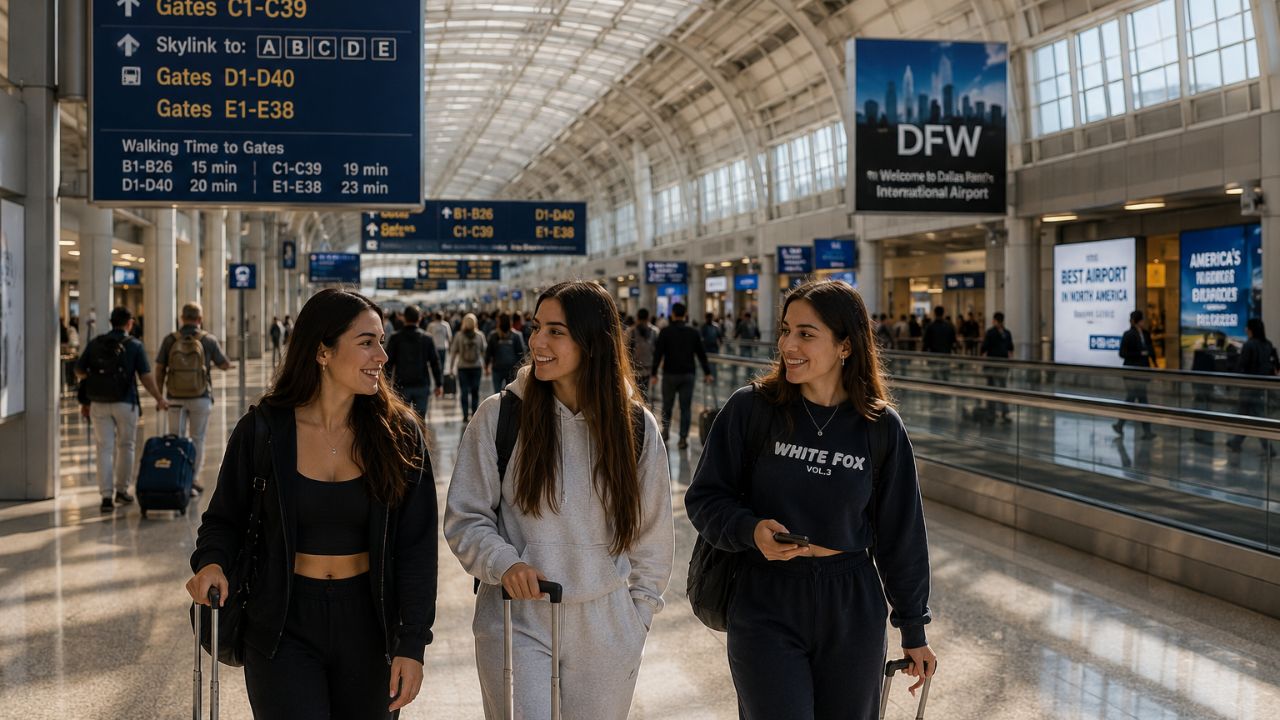
Image generated by AI
US airport terminal walking distances have increased significantly as modern transit hubs expand to accommodate growing passenger volumes. A new study highlights the airports that demand the longest treks between connecting gates.
Sprawling Terminal Architecture Extends Gate Walks
Modern aviation hubs require expansive layouts to separate aircraft safely and manage passenger flows. Data compiled by the Federal Aviation Administration (FAA) indicates that terminal designs have lengthened walking distances.
A comprehensive transit distance study conducted by Kuru Footwear ranked the physical dimensions of major US airports. The perimeter coordinates at Dallas/Fort Worth International Airport (DFW) recorded the longest continuous walk in the nation.
Travelers walking from the edge of Terminal B to the furthest gate in Terminal E face a 2.16-mile walk.
Major Hubs with Walking Distances Exceeding One Mile
Chicago O'Hare International Airport (ORD) registered the second-longest walking path, with a maximum continuous distance of 1.34 miles. This layout impacts passengers moving between domestic gates and international Terminals.
Other major transit hubs, including Hartsfield-Jackson Atlanta (ATL) and Denver (DEN), routinely demand walks exceeding one mile. Orlando International Airport (MCO) also features walking corridors that test passenger endurance.
These dimensions can cause travelers to miss tight connection windows when connecting flights are scheduled in separate concourses.
US Airports with the Longest Walking Distances
The tables below display the terminal walking distances and automated transit systems at major US hubs.
US Airports with the Longest Terminal Walking Distances
| Airport Code & Location | Maximum Continuous Walk | Principal Concourse Challenge |
|---|---|---|
| DFW (Dallas / Fort Worth) | 2.16 Miles | Terminal B perimeter to Terminal E gates |
| ORD (Chicago O'Hare) | 1.34 Miles | Transatlantic and domestic transfer corridors |
| ATL (Atlanta) | 1.00+ Miles | Multi-concourse linear spine layout |
| DEN (Denver) | 1.00+ Miles | Distant concourse terminals |
| MCO (Orlando) | 1.00+ Miles | Sprawling airside satellite design |
Automated Transit Systems at Major US Hubs
| Airport Hub | Internal People Mover Name | Service Type | Operational Target |
|---|---|---|---|
| Dallas / Fort Worth (DFW) | Skylink Train | High-Speed Overhead Monorail | Connects all five terminals airside |
| Atlanta Hartsfield (ATL) | Plane Train | Underground Automated People Mover | Services concourses T through F |
| Denver International (DEN) | Automated Guideway System | Underground Train | Connects main terminal to gates A, B, and C |
Strategies to Manage Sprawling Terminal Layouts
Travel coordinators recommend booking layover windows of at least 90 minutes when connecting at major hubs. This buffer time accounts for aircraft taxing, gate changes, and terminal transit.
Most mega-airports offer automated people movers (APM) to help passengers bypass long walking corridors. Using underground or overhead train systems, like the Skylink or Plane Train, reduces transit fatigue.
Elderly passengers or families traveling with strollers should request wheelchair or motorized cart assistance in advance.
Why This Matters
Our analysis of the flight data indicates that airport expansion projects prioritize gate capacity over passenger walking limits. As airlines transition to larger widebody aircraft, gates must be spaced further apart to maintain wingtip clearance. This design priority forces terminal structures to stretch outward, directly extending walking distances.
Additionally, this spatial design increases the risk of baggage delivery delays. Luggage must travel through miles of underground conveyor belts, matching the long pathways walked by passengers. The resulting scheduling pressure makes tight connection windows increasingly risky for travelers.
Industry Outlook
Market trends suggest that airport developers will focus on upgrading automated transit systems to improve passenger mobility. Future terminal designs will comply with FAA recommendations for centralizing security checkpoints.
Expect airports to integrate augmented reality navigation maps to guide passengers through long corridors. The current terminal configurations are scheduled to expand through the upcoming decade.
Key Takeaways
- Dallas Walk: Dallas/Fort Worth Airport has the longest continuous terminal walk, measuring 2.16 miles.
- O'Hare Distance: Chicago O'Hare ranks second with a maximum continuous gate-to-gate walk of 1.34 miles.
- One-Mile Threshold: Atlanta, Denver, and Orlando airports require walks exceeding one mile between distant gates.
- Transit Solutions: Automated people movers like the Skylink and Plane Train are vital to reducing traveler fatigue.
- Booking Buffer: Travel specialists advise securing connection times of at least 90 minutes at major US hubs.
FAQ
Which US airport has the longest walk between gates?
Dallas/Fort Worth International Airport (DFW) features the longest continuous walk at 2.16 miles.
Are there trains to help passengers at these airports?
Yes, most major hubs offer free automated people movers, such as the DFW Skylink and ATL Plane Train.
What is the recommended connection time for large hubs?
Travelers should schedule connection windows of at least 90 minutes to ensure they have enough time to reach their gates.
How can travelers request assistance for long walks?
Passengers can contact their airline 48 hours in advance to request wheelchair or motorized cart escorts.
Related Travel Guides
Disclaimer
This article is for informational and educational purposes only. It does not constitute legal, financial, or professional advice. While we strive to provide accurate and up-to-date information, travel policies, regulations, and conditions change rapidly. Always verify information with official sources before making travel decisions. Nomad Lawyer makes no representations about the accuracy, reliability, completeness, or suitability of the information provided. Readers should consult qualified professionals for advice specific to their circumstances. The views expressed in this article are those of the author and do not necessarily reflect the views of Nomad Lawyer.
Kunal K Choudhary
Co-Founder & Contributor
A passionate traveller and tech enthusiast. Kunal contributes to the vision and growth of Nomad Lawyer, bringing fresh perspectives and driving the community forward.
Learn more about our team →