
Major US Airlines Redesign Aircraft Fleets to Expand Luxury Premium Cabins Targeting High Spenders
Delta, United, and American Airlines are aggressively expanding premium seating, creating a widening cabin divide for air travelers.

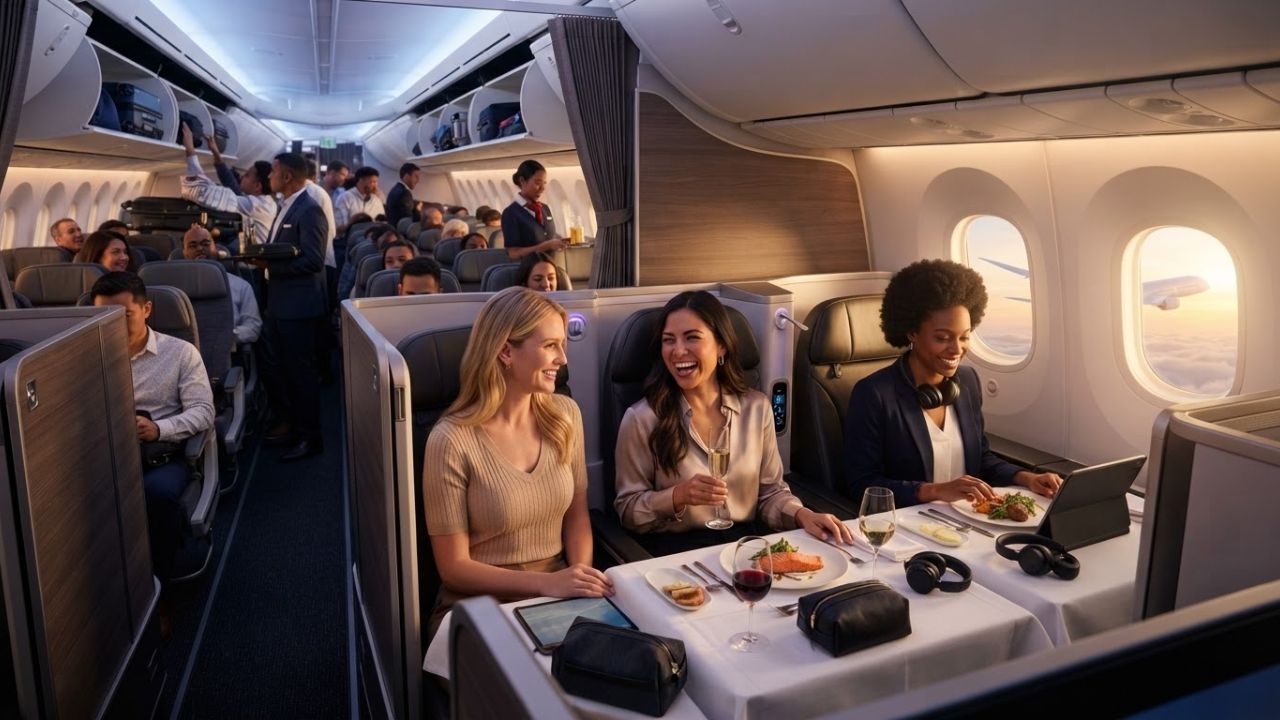
Image generated by AI
[Washington, July 10, 2026] — A fundamental restructuring of commercial air travel is underway across the United States as domestic carriers accelerate the redesign of their aircraft cabins. Boarding a modern flight reveals a growing division between ultra-luxury premium suites and high-density economy sections.
Industry observers note that carriers are dedicating larger portions of their fleet footprints to lie-flat seating, private doors, and exclusive amenities. This development marks a transition from mass-market accessibility to premium-yield optimization.
The business models underpinning commercial aviation in North America have experienced a long-term structural pivot. Data from the U.S. Department of Transportation and the Bureau of Transportation Statistics show that while overall passenger numbers have returned to pre-pandemic levels, profitability is increasingly driven by high-yield fares.
Delta Air Lines, United Airlines, and American Airlines are dedicating significant capital expenditures to acquire next-generation aircraft and retrofit existing cabins. By expanding business-class, first-class, and premium-economy spaces, these operators are aiming to capture a larger share of discretionary spending from affluent flyers.
For passengers, this fleet realignment creates a highly polarized travel market. Corporate travelers and high-income leisure flyers enjoy an elevated standard of comfort, featuring enhanced privacy, premium dining options, and access to dedicated airport lounges.
Conversely, budget travelers face rising base fares and increasingly restrictive ticketing rules. Basic economy tickets, which appear cost-effective on booking engines, frequently omit seating assignments, carry-on baggage allowances, and flight change options. When passengers purchase these options separately, the total cost often matches or exceeds standard economy fares.
The focus on luxury seating represents a significant shift for an industry that historically aimed to democratize air travel. Aviation intelligence reports show that premium cabins generate a disproportionate share of airline revenues relative to the physical cabin space they occupy.
On high-density routes, such as transatlantic corridors, premium ticket sales regularly equal the revenue of the entire economy cabin. Former airline executives state that premium offerings have evolved from high-cost perks into the highest-margin assets in the skies. Consumer advocacy groups, including the American Economic Liberties Project, have expressed concern that this polarization disadvantages the average traveler.
Airlines are committing to long-term fleet adjustments to lock in this premium-heavy strategy. American Airlines plans to increase its premium seating capacity by 50% by 2030, retrofitting its narrowbody and widebody fleets.
Upcoming long-haul Airbus deliveries for major carriers will allocate nearly half of their total cabin space to premium classes. To navigate this changing travel market, passengers can monitor regulatory updates from the U.S. Department of Transportation, which enforces guidelines on fare transparency and passenger refund rights. Real-time operational data and flight delays are tracked by the Federal Aviation Administration.
Fleet Restructuring and Revenue Metrics
- Premium Expansion Targets: American Airlines plans a 50% increase in premium seating capacity by 2030.
- Next-Gen Fleet Layouts: Upcoming Airbus long-haul arrivals will dedicate nearly half the cabin footprint to premium classes.
- Primary Profitability Driver: Premium cabins now generate the highest profit margins for major US commercial carriers.
- Ancillary Budget Traps: Basic economy tickets increasingly exclude carry-on bags, seat selection, and change flexibility.
Impact Analysis
The rapid expansion of premium cabins represents a significant change in fleet economics. By dedicating more cabin square footage to business and premium economy seating, airlines are reducing total seat counts on individual aircraft. While this layout structure increases average yield per passenger, it reduces the overall seat inventory available to budget travelers. As a result, standard economy passengers are facing higher base fares due to supply limitations. Additionally, the proliferation of basic economy fares represents a strategic unbundling of services, allowing airlines to advertise low entry-level prices while collecting significant ancillary revenues from checked bags, seat assignments, and changes.
Why This Matters
Our analysis of the fleet data indicates that the massive expansion of premium cabins represents a structural defense mechanism against volatile fuel prices and rising labor costs. Airlines have realized that relying on price-sensitive economy travelers makes them highly vulnerable to economic downturns. By locking in high-spending corporate and premium leisure flyers, carriers insulate their revenue streams. However, this strategy carries significant operational risks. Restructuring cabins to hold fewer seats overall reduces an airline's flexibility during periods of mass disruptions. When a flight is cancelled, finding empty seats for displaced passengers is much harder in a premium-heavy configuration. This transition also forces budget travelers to pay higher indirect costs, effectively subsidizing the premium passenger experience.
Industry Outlook
Market trends suggest that the cabin divide will widen as airlines introduce new seating concepts and premium amenities. Travelers must adapt by carefully calculating total journey costs, factoring in luggage and seat selection fees prior to booking.
FAQ
Why are US airlines expanding premium cabins?
Airlines are expanding premium seating because these sections generate disproportionately high profit margins and help insulate carriers from fluctuations in economy passenger demand.
Which airlines are leading this fleet redesign?
Major US legacy carriers, including Delta Air Lines, United Airlines, and American Airlines, are aggressively expanding their premium cabin configurations.
What are the main limitations of basic economy tickets?
Basic economy fares typically exclude seat selection, carry-on bags, and ticket change flexibility, which must be purchased as separate add-ons.
Related Travel Guides
- Bengaluru Kempegowda Airport Named World's Most On-Time Large Airport in July 2026: Cirium Report
- Travel Chaos Peaks as JFK and Newark Named America's Most Stressful Airports Amid Rising Flight Cancellations and Disruptions: Latest Airline News
- Starlux Airlines Deploys Massive A350-1000 on Taipei-Phoenix Route, Shielding Transpacific Travelers from Severe Flight Cancellations and Regional Travel Chaos: Latest Airline News
Disclaimer
This article is for informational and educational purposes only. It does not constitute legal, financial, or professional advice. While we strive to provide accurate and up-to-date information, travel policies, regulations, and conditions change rapidly. Always verify information with official sources before making travel decisions. Nomad Lawyer makes no representations about the accuracy, reliability, completeness, or suitability of the information provided. Readers should consult qualified professionals for advice specific to their circumstances. The views expressed in this article are those of the author and do not necessarily reflect the views of Nomad Lawyer.
Preeti Gunjan
Contributor & Community Manager
A passionate traveller and community builder. Preeti helps grow the Nomad Lawyer community, fostering engagement and bringing the reader experience to life.
Learn more about our team →