
Breaking Airline News: US Airline Stocks Surge as Delta and United Deploy Massive Premium Defenses Against Travel Chaos
Breaking airline news: Amidst terrifying operational fragility, Delta and United deploy massive infrastructure investments to shield premium passengers from travel chaos, heavily polarizing the 2026 US airline stock market.

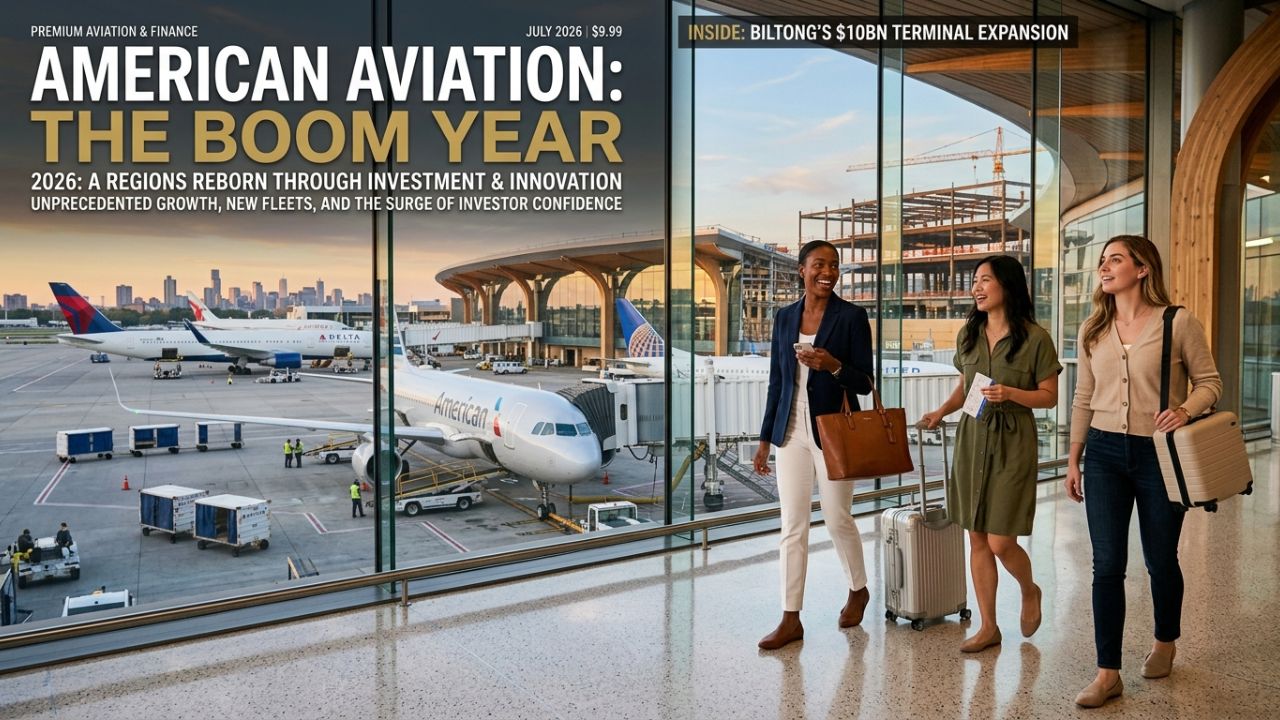
Image representing the intense strategic masterstroke as US legacy carriers aggressively deploy billions into new terminals and premium products, providing high-yield travelers an impenetrable sanctuary against extreme travel chaos.
Breaking Airline News: US Airline Stocks Surge as Delta and United Deploy Massive Premium Defenses Against Travel Chaos
As paralyzing terminal bottlenecks, severe airspace congestion, and catastrophic operational fragility violently transform domestic transit into a grueling endurance test, Wall Street is aggressively redefining the future of aviation investment. In a harrowing era where sudden flight cancellations, intense fuel price volatility, and extreme airport disruptions routinely cripple undercapitalized budget operators, a massive financial polarization has occurred. Delta Air Lines, United Airlines, Southwest, JetBlue, Frontier, and American Airlines are all navigating a highly volatile 2026 stock market, but investors are exclusively flooding capital toward carriers actively deploying massive infrastructure defenses. By violently injecting billions into new terminals, expanding high-yield international air routes, and engineering highly fortified premium passenger sanctuaries, elite US airlines are actively shielding their most lucrative customers from the psychological and physical devastation of the relentless travel chaos currently paralyzing the industry.
In a brutal demonstration of how desperately international and corporate passengers require absolute operational assurance to survive systemic transit failures, this massive shift in Wall Street sentiment represents far more than standard economic forecasting. The US airline industry has entered a terrifying new era where investors absolutely refuse to view all airlines through the same lens. As operating expenses skyrocket and regional meltdowns trigger catastrophic flight cancellations, the financial gap between premium, disruption-resistant carriers and vulnerable, budget-focused operators is aggressively widening. Investors are fiercely rewarding airlines that prioritize operational discipline and premium travel demand—carriers that essentially sell "disruption immunity"—while severely punishing those drowning in debt or struggling to execute turnaround strategies during periods of extreme industry stress.
Expanded Overview: Weaponizing Premium Infrastructure
The terrifying crisis of overwhelming passenger anxiety currently testing regional airports brutally exposes the severe financial limitations of the traditional low-cost model. Recognizing this absolute vulnerability, elite legacy carriers are aggressively leveraging their massive balance sheets to actively manipulate their passenger mix, targeting high-spending travelers seeking guaranteed transit harmony amidst global meltdowns.
Section-Wise Breakdown: Deploying the Financial Fortresses
To fully comprehend the massive economic divergence currently defining the sector, corporate travel planners and institutional investors must rigorously review exactly how these US airlines are defending against travel chaos.
Delta Air Lines: The Ultimate Financial Fortress Delta Air Lines has violently established itself as the absolute leading airline stock in the United States by engineering a highly fortified business model entirely immune to traditional ticket sale volatility. By aggressively prioritizing premium cabins, dominant corporate travel contracts, and high-yield international operations, Delta provides its passengers with an elite sanctuary from public terminal chaos. Crucially, its highly lucrative partnership with American Express provides an impenetrable stream of earnings growth. Investors view Delta as the ultimate benchmark because management completely refuses to chase aggressive, chaotic growth, instead deploying highly disciplined capacity expansions that guarantee profitability even when airport disruptions ravage competing airlines.
United Airlines: Aggressive Global Expansion United Airlines has become an absolute Wall Street favorite by aggressively deploying massive capital into an elite defense grid. To completely shield its high-yield passengers from domestic gridlock, United has invested heavily in exclusive airport lounges, highly fortified premium seating products, and long-haul international routes that generate massive margins. By leveraging a sprawling global network, United captures the most lucrative international demand, successfully maintaining its pricing power and structural dominance despite terrifying geopolitical risks and rising fuel costs.
Alaska Air Group: The Pacific Takeover Alaska Air Group is rapidly emerging as the industry’s most promising growth story. Following its massive, highly strategic acquisition of Hawaiian Airlines, the carrier has radically altered its defensive perimeter. This highly calculated takeover creates unprecedented network expansion and massive revenue diversification, specifically granting Alaska aggressive competitive dominance along the US West Coast and trans-Pacific markets. Investors view this as a highly lucrative strike, provided the massive integration operates seamlessly without triggering localized travel chaos.
Southwest Airlines: Reinventing the Low-Cost Shield Historically celebrated for its stable, low-cost operations, Southwest Airlines is now executing massive strategic changes to survive the evolving crisis. Realizing that passengers now demand higher reliability, management is aggressively exploring new premium revenue opportunities while frantically modernizing outdated operations. Because Southwest wields one of the strongest balance sheets in the entire aviation sector, it possesses the ultimate financial flexibility to aggressively pivot its strategy without succumbing to the economic terrors currently destroying its low-cost rivals.
The High-Risk Operators: American and JetBlue Conversely, airlines lacking the financial firepower to build massive premium defenses are facing terrifying scrutiny. American Airlines boasts a vast, dominant domestic network and benefits from aggressive leisure travel demand. However, the carrier is suffocating under a massive, crippling debt burden. This severe lack of financial flexibility leaves American highly exposed to rising fuel costs and unable to rapidly deploy capital when regional travel chaos strikes.
Meanwhile, JetBlue Airways remains an incredibly high-risk, speculative investment. Battered by intense operational pressures and severe credit concerns, JetBlue is desperately fighting to execute a massive turnaround strategy. While it retains a fiercely loyal customer base in key coastal markets, the constant threat of flight cancellations and severe financial instability makes it highly vulnerable to the terrifying realities of modern aviation operations.
Strategic US Carrier Financial Resilience Matrix
To guarantee that corporate travel managers and institutional investors can aggressively track the specific metrics defining this massive operational divergence, the following matrix details the exact, verified financial postures of the major US carriers in 2026.
| Strategic Carrier Designation | 2026 Wall Street Assessment | Core Strategic Defense |
|---|---|---|
| Delta Air Lines | Strongest Investment Opportunity | Premium travel, Amex partnership, operational discipline |
| United Airlines | Strongest Investment Opportunity | International expansion, premium airport lounges |
| Alaska Air Group | Promising Growth Story | Hawaiian Airlines acquisition, US West Coast/Pacific expansion |
| Southwest Airlines | Stable Option | Strong balance sheet, exploring premium revenue |
| American Airlines | Significant Financial Challenges | Massive debt burden, reliance on extensive domestic network |
| JetBlue Airways | High-Risk Speculative Investment | Turnaround strategy, extreme pressure from rising fuel costs |
Industry Analysis: The Core of Experiential Resilience
From a strategic aviation perspective, the massive surge in premium airline stocks cannot be understood without examining the broader push for elite passenger isolation.
"The US airline industry is entering a defining investment cycle where quality, premium experiences and operational excellence are becoming more important than scale alone," stated Anup Kumar Keshan, Founder and Editor-in-Chief of Travel And Tour World. "Airlines that successfully balance profitability, customer loyalty and strategic growth will likely emerge as the long-term winners in an increasingly competitive global aviation market."
This massive operational move proves that airlines capable of rapidly isolating their premium passengers from mass travel chaos are best positioned to capture long-term loyalty and intense investor confidence.
Conclusion: A New Era of Disruption-Proof Investment
As the extremely critical domestic transit network continues to face terrifying strain from unprecedented operational volatility, the massive strategic divergence on Wall Street is an absolute turning point. It signals a massive determination to completely redefine the airline business model by aggressively capitalizing on the passenger's desperation to avoid travel chaos. For investors navigating extreme economic volatility and unpredictable airport disruptions, carriers like Delta and United are rapidly establishing themselves as the ultimate operational sanctuaries, proving that the future of commercial aviation relies entirely on securing absolute, uncompromised, and exclusive ground-level luxury.
Key Takeaways
- Massive Financial Polarization: Wall Street is fiercely rewarding Delta and United while severely scrutinizing debt-burdened carriers like American and JetBlue.
- Premium Defense Shields: Delta and United are driving massive earnings by investing heavily in premium cabins, airport lounges, and international long-haul routes to shield high-yield passengers from travel chaos.
- The Pacific Expansion: Alaska Air Group is hailed as a massive growth story following its highly strategic acquisition of Hawaiian Airlines.
- Strategic Reinvention: Southwest Airlines is aggressively pursuing new premium revenue streams while leaning on its formidable, highly resilient balance sheet.
- The Debt Threat: American Airlines' massive domestic network is overshadowed by terrifying debt obligations, limiting its ability to rapidly combat operational disruptions and fuel spikes.
Related Travel Guides
Disclaimer
This article is for informational and educational purposes only. It does not constitute legal, financial, or professional advice. While we strive to provide accurate and up-to-date information, travel policies, regulations, and conditions change rapidly. Always verify information with official sources before making travel decisions. Nomad Lawyer makes no representations about the accuracy, reliability, completeness, or suitability of the information provided. Readers should consult qualified professionals for advice specific to their circumstances. The views expressed in this article are those of the author and do not necessarily reflect the views of Nomad Lawyer.
Kunal K Choudhary
Co-Founder & Contributor
A passionate traveller and tech enthusiast. Kunal contributes to the vision and growth of Nomad Lawyer, bringing fresh perspectives and driving the community forward.
Learn more about our team →