
Australia's Ultra-Long-Haul Aviation Revolution: Ten New Nonstop Routes Reshape Global Connectivity
Breaking airline news and aviation industry updates for 2026.

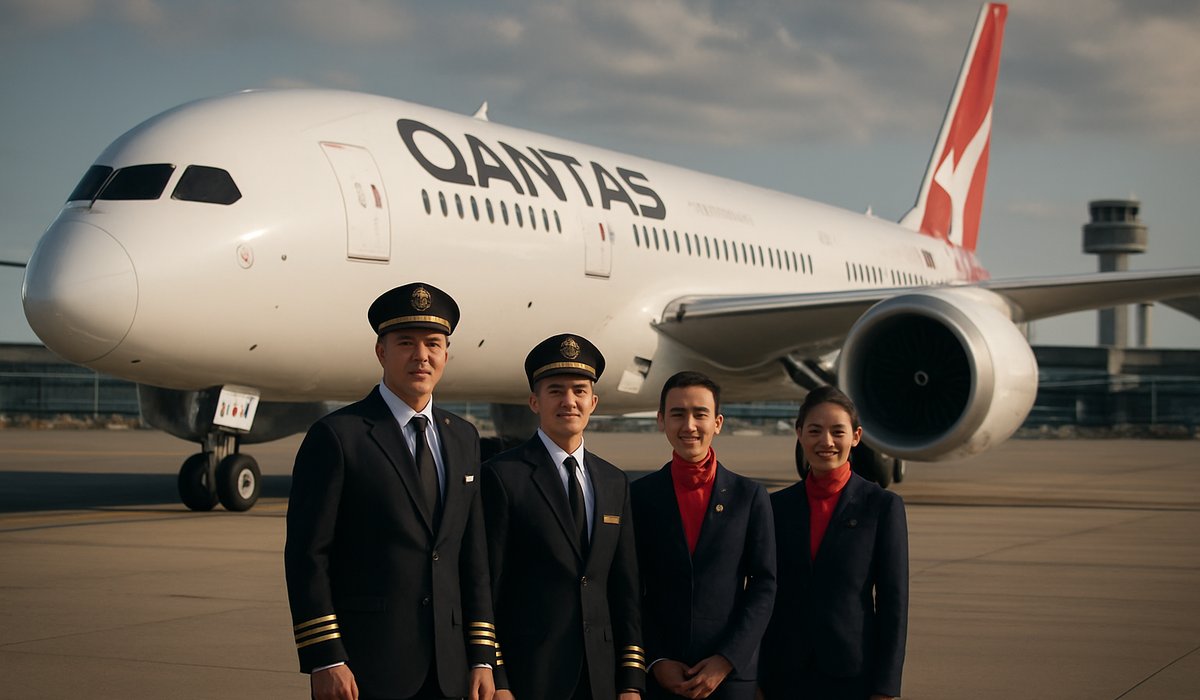
Image generated by AI
Australia's Ultra-Long-Haul Aviation Revolution: Ten New Nonstop Routes Reshape Global Connectivity
Qantas expands international network with flights exceeding 9,000 miles, cementing Australia's position as a hub for world's longest commercial air routes
The Emergence of Extreme Distance Aviation
Australia is rapidly establishing itself as the epicenter of the world's most ambitious nonstop flight operations, with carriers now deploying aircraft on routes stretching up to 9,000 miles without intermediate stops. This expansion represents a significant shift in how airlines are connecting the Australian continent to distant international markets, fundamentally reshaping travel patterns across the Asia-Pacific region and beyond.
Qantas Airways, Australia's national carrier, has secured its dominance in this emerging segment by becoming the world's sole operator of regular nonstop services linking the Australian continent directly to Europe. The airline's established year-round operations to London and Paris, complemented by seasonal connectivity to Rome, underscore the viability of ultra-long-haul aviation and the technological capabilities of modern aircraft fleets.
Ten New Routes Redefine Distance Benchmarks
The introduction of ten additional nonstop routes from Australian gateways marks a watershed moment for the aviation industry. These services exceed traditional distance limitations and demand aircraft engineered specifically for extreme endurance flights—typically spanning 19-25 hours of continuous flight time with minimal crew rotation.
The routes represent substantial investments in fuel-efficient aircraft and advanced navigation systems, reflecting how airlines are leveraging newer technology to access previously underserved markets. Airlines have had to recalibrate operational strategies, cabin configurations, and crew scheduling protocols to accommodate journeys of this unprecedented length.
Industry-Wide Implications and Market Dynamics
The expansion of nonstop ultra-long-haul services creates competitive pressure across the aviation sector. As jet fuel prices remain elevated and airline operating costs continue climbing, carriers deploying on these routes must balance premium pricing strategies against demand elasticity. The introduction of multiple competing services on identical routes could suppress fares, benefiting travelers while compressing airline margins.
Airports in secondary Australian cities stand to gain significant connectivity benefits, reducing passenger dependency on traditional hub-and-spoke models concentrated in Sydney and Melbourne. This decentralization could reshape regional economic development and tourism patterns across the continent.
Qantas's Strategic Position
Qantas's exclusive position operating Australia-to-Europe services provides a temporary competitive moat, though this advantage faces potential erosion as additional carriers obtain compatible aircraft and regulatory approvals. The airline's investment in ultra-modern long-range aircraft—engineered for maximum fuel efficiency and extended crew operations—positions it favorably for sustained market dominance.
The carrier's ability to command premium positioning on these routes reflects both scarcity value and passenger demand for direct connectivity, factors that support premium pricing relative to one-stop competitors.
FAQ: Understanding Australia's Ultra-Long-Haul Aviation Expansion
Q: What defines an ultra-long-haul flight, and why are 9,000-mile routes significant? Ultra-long-haul flights exceed 14+ hours of continuous flight time, with 9,000-mile routes typically requiring 17-25 hours of airborne time, pushing the operational limits of aircraft design and crew endurance regulations.
Q: How do ultra-long-haul routes impact airline fees and baggage charges? Extended flights increase operational costs per passenger, often resulting in premium cabin pricing and refined baggage policies, though some carriers use unlimited baggage as a competitive differentiation tool on competitive routes.
Q: Which aircraft models enable these extreme-distance nonstop services? Boeing's 787 Dreamliner and Airbus's A350 aircraft, equipped with fuel-efficient engines and lightweight composite construction, dominate ultra-long-haul operations due to superior range and lower jet fuel consumption per available seat kilometer.
Q: How do elevated jet fuel prices influence nonstop route viability? Fluctuating jet fuel costs directly impact per-seat operating expenses on ultra-long-haul routes; sustained fuel price elevation can render marginal routes unprofitable, forcing carriers to adjust capacity, pricing, and route networks accordingly.
Q: What competitive advantages does Qantas maintain on Australia-Europe routes? As the sole current operator of regular nonstop Australia-Europe services, Qantas captures premium market positioning, though this advantage remains temporary pending new aircraft deliveries and regulatory approvals for competing carriers.
Related Travel Guides
Flight Delay Compensation Guide 2026
Understanding Airline Route Changes
Airport Security Process Updated (2026)
External Resources
Disclaimer
This article is for informational and educational purposes only. It does not constitute legal, financial, or professional advice. While we strive to provide accurate and up-to-date information, travel policies, regulations, and conditions change rapidly. Always verify information with official sources before making travel decisions. Nomad Lawyer makes no representations about the accuracy, reliability, completeness, or suitability of the information provided. Readers should consult qualified professionals for advice specific to their circumstances. The views expressed in this article are those of the author and do not necessarily reflect the views of Nomad Lawyer.
Preeti Gunjan
Contributor & Community Manager
A passionate traveller and community builder. Preeti helps grow the Nomad Lawyer community, fostering engagement and bringing the reader experience to life.
Learn more about our team →