
Aviation Updates: United Airlines Flight UAL2388 Boeing 737-700 N54711 Diverts from Houston to Washington Dulles Route to Charlotte Douglas International Airport on June 23, 2026 in Precautionary Mid-Flight Operational Decision That Disrupts East Coast Air Travel
United Airlines Flight UAL2388, a Boeing 737-700 registered N54711 operating the Houston Intercontinental (IAH) to Washington Dulles (IAD) route, executed a precautionary mid-route diversion to Charlotte Douglas International Airport (CLT) on June 23, 2026 — landing safely under standard FAA aviation safety protocols after an unscheduled course change during the eastbound sector.

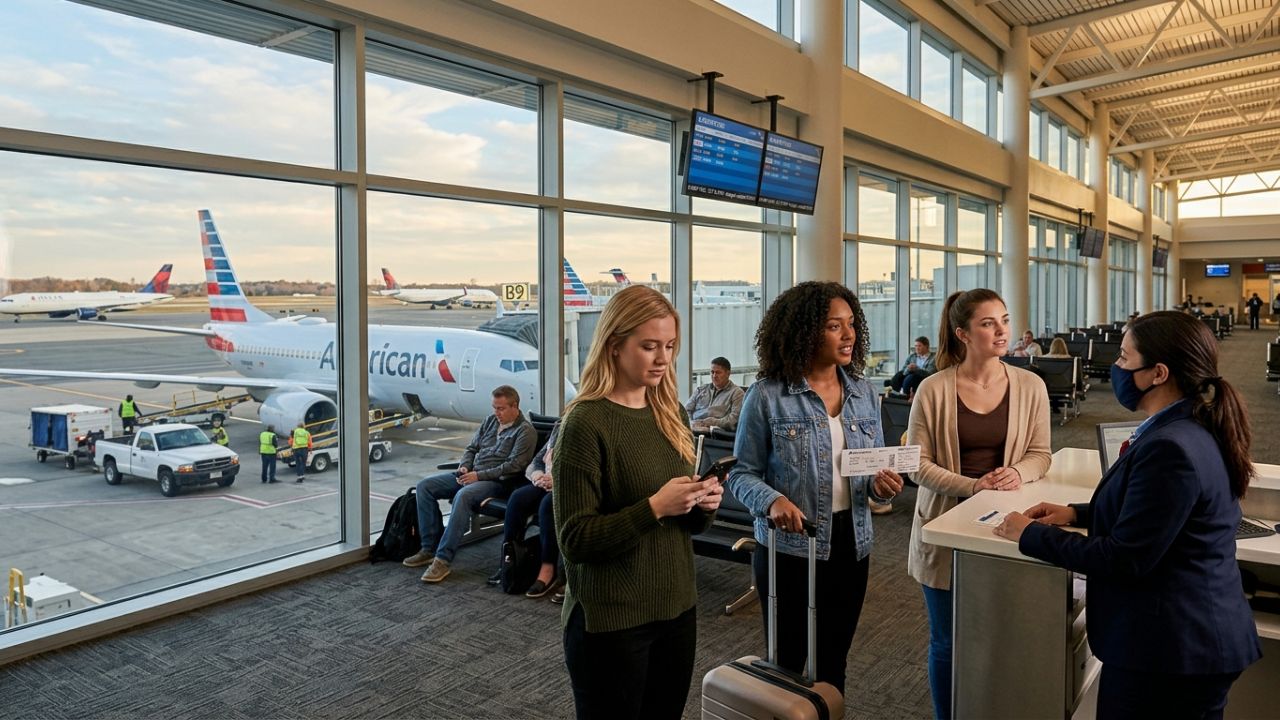
Image generated by AI
Aviation Updates: United Airlines Flight UAL2388 Boeing 737-700 N54711 Diverts from Houston to Washington Dulles Route to Charlotte Douglas International Airport on June 23, 2026 in Precautionary Mid-Flight Operational Decision That Disrupts East Coast Air Travel
When the calculated certainty of a routine domestic sector gives way to an unplanned diversion in American airspace, the precision of modern aviation safety protocols is put immediately and visibly to the test — and on June 23, 2026, a United Airlines Boeing 737-700 made exactly that test, and passed it.
Confirmed airline news reported by real-time aviation tracking platforms FlightAware and Flightradar reveals that United Airlines Flight UAL2388, operated by a Boeing 737-700 registered N54711, executed an unscheduled mid-route diversion to Charlotte Douglas International Airport (CLT) on June 23, 2026 while operating what should have been a routine domestic sector from Houston Intercontinental Airport (IAH) to Washington Dulles International Airport (IAD). The aircraft altered its eastbound flight path during the en-route phase, descending toward Charlotte rather than continuing into Washington's high-density terminal airspace — landing safely at CLT without incident in what aviation safety protocols formally classify as a precautionary diversion.
The event drew immediate attention within the aviation updates community because it highlights a critical but often misunderstood dimension of modern commercial flight operations: the fundamental priority that pilots, airlines, and the Federal Aviation Administration place on controlled, proactive responses to in-flight operational alerts — even when those alerts do not constitute a declared emergency. For the passengers aboard Flight UAL2388, a domestic journey that began ordinarily at Houston Intercontinental ended unexpectedly at a different airport entirely, triggering airport disruption protocols, passenger rebooking procedures, and a technical inspection cycle that are the standard operational response to any unscheduled diversion at a major US hub. No specific technical, medical, or environmental cause has been officially disclosed in the available operational record, consistent with standard airline communication practices during active investigation phases.
Expanded Overview: The Operational Significance of a Houston-Washington Diversion
The Houston Intercontinental–Washington Dulles corridor is one of the United States' most commercially vital domestic city pairs — a route that connects Texas's dominant energy and petrochemical capital with the federal government hub of the eastern seaboard. United Airlines operates this sector as part of its core hub-to-hub domestic network, with IAH functioning as one of the carrier's primary Star Alliance gateway hubs and IAD serving as United's preferred Washington gateway for both domestic and transatlantic connections.
On a sector of this commercial significance, a mid-route diversion carries implications beyond the immediate operational disruption to the passengers and crew aboard the affected aircraft. It interrupts the aircraft rotation that was planned to continue beyond IAD, potentially delays subsequent United services that were dependent on N54711's arrival in Washington, and triggers a formal technical review cycle that takes precedence over any rebooking or continuation decision until the aircraft's airworthiness is confirmed by maintenance engineers on the ground at Charlotte.
The diversion to Charlotte Douglas International Airport — a strategic choice that reflects Charlotte's well-established role as an operational relief hub for east coast diversions — places the aircraft within a facility that offers full maintenance capabilities, United Airlines ground handling presence, and the runway infrastructure needed to accommodate Boeing 737-series aircraft without restrictions. Charlotte's geographic position along the I-85 corridor between Atlanta and the mid-Atlantic states makes it a logical intermediate landing point for aircraft that have diverted from a Houston-Washington routing without the need for significant course deviation.
Section-Wise Breakdown: Three Airports, One Operational Decision
Houston Intercontinental Airport: Where the Journey Began on Schedule
George Bush Intercontinental Airport (IAH) is United Airlines' most significant hub outside of Newark and Chicago O'Hare — a facility from which the carrier operates an extensive domestic network alongside its transpacific and transatlantic long-haul services. Flight UAL2388 departed IAH as a scheduled, routine domestic service on June 23, 2026, with N54711 — a Boeing 737-700 in standard United Airlines domestic configuration — cleared for an eastbound sector toward Washington Dulles.
Nothing in the departure phase indicated that the flight would not complete its planned routing. The aircraft was dispatched under standard FAA clearances, and the flight crew followed the established flightplan toward IAD. It was during the en-route eastbound transit that the operational circumstances arose which prompted the diversion decision.
Charlotte Douglas International Airport: The Strategic Diversion Hub
Charlotte Douglas International Airport (CLT) has earned its role as a preferred diversion point in the eastern United States aviation network through a combination of geographic positioning, runway capacity, and operational infrastructure that few intermediate airports between the Gulf states and the Northeast can match. Positioned approximately equidistant between Atlanta and Washington along the eastern Appalachian corridor, CLT offers arriving diverted aircraft a landing environment that is materially less congested than Washington Dulles or Ronald Reagan Washington National Airport during peak demand periods.
For Flight UAL2388, the decision to designate Charlotte as the diversion destination rather than pressing forward to the original IAD arrival reflects precisely this rationale. Washington Dulles — particularly during peak arrival banking waves — presents a complex terminal environment that would add operational stress to any situation already requiring heightened crew attention. Charlotte, by contrast, offered a controlled, well-equipped alternative landing environment where United's ground engineering teams could conduct inspections and where passenger handling resources were available to manage the downstream consequences of the diversion efficiently.
Washington Dulles International Airport: The Destination That Didn't Receive Its Flight
Washington Dulles International Airport (IAD) — the planned destination for Flight UAL2388 — received no aircraft on this service on June 23. For passengers who had booked through to IAD on UAL2388, the diversion to Charlotte created an immediate need for rebooking onto alternative Washington-bound services or, in some cases, ground transport arrangements between Charlotte and the DC area. United Airlines customer service teams at Charlotte would have been activated to manage this process as part of the carrier's standard disruption recovery protocols.
Verified Flight Diversion Data Matrix
Confirmed Operational Data — United Airlines UAL2388, June 23, 2026
| Data Point | Detail |
|---|---|
| Flight Number | UAL2388 |
| Airline | United Airlines |
| Aircraft Type | Boeing 737-700 |
| Aircraft Registration | N54711 |
| Departure Airport | Houston Intercontinental Airport (IAH) |
| Planned Destination | Washington Dulles International Airport (IAD) |
| Diversion Airport | Charlotte Douglas International Airport (CLT) |
| Date | June 23, 2026 |
| Flight Phase at Diversion | En-route (eastbound sector) |
| Landing Outcome | Safe landing, no incident |
| Diversion Classification | Precautionary |
| Officially Disclosed Cause | Not publicly specified in available records |
| Data Sources | FlightAware, Flightradar |
All operational data sourced from FlightAware and Flightradar records for June 23, 2026.
Passenger Impact: A Washington-Bound Journey Rerouted Through the Carolinas
For the passengers aboard UAL2388 on June 23, the diversion produced a travel experience that deviated sharply from their original itinerary in both geography and timing. Passengers who boarded at Houston expecting a direct arrival at Washington Dulles instead found themselves deplaning at Charlotte Douglas — a city that, while well-served by Charlotte's own domestic network, is not their intended destination and offers no immediate United Airlines connection to IAD that eliminates the time loss created by the diversion.
The practical consequences vary by passenger profile. Business travelers with afternoon appointments in Washington — congressional meetings, government briefings, corporate engagements — faced the collapse of same-day schedules that an unplanned stop in Charlotte and subsequent rebooking cannot recover. Leisure travelers with hotel check-in windows, pre-booked restaurant reservations, or event tickets in the DC area encountered the financial exposure of potentially wasted bookings. Connecting passengers using IAD as a transit point for onward international departures faced the more severe consequence of a missed long-haul connection — a situation that can cascade into a full day's delay or more, depending on the frequency of the onward service.
United Airlines' rebooking infrastructure at Charlotte — supported by the carrier's customer service teams and its high-frequency domestic network — provides the mechanism for addressing these downstream consequences. However, the timeliness and adequacy of recovery options depends heavily on seat availability on subsequent Washington-bound services, a variable that is particularly constrained during peak summer travel periods when United's IAD services routinely operate at or near capacity load factors.
Industry Analysis: What Triggers Precautionary Diversions on the 737-700
The Boeing 737-700 is a narrowbody aircraft with an extensive and largely reliable operational history across the US domestic network. United Airlines operates numerous examples of the type across its continental routes, and the 737-700's flight management and monitoring systems are sophisticated enough to detect operational anomalies across a broad spectrum of aircraft systems well before those anomalies escalate to serious technical events.
Among the most common triggers for precautionary diversions on narrowbody aircraft operating in the 737 family are cockpit system alerts related to engine performance parameters, hydraulic system pressure variations, cabin pressurisation stability, or avionics sensor irregularities — all of which activate cockpit warnings that require the flight crew to assess whether continuation to the planned destination is operationally appropriate under FAA regulatory standards. The FAA's guidelines are explicit: when any alert requires assessment, the crew's first obligation is to ensure the aircraft is on the ground at the most suitable available airport as rapidly as safely possible, without any requirement to complete the original sector.
The Washington airspace environment may have been an additional consideration on June 23. Washington Dulles handles significant volumes of heavy commercial traffic during peak periods, and the high-density terminal area environment around IAD can create additional landing complexity that makes a diversion to an intermediate airport like Charlotte operationally preferable when a crew is simultaneously managing an onboard system alert.
Conclusion: Safety Procedures Validated, Questions Remain Open
The safe landing of United Airlines Flight UAL2388 at Charlotte Douglas International Airport on June 23, 2026 represents the most critical outcome that aviation safety culture demands — a crew that identified an operational situation requiring precautionary action, executed a controlled diversion to a fully equipped hub airport, and brought every passenger and crew member safely to the ground without incident.
The unanswered question — the specific trigger that prompted the diversion decision — remains unresolved in the public record. United Airlines and the FAA will conduct the standard post-diversion technical investigation, reviewing cockpit data, maintenance logs, and onboard diagnostic systems to establish the precise cause of the course change. That process typically concludes with a formal determination that informs both the disposition of the specific aircraft and, where relevant, broader fleet maintenance guidance.
For the passengers who boarded in Houston expecting to arrive in Washington, the June 23 diversion delivered travel chaos in the most literal sense — a journey that ended somewhere unexpected, requiring a level of flexibility and patience that the modern air traveler is increasingly called upon to demonstrate. The aviation safety system functioned exactly as it was designed to. The disruption was real. Both things are true.
Key Takeaways
- Flight Diverted: United Airlines Flight UAL2388, a Boeing 737-700 registered N54711, diverted from its planned Houston (IAH) → Washington Dulles (IAD) routing to Charlotte Douglas International Airport (CLT) on June 23, 2026.
- Precautionary Classification: The diversion was precautionary in nature — the aircraft landed safely without incident, indicating no escalated emergency was declared during the event.
- Cause Not Disclosed: No specific technical, medical, or environmental cause has been officially released in the public operational record, consistent with standard airline investigation protocols.
- Charlotte as Strategic Hub: Charlotte Douglas International Airport's geographic positioning and operational infrastructure made it the logical diversion destination — providing full maintenance capabilities and United Airlines ground support without significant route deviation.
- FAA Standards Applied: The diversion reflects the precise application of FAA safety guidelines, under which flight crews are trained to prioritize a controlled landing at the nearest suitable airport when any system alert requires assessment, regardless of schedule impact.
- Passenger Recovery Protocols Activated: United Airlines customer service teams at Charlotte managed rebooking of Washington-bound passengers onto subsequent services — a process complicated by peak-season load factors across IAD-bound services.
Related Travel Guides
SkyWest Flight AAL5480 CRJ-700 San Francisco Arcata Diversion June 2026
San Francisco Airport 213 Delays 3 Cancellations Travel Chaos 2026
Global Flight Cancellation and Compensation Guide 2026
Disclaimer: This article is strictly for informational purposes only. All flight data and operational details for United Airlines Flight UAL2388 are sourced from FlightAware and Flightradar records for June 23, 2026. The cause of the diversion has not been officially disclosed at time of publication. Passengers affected by this disruption should contact United Airlines directly for rebooking assistance, compensation information, and updates on the aircraft's return to service.
Disclaimer
This article is for informational and educational purposes only. It does not constitute legal, financial, or professional advice. While we strive to provide accurate and up-to-date information, travel policies, regulations, and conditions change rapidly. Always verify information with official sources before making travel decisions. Nomad Lawyer makes no representations about the accuracy, reliability, completeness, or suitability of the information provided. Readers should consult qualified professionals for advice specific to their circumstances. The views expressed in this article are those of the author and do not necessarily reflect the views of Nomad Lawyer.
Preeti Gunjan
Contributor & Community Manager
A passionate traveller and community builder. Preeti helps grow the Nomad Lawyer community, fostering engagement and bringing the reader experience to life.
Learn more about our team →