
San Francisco International Airport Seeks Operators for Private TSA Terminal to Bypass Standard Security Checks by 2028
San Francisco International Airport is soliciting bids for a luxury private terminal featuring exclusive TSA screening and valet services to reduce congestion at the United Airlines hub.

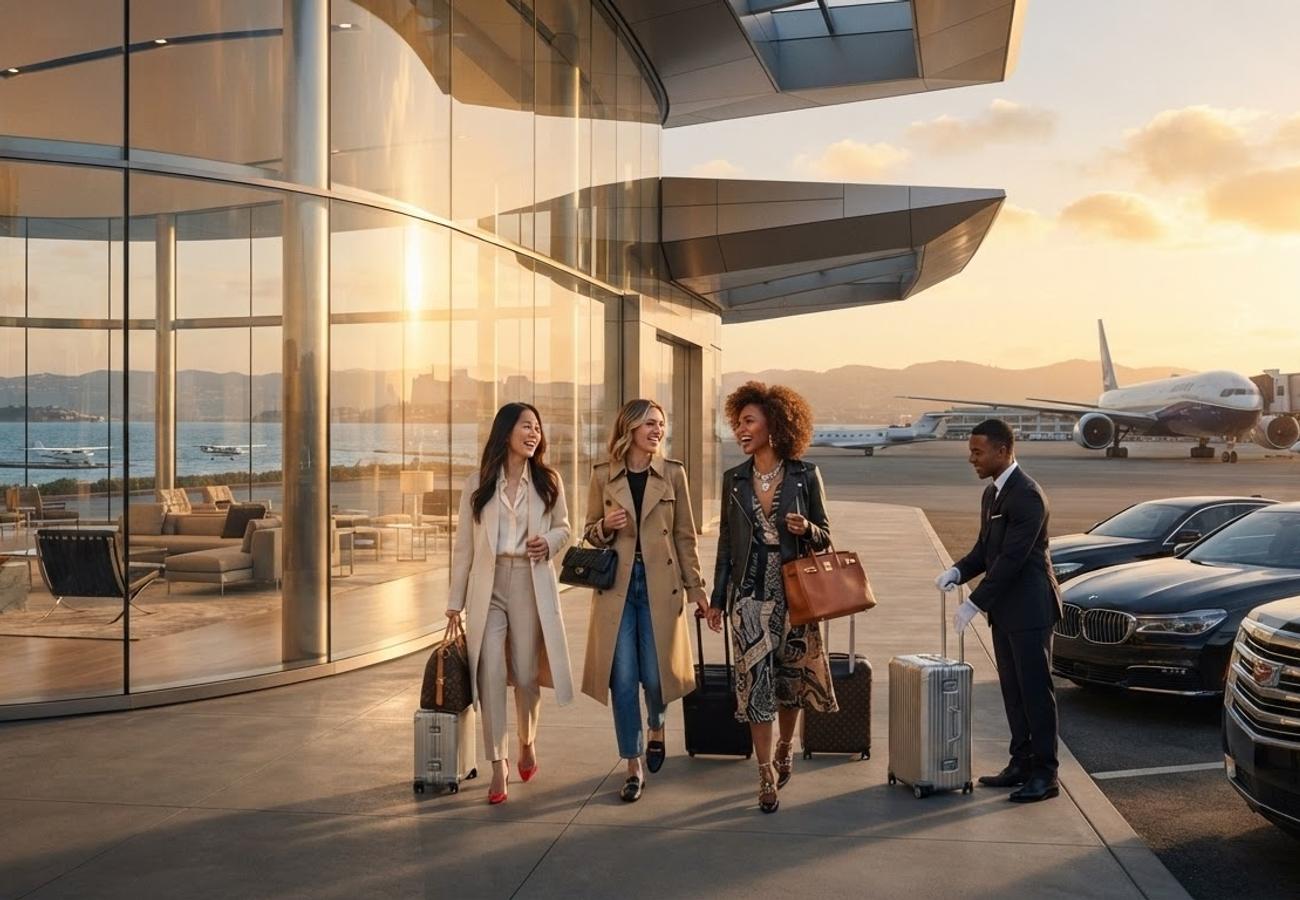
Image generated by AI
[San Francisco, July 10, 2026] — San Francisco International Airport (SFO), a primary hub for United Airlines, is actively seeking operators to design, build, and manage a new private terminal. This proposed facility would allow high-net-worth travelers to bypass standard security checkpoints entirely, utilizing dedicated private TSA and customs screening to avoid the unpredictable delays common at main terminals.
The initiative comes as a response to significant operational strain. Following the Federal Aviation Administration (FAA) decision to shut down parallel landings at the airport in early April, SFO experienced a fourfold increase in average delay times. By creating a separate stream for premium passengers, airport officials believe they can alleviate pressure on the general passenger flow while catering to a growing market for luxury aviation services.
SFO Solicits Bids for Exclusive Security Terminal
The airport is currently inviting proposals from qualified companies to develop this high-end facility. The bidding window is scheduled to open on September 30 and close on October 7. According to Doug Yakel, a spokesperson for SFO, the airport has been analyzing the success of membership-based private terminals at other major global and domestic hubs.
The proposed terminal is designed as a comprehensive luxury experience. Beyond private TSA and customs processing, the facility will feature an exclusive luxury lounge and a specialized car-to-plane valet service. While the airport has not set a fixed price for these services, Yakel indicated that the winning operator will determine the cost structure, whether through annual memberships or per-use fees.
To provide a benchmark for potential pricing, officials pointed to the operations of PS (formerly Private Suite) at Los Angeles International Airport (LAX). Current data from PS indicates an all-access annual subscription costs $4,850 per person, while individual one-time use for drop-offs or pick-ups is priced at $895 per person.
Strategic Location and Project Timeline
The airport intends to finalize a long-term ground lease by December 2026. If the project proceeds as planned, the terminal could open its doors as early as late 2028.
The facility will be situated on a 75,000-square-foot plot of land known as Plot 42, located off North Access Road. This site is positioned adjacent to Seaplane Harbor on the San Francisco Bay, ensuring it remains physically separate from the congested main terminal buildings. Additionally, a 13,415-square-foot area across the street is designated for parking.
The financial structure of the lease is set for a 14-year term, with a possible two-year extension. The operator's financial obligations include a minimum guarantee of $1.5 million for the first year. Subsequently, the minimum annual guarantee is set at 5% of gross revenue up to $15 million, with the operator receiving 7% of any gross revenue that exceeds that threshold.
SFO Private Terminal Proposed Financial Shares
| Financial Metric | Requirement/Rate |
|---|---|
| 1st year minimum guarantee | $1.5 million |
| Minimum annual guarantee | 5% of up to $15 million gross revenue |
| Operator share | 7% of gross revenue |
Global Competition for SFO Terminal Management
The project has already attracted significant international and domestic interest. An informational meeting held in June saw 25 attendees, including five representatives from PS. Other interested parties included a representative from Gavin de Becker and Associates—a security firm known for protecting high-profile figures like Jeff Bezos and Elon Musk—as well as staff from the Irish government.
International interest was also evident with the presence of Terminal BTG Pactual, which currently manages a private terminal at Brazil's São Paulo/Guarulhos International Airport (GRU). Fabio Camargo, CEO of Terminal BTG Pactual, noted that private VIP terminals are already well-established in Asia and Europe and are seeing rapid expansion in Latin America, suggesting SFO is a prime candidate for such an asset.
To ensure operational quality, SFO has set strict eligibility criteria. Bidders must demonstrate at least two years of experience in private terminal management and prove they have generated a minimum of $15 million in annual gross sales.
Evolution of Private Terminals Across United States Hubs
SFO is joining a growing trend of "airport-within-an-airport" concepts. Currently, six U.S. airports offer private terminal services. PS maintains operations at four of these: LAX, Hartsfield-Jackson Atlanta International Airport (ATL), Dallas-Fort Worth International Airport (DFW), and Miami International Airport (MIA). The trend began in January 2020 at LAX through a partnership between Los Angeles World Airports and PS.
Other airlines are also entering the space. In June 2023, ATL launched a private terminal regulated by the City of Atlanta Department of Aviation. More recently, MIA and Boston Logan International Airport (BOS) introduced new services in June 2026.
At JFK, Delta Air Lines launched a 39,000-square-foot facility in October 2024 for Delta One passengers, featuring a wellness area with massages and a chef-assisted market. Conversely, the Boston Logan project focuses on efficiency rather than luxury. Through a partnership with Landline, Delta and JetBlue passengers can complete security at a remote facility in Framingham, Massachusetts, 20 miles from the airport, before being shuttled directly to their gates.
Why This Matters: The Shift Toward Tiered Aviation Infrastructure
The move by SFO to implement a paid, private security bypass represents a significant shift in the philosophy of public infrastructure. By outsourcing the "experience" of security to a private operator, SFO is effectively creating a two-tiered system of transit.
From an operational standpoint, this is a strategic move to mitigate the "bottleneck" effect. When high-volume, low-friction travelers (those who can afford private services) are removed from the general population, it theoretically reduces the load on standard TSA checkpoints for the average traveler. However, it also signals a future where the "standard" airport experience may become increasingly slower as premium resources are diverted to private enclaves.
Furthermore, SFO's unique security arrangement—using Covenant Aviation Security rather than a traditional TSA-staffed model—makes the integration of a private terminal more flexible. This development suggests that major hubs are no longer viewing the airport as a monolithic utility, but as a real estate opportunity to monetize the desire for time-saving and exclusivity.
As aviation hubs continue to struggle with capacity, the divide between the standard passenger experience and the luxury tier is becoming a physical reality in airport architecture.
Related Travel Guides
Disclaimer
This article is for informational and educational purposes only. It does not constitute legal, financial, or professional advice. While we strive to provide accurate and up-to-date information, travel policies, regulations, and conditions change rapidly. Always verify information with official sources before making travel decisions. Nomad Lawyer makes no representations about the accuracy, reliability, completeness, or suitability of the information provided. Readers should consult qualified professionals for advice specific to their circumstances. The views expressed in this article are those of the author and do not necessarily reflect the views of Nomad Lawyer.
Raushan Kumar
Founder & Lead Developer
Full-stack developer with 11+ years of experience and a passionate traveller. Raushan built Nomad Lawyer from the ground up with a vision to create the best travel and law experience on the web.
Learn more about our team →