
United Airlines Newark to West Palm Beach Flight UA1771 Diverts to Charleston: Emergency Landing Sparks Travel Chaos and Airport Disruptions for Florida-Bound Travelers
United Airlines flight UA1771 from Newark to West Palm Beach made an emergency diversion to Charleston, triggering massive travel chaos for passengers on Friday.

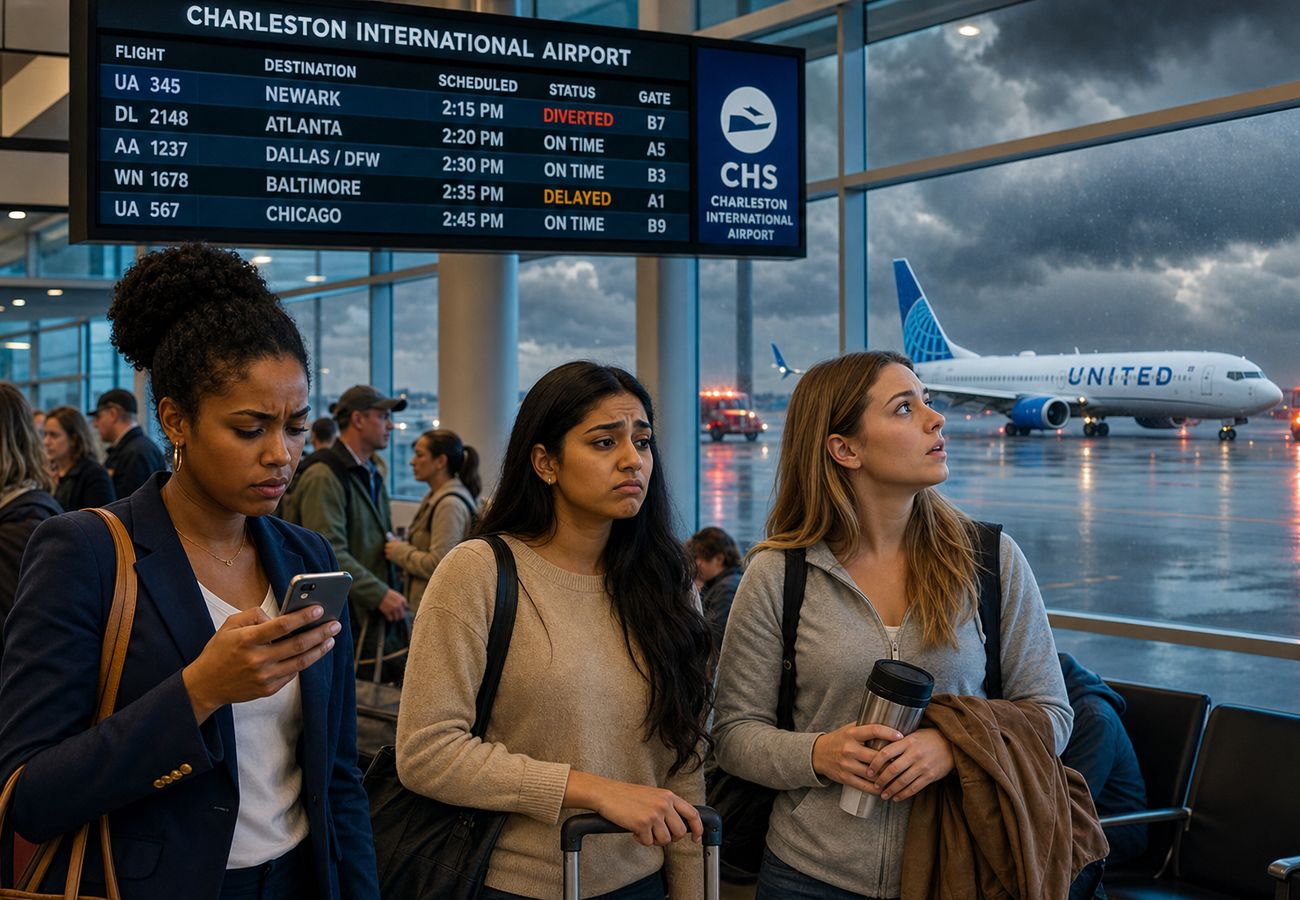
Image generated by AI
The East Coast aviation corridor was gripped by a sudden wave of travel chaos on Friday morning as United Airlines flight UA1771 made an emergency diversion to Charleston International Airport (CHS). Originally scheduled to transport hundreds of passengers from the busy hub of Newark Liberty (EWR) to the sunny shores of West Palm Beach (PBI), the flight was abruptly rerouted mid-journey, sparking widespread concern among online aviation watchers and leaving Florida-bound travelers stranded in South Carolina. This latest aviation update highlights the unpredictable nature of long-haul domestic operations and the ripple effects that a single diversion can have on regional airport disruptions.
Breaking: UA1771 Newark to West Palm Beach Operational Crisis
The incident began in the early hours of Friday, May 15, 2026. Flight UA1771, a high-demand service connecting the New York metropolitan area with Florida’s luxury leisure market, departed Newark Liberty International Airport at 5:53 a.m., slightly ahead of its planned 6:00 a.m. slot. However, what started as a routine morning departure from Terminal C, Gate C74, quickly transformed into an emergency operational scenario as the aircraft was flagged as "DIVERTED" on live flight tracking systems.
The sudden change in route saw the aircraft descending into Charleston International Airport at 9:42 a.m., nearly four hours after its initial takeoff. While the airline has not yet officially disclosed the exact reason for the emergency landing, the "ARRIVED LATE" status on tracking panels in West Palm Beach confirmed that the diversion had caused a massive delay for the intended Florida arrival.
Section-Wise Breakdown: Hub Impacts and Regional Detours
Newark Liberty (EWR): The Terminal C Departure
As one of United Airlines' primary hubs, Newark Liberty handles thousands of Florida-bound passengers daily. The departure of UA1771 from Gate C74 was initially unremarkable, representing one of the hundreds of scheduled flights aimed at the high-traffic South Florida corridor. The subsequent diversion back at the EWR operations center likely triggered a scramble to adjust follow-up rotations for the aircraft involved, potentially leading to further flight cancellations or gate adjustments for later services.
Charleston International (CHS): The Strategic Alternate Landing
Charleston International Airport in South Carolina served as the unexpected host for the diverted UA1771. Strategically positioned along the U.S. East Coast, CHS is frequently utilized as an alternate landing location for flights experiencing irregular conditions between the Northeast and Florida. The aircraft remained on the tarmac for several hours as ground crews and airline officials processed the diversion. Because the landing was handled under operational urgency, no immediate terminal or gate assignment was initially visible on public arrival screens, adding to the sense of uncertainty for those waiting in West Palm Beach.
West Palm Beach (PBI): The Impact on Florida’s Gateway
At West Palm Beach International Airport, the ripple effects of the UA1771 diversion were felt immediately. Families, business travelers, and luxury tourists awaiting the early-morning arrival were left navigating a series of rolling delays. The status update of "ARRIVED LATE" underscored the significant disruption to ground transportation plans, hotel check-ins, and connecting itineraries. For a city whose tourism economy relies on predictable air links to the New York market, such airport disruptions are a significant point of frustration for local hospitality stakeholders.
Flight Details and Tracking Data: UA1771 Summary
The following table provides a precise look at the timeline and operational status of United Airlines flight UA1771 on the day of the diversion.
Flight UA1771 Operational Matrix: May 15, 2026
| Category | Flight Information |
|---|---|
| Airline / Call Sign | United Airlines / UA1771 |
| Origin Airport | Newark Liberty International (EWR) |
| Destination Airport | West Palm Beach International (PBI) |
| Diversion Airport | Charleston International (CHS) |
| Departure Gate | Terminal C, Gate C74 |
| Actual Departure Time | 5:53 a.m. (7 minutes early) |
| Arrival at CHS (Diverted) | 9:42 a.m. |
| Total Detour Duration | ~3 Hours 49 Minutes |
| System Status | DIVERTED / ARRIVED LATE |
Data source: OAG and live aviation tracking platforms.
Passenger Impact: Navigating Emergency Diversions
For the hundreds of passengers on board UA1771, the diversion to Charleston represented a major interruption to their Friday plans. Unexpected reroutes of this nature often lead to:
- Missed Connections: Travelers heading south for weekend cruises or international transfers via Florida face the highest risk of disrupted itineraries.
- Communication Gaps: During the early phases of a diversion, airline communication can often be delayed as pilots and operations teams prioritize safety-first procedures over passenger notifications.
- Logistical Stress: Extended waiting times in Charleston, combined with uncertainty about rebooking or continuation of the flight, contribute significantly to the overall sense of travel chaos.
Aviation experts note that in such scenarios, passengers are usually advised to monitor official airline apps and mobile notifications, which often provide real-time gate changes and rebooking options faster than terminal displays.
Industry Analysis: Why Do Diversions Occur?
While United Airlines has remained tight-lipped about the specific cause of the UA1771 diversion, industry analysts point to several common factors that trigger such "safety-first" reroutes.
- Technical Concerns: Minor mechanical issues that do not pose an immediate danger but require a precautionary landing for inspection.
- Medical Emergencies: A passenger or crew member requiring urgent medical attention is one of the most frequent causes for a mid-route diversion.
- Weather and Air Traffic: Severe turbulence or unpredicted congestion in the Florida airspace can sometimes force a flight to "hold" or divert to a strategic alternate like Charleston.
Regardless of the cause, pilots and airline operations teams are trained to prioritize the safety of the aircraft and its occupants over schedule adherence.Rerouting an aircraft is an expensive and complex procedure, emphasizing the airline's commitment to operational safety whenever irregular conditions arise.
Conclusion: A Resiliency Test for East Coast Travel
The diversion of United Airlines flight UA1771 is a stark reminder of the complexities involved in maintaining the high-frequency East Coast aviation network. As the industry continues to provide aviation updates regarding the continuation of the journey to West Palm Beach, the focus remains on re-establishing service and minimizing further airport disruptions. For the travelers caught in this Friday morning detour, the priority is a safe and timely arrival in Florida, even if it comes several hours later than planned.
Key Takeaways
- Sudden Diversion: United Airlines UA1771 from Newark to West Palm Beach diverted to Charleston, SC.
- Early Departure: The flight left EWR at 5:53 a.m., but failed to reach its intended Florida destination.
- Time Loss: The detour added approximately 3 hours and 49 minutes to the total travel duration.
- Status Alert: Tracking systems marked the flight as "DIVERTED" and "ARRIVED LATE" to West Palm Beach.
- Safety First: Airlines prioritize safety over schedules, utilizing Charleston as a strategic alternate landing site.
- Traveler Impact: Hundreds of passengers faced delayed itineraries and missed connections in the South Florida region.
Related Travel Guides
Disclaimer
This article is for informational and educational purposes only. It does not constitute legal, financial, or professional advice. While we strive to provide accurate and up-to-date information, travel policies, regulations, and conditions change rapidly. Always verify information with official sources before making travel decisions. Nomad Lawyer makes no representations about the accuracy, reliability, completeness, or suitability of the information provided. Readers should consult qualified professionals for advice specific to their circumstances. The views expressed in this article are those of the author and do not necessarily reflect the views of Nomad Lawyer.
Kunal K Choudhary
Co-Founder & Contributor
A passionate traveller and tech enthusiast. Kunal contributes to the vision and growth of Nomad Lawyer, bringing fresh perspectives and driving the community forward.
Learn more about our team →