
United Airlines Flight 939 Grounded at Heathrow After Repeat TCAS Failure
A premium United Airlines Boeing 787-9 Dreamliner was grounded at London Heathrow Airport on July 4, 2026, forcing the cancellation of Flight 939 due to a TCAS fault.

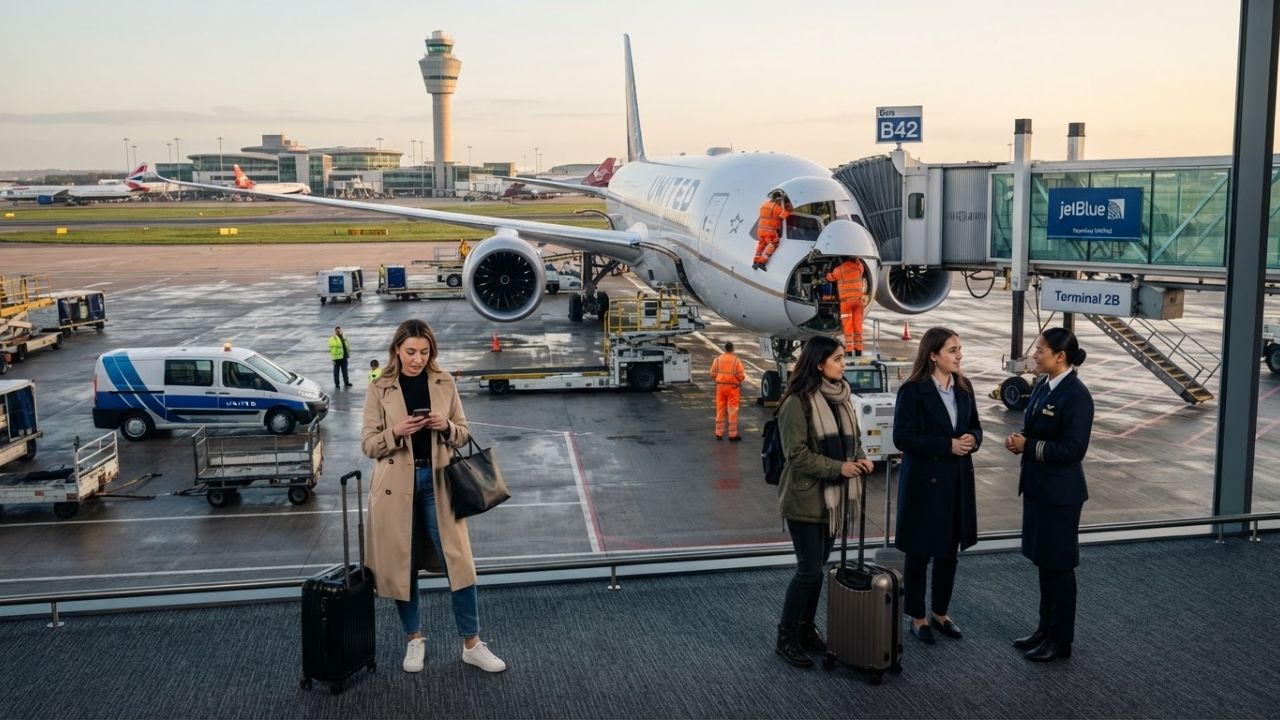
Image generated by AI
A high-profile United Airlines flight 939 cancellation occurred at London Heathrow Airport on July 4, 2026, when a Boeing 787-9 Dreamliner was grounded due to a recurring technical fault. The aircraft experienced a repeat failure of its Traffic Alert and Collision Avoidance System (TCAS).
Recurring Avionics Failure Post-Maintenance
The widebody aircraft, registered as N61101, was scheduled to operate the long-haul sector to San Francisco International Airport (SFO). The cancellation disrupted travel plans for passengers booked on the 222-seat premium-configured airliner.
The TCAS is a mandatory safety instrument designed to prevent mid-air collisions by providing resolution advisories to pilots. Under aviation safety regulations, commercial flights are prohibited from departing with an inoperative TCAS unit.
The grounding occurred just four days after the aircraft returned from Boeing's Moses Lake maintenance facility in Washington on June 30. During that maintenance event, technicians replaced both TCAS antennas to resolve earlier system faults.
Following its return to service, the aircraft successfully completed a domestic repositioning flight to Houston and a long-haul transoceanic flight from San Francisco to London on July 2. However, the system failed again during pre-flight checks at London Heathrow Airport (LHR).
Aviation maintenance teams at Heathrow initiated troubleshooting protocols to inspect the antennas and cockpit wiring. The recurrence of the fault raises concerns regarding the effectiveness of post-repair validation procedures under Federal Aviation Administration guidance.
Premium Configuration Under Operational Strain
The affected Dreamliner features United Airlines' new premium international layout designed for high-yield business travel corridors. The cabin configuration includes 8 Polaris Studio suites, 56 Polaris Business Class seats, and 35 Premium Plus seats.
To support high-density passenger services, the aircraft is equipped with advanced systems, including Starlink-enabled Wi-Fi connectivity and 4K OLED screens. Some industry observers suggest that high-density cabin electrical loads could introduce electromagnetic interference into sensitive avionics wiring.
United Airlines customer service representatives worked to rebook affected passengers onto alternative transatlantic flights. The airline has not released an official statement regarding the root cause of the avionics malfunction.
Why This Matters
Our analysis of the flight data indicates that recurring avionics failures in premium-configured aircraft point to a rising integration risk between upgraded cabin entertainment systems and core flight safety hardware. When airlines retrofit older airframes with high-draw components like 4K OLED screens and satellite terminals, the aircraft's electrical load distribution shifts. This added load can create transient voltage fluctuations or electromagnetic interference that disrupts sensitive systems like the TCAS. Grounding an expensive widebody aircraft at a major international gateway like Heathrow results in high passenger rebooking costs and gate fees, underscoring the financial impact of unresolved engineering issues.
Industry Outlook
Market trends suggest that international carriers will implement more rigorous electromagnetic compatibility testing during cabin retrofits to prevent secondary avionics failures. Long-term projections indicate that aviation regulators will tighten post-maintenance verification guidelines, requiring aircraft to complete several domestic sectors before being cleared for transoceanic passenger flights. Expect airlines to work closely with airframe manufacturers to develop dedicated shielded conduits for cabin power lines to isolate sensitive communication systems.
Frequently Asked Questions: United Flight 939 Grounding
Why was United Airlines Flight 939 cancelled?
The flight was cancelled because the Boeing 787-9 Dreamliner experienced a pre-departure failure of its Traffic Alert and Collision Avoidance System (TCAS).
Had the aircraft recently undergone maintenance for this issue?
Yes, the aircraft returned on June 30 from Boeing's Moses Lake facility, where both TCAS antennas were replaced to address previous failures.
What is the seating configuration of the grounded aircraft?
The Boeing 787-9 (registration N61101) features a 222-seat premium layout, including 8 Polaris Studios, 56 Polaris Business Class seats, and 35 Premium Plus seats.
Related Travel Guides
Disclaimer
This article is for informational and educational purposes only. It does not constitute legal, financial, or professional advice. While we strive to provide accurate and up-to-date information, travel policies, regulations, and conditions change rapidly. Always verify information with official sources before making travel decisions. Nomad Lawyer makes no representations about the accuracy, reliability, completeness, or suitability of the information provided. Readers should consult qualified professionals for advice specific to their circumstances. The views expressed in this article are those of the author and do not necessarily reflect the views of Nomad Lawyer.
Kunal K Choudhary
Co-Founder & Contributor
A passionate traveller and tech enthusiast. Kunal contributes to the vision and growth of Nomad Lawyer, bringing fresh perspectives and driving the community forward.
Learn more about our team →