
Ukraine Teams Up With Sudan and Other Countries In a Joint Global Security Forum To Tackle Mutual Crises
Ukraine Teams Up With Sudan and Other Countries In a Joint Global Security Forum To Tackle Mutual Crises

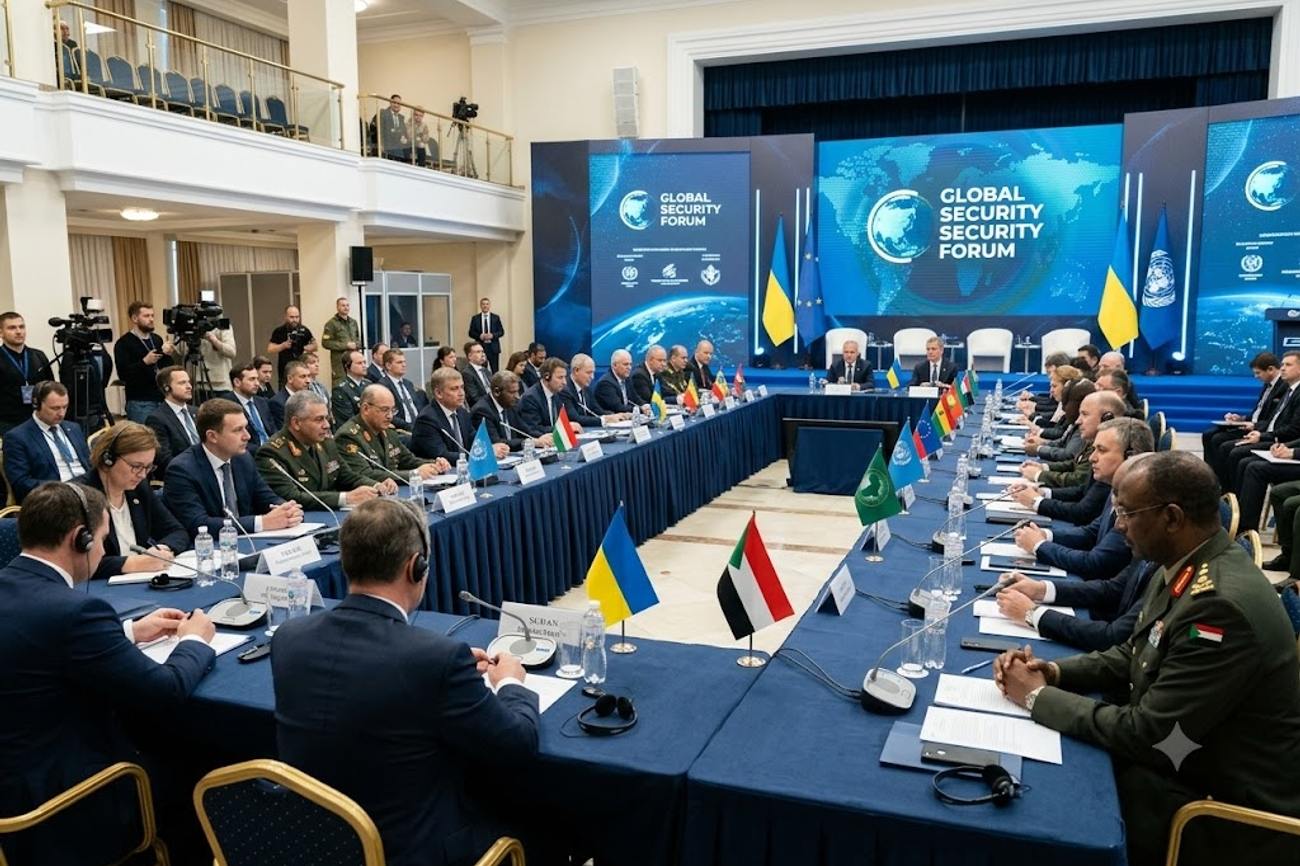
Image generated by AI
[New York, May 2024] — Ukraine, Sudan, the Democratic Republic of the Congo (DRC), and Yemen have entered into an unprecedented joint global security coalition to address the intersecting crises of state collapse, interstate warfare, and humanitarian catastrophe.
The diplomatic summit brings together delegates from these four nations to establish multilateral frameworks aimed at stabilizing regions currently experiencing extreme geopolitical volatility. The forum focuses on securing critical resource corridors, coordinating international aid, and developing collective strategies to mitigate the spillover effects of their respective conflicts on global commerce and civilian safety.
Geopolitical Triggers of the Coalition
The alliance is driven by a convergence of protracted conflicts and resource scarcity that have rendered traditional, isolated diplomatic efforts ineffective. By forming a cross-continental bloc, these nations intend to amplify their collective leverage on the global stage and compel traditional power centers to prioritize their stability.
The coalition is responding to four distinct but equally destabilizing dynamics:
- Conventional Warfare: The high-intensity conflict in Ukraine utilizing autonomous drones and electronic warfare.
- State Fragmentation: The total breakdown of central governance in Sudan.
- Resource-Driven Insurgency: The exploitation of critical minerals in the DRC.
- Proxy Conflict: The fractured governance and maritime insecurity stemming from the war in Yemen.
Crisis Analysis and Global Impact
The following data outlines the primary security threats and the resulting global spillover effects currently being addressed by the coalition.
| Country / Region | Primary Security Threat | Core Conflict Drivers | Global & Humanitarian Impact |
|---|---|---|---|
| Ukraine | Interstate Conventional Warfare | High-intensity frontlines; systematic infrastructure targeting | Mass refugee displacement; global grain export threats; landmine contamination |
| Sudan | Internal Civil War | Power struggle between military and paramilitary factions | Mass famine risks; acute malnutrition; targeted ethnic violence |
| DRC | Sub-national Insurgencies | Militia exploitation of cobalt and coltan deposits | Systemic sexual violence; child soldier recruitment; governance failure |
| Yemen | Fragmented Governance | Decade-long civil war and regional proxy networks | Collapse of healthcare/sanitation; threats to global shipping lanes |
What This Means for Travelers
While this is a diplomatic security forum, the outcomes directly impact international travel, logistics, and corporate risk assessments.
1. High-Risk Zone Classifications Travelers and logistics firms should expect continued or expanded "Do Not Travel" advisories for these regions. The focus on "securing resource corridors" suggests that transit through these areas remains volatile and subject to sudden military closures.
2. Global Supply Chain Volatility The coalition's focus on "critical resource corridors" is a direct nod to the instability of global markets. Specifically, the DRC's cobalt and coltan exports and Ukraine's grain shipments are vital to global tech and food industries. Any shift in control of these corridors can lead to price spikes in consumer electronics and food staples.
3. Maritime Security Alerts For those utilizing sea travel or shipping, the Yemen crisis continues to render surrounding waters high-risk. The coalition's efforts to address maritime security are critical for the safety of international commerce passing through these corridors.
4. Humanitarian Corridor Access The mobilization of international aid may open specific, secured corridors for NGO workers and diplomatic staff, though these remain subject to the United Nations Security Council mandates and local security conditions.
Strategic Outlook and Implementation
The coalition now faces the challenge of converting high-level diplomatic declarations into tangible stability. The immediate priority is the establishment of "resource intelligence sharing," allowing these nations to coordinate how they manage critical exports and receive international aid.
The long-term success of the forum depends on whether these multilateral frameworks can outpace the rapid evolution of hybrid warfare. The participating nations are seeking to move away from being "isolated battlefields" and instead operate as a unified diplomatic bloc to pressure international bodies for more effective intervention.
Observers note that while the forum provides a platform for visibility, the actual restoration of domestic infrastructure—such as Ukraine's electrical grids or Yemen's sanitation networks—will require massive capital injections and a cessation of proxy fueling by external regional actors.
FAQ: Global Security Forum 2024
Is it safe to travel to any of these coalition countries? No. All four nations—Ukraine, Sudan, DRC, and Yemen—are currently experiencing active conflict or state collapse. Travelers should consult their national embassy and the World Health Organization (WHO) for health and safety warnings before considering any movement.
How does this coalition affect global food and tech prices? By coordinating the security of "resource corridors," the coalition aims to stabilize the export of Ukrainian grain and Congolese minerals (cobalt/coltan). If successful, this could reduce volatility in global food and electronics pricing.
What is the primary goal of this security forum? The goal is to create a multilateral diplomatic framework that allows nations facing state fragmentation and warfare to share intelligence and exert collective pressure on global powers to secure aid and stability.
Who is overseeing the humanitarian aid mentioned? Aid mobilization is being coordinated through collective policy dialogues, with oversight and diplomatic resources provided by international bodies like the United Nations.
Diplomacy is now racing against the clock of systemic collapse.
#UkraineSecurity2024 #SudanCrisis #DRCMineralConflict #YemenMaritimeSecurity #UNSecurityCouncil #GlobalStabilityForum
Related Travel Guides
- China Surpasses Egypt and Other Countries in Uzbekistan Tourism Growth as Foreign Arrivals Soar to 10.3 Million in Jan–Sep 2026
- Azerbaijan Makes Bold Tourism Push in Poland as Visitor Growth Hits 13.1% and New Adventures Beckon
- Dubai Strengthens Family Tourism Offering as Truly Amazing Campaign Connects Theme Parks, Hotels and Attractions
Disclaimer
This article is for informational and educational purposes only. It does not constitute legal, financial, or professional advice. While we strive to provide accurate and up-to-date information, travel policies, regulations, and conditions change rapidly. Always verify information with official sources before making travel decisions. Nomad Lawyer makes no representations about the accuracy, reliability, completeness, or suitability of the information provided. Readers should consult qualified professionals for advice specific to their circumstances. The views expressed in this article are those of the author and do not necessarily reflect the views of Nomad Lawyer.
Kunal K Choudhary
Co-Founder & Contributor
A passionate traveller and tech enthusiast. Kunal contributes to the vision and growth of Nomad Lawyer, bringing fresh perspectives and driving the community forward.
Learn more about our team →