
UK's Elizabeth Line Gets 10 New Aventra Trains: First Class 345 Rolls Off Derby Factory in Major Rail Expansion
The UK's busiest railway hits a manufacturing milestone as the first of ten new Aventra Class 345 trains departs Alstom's historic Derby factory, expanding capacity by 120,000 passenger seats.

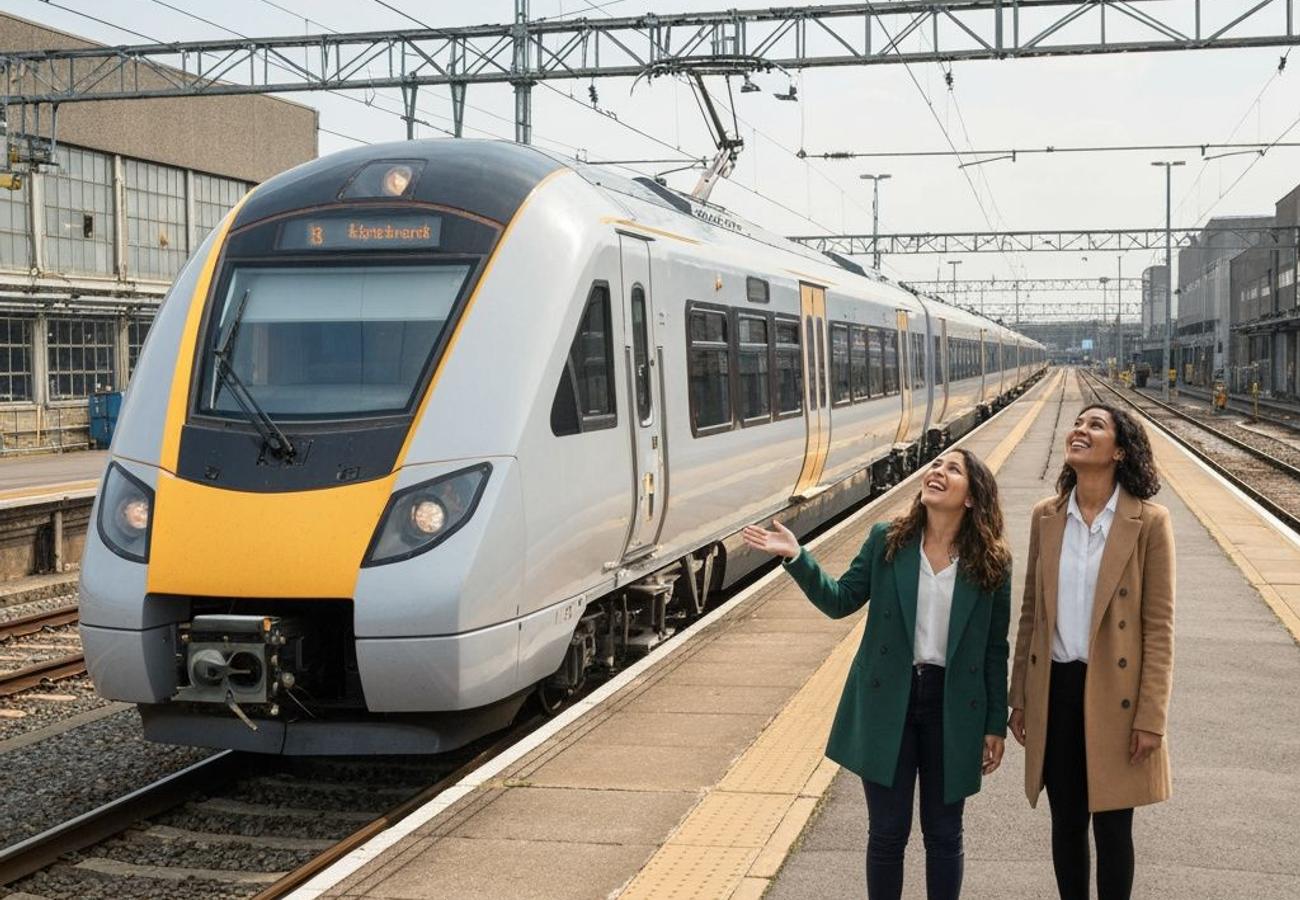
Image generated by AI
Historic Milestone: First New Elizabeth Line Train Leaves the Factory
Britain's rail renaissance just got real. On June 9, 2026, the first of a brand-new ten-train fleet rolled off the production line at Alstom's Litchurch Lane facility in Derby—marking a watershed moment for one of Europe's most ambitious transport projects. The Class 345 No. 345071 is now undergoing meticulous safety checks on the factory's internal test track before heading to the London rail network for intensive trials.
This isn't just another train delivery. It's the tangible proof that the UK government's strategic investment in transport infrastructure is translating into real-world capacity expansion four years after the Elizabeth line opened to the public.
Reddit: "Finally! My commute is going to be way less crowded. The Elizabeth line is rammed every morning." — r/london
The Numbers Are Staggering: 850 Million Journeys in Four Years
When the Elizabeth line launched in May 2022, nobody expected it to become the busiest railway in the entire United Kingdom within four years. Yet here we are.
The numbers tell the story: over 850 million passenger journeys have already been completed on this high-frequency cross-London service. That's demand that demands action. The existing fleet was never designed for this kind of sustained ridership, and overcrowding became the inevitable consequence.
Enter the ten new Aventra trains—a game-changer. Once fully deployed, this expanded fleet will deliver:
- Nearly ten miles of collective train length across the entire fleet
- Approximately 120,000 additional passenger seats—that's more capacity than London's Wembley Stadium can hold
- Seamless integration with the future High Speed 2 network and the upcoming Old Oak Common interchange
This investment directly addresses the bottleneck that's been strangling the network's potential. And the funding? Direct government allocation, ensuring that future passenger demand is handled without compromising service quality.
Derby: 150 Years of Industrial Mastery on Display
Here's what most travelers don't realize: building a nine-carriage train is an engineering marvel that's barely visible to the passenger sitting in a comfortable seat.
Each single train contains:
- 5 miles of specialized welding
- 50 miles of complex electrical cabling
- 47,700 screws and bolts
- Intricate systems that took months of assembly and testing
All of this is happening at the Litchurch Lane Works, a 150-year-old factory that's been the heartbeat of British rail manufacturing since 1839. According to Andy Butters, Managing Director of the Derby facility, this rollout represents far more than a production achievement.
"It's a point of immense pride for the entire local workforce," Butters emphasized. The project isn't just about London—it's creating a nationwide ripple effect, supporting skilled manufacturing jobs and reinforcing the UK's entire industrial supply chain across multiple sectors. This is how capital city investment translates into regional prosperity.
The Testing Gauntlet: From Factory Floor to Passenger Seats
The first Aventra train doesn't go straight into service. What comes next is equally crucial: a comprehensive testing phase that'll take weeks.
After initial safety assessments at Derby, the train will move to dedicated trial tracks near London and along the central Elizabeth line infrastructure itself. Engineers will stress-test every system, validate operational readiness, and ensure passenger safety meets the most exacting standards. Only after this rigorous vetting will the train be cleared for passenger operations later this year.
The remaining nine units are scheduled to roll off the production line progressively throughout the rest of 2026 and into 2027. That's a carefully managed rollout designed to maintain quality while meeting delivery timelines.
Looking Ahead: High-Speed Rail Integration and Old Oak Common
This expanded fleet isn't just solving today's overcrowding problem—it's laying the groundwork for Britain's future transport network.
Trish Ashton, Director of Rail at Transport for London, outlined the strategic vision: these new trains will provide vital high-capacity connectivity to the upcoming Old Oak Common interchange, which will serve as the central hub connecting the Elizabeth line to the incoming High Speed 2 network. This convergence will transform London's position as a transport hub, enabling fast-rail connections across the entire Midlands and beyond.
According to Ashton, the physical departure of the first train represents an "incredibly vital step" toward realizing these long-term capacity goals. Daily connectivity currently reaches hundreds of thousands of active customers—and the introduction of these new units ensures Transport for London can continue meeting escalating passenger expectations over the next decade.
The Broader Economic Picture: Why Capital Investment Drives National Prosperity
Seb Dance, Deputy Mayor of London for Transport, reframed the entire project in terms of economic geography. His argument: the success of the Elizabeth line and this manufacturing order proves that high-quality transport infrastructure unlocks tangible opportunities for connected communities far beyond London's boundaries.
The collaborative efforts between Transport for London, the national government, and manufacturing partners like Alstom are designed to unleash the full potential of the urban transit network while driving economic growth across the UK's regional centers. Derby itself is a case study in how this works—skilled engineering jobs, supply chain contracts, and industrial reinvestment flowing into the Midlands because London needed better trains.
What This Means for Your Commute and Travel Plans
If you're a regular Elizabeth line commuter, relief is coming—but not immediately. The staged rollout means gradual capacity increases throughout 2026 and 2027, with passenger-facing improvements most visible in the second half of next year.
For broader UK travel, this signals government commitment to transport infrastructure that's been inconsistent in recent years. When London invests in rail capacity, the entire country benefits through economic connectivity and supply chain strength.
Britain's building its transport future, one nine-carriage train at a time.
Related Travel Guides
Disclaimer
This article is for informational and educational purposes only. It does not constitute legal, financial, or professional advice. While we strive to provide accurate and up-to-date information, travel policies, regulations, and conditions change rapidly. Always verify information with official sources before making travel decisions. Nomad Lawyer makes no representations about the accuracy, reliability, completeness, or suitability of the information provided. Readers should consult qualified professionals for advice specific to their circumstances. The views expressed in this article are those of the author and do not necessarily reflect the views of Nomad Lawyer.
Raushan Kumar
Founder & Lead Developer
Full-stack developer with 11+ years of experience and a passionate traveller. Raushan built Nomad Lawyer from the ground up with a vision to create the best travel and law experience on the web.
Learn more about our team →