
UK Borders Enter New Era: 8 and 9 Year-Olds Granted E-Gate Access From July 2026 to Neutralize Summer Travel Chaos and Airport Disruptions
The UK will allow children aged 8 and 9 to use automated e-gates from July 2026, a move designed to streamline family travel and reduce airport disruptions.

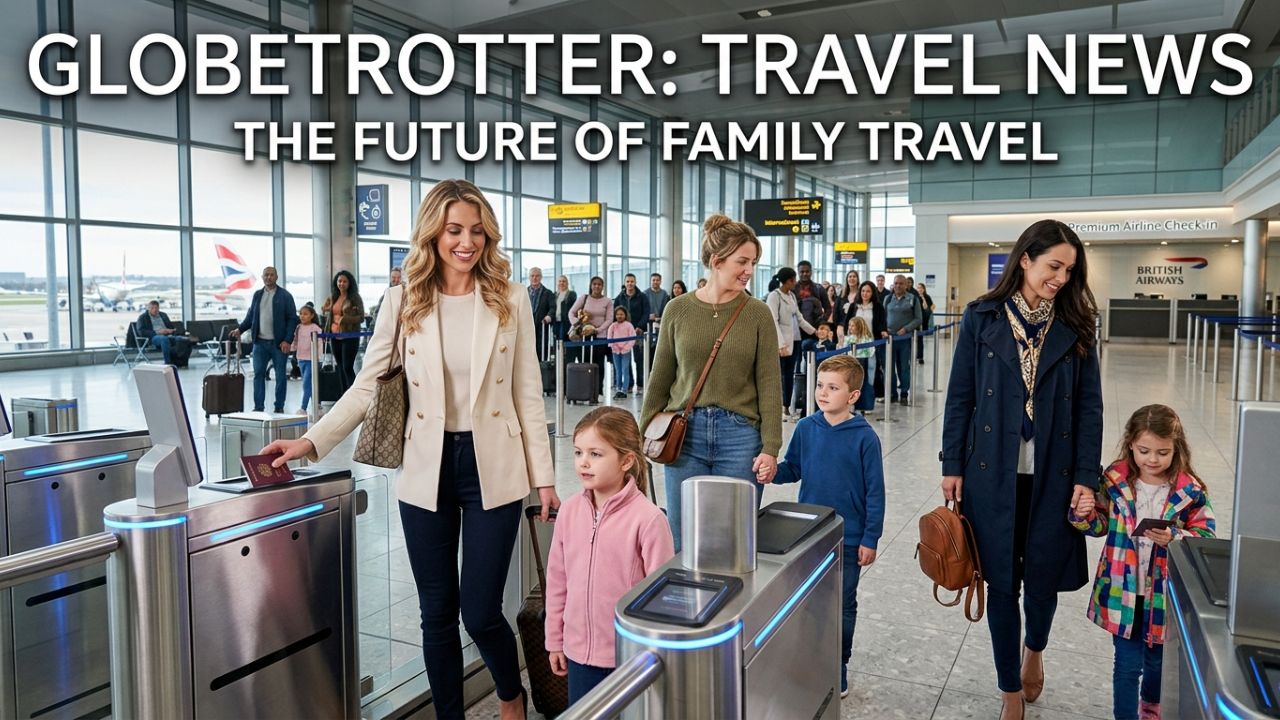
Image generated by AI
In a landmark decision that is set to revolutionize the arrival experience for millions of international visitors, the United Kingdom has officially announced that children aged 8 and 9 will be granted access to automated e-gates starting July 2026. This major airline news update, released this Saturday, marks a definitive shift in border processing strategy, aimed at dismantling the systemic travel chaos that has historically plagued UK arrivals during the peak summer months. By expanding the biometric footprint to younger travelers, the Home Office and Border Force are positioning the UK’s major gateways—including Heathrow, Gatwick, and Manchester—as the most family-friendly transit points in the world. For the 2026-27 travel cycle, this policy is being hailed as the ultimate antidote to the localized airport disruptions and bottlenecks that frequently result in missed connections and short-notice flight cancellations.
Breaking: The 'Family-First' Border and the Biometric Expansion
The move to extend e-gate access to younger children is a direct response to operational data showing that manual checks for families are the primary cause of arrival-hall gridlock. Under the current system, families with young children are funneled into staffed desks, often resulting in wait times exceeding two hours during holiday surges. Starting in July 2026, children with eligible biometric passports will be able to process their arrival in under 60 seconds using facial recognition technology.
Aviation analysts suggest that this is a critical aviation update for the transatlantic and European short-haul sectors. By automating the majority of family arrivals, border authorities can reallocate staff to complex cases and high-security checks. For the traveling public, this means that the "Arrival Hall Nightmare" is nearing its end, ensuring that the first impression of the UK is one of high-tech efficiency rather than terminal-based travel chaos.
Expanded Overview: Redesigning the UK Gateways for 2026
The July 2026 rollout involves a massive infrastructure and training overhaul across the UK’s primary airports. The goal is to create a seamless flow that protects the "Minimum Connection Time" (MCT) for transit passengers.
- Family Lanes: Airports are planning dedicated e-gate lanes specifically for families, allowing staff to provide light-touch assistance to younger travelers.
- Digital Signage & Tech Upgrades: Signage systems are being updated to reflect the new age limit, and e-gate software is undergoing rigorous stress-testing to handle the increased biometric volume.
- Staff Training: Frontline border officers are being retrained to monitor the gates for younger children, ensuring that the high-security standards of the UK border are preserved during the transition.
This policy shift is expected to yield significant operational dividends. By reducing the "Immigration Bottleneck," airports can improve their on-time performance for outbound flights, as crews and transit passengers are less likely to be delayed by arrival-side congestion.
Section-Wise Breakdown: Evaluating the UK Border Modernization
Heathrow and Gatwick: The Primary Hub Impact
At the UK’s busiest hubs, family travel surges during the summer and winter holidays are the primary drivers of airport disruptions. The new 8-and-9-year-old access will allow Heathrow to process thousands of additional families per hour, effectively providing a "Safety Valve" that prevents arrival halls from reaching critical density. Similarly, Gatwick, which serves as a major transatlantic leisure hub, will see a massive reduction in the manual-check backlog.
Biometric Reliability: The Tech Guarantee
The e-gates operate by verifying a child’s passport against live facial recognition data. Technical reliability has been prioritized, with system maintenance windows scheduled for the first half of 2026 to ensure the gates can handle the "July Wave." In the event of a system outage, contingency plans are in place to ramp up manual processing capacity to prevent a total logistical meltdown.
Privacy and Data Protection
The use of biometrics for younger children has been scrutinized against strict data protection frameworks. The Home Office has confirmed that biometric data retention will be limited and used solely for identity verification at the border. Updated privacy notices will be accessible to all travelers, ensuring transparency in how the 8-and-9-year-old demographic is processed.
The Connection Dividend: Mitigating Cancellations
One of the most overlooked benefits is the reduction in domestic and short-haul flight cancellations. When arrival halls are congested, passengers frequently miss their onward connections to cities like Edinburgh, Manchester, or Belfast. By speeding up the border, the risk of a "Connecting Flight Failure" is significantly lowered, protecting the airline’s network reliability and reducing the costs associated with passenger rebooking.
Policy Details: UK Border Force E-Gate Policy Expansion Matrix (July 2026)
The following table providing the operational specifics and the strategic benefits of the new family border arrangement as of May 16, 2026.
UK Border Force E-Gate Policy Expansion Matrix (July 2026)
| Parameter | Policy Detail | Strategic Goal | Passenger Benefit |
|---|---|---|---|
| Eligible Age Group | Children aged 8 and 9 | Streamline Family Processing | Reduced Queue Times |
| Start Date | July 1, 2026 | Neutralize Summer Surge | Stress-Free Arrivals |
| Requirements | Biometric Passport | Preserve Security Standards | 60-Second Identity Check |
| Airport Upgrades | Dedicated Family Lanes | Improve Flow / Passenger Care | Less Arrival Hall Congestion |
| Hub Focus | LHR, LGW, MAN, STN | Manage Mega-Hub Volumes | Improved Connection Security |
| Evaluation Metrics | Avg. Processing Time / NPS | Performance Monitoring | Continuous Satisfaction Review |
| Tech Framework | Facial Recognition | Digital Border Sovereignty | Transparency & Privacy |
Passenger Impact: The Reliability Dividend for International Families
For the 2026 traveler, the UK’s e-gate expansion offers a tangible improvement in international logistics.
- Antidote to Travel Chaos: Families can now expect to clear immigration in a fraction of the time, effectively immunizing their holiday against the terminal-based airport disruptions of the past.
- Sanctuary for Connections: If you are transiting through London for a domestic flight, the faster border ensures you reach your departure gate without the risk of a connection-related flight cancellation.
- Digital Convenience: Use your child’s biometric passport exactly like your own, with no need for manual stamps or lengthy questioning at a staffed desk.
- Smooth Arrivals: Experience a quieter, less congested arrival hall, allowing for a more pleasant start to your UK visit or homecoming.
Industry Analysis: The Rise of the 'Smart Border'
Aviation specialists believe the UK is signaling a new era where "Border Efficiency" is a competitive asset.
- Automation as a Brand: By being among the first to allow 8-and-9-year-olds to use e-gates, the UK is positioning its airports as the premier choice for international families who are increasingly "Queue Averse."
- Infrastructure Hedge: As passenger volumes continue to hit record levels in 2026, automation is the only way to manage growth without massive physical terminal expansions.
- Human Capital Reallocation: Moving more families to automated gates allows Border Force to focus its elite human intelligence on high-risk threats, strengthening the nation's security while improving its hospitality.
Conclusion: A New Standard for Global Arrivals
The expansion of e-gate access to 8 and 9 year-olds is a definitive aviation update that confirms the UK’s commitment to a "Seamless Border" for the modern era. By prioritizing family mobility and biometric innovation, the Home Office is proving that the travel chaos of the modern era can be overcome through strategic automation. As the first 8-year-old takes to the e-gates in July 2026, the message to global travelers is clear: your journey no longer needs to be defined by a stressful wait at a staffed immigration desk. For the UK, the border isn't just a checkpoint—it’s the start of a world-class travel experience.
Key Takeaways
- Policy: Children aged 8 and 9 permitted to use automated e-gates from July 2026.
- Eligibility: Must possess a valid biometric passport.
- Goal: Streamline family arrivals and reduce peak-season airport disruptions.
- Impact: Faster processing times at Heathrow, Gatwick, Manchester, and other major hubs.
- Security: Facial recognition technology preserves high border standards while increasing speed.
- Strategy: Reallocate staff to high-security areas by automating low-risk family flows.
- Advice: Families should verify passport compatibility and arrive with sufficient time for the new system.
Related Travel Guides
Disclaimer
This article is for informational and educational purposes only. It does not constitute legal, financial, or professional advice. While we strive to provide accurate and up-to-date information, travel policies, regulations, and conditions change rapidly. Always verify information with official sources before making travel decisions. Nomad Lawyer makes no representations about the accuracy, reliability, completeness, or suitability of the information provided. Readers should consult qualified professionals for advice specific to their circumstances. The views expressed in this article are those of the author and do not necessarily reflect the views of Nomad Lawyer.
Kunal K Choudhary
Co-Founder & Contributor
A passionate traveller and tech enthusiast. Kunal contributes to the vision and growth of Nomad Lawyer, bringing fresh perspectives and driving the community forward.
Learn more about our team →