
UAE Issues Urgent Aviation Warning as Emirates, Etihad, and Flydubai Flight Cancellations Unleash Regional Travel Chaos: New Travel Alert
The UAE faces severe travel chaos as Emirates, flydubai, Etihad, and Air Arabia cancel 10 critical flights across major global corridors. Read the latest alert.

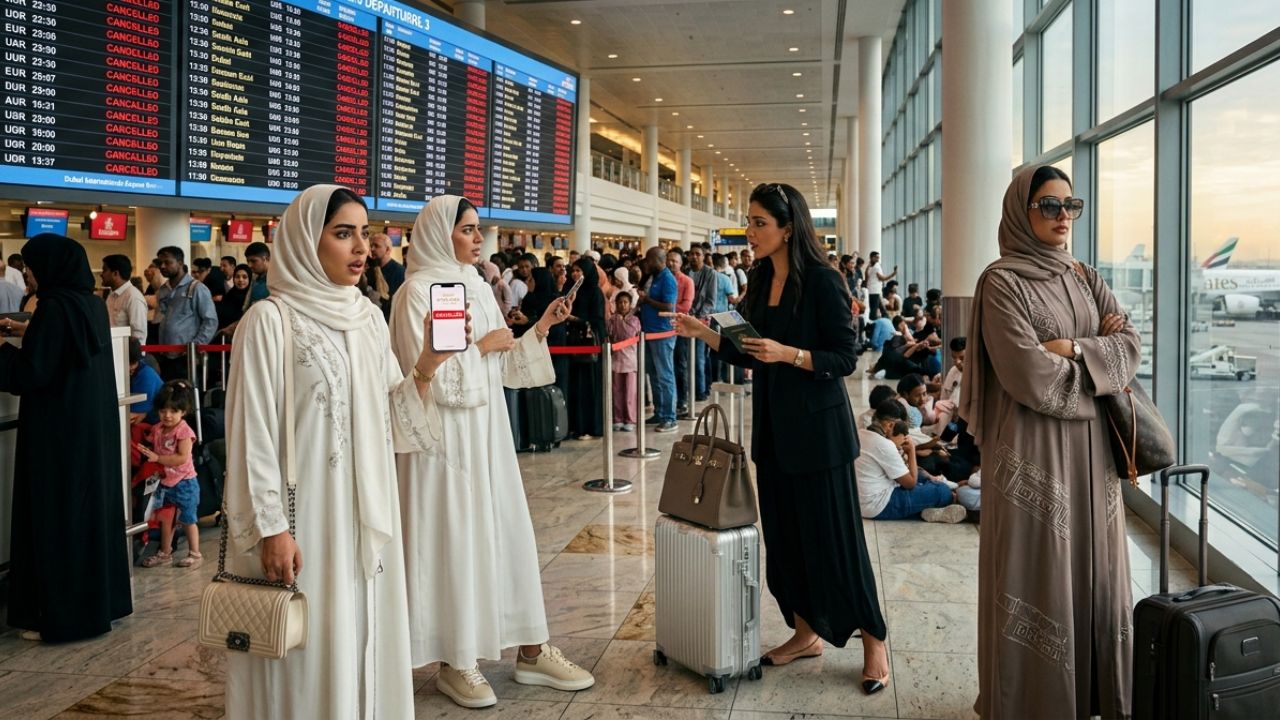
Image generated by AI
A wave of localized operational interruptions across the United Arab Emirates has resulted in 10 sudden flight cancellations, severely fracturing critical aviation corridors linking the Middle East to Africa, South Asia, and East Asia. Driven by route-level operational constraints, aviation titans including Emirates, flydubai, Etihad Airways, and Air Arabia have been forced to ground massive wide-body and narrow-body jets across Dubai, Abu Dhabi, and Sharjah. Passengers destined for global centers such as Addis Ababa, Riyadh, Hong Kong, Islamabad, and Colombo are facing an abrupt surge in travel chaos. Travelers relying on these mega-hubs for international connections must urgently verify their itineraries as authorities work to mitigate these severe airport disruptions.
Quick Summary
- Total Cancellations: 10 critical international departures have been fully grounded across three major UAE airports.
- Airlines Affected: The operational disruption impacts Emirates, flydubai, Etihad Airways, and Air Arabia.
- Airports Impacted: Dubai International Airport (DXB), Abu Dhabi International Airport (AUH), and Sharjah International Airport (SHJ).
- Global Reach: Flights to East Africa (Addis Ababa, Entebbe, Mombasa), Asia (Hong Kong, Islamabad, Colombo, Sialkot, Faisalabad), and the Gulf (Riyadh) are affected.
- Core Issue: Route-specific operational constraints and scheduling volatility are driving the disruptions, rather than a single systemic hub failure.
Context: Operational Strain Across the UAE Aviation Grid
The sudden localized grounding of 10 international flights stems from highly clustered, route-based operational constraints currently affecting the United Arab Emirates. As the region’s massive mega-hubs attempt to synchronize global transit flow, scheduling instability has forced several of the world's most prominent carriers—including Emirates, Etihad Airways, flydubai, and Air Arabia—to sever immediate connectivity on key routes. Because these three primary airports (Dubai, Abu Dhabi, and Sharjah) are so heavily interconnected, a cluster of cancellations rapidly paralyzes the broader aviation network, converting minor delays into severe airport disruptions.
Event Details: 10 Flights Grounded Across Three Hubs
The core of this critical airline news centers on how the cancellations are geographically structured. Rather than a total airport shutdown, the disruptions heavily target specific regional corridors. At Dubai International Airport, cancellations completely focused on East African services operated by B38M aircraft. This includes the repeated grounding of flydubai flight FDB605 to Addis Ababa on both Wednesday and Thursday.
At Abu Dhabi International Airport, disruptions severed both long-haul and medium-haul routes. Etihad Airways grounded its heavy Boeing 777 (B772) operations to Riyadh and Hong Kong, while Air Arabia (ABQ) cancelled its Airbus A321 service to Islamabad. Meanwhile, Sharjah International Airport recorded cancellations exclusively targeting South Asian labor and travel corridors, utilizing A320 aircraft to drop flights destined for Colombo, Sialkot, and Faisalabad.
To guarantee absolute factual accuracy regarding this wave of flight cancellations, the following complete list documents the affected flights:
| Airport | Flight | Aircraft | Destination | Time & Day |
|---|---|---|---|---|
| Dubai International Airport | FDB605 | B38M | Addis Ababa | Wed 01:20 AM |
| Dubai International Airport | FDB605 | B38M | Addis Ababa | Thu 01:20 AM |
| Dubai International Airport | FDB619 | B38M | Entebbe | Wed 12:30 PM |
| Dubai International Airport | FDB1289 | B38M | Mombasa | Tue 03:35 PM |
| Abu Dhabi International Airport | ETD9719 | B772 | Riyadh | Wed 04:55 AM |
| Abu Dhabi International Airport | ETD933 | B772 | Hong Kong | Tue 06:25 AM |
| Abu Dhabi International Airport | ABQ231 | A321 | Islamabad | Tue 03:15 AM |
| Sharjah International Airport | ABY508 | A320 | Colombo | Thu 08:10 AM |
| Sharjah International Airport | ABY552 | A320 | Sialkot | Wed 10:45 PM |
| Sharjah International Airport | ABY562 | A320 | Faisalabad | Wed 09:05 PM |
Risk/Impact: Cascading Network Uncertainty
The concentration of these cancellations across the UAE's primary hubs guarantees localized passenger friction and widespread travel chaos. Because wide-body aircraft like the Boeing 777 are deeply affected alongside narrow-body A320s and B38Ms, both premium and economy passengers are stranded. The risks and impacts include:
- Reduced Direct Availability: Passengers traveling to Africa and Asia face a sudden, drastic reduction in direct flight availability out of the UAE.
- Increased Connection Dependency: Travelers will be forced to rely on highly complex, multi-leg alternative connections to bypass the grounded routes.
- Schedule Uncertainty: The repeated cancellation of specific flight numbers (such as FDB605) injects severe uncertainty into multi-leg journeys, completely destroying carefully planned itineraries.
- Rebooking Delays: Thousands of passengers attempting to secure alternative routing during peak travel windows will face massive digital and in-person bottlenecks.
What Authorities Are Saying About the Airport Disruptions
While specific public apologies have been sparse, the cancellation pattern confirms that aviation authorities and airline dispatchers are struggling against sustained, route-level operational stress. The targeted clustering of these grounded flights indicates that authorities are actively managing resource allocation challenges rather than a total airspace failure. The operational breakdown confirms that airport authorities are failing to maintain consistency across the highly sensitive Asia-to-Africa transit corridors.
Practical Traveler Advice: Navigating the Cancellations
To actively insulate yourself from this severe wave of airport disruptions and salvage your international itinerary, execute the following actions immediately:
- Verify Flight Status: Do not travel to Dubai, Abu Dhabi, or Sharjah without digitally verifying your exact flight status (e.g., ETD933 or FDB619) via the airline's official app.
- Demand Rerouting: If your flight is on the cancelled list, contact Emirates, Etihad, flydubai, or Air Arabia immediately to demand rerouting before alternative seat inventory on competing carriers is entirely depleted.
- Pad Transit Times: If you are scheduled to connect through the UAE on an itinerary linking Africa and Asia, expect massive knock-on delays and ensure your layover is adequately padded.
- Monitor Recurring Failures: Because flights like FDB605 were cancelled on consecutive days, do not automatically accept a rebooking onto the exact same flight number for the following day.
Broader Context: The Fragility of Interconnected Mega-Hubs
This ongoing situation highlights the extreme sensitivity of the United Arab Emirates aviation network. The UAE relies heavily on seamless connectivity, serving as the ultimate global bridge funneling transit passengers between Europe, Africa, Asia, and North America. When high-frequency corridors linking the UAE with East Africa or South Asia collapse under scheduling pressure, it physically paralyzes the region's ability to maintain its reputation for flawless transit. The fact that Dubai, Abu Dhabi, and Sharjah are all suffering concurrent disruptions proves that global aviation networks are highly vulnerable to clustered operational constraints.
What to Expect Next / Looking Ahead
As this localized situation evolves, the restoration of normal operations will completely depend on the airlines' ability to violently stabilize their specific route allocations. Aviation analysts expect these clustered delays to ripple through the system for several days as carriers attempt to clear the backlog of stranded passengers heading to Pakistan, Sri Lanka, and East Africa. Until the underlying inefficiencies in scheduling are resolved, airlines and passengers will remain trapped in a cycle of severe uncertainty.
In conclusion, the mass grounding of 10 critical flights across the UAE is a stark reminder of the fragile nature of global aviation networks. Travelers utilizing these massive Gulf hubs must remain hyper-vigilant, continuously monitor official airline communications, and act decisively to protect their itineraries from this disruption.
FAQ
Why were 10 flights cancelled across UAE airports? The localized wave of flight cancellations was driven by a severe operational breakdown involving route-level constraints and scheduling instability across Dubai, Abu Dhabi, and Sharjah.
Which airlines are affected by this travel chaos? The disruptions heavily target Emirates, flydubai (FDB), Etihad Airways (ETD), and Air Arabia (ABY/ABQ), grounding both wide-body and narrow-body aircraft.
Are flights to Africa and Asia affected? Yes. Critical flights to Addis Ababa, Entebbe, Mombasa, Hong Kong, Islamabad, Colombo, Sialkot, and Faisalabad have been grounded.
What should I do if my flight from the UAE is cancelled? Do not proceed to the airport. Instantly contact your airline via their digital app or customer service hotline to demand rebooking on alternative services, and secure local accommodations if necessary.
Will the airport disruptions continue? Given the repeated cancellations of identical flight numbers across multiple days (like FDB605), operational stress on specific routes is expected to continue until airlines stabilize their schedules.
Disclaimer
This article is for informational and educational purposes only. It does not constitute legal, financial, or professional advice. While we strive to provide accurate and up-to-date information, travel policies, regulations, and conditions change rapidly. Always verify information with official sources before making travel decisions. Nomad Lawyer makes no representations about the accuracy, reliability, completeness, or suitability of the information provided. Readers should consult qualified professionals for advice specific to their circumstances. The views expressed in this article are those of the author and do not necessarily reflect the views of Nomad Lawyer.
Kunal K Choudhary
Co-Founder & Contributor
A passionate traveller and tech enthusiast. Kunal contributes to the vision and growth of Nomad Lawyer, bringing fresh perspectives and driving the community forward.
Learn more about our team →