
UAE Orders 20 Embraer C-390 Aircraft: Middle East Military Aviation Game-Changer
UAE signs record deal for 20 Embraer C-390 Millennium jets, becoming first Middle Eastern nation to acquire versatile military transport aircraft with humanitarian and emergency response capabilities.

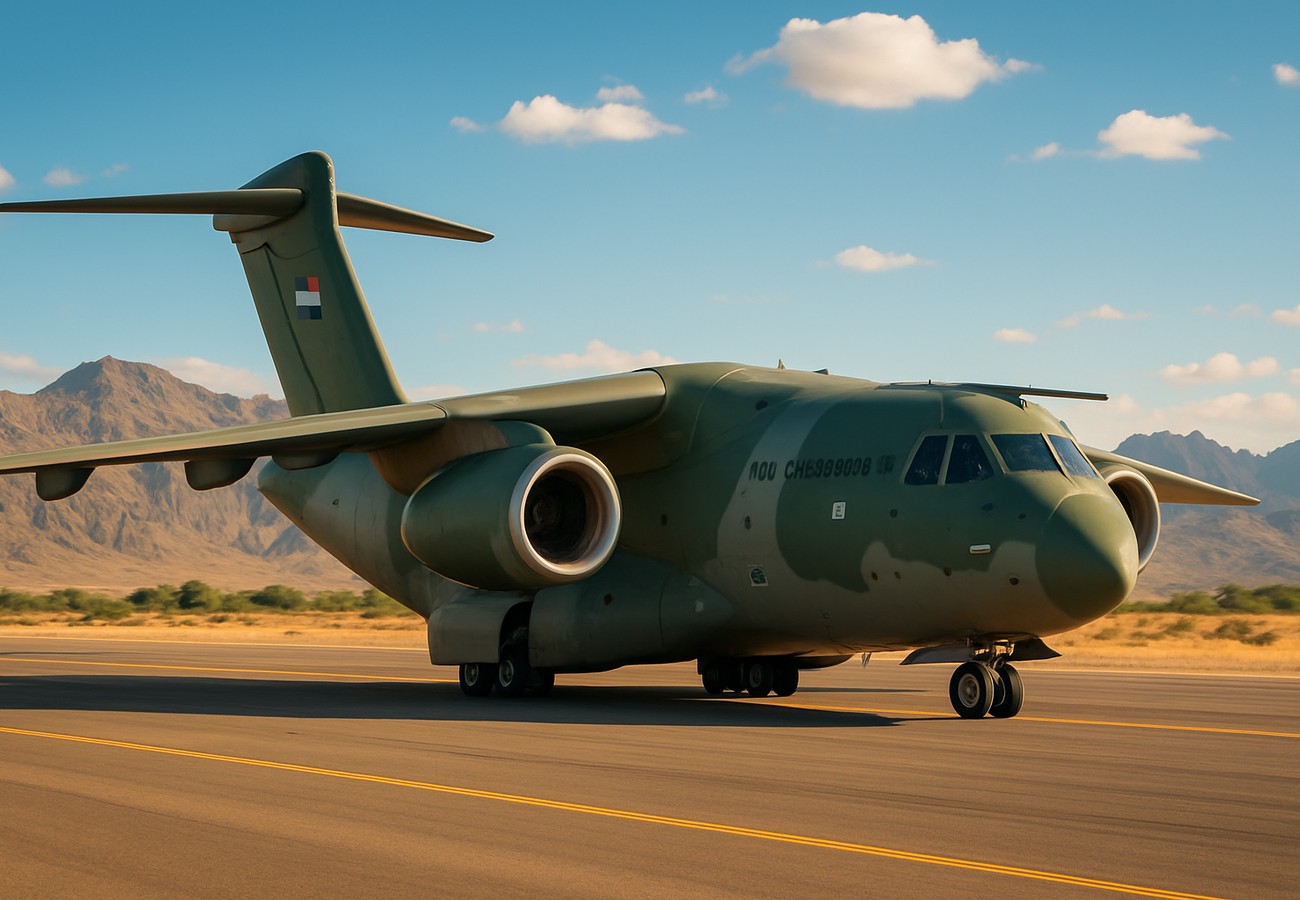
Image generated by AI
UAE Orders 20 Embraer C-390 Millennium Aircraft in Historic Middle East Deal: What It Means for Global Emergency Response and Humanitarian Aviation
Record Military Aviation Procurement Strengthens UAE's Regional Dominance and Crisis Response Capabilities
The United Arab Emirates has secured a landmark agreement with Brazilian aerospace manufacturer Embraer to procure up to 20 C-390 Millennium multi-mission aircraft—marking the first acquisition of this advanced platform in the Middle East and positioning the nation as a potential global leader in operating this versatile military transport aircraft.
The deal encompasses 10 firm orders with an additional 10 options, establishing the foundation for what could become the world's largest operational fleet of the C-390 if all options are exercised. While classified primarily as a defense procurement, the strategic implications extend far beyond military considerations, directly impacting humanitarian operations, disaster relief capabilities, and the global architecture of emergency air response systems.
Breaking Down the Historic Agreement
The UAE's partnership with Embraer represents a watershed moment for both regional defense modernization and international humanitarian air mobility. This is not merely a military hardware transaction—it signals a fundamental shift in how the Middle East approaches crisis response, emergency evacuations, and rapid-deployment logistics across a region characterized by complex geopolitical challenges and recurring humanitarian emergencies.
For Embraer, one of the world's leading commercial and defense aircraft manufacturers, this breakthrough into the Arabian Peninsula market validates the C-390's positioning as the next-generation standard for mid-range military airlift across emerging markets and established defense sectors alike.
The agreement includes substantial commitments beyond aircraft delivery. Embraer will collaborate with UAE-based organizations to establish local maintenance, repair, and overhaul (MRO) facilities—ensuring operational independence and dramatically reducing logistics costs associated with keeping these sophisticated platforms mission-ready.
The C-390 Millennium: Why This Aircraft Matters
The Embraer C-390 Millennium represents a dramatic leap forward from legacy military transport aircraft still operating globally. Unlike the aging Lockheed C-130 Hercules platform that has dominated military airlift operations for six decades, the C-390 combines jet-like speed with heavy-lift cargo capacity, making it ideally suited for the unpredictable operational environment the UAE and broader Middle Eastern region faces.
Performance Specifications and Operational Advantages
| Specification | Performance |
|---|---|
| Maximum Cargo Capacity | 26,000 kg (57,320 lbs) |
| Cruise Speed | Jet-comparable (approximately 470 knots) |
| Operational Range | Long-distance regional/international missions |
| Troop Transport Capacity | Up to 64 paratroopers |
| Runway Requirements | Semi-prepared and unpaved airstrips |
| Rapid Reconfiguration Time | 2-4 hours between mission profiles |
| Engine Configuration | Dual turboprops (debris-resistant positioning) |
| Operational Environment Range | Tropical to arctic conditions |
The C-390's defining characteristic is its extraordinary operational flexibility. Within hours, ground crews can reconfigure the airframe from cargo transport to medical evacuation, disaster relief operations, or firefighting support. This rapid mission adaptability addresses the core challenge facing modern humanitarian air operations: unpredictable, simultaneous demands across multiple crisis zones.
Regional and Global Geopolitical Context
The UAE's C-390 acquisition occurs within a complex Middle Eastern security landscape characterized by climate-driven disasters, regional conflicts, population displacement, and recurring humanitarian emergencies. The Arabian Peninsula faces increasing vulnerability to cyclones, flash flooding, and infrastructure disruptions—scenarios where rapid aerial response can mean the difference between disaster mitigation and catastrophic loss of life.
Beyond domestic applications, the UAE's investment positions the nation as a regional humanitarian air hub. Dubai's geographic centrality within Asia, Africa, and Europe makes it an ideal staging point for international disaster response operations. The C-390 fleet could facilitate rapid deployment to conflict zones, earthquake-stricken regions, or areas devastated by weather events across three continents.
This procurement also reflects the UAE's strategic pivot toward "soft power" influence through humanitarian capability—increasingly important in a regional environment where military spending faces international scrutiny and soft influence through aid and disaster response generates geopolitical advantage.
Impact on Global Emergency Response Architecture
While primarily a UAE-focused procurement, this deal has ripple effects across international humanitarian aviation networks. The addition of 20 advanced military transport aircraft to the Middle Eastern operational environment creates new capacity for:
- Rapid civilian evacuations during regional conflicts
- Urgent medical transport to tertiary care facilities during mass casualty events
- Disaster relief logistics across Africa, Asia, and the Indian Ocean region
- Humanitarian corridor establishment when commercial infrastructure is damaged
- Pandemic response and medical supply distribution during health crises
The C-390's ability to operate from damaged or unprepared airfields is particularly critical. In disaster scenarios, conventional airport infrastructure is often destroyed—the C-390 can land on partially damaged runways, desert airstrips, or remote locations where standard commercial jets cannot operate.
Direct and Indirect Traveler Impact
Emergency Evacuation Capabilities
For travelers, the practical implications emerge during crises. Commercial airline networks typically collapse during regional emergencies—cancellations cascade, bottlenecks form at remaining airports, and evacuation becomes chaotic. A dedicated fleet of rapid-response military transport aircraft provides alternative evacuation pathways.
Recent precedents demonstrate this value. During the Afghanistan crisis of 2021, military cargo aircraft became lifelines for stranded civilians. Similarly, hurricane evacuations, flood responses, and conflict-zone extractions depend entirely on military airlift capacity. The UAE's C-390 fleet dramatically expands this lifeline infrastructure for the Indian Ocean region, Arabian Peninsula, and proximate continents.
Disaster Relief and Route Restoration
When earthquakes, cyclones, or conflicts disrupt commercial aviation hubs, humanitarian aircraft restore connectivity to affected regions. The C-390's speed advantage over legacy transport aircraft means aid arrives faster, damaged airports receive emergency supplies more quickly, and normal commercial operations resume sooner.
For travelers facing disrupted bookings, canceled flights, and stranded logistics, faster humanitarian restoration directly translates to quicker normalization of commercial services.
No Direct Commercial Service Impact
However, travelers should understand a critical limitation: these aircraft will never carry commercial passengers on revenue flights. The C-390 remains exclusively military/humanitarian inventory. Ticket prices, commercial flight schedules, and passenger amenities remain unaffected by this procurement.
Strategic Implications for Embraer and the Aerospace Industry
This deal strengthens Embraer's competitive position against Airbus (which produces the A400M military transport aircraft) and demonstrates market appetite for the C-390 beyond established defense budgets. The Middle East represents untapped demand for next-generation military airlift—if the UAE procurement succeeds operationally, neighboring Gulf Cooperation Council (GCC) nations may follow with their own orders.
The agreement also validates Embraer's strategy of localized support infrastructure. By establishing MRO facilities in the UAE, Embraer reduces customer dependency on Brazil-based logistics and creates incentive for other Middle Eastern nations to consider the platform.
Financially, this represents one of the largest defense procurement contracts for an emerging-market aircraft manufacturer, signaling investor confidence in Embraer's ability to compete with traditional Western aerospace powerhouses.
Local Maintenance and Industrial Development
The partnership between Embraer and UAE-based maintenance organizations has overlooked but significant implications. Establishing C-390 MRO capabilities in Dubai creates:
- High-skilled aerospace employment in the UAE
- Technology transfer from Brazilian engineers to local technicians
- Regional expertise hub positioning the UAE as an aviation support center
- Reduced operational costs through local maintenance rather than international logistics
This industrial dimension aligns with the UAE's broader diversification strategy, reducing over-reliance on oil revenues and building advanced manufacturing sectors.
Middle Eastern Context and Regional Implications
The UAE's procurement decision reflects several regional factors:
Climate and Disaster Resilience: The Arabian Peninsula faces increasing climate volatility. The UAE has experienced record rainfall, flooding, and severe weather events in recent years. Advanced air transport capacity strengthens disaster response across the Emirates.
Regional Leadership: By acquiring cutting-edge military equipment, the UAE reinforces its position as the region's most technologically advanced nation—crucial for maintaining defense credibility among neighbors.
Humanitarian Soft Power: The C-390's humanitarian capabilities enable the UAE to position itself as a regional leader in disaster response, generating positive international relations through aid delivery.
Operational Flexibility: Unlike larger nations with global reach, the Middle East's mid-range powers benefit from equipment specifically scaled to regional distances and operational requirements.
What Happens Next: Future Expansion Possibilities
If the 10 firm C-390 orders prove operationally and financially successful, the UAE will likely exercise its 10 optional aircraft. This could make the nation the world's largest C-390 operator, surpassing Brazil itself.
Beyond the UAE, the procurement may trigger cascading orders from:
- Saudi Arabia
- Qatar
- Kuwait
- Oman
- Other Gulf Cooperation Council nations
Each nation faces similar disaster response challenges and regional humanitarian responsibilities. The UAE's successful integration of the C-390 provides a proof-of-concept that may accelerate Middle Eastern adoption of this platform.
Internationally, countries across Africa, Southeast Asia, and Latin America—regions with similar infrastructure constraints and humanitarian challenges—may view the C-390 as an attractive alternative to aging military transport fleets.
Industry Expert Analysis: Why This Matters Beyond Defense
Aviation analysts emphasize that military transport procurement has direct civilian implications. When humanitarian air capacity increases, commercial airline networks become secondary providers rather than primary responders during crises. This distribution of responsibility actually strengthens overall system resilience.
The C-390's introduction to the Middle East also indicates a shift toward "multi-mission" equipment. Rather than purchasing specialized aircraft for cargo, passenger evacuation, medical transport, and firefighting separately, modern defense budgets favor versatile platforms. This trend toward flexibility over specialization is reshaping global military procurement patterns.
For the travel industry, increased humanitarian air capacity indirectly improves passenger safety and crisis response—even though travelers never board these aircraft.
Conclusion: Aviation's Unseen Infrastructure
The UAE's C-390 procurement exemplifies how aviation extends far beyond commercial passenger routes and airline economics. Behind every safe flight, functioning airport, and restored travel route are military and humanitarian aircraft providing invisible infrastructure—rescue, evacuation, supply delivery, and crisis response.
While this deal won't affect ticket prices or schedule convenience, it fundamentally strengthens the global safety net that protects travelers during emergencies. As climate volatility increases and geopolitical instability persists, investing in rapid-response air transport becomes a critical resilience measure.
For the UAE, acquiring 20 of the world's most advanced military transport aircraft positions the nation as a regional humanitarian leader. For global travelers, it means more robust emergency response infrastructure exists across a strategically critical region. For Embraer, it validates the C-390's market position and opens doors to additional Middle Eastern sales.
The aircraft may never carry you as a paying passenger—but if disaster strikes, the C-390 fleet may very well be the lifeline that brings you home.
Key Takeaways
- UAE Signs Historic Deal: First Middle Eastern nation to order Embraer C-390 Millennium with 10 firm orders and 10 optional aircraft
- Potential Global Leader: UAE could become the world's largest C-390 operator if all options are exercised
- Humanitarian Focus: Aircraft designed for military use but equipped for disaster relief, medical evacuation, and emergency response
- No Passenger Impact: C-390 aircraft will not operate commercial passenger flights; no direct effect on ticket prices or routes
- Regional Implications: Deal signals potential for cascading orders across Gulf Cooperation Council nations
- Local Infrastructure: Embraer to establish maintenance and support facilities in UAE, creating high-skilled aerospace jobs
- Emergency Response: Aircraft can operate from damaged or unprepared runways, critical advantage during disaster scenarios
- Global Resilience: Increased humanitarian air capacity indirectly strengthens travel system resilience during crises
- Geopolitical Positioning: Procurement enhances UAE's soft power through humanitarian capability and regional leadership
Related Travel Guides
Disclaimer
This article is for informational and educational purposes only. It does not constitute legal, financial, or professional advice. While we strive to provide accurate and up-to-date information, travel policies, regulations, and conditions change rapidly. Always verify information with official sources before making travel decisions. Nomad Lawyer makes no representations about the accuracy, reliability, completeness, or suitability of the information provided. Readers should consult qualified professionals for advice specific to their circumstances. The views expressed in this article are those of the author and do not necessarily reflect the views of Nomad Lawyer.
Kunal K Choudhary
Co-Founder & Contributor
A passionate traveller and tech enthusiast. Kunal contributes to the vision and growth of Nomad Lawyer, bringing fresh perspectives and driving the community forward.
Learn more about our team →