
UAE Strengthens BRICS Tourism Partnerships via Jaipur Declaration to Boost 2031 GDP Goals
The UAE leverages the 2026 BRICS Tourism Ministers’ Meeting in Jaipur to accelerate frictionless travel, AI integration, and investment to reach 40 million annual guests by 2031.

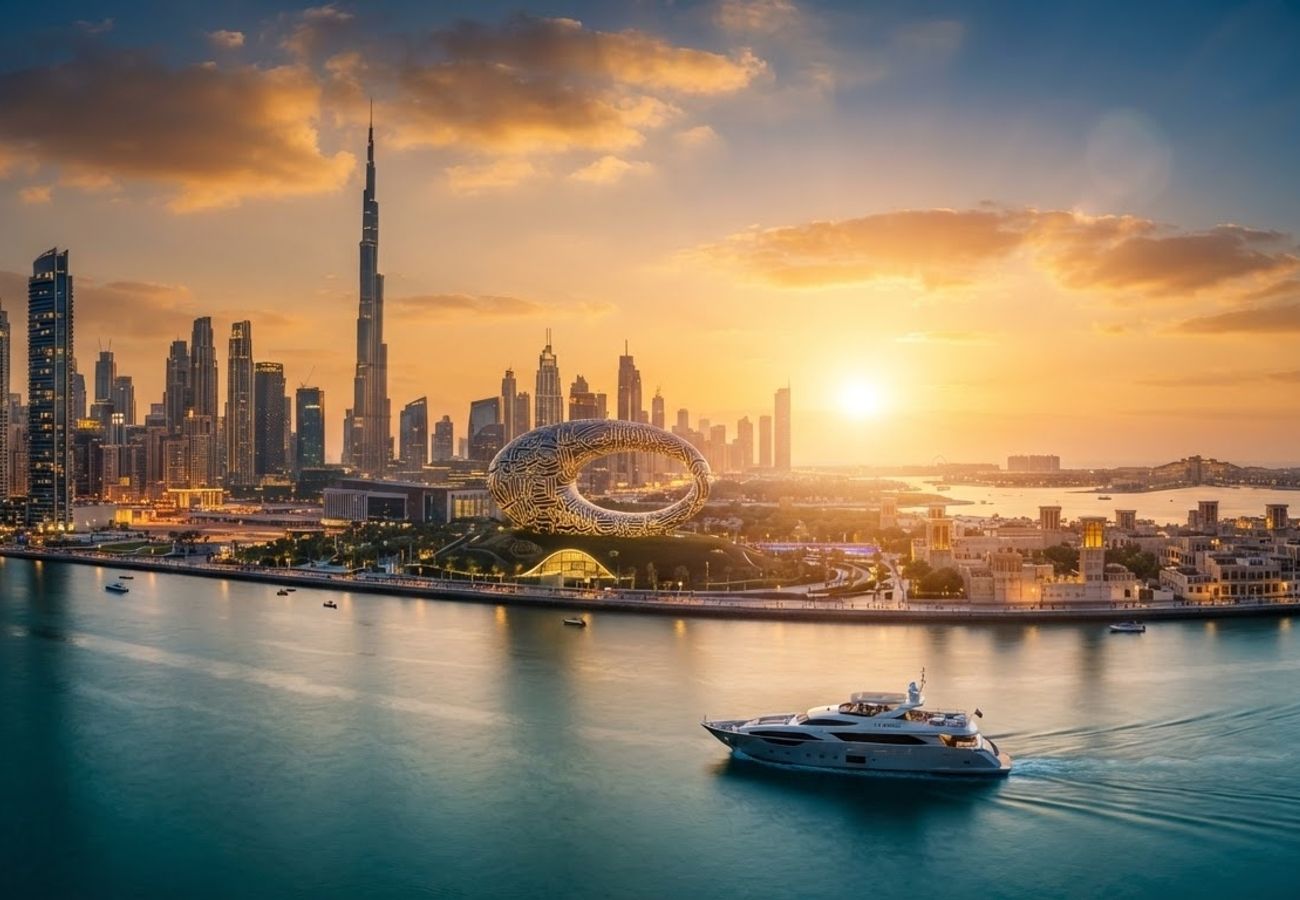
Image generated by AI
The United Arab Emirates is aggressively expanding its tourism footprint across BRICS nations following the Tourism Ministers’ Meeting in Jaipur, India, on 21 August 2026. This strategic pivot focuses on frictionless travel and AI-driven destination management to accelerate the UAE's goal of attracting 40 million annual guests by 2031.
The Jaipur Declaration: A New Framework for Global Mobility
Under India’s 2026 BRICS chairship, tourism ministers convened in Jaipur under the theme “Building for Resilience, Innovation, Cooperation and Sustainability.” The summit culminated in the adoption of the Jaipur Declaration, a ministerial communique establishing a collaborative framework for member states.
Our analysis indicates that the declaration focuses on four critical pillars designed to modernize the traveler experience:
- Artificial Intelligence and Tourism: Implementing responsible AI to optimize visitor services, urban planning, and destination management.
- Sustainability and Responsible Tourism: Establishing protocols to protect natural resources, cultural heritage, and local communities.
- Tourism Skilling and Capacity Building: Creating a standardized, adaptable workforce to meet evolving global travel demands.
- Tourism Exchanges and Seamless Travel: Simplifying visa processes and facilitating frictionless movement between BRICS member states.
While the declaration does not mandate immediate legal changes, it provides the policy architecture for bilateral agreements, particularly between the UAE, India, and Brazil.
UAE Tourism Performance Metrics (2024-2025)
The UAE enters these partnerships from a position of significant growth. Data from the Ministry of Economy and Tourism reveals a robust trajectory in hotel capacity and revenue.
| UAE Tourism Indicator | Official Period | Performance |
|---|---|---|
| Hotel Guests | 2024 | Nearly 30.8 million |
| Annual Guest Growth | 2024 | 9.5 per cent |
| Hotel Revenue | 2024 | Nearly AED45 billion |
| Hotel Occupancy | 2024 | 78 per cent |
| Total Hotels | End of 2024 | 1,251 |
| Total Hotel Rooms | End of 2024 | 216,966 |
| Hotel Occupancy | Jan–Nov 2025 | 79.5 per cent |
| Average Stay | Jan–Nov 2025 | 3.42 nights |
Dubai continues to act as the primary catalyst for this growth. The Dubai Department of Economy and Tourism reported 19.59 million international overnight visitors in 2025, a 5 per cent increase over the 18.72 million arrivals recorded in 2024. Notably, December 2025 marked the first time Dubai welcomed over two million international visitors in a single month.
Passenger Rights & Advisory: Navigating New BRICS Corridors
As the UAE pushes for "seamless travel facilitation," passengers traveling between BRICS nations can expect a shift in how entry and transit are handled.
For the affected passenger, this means:
- Digital Integration: The push for "responsible digital tools" suggests a move toward biometric processing and e-visas. Travelers should ensure their passports are machine-readable and digital identities are updated to benefit from faster processing.
- AI-Driven Support: The adoption of multilingual AI tools will likely reduce reliance on human translators for transport and entry procedures. Passengers should look for official government-backed AI portals to avoid third-party scams.
- Rebooking and Connectivity: As the UAE expands bilateral ties with Brazil and India, flight frequencies are expected to increase. Under standard aviation guidelines, increased capacity typically leads to better rebooking options during disruptions; however, passengers should always verify if their carrier falls under EU261 or similar national protections when booking multi-leg BRICS itineraries.
Strategic Alignment: National Tourism Strategy 2031
The BRICS initiative is a tactical component of the UAE’s National Tourism Strategy 2031. The government has set ambitious financial and volume targets:
- GDP Contribution: Aiming to raise tourism's contribution to the national GDP to AED450 billion.
- Investment Attraction: Targeting AED100 billion in new tourism-related investments.
- Volume Growth: Increasing annual hotel guests to 40 million.
By the end of 2024, the UAE had already achieved 77 per cent of its 40-million-guest target. The integration of the BRICS Tourism Solutions Exchange Platform—a proposed knowledge-sharing hub—is expected to bridge the gap by optimizing visitor distribution and solving regional connectivity issues.
The UAE is not merely seeking a higher volume of tourists; it is exporting its "smart city" tourism model. By leading the discourse on AI and frictionless travel within BRICS, the UAE positions itself as the indispensable hub connecting Latin America, Africa, and Asia.
The focus on "responsible AI" is a critical hedge against the privacy concerns and data breaches that often plague rapid digitalization. If the UAE can successfully implement the Jaipur Declaration's pillars, it will likely see a diversification of its visitor base, reducing reliance on traditional Western markets and increasing the average length of stay beyond the current 3.42 nights.
The UAE's shift toward BRICS integration signals a broader geopolitical realignment of global travel flows.
Related Travel Guides
Disclaimer
This article is for informational and educational purposes only. It does not constitute legal, financial, or professional advice. While we strive to provide accurate and up-to-date information, travel policies, regulations, and conditions change rapidly. Always verify information with official sources before making travel decisions. Nomad Lawyer makes no representations about the accuracy, reliability, completeness, or suitability of the information provided. Readers should consult qualified professionals for advice specific to their circumstances. The views expressed in this article are those of the author and do not necessarily reflect the views of Nomad Lawyer.
Preeti Gunjan
Contributor & Community Manager
A passionate traveller and community builder. Preeti helps grow the Nomad Lawyer community, fostering engagement and bringing the reader experience to life.
Learn more about our team →