
Belize Launches $500M Turneffe Atoll Upgrade for Sustainable Eco-Tourism
The Belize Tourism Board and Protected Areas Conservation Trust have launched a major infrastructure program at Turneffe Atoll Marine Reserve, investing in visitor facilities while strengthening marine conservation across Central America's largest protected atoll.

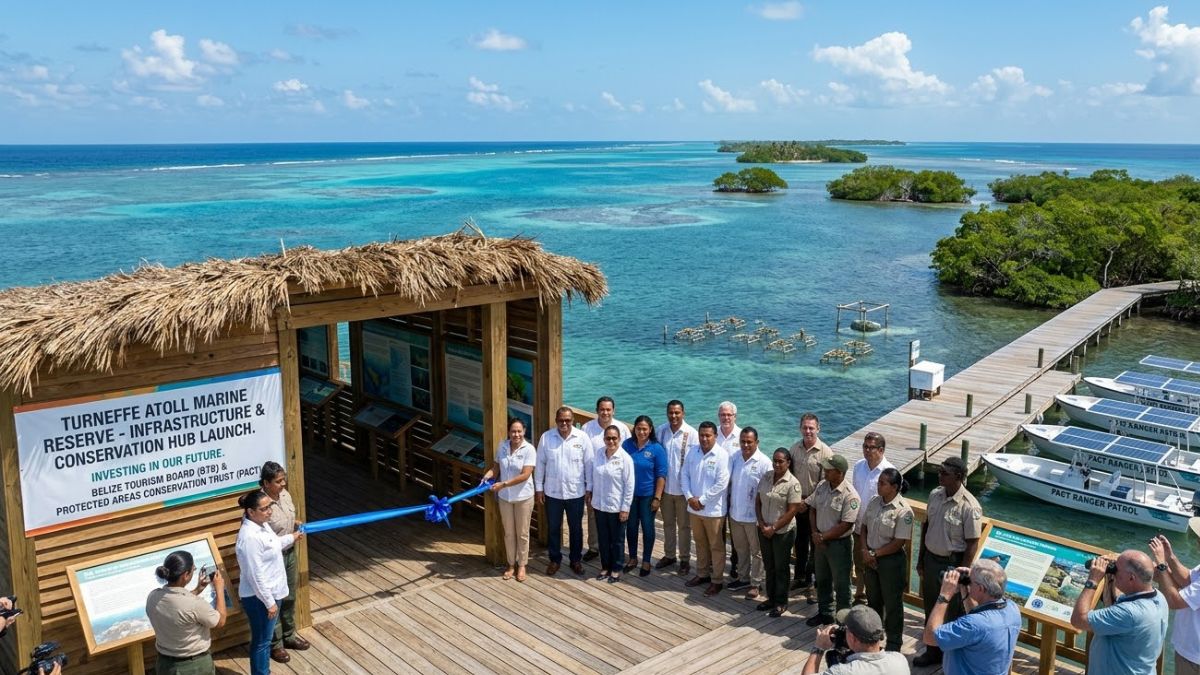
Image for illustrative purposes
Quick Summary
- Turneffe Atoll Marine Reserve: Belize Tourism Board launches Tourism Enhancement in Protected Areas Programme to upgrade infrastructure across the 132,000-hectare marine sanctuary
- Investment Scale: Strategic fund aims to modernize visitor facilities while strengthening conservation at three protected areas, with the atoll's total economic value estimated at $500 million annually
- Key Projects: New pier at Mauger Caye, visitor centre at Calabash Caye, and enhanced conservation outpost at Caye Bokel to manage tourism sustainably
- Conservation Focus: Advanced radar systems, drone surveillance, and Belize Coast Guard patrols intensify protection of spawning sites and the historic "Wit" shipwreck
Belize Launches Major Sustainability Initiative at Turneffe Atoll
The Belize Tourism Board and Protected Areas Conservation Trust have officially launched a transformative funding programme designed to upgrade visitor infrastructure while strengthening marine conservation at Turneffe Atoll Marine Reserve, Central America's largest marine protected area. This week's stakeholder site visits revealed plans for strategic physical improvements across three of Belize's most ecologically significant protected zones, with Turneffe—located approximately twenty miles off the country's coast—serving as the flagship initiative.
The Tourism Enhancement in Protected Areas Programme represents a collaborative effort to balance human access with environmental protection, positioning Belize as a leader in high-value, low-impact eco-tourism. Rather than pursuing mass tourism models, the country aims to attract discerning travellers willing to pay premium rates for authentic, conservation-focused experiences that leave minimal ecological footprints.
Strategic Infrastructure Upgrades Across Three Key Sites
Mauger Caye: New Pier for Safe Vessel Access
At Mauger Caye, construction of a new pier will enable seamless vessel docking, allowing visitors to transition safely from sea to land without disturbing surrounding coral nurseries. The facility will serve as a hub for lunch service and barbecue experiences, generating revenue while maintaining strict environmental protocols.
Calabash Caye: Visitor Education Centre
Calabash Caye will host a dedicated visitor centre functioning as an educational hub where international travellers can learn about the atoll's mangrove ecosystems, seagrass beds, and marine biodiversity. The centre will also serve as a retail space for "Turneffe Ambassador" merchandise, enabling visitors to become conservation advocates.
Caye Bokel: Enhanced Conservation Operations
Caye Bokel will receive infrastructure upgrades for the conservation outpost managed by the Turneffe Atoll Sustainability Association (TASA), allowing enforcement officers to demonstrate their protection methodology to visiting tourists. The facility strengthens monitoring capabilities for the reserve's 132,000-hectare expanse.
Advanced Technology and Sustainable Construction Standards
All new constructions within the protected zone prioritize renewable energy integration, including solar arrays and rainwater harvesting systems. The M2 Radar System at Caye Bokel, recently restored to full operational status in March 2026, forms part of an advanced surveillance network protecting critical spawning aggregation sites and the historic "Wit" shipwreck.
Drone surveillance and joint patrols with the Belize Coast Guard—rotating personnel every three weeks as an operating base—enhance enforcement capabilities across high-pressure fishing zones. Structured pathways and designated viewing areas direct tourist movement, reducing physical damage to reef systems while enabling effective visitor management.
The Economic Case for Conservation Investment
Economists estimate the atoll's total annual economic value at $500 million when accounting for shoreline protection, carbon sequestration, and fisheries support. This calculation underscores why infrastructure upgrades represent vital investments in Belize's "Blue Economy" rather than discretionary spending.
Executive Director Valdemar Andrade of TASA emphasized the strategic rationale: "These are funds that are very hard to come by in our business, but these are very necessary funds as well. One of the ideas behind these kinds of programs is for us to generate our own revenues at the end of the day." By commanding higher per-visitor fees through enhanced amenities, the reserve can sustain conservation operations while reducing pressure on marine resources.
Co-Management Model as Global Blueprint
TASA's management approach has become a global model for marine protected area governance, integrating cutting-edge technology with traditional stewardship practices rooted in local fishing communities. The organization's role extends beyond enforcement to encompass scientific research and community engagement, transforming Turneffe into a "living laboratory" for marine biology and climate adaptation.
A highly skilled technical and business team has been assembled to implement the Financial Sustainability and Tourism Program, with an experienced Enforcement Director now structuring patrol operations. Recent accomplishments include establishing a Belize Marine Protected Areas Network to enable system-level management and collaborative fundraising across core conservation programmes.
Balancing Traditional Livelihoods with Modern Conservation
By engaging local fishing communities who have relied on these waters for generations, TASA strikes a balance between traditional livelihoods and contemporary conservation objectives. Joint patrols with the Belize Coast Guard have proven effective in resolving conflicts between enforcement and commercial fishing operations, with continuous monitoring and inspection of fishing vessels during enforcement deployments.
Data collected by researchers within the atoll informs national policy, positioning Turneffe as a critical source of evidence for marine management strategies across the Caribbean region.
Key Facts at a Glance
| Detail | Information |
|---|---|
| Location | 20 miles off Belize's coast |
| Reserve Size | 132,000 hectares |
| Status | Largest atoll in the Mesoamerican Reef; largest marine reserve in Belize |
| Annual Economic Value | $500 million (including shoreline protection and carbon sequestration) |
| Managing Organization | Turneffe Atoll Sustainability Association (TASA) |
| Executive Director | Valdemar Andrade |
| Primary Funding | Tourism Enhancement in Protected Areas Programme (Belize Tourism Board + Protected Areas Conservation Trust) |
| Conservation Outposts | Mauger Caye, Calabash HQ, Caye Bokel |
| Key Technology | M2 Radar System, drone surveillance, Belize Coast Guard joint patrols |
| Protected Species/Sites | Spawning aggregation sites, "Wit" shipwreck, coral nurseries |
What This Means for Eco-Tourists
Visitors to Turneffe Atoll can expect enhanced amenities without compromising the reserve's ecological integrity. The new pier at Mauger Caye eliminates the logistical friction of beach landings, while the Calabash visitor centre provides context for marine ecosystems before snorkeling or diving activities. Transparent conservation messaging—including tours of Caye Bokel's operations—transforms tourists into informed advocates rather than passive consumers.
Higher entry fees and premium pricing models enable TASA to fund ongoing protection while limiting visitor numbers to sustainable levels. This approach contrasts sharply with mass-tourism destinations where overcrowding degrades reef health and visitor experience simultaneously.
Challenges and Implementation Timeline
The programme's success depends on sustained funding beyond the initial investment phase. While the Belize Tourism Board and Protected Areas Conservation Trust have committed strategic capital, long-term revenue generation through visitor fees and merchandise sales must offset operational costs. Construction timelines for the three facilities remain undisclosed, though stakeholder tours suggest imminent implementation.
Climate change poses an ongoing threat to the atoll's coral systems regardless of infrastructure improvements. The reserve's role in carbon sequestration—part of its $500 million valuation—underscores the urgency of protection efforts.
Frequently Asked Questions
What makes Turneffe Atoll economically significant for Belize? The atoll's $500 million annual economic value derives from multiple ecosystem services: shoreline protection against storm surge, carbon sequestration for climate mitigation, support for commercial and subsistence fisheries, and tourism revenue. These services justify substantial conservation investment as economic infrastructure rather than environmental charity.
How does the new infrastructure protect coral reefs from tourist damage? Structured pathways, designated viewing areas, and controlled pier access reduce physical contact between visitors and fragile coral systems. The pier at Mauger Caye eliminates wading across shallow reefs, while the Calabash visitor centre concentrates educational activities away from sensitive spawning aggregation zones. Solar-powered facilities minimize energy-related carbon emissions that accelerate ocean acidification.
Can local fishing communities continue traditional practices within the reserve? Yes. TASA explicitly engages local fishermen through joint enforcement patrols and collaborative management frameworks. The reserve balances conservation with traditional livelihoods by targeting illegal commercial fishing while permitting regulated subsistence practices. This approach has reduced conflicts between enforcement and fishing communities.
When will the new facilities open to visitors? Specific opening dates have not been announced. Stakeholder site visits occurred in mid-March 2026, suggesting construction may begin imminently, though timelines depend on funding disbursement and permitting processes. Check Belize Tourism Board for updates on facility availability.
Related Travel Guides
Belize's Blue Economy: How Marine Protected Areas Drive Sustainable Tourism Revenue
Snorkeling and Diving Guide to Turneffe Atoll: Best Sites and Conservation Tips
Central America's Largest Marine Reserves: Comparing Turneffe, Lighthouse Reef, and Half Moon Caye
Disclaimer
This article is for informational and educational purposes only. It does not constitute legal, financial, or professional advice. While we strive to provide accurate and up-to-date information, travel policies, regulations, and conditions change rapidly. Always verify information with official sources before making travel decisions. Nomad Lawyer makes no representations about the accuracy, reliability, completeness, or suitability of the information provided. Readers should consult qualified professionals for advice specific to their circumstances. The views expressed in this article are those of the author and do not necessarily reflect the views of Nomad Lawyer.
Preeti Gunjan
Contributor & Community Manager
A passionate traveller and community builder. Preeti helps grow the Nomad Lawyer community, fostering engagement and bringing the reader experience to life.
Learn more about our team →