
Turkey Maritime Disaster: 115 Evacuated After Toys Boat Fire Near Fethiye in August 2026
A rapid emergency evacuation of 115 passengers and crew from the Toys Boat near Fethiye highlights critical gaps in small-vessel maritime safety protocols in Turkey.

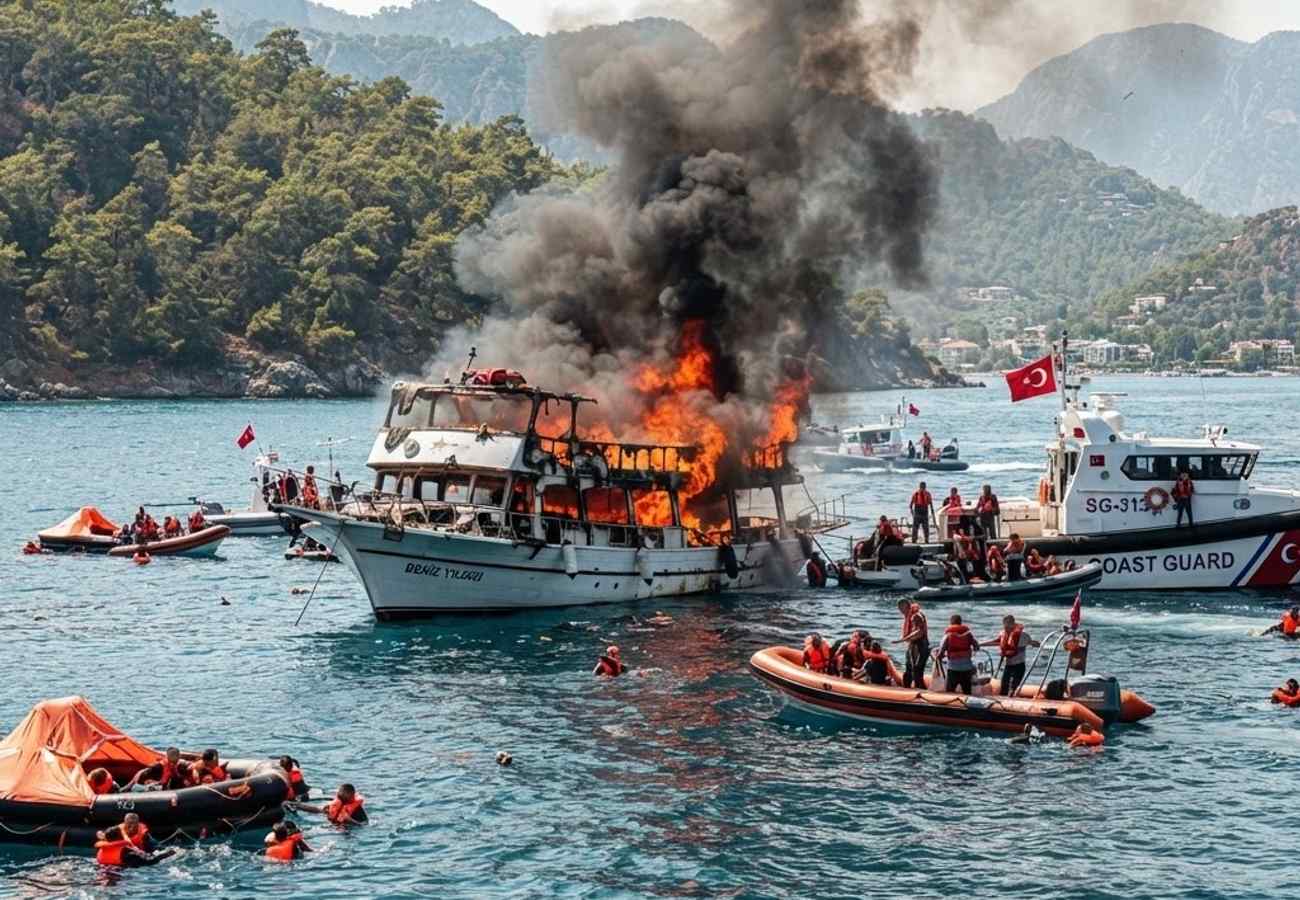
Image generated by AI
A rapid emergency evacuation of 115 passengers and crew from the Toys Boat near Fethiye highlights critical gaps in small-vessel maritime safety protocols in Turkey.
On August 13, 2026, a leisure vessel known as the Toys Boat, which operated specifically as a children’s entertainment tour boat, was destroyed by fire off the coast of Fethiye in southwestern Turkey. The incident transformed a recreational family excursion into a survival scenario, necessitating the immediate evacuation of all 115 individuals on board.
The fire escalated quickly, producing thick black smoke and sweeping through the vessel's structure. Passengers were forced to don life jackets and enter the sea to escape the flames. The Turkish Coast Guard coordinated the rescue operation, successfully transporting all 115 people to shore. Medical reports indicate that 11 individuals required hospitalization for smoke inhalation, though none were listed in serious condition.
Maritime Emergency Response and Casualty Data
The speed of the fire's spread underscores the vulnerability of small-scale passenger craft. The following data summarizes the impact of the Toys Boat incident:
| Parameter | Detail |
|---|---|
| Vessel Name | Toys Boat |
| Incident Date | August 13, 2026 |
| Location | Fethiye, Southwestern Turkey |
| Total Evacuated | 115 (Passengers and Crew) |
| Hospitalizations | 11 (Smoke Inhalation) |
| Fatalities | 0 |
| Primary Rescue Agency | Turkish Coast Guard |
Traveler Logistics Guide: Navigating Small-Vessel Tours
From a ground-level perspective, the best way to navigate the risks associated with coastal leisure tours is to treat the boarding process as a safety audit rather than a formality. Many tourists overlook safety briefings, but the Fethiye disaster proves that seconds matter during a maritime fire.
Proactive Safety Checklist for Passengers:
- Immediate Equipment Verification: Upon boarding, physically locate the life jacket assigned to you and your children. Do not assume they are available; verify that the flotation devices are appropriate for the age and size of the passengers.
- Exit Mapping: Identify at least two ways off the boat. In the event of smoke or fire blocking one route, knowing an alternative exit is vital.
- Briefing Engagement: Listen to the crew's safety instructions. Note the location of fire extinguishers and emergency alarm buttons.
- Sensory Vigilance: Report any unusual smells (such as electrical burning) or mechanical sounds to the crew immediately.
- Operator Vetting: Before booking, research the operator's safety record and check for valid maritime certifications.
Infrastructure and Regulatory Impact Assessment
The Toys Boat incident exposes a recurring disparity in maritime oversight. While large-scale cruise ships operate under stringent international regimes, smaller recreational vessels often face less rigorous enforcement.
Turkish authorities are currently investigating the cause of the fire, focusing on mechanical maintenance and fire-safety standards. This investigation is expected to drive a re-evaluation of local maritime licensing and the implementation of stricter mandates, including:
- Automated Detection: Mandatory installation of fire detection systems on all passenger-carrying leisure craft.
- Audit Frequency: An increase in unannounced safety audits conducted by port authorities.
- Digital Manifests: The digitalization of passenger manifests to ensure the Coast Guard has exact headcounts during rescue operations.
The transition from reactive to proactive policy is necessary to protect the Mediterranean tourism economy, as casual maritime tourism continues to outpace current regulatory frameworks.
Safety at sea is not a guarantee provided by the operator, but a protocol verified by the passenger.
Related Travel Guides
Disclaimer
This article is for informational and educational purposes only. It does not constitute legal, financial, or professional advice. While we strive to provide accurate and up-to-date information, travel policies, regulations, and conditions change rapidly. Always verify information with official sources before making travel decisions. Nomad Lawyer makes no representations about the accuracy, reliability, completeness, or suitability of the information provided. Readers should consult qualified professionals for advice specific to their circumstances. The views expressed in this article are those of the author and do not necessarily reflect the views of Nomad Lawyer.
Preeti Gunjan
Contributor & Community Manager
A passionate traveller and community builder. Preeti helps grow the Nomad Lawyer community, fostering engagement and bringing the reader experience to life.
Learn more about our team →