
Türkiye Welcomes 52.78 Million Tourists in 2025, Shatters European Records with $65.23 Billion Revenue Haul
Türkiye set unprecedented tourism records in 2025, welcoming 52.78 million foreign visitors and generating $65.23 billion in revenue—outpacing Spain, France, Italy, and Greece combined.

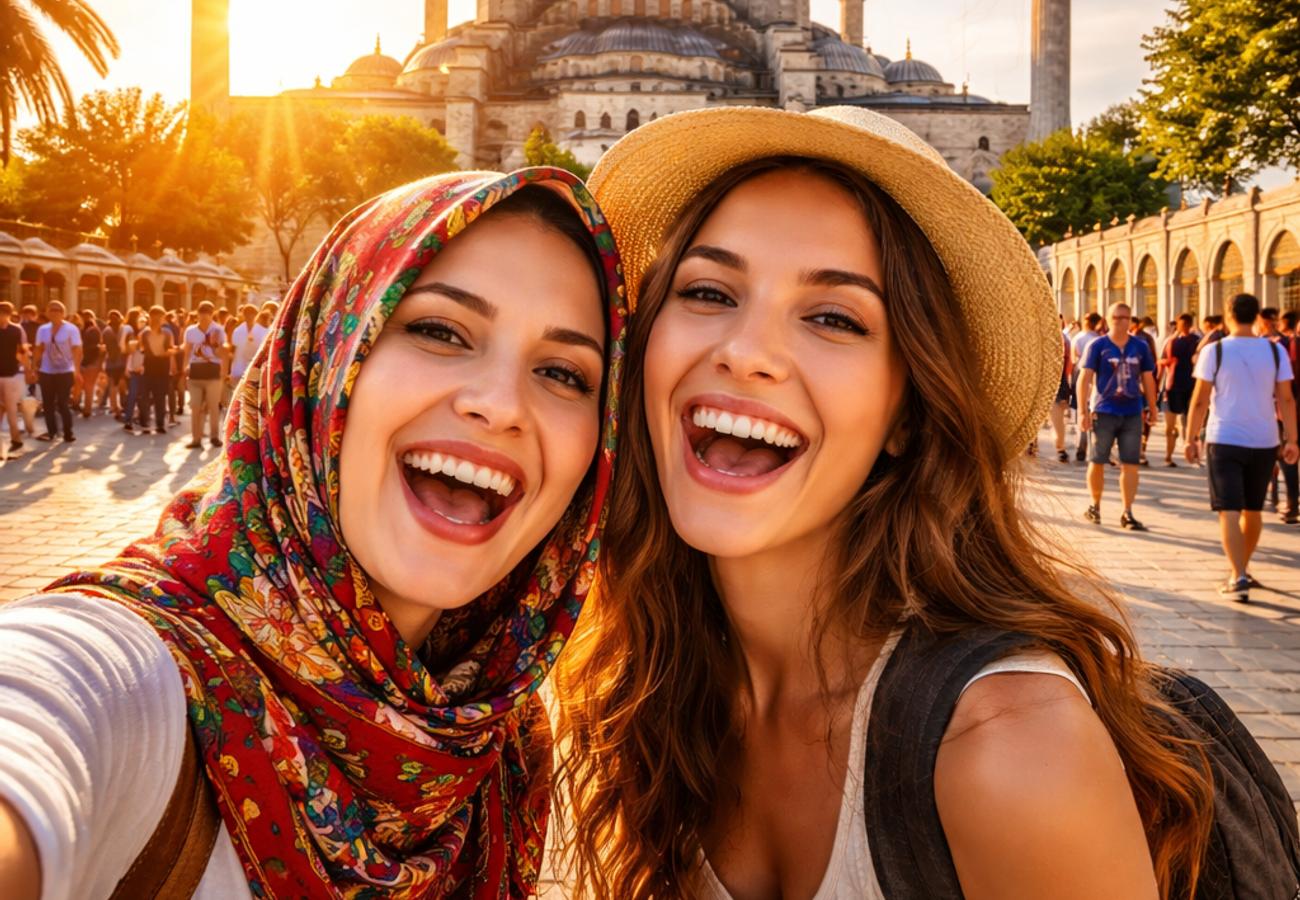
Image generated by AI
Türkiye's Staggering 2025 Tourism Triumph
Türkiye just pulled off something extraordinary. According to the Culture and Tourism Ministry, the country welcomed 52.78 million foreign tourists in 2025, while total visitor arrivals—including Turkish diaspora returning home—hit an all-time peak of 63.94 million. The economic payoff? A jaw-dropping $65.23 billion in tourism revenue.
This isn't just a record. It's a seismic shift in European travel patterns.
The numbers demolish projections made just two years ago. Spain, France, Italy, Greece—the traditional heavyweights—have been outmaneuvered. Despite regional conflicts, climate disruptions, and seismic events that would have crippled smaller tourism markets, Türkiye pivoted, scaled up, and captured global traveler demand like no European nation has managed.
Reddit: "Türkiye is the deal of the century right now. Longer stays, better prices, and you're actually experiencing something real instead of another Instagram postcard." — r/travel
Why Tourists Are Staying Longer Than Anywhere Else in Europe
Here's the stat that matters most: the average international visitor spent 10.7 days in Türkiye.
Compare that to Spain (5.3 days), Italy (7.8 days), France (7.2 days), and Greece (6.8 days). The gap isn't marginal—it's a fundamental reordering of how travelers engage with European destinations.
Extended stays translate directly to extended spending. Visitors explore Antalya, Bodrum, Dalaman, and İzmir's coastal playgrounds. They queue at Istanbul's historical sites—the Blue Mosque, Hagia Sophia, Topkapi Palace. They venture into Anatolian interiors for eco-tourism, hiking, and winter sports. The diversity of experience keeps travelers engaged across seasons, not just the summer beach rush.
This isn't accidental. Türkiye's infrastructure—major international airports, expanded domestic transport networks, high-speed ferry services, and tiered accommodation options from ultra-luxury resorts to eco-lodges—enables multi-destination itineraries that short-stay markets simply can't support.
The Revenue Breakdown: Where the Money Actually Flows
Per-visitor spending jumped 3.7 percent year-on-year to reach $1,008 per tourist, averaging $100 per night. Here's where your tourism dollar goes:
- Food and beverage: 27% of total spending
- Accommodation: 21.2%
- International transportation: significant growth
- Health and wellness activities: notable spike
The shift toward premium services is unmistakable. Travelers are booking boutique hotels, luxury resorts, wellness retreats, and immersive cultural tours—not budget chains. This market segmentation allows Türkiye to capture high-value visitors across multiple tiers simultaneously.
A Truly Global Visitor Base Driving Resilience
Russia delivered 6.9 million tourists. Germany contributed 6.75 million. The United Kingdom sent 4.27 million. Add significant flows from Italy, France, the United States, and rising numbers from Japan and Asia-Pacific markets.
This geographic diversification is strategic genius. When one market softens—political tensions, currency fluctuations, recession fears—others compensate. Türkiye's position as a culturally rich, geographically accessible, and competitively priced destination ensures stability across economic cycles.
The official Tourism Ministry statistics confirm this resilience is structural, not a one-year anomaly.
Year-Round Tourism: Breaking the Seasonal Stranglehold
Traditional Mediterranean tourism faces a brutal bottleneck: July and August. Everyone arrives simultaneously. Infrastructure strains. Quality degrades. Locals resent overtourism. Communities see minimal year-round benefit.
Türkiye is deliberately fragmenting this pattern. Winter sports initiatives in the Anatolian mountains. Eco-tourism expansion in the Black Sea region. Cultural festivals rotating through provincial cities. The strategic goal: distribute 63.94 million visitors across twelve months, not concentrate them in six weeks.
This approach relieves pressure on coastal resorts, creates economic opportunities inland, improves occupancy rates, and encourages repeat visits. It's sustainable tourism by design, not accident.
Infrastructure That Actually Supports Longer Stays
Türkiye's competitive advantage rests partly on hard assets: modern airports, domestic transportation networks, ferry services, and accommodation diversity. But it's the variety of experiences that extends stays.
Cultural tours through Istanbul's Byzantine heritage. Beach holidays on Mediterranean and Aegean coasts. Culinary journeys through regional cuisines. Adventure sports—paragliding in Cappadocia, whitewater rafting in Köprülü Canyon. Heritage exploration in Ephesus, Troy, and Pergamon. Wellness retreats centered on traditional hammam culture.
Single-experience destinations get tired. Multi-dimensional destinations get revisited.
The Economic Powerhouse Behind the Numbers
Tourism represents approximately 10 percent of Türkiye's gross domestic product. The $65.23 billion haul didn't vanish into government coffers—it flowed directly to hotels, restaurants, retail sectors, cultural sites, transportation providers, and service workers across the Mediterranean and Aegean coasts and into inland regions.
Rising per-capita spending means higher wages for hospitality staff, more investment in local infrastructure, improved community livelihoods, and elevated hospitality standards. Tourism isn't just economic data; it's a jobs engine for regions that often lack alternative employment pathways.
The World Travel & Tourism Council documents Türkiye's tourism sector as one of the fastest-growing and most resilient in the Mediterranean.
What's Next: Niche Segments and Market Expansion
Türkiye's government isn't resting on 2025's laurels. The forward strategy targets:
- Medical tourism: leveraging cost advantages and surgical expertise
- Gastronomy tourism: promoting regional cuisines and wine culture
- Adventure tourism: expanding extreme sports and outdoor activities
- Wellness tourism: deepening spa, thermal spring, and holistic health offerings
- Market diversification: aggressively pursuing emerging Asian and African markets
Regional development initiatives aim to spread tourism benefits beyond Istanbul and the southern coast. Infrastructure investment in provincial cities ensures that growth sustains across the entire nation, not just traditional hotspots.
If Türkiye maintains current trajectories, crossing 100 million annual arrivals within five years isn't speculation—it's conservative projection.
The Verdict
Türkiye didn't just hit tourism targets in 2025. It rewrote the European tourism playbook. Longer stays, higher spending, diversified source markets, year-round distribution, and infrastructure supporting multi-destination itineraries have created a competitive moat that traditional destinations haven't figured out how to replicate.
The country's capacity to attract high-value visitors while maintaining cultural authenticity and sustainable growth patterns positions it not as a regional player, but as the global tourism benchmark.
Türkiye didn't just break records—it redefined what modern tourism excellence looks like.
Related Travel Guides
Disclaimer
This article is for informational and educational purposes only. It does not constitute legal, financial, or professional advice. While we strive to provide accurate and up-to-date information, travel policies, regulations, and conditions change rapidly. Always verify information with official sources before making travel decisions. Nomad Lawyer makes no representations about the accuracy, reliability, completeness, or suitability of the information provided. Readers should consult qualified professionals for advice specific to their circumstances. The views expressed in this article are those of the author and do not necessarily reflect the views of Nomad Lawyer.
Preeti Gunjan
Contributor & Community Manager
A passionate traveller and community builder. Preeti helps grow the Nomad Lawyer community, fostering engagement and bringing the reader experience to life.
Learn more about our team →