
UK Holidaymakers Face TUI Warning Over Hidden Airport Currency Exchange Surcharges

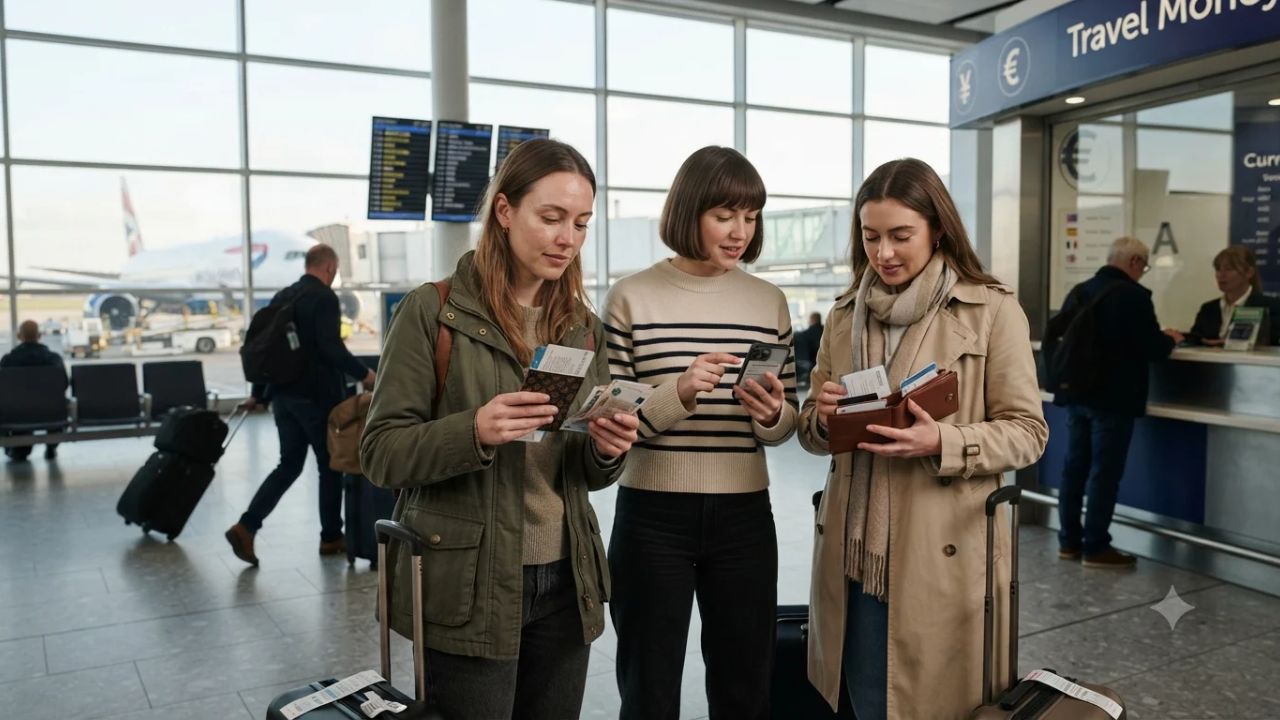
Image generated by AI
With airport walk-up currency kiosks routinely imposing foreign exchange markups ranging between 10 and 20 percent above interbank mid-market rates, British travel giant TUI UK has issued a nationwide financial alert warning holidaymakers against last-minute departure gate conversions. As millions of British tourists finalize autumn getaways to the Mediterranean, the Caribbean, and North Africa, the advisory underscores how a single impulsive financial transaction inside an airport departure concourse can strip hundreds of pounds directly out of a family's overseas spending budget.
The economics of international leisure travel have grown increasingly sensitive to inflationary pressures. While travelers dedicate weeks to hunting discounted airfares and all-inclusive hotel packages, foreign exchange execution remains a persistent blind spot. Under pressure from tight departure schedules and pre-boarding queues, passengers routinely walk up to airport retail exchange booths without comparing real-time exchange benchmarks, surrendering significant purchasing power before their aircraft even pushes back from the gate.
The Airport Captive Market: Deconstructing the Retail Currency Markup
The commercial mechanics behind airport currency kiosks explain why walk-up exchange rates are historically punitive. Operating inside major international departure halls—such as London Gatwick, Manchester, Birmingham, and London Heathrow—requires retail currency operators to pay substantial concession fees and property rents to airport authorities.
To cover these overhead costs while generating corporate profit, operators widen the "bid-ask spread"—the difference between the price at which they purchase foreign currency and the price at which they sell it to consumers. According to consumer finance audits monitored by the Financial Conduct Authority (FCA), travelers converting £1,000 into euros or US dollars at an airport walk-up counter frequently receive £150 to £200 less in foreign currency than they would through pre-ordered high-street collection, digital multi-currency cards, or domestic banking transfers.
Because travelers passing through security have entered a commercially captive zone, retail kiosks face zero price competition. Passengers cannot compare rates across alternative high-street vendors or wait for favorable midday market fluctuations monitored by the Bank of England. Rushed by final boarding calls, travelers accept whatever sub-optimal rate appears on the digital exchange board, treating the transaction as an unavoidable logistical cost rather than an avoidable financial penalty.
The Cash Versus Digital Dichotomy: Navigating Uneven Global Payment Rails
A persistent misconception among modern travelers is that digital card payments have rendered physical cash obsolete across global tourist corridors. While metropolitan destinations across Northern and Western Europe operate on nearly cashless payment rails, extensive portions of the global tourist economy remain deeply reliant on physical paper currency.
In popular Mediterranean holiday destinations, rural resort enclaves, and island communities across Greece, southern Italy, Spain, and Turkey, small businesses frequently enforce minimum card transaction thresholds or maintain cash-only policies for everyday transactions. Independent beach tavernas, local taxi fleets, rural produce markets, and tipping cultures across the hospitality sector depend on immediate physical liquidity.
| Currency Exchange Channel | Typical FX Spread Over Interbank Rate | Hidden Fees / Surcharges | Convenience Factor | Best Strategic Usage |
|---|---|---|---|---|
| Airport Walk-Up Kiosks | 10.0% – 20.0% Markup | High retail spreads; zero price competition | Immediate on-site cash, high time pressure | Emergency only; worst financial value |
| Pre-Ordered Airport Collection | 2.5% – 5.0% Markup | Locked online rates; collection at terminal | Convenient terminal pick-up without walk-up penalty | Planned cash buffer before departure |
| Specialist Multi-Currency Cards | 0.0% – 0.5% Markup | Interbank rate; weekend markup on some apps | Frictionless digital spending via smartphone/card | Primary payment rail for daily merchant spending |
| Traditional Bank Debit Cards | 2.75% – 3.0% FX Fee | Non-sterling transaction fee + flat cash ATM fee | Uses standard current account; no pre-loading | Backup option; costly for multiple small transactions |
| Destination Airport ATMs | 3.0% – 8.0% Markup | Dynamic Currency Conversion (DCC) traps + local ATM fee | Readily accessible upon landing in-country | Secondary cash access; always decline DCC conversion |
Failing to carry a baseline buffer of pre-purchased local currency leaves travelers vulnerable immediately upon arrival. Arriving at a destination airport without local currency forces vacationers into destination arrival hall exchange kiosks or foreign independent ATM networks that levy aggressive international withdrawal fees alongside predatory currency conversion markups.
Hidden Banking Friction: Dynamic Currency Conversion and Non-Sterling Fees
The financial pitfalls facing overseas holidaymakers extend well beyond physical cash exchange. When UK travelers use standard high-street bank debit or credit cards abroad, they routinely encounter hidden cross-border transaction tariffs. Most legacy UK banking institutions apply a non-sterling transaction fee averaging between 2.75 percent and 3.0 percent on every single overseas swipe, adding an unbudgeted surcharge to daily meals, museum admissions, and retail purchases.
Compounding this is the trap of Dynamic Currency Conversion (DCC). When paying with a card at an overseas terminal or withdrawing funds from an international ATM, the terminal prompt frequently asks: "Would you like to be charged in GBP or local currency (EUR/USD)?"
Selecting British pounds activates DCC, allowing the foreign merchant's acquiring bank to set its own arbitrary, highly inflated exchange rate. By opting to pay in GBP rather than the local merchant currency, travelers forfeit the competitive wholesale exchange rates provided by international card payment networks (Visa and Mastercard), incurring an additional hidden markup of 5 to 10 percent on the transaction.
Expert Analysis: Travel Cash Hedging, Neo-Banking Rails, and Budget Erosion
From a macroeconomic and personal finance perspective, managing foreign exchange represents an essential pillar of overall holiday risk management. In volatile foreign exchange markets, currency fluctuations can rapidly alter the total cost of an international vacation between the date of holiday booking and the date of departure.
For travelers booking this route, the direct consequence is that failing to secure foreign exchange ahead of transit can erode up to a fifth of discretionary in-resort spending power, forcing families to curtail excursions, dining experiences, and cultural activities to stay within overall holiday spending caps.
The pricing pressure this creates means UK holidaymakers must adopt structured, dual-rail payment strategies before arriving at the airport. Financial travel specialists recommend combining an audited digital multi-currency debit card (such as those offered by modern neo-banks that charge zero foreign transaction fees at the interbank rate) with a small, pre-ordered physical cash buffer secured days ahead of departure.
By ordering foreign cash in advance—either for home delivery or through pre-booked airport collection windows that lock in competitive online rates—travelers bypass the retail spread penalties imposed on walk-up airport customers. Furthermore, understanding destination-specific payment habits allows travelers to right-size their cash holdings, minimizing the double-conversion penalty of converting surplus foreign paper banknotes back into British pounds upon return. In an era of tight household budgets, eliminating currency conversion leakage is the fastest way to maximize the tangible value of an overseas holiday.
Key Takeaways
- Airport Markup Penalty: Walk-up currency exchange booths at UK airports routinely impose markups of 10 to 20 percent over the interbank exchange rate, severely depleting travelers' spending power.
- TUI Travel Warning: TUI urges British tourists to organize holiday money and evaluate local payment customs well in advance rather than relying on last-minute airport conversions.
- The Cash Buffer Rule: Despite the rise of digital card payments, destinations across the Mediterranean and emerging markets still rely heavily on cash for taxis, tips, and local markets.
- Decline Dynamic Currency Conversion: When using cards overseas or at international ATMs, travelers should always choose to be billed in the local currency, never in British pounds (GBP), to avoid predatory DCC rates.
- Adopt Multi-Currency Rails: Combining zero-fee international travel debit cards with a modest pre-ordered cash reserve provides the optimal balance of security, liquidity, and cost efficiency.
FAQ: Travel Money and Airport Currency Exchange 2026
Why should I avoid exchanging currency at the airport?
Airport walk-up exchange kiosks operate in captive environments with high concession rents, resulting in wide exchange margins that cost travelers 10 to 20 percent more than pre-ordered rates or interbank digital cards.
What is Dynamic Currency Conversion (DCC) and how do I avoid it?
DCC occurs when an overseas card reader or ATM asks if you want to pay in GBP. Always select the local currency (e.g., EUR or USD) so your card issuer performs the conversion at official wholesale rates.
How much physical cash should I take on a European holiday?
Carrying €100 to €200 in physical cash per family covers initial transit, tips, and cash-only merchants, while utilizing a zero-fee travel debit card for hotels, dining, and retail purchases.
Are pre-ordered airport currency collections cheaper than walk-up kiosks?
Yes. Ordering foreign currency online for collection at an airport booth locks in competitive online high-street rates, avoiding the inflated markups charged to walk-up customers at the terminal.
[In the mathematics of modern travel, the savviest holidaymaker is not the one who finds the cheapest flight, but the one who refuses to let hidden exchange fees siphon joy from their journey.]
Related Travel Guides
Disclaimer
This article is for informational and educational purposes only. It does not constitute legal, financial, or professional advice. While we strive to provide accurate and up-to-date information, travel policies, regulations, and conditions change rapidly. Always verify information with official sources before making travel decisions. Nomad Lawyer makes no representations about the accuracy, reliability, completeness, or suitability of the information provided. Readers should consult qualified professionals for advice specific to their circumstances. The views expressed in this article are those of the author and do not necessarily reflect the views of Nomad Lawyer.
Raushan Kumar
Founder & Lead Developer
Full-stack developer with 11+ years of experience and a passionate traveller. Raushan built Nomad Lawyer from the ground up with a vision to create the best travel and law experience on the web.
Learn more about our team →