
TSA's $19-Per-Employee Biometric Grid: Why Airlines Are Paying Millions to Replace KCM by 2027
The TSA is sunsetting the 15-year-old Known Crewmember program and forcing U.S. airlines to pay $19 annually per employee for new biometric access. Here's what the industry is missing about cascading delays.

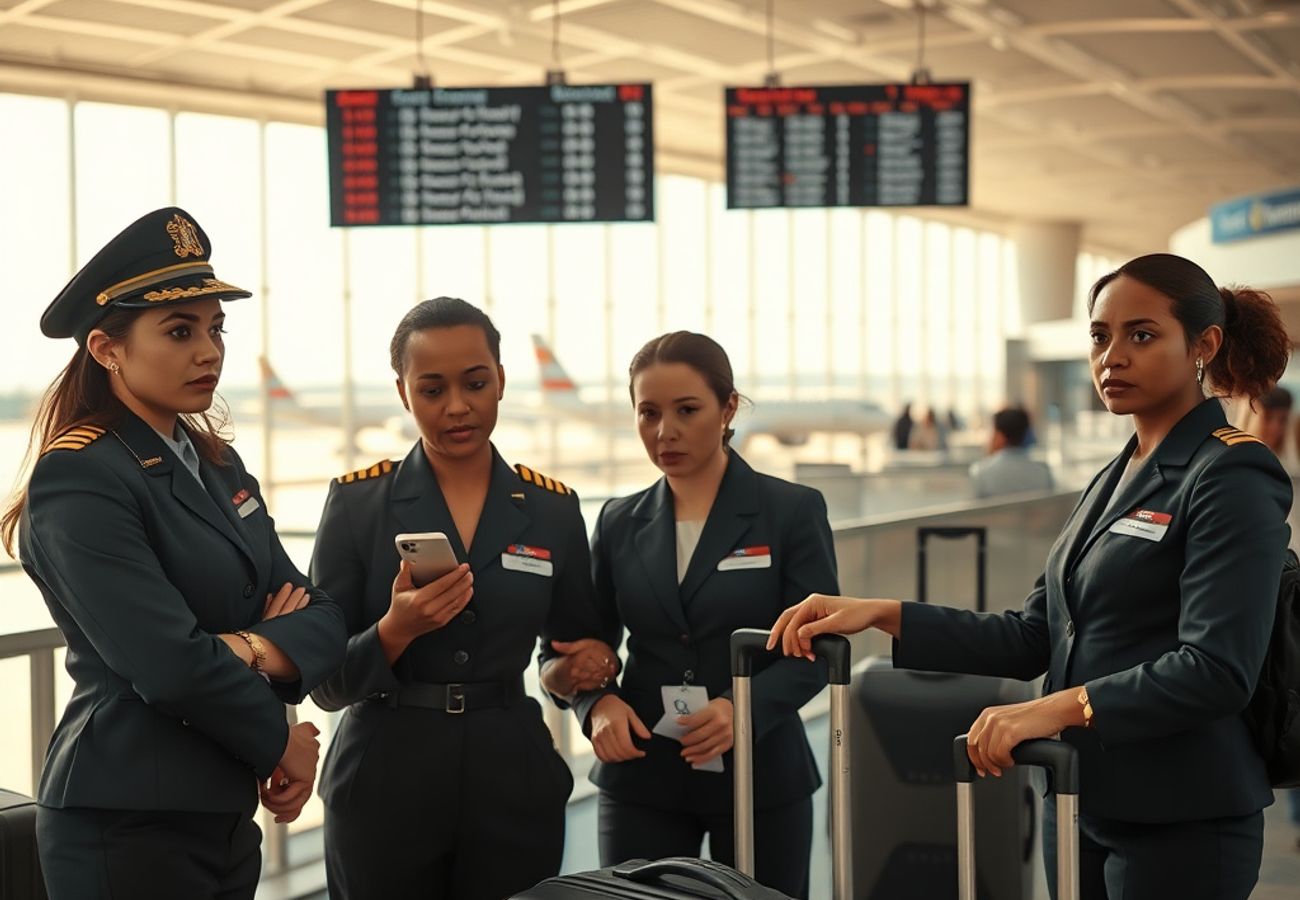
Image generated by AI
The Death of a 15-Year Industry Standard
The Department of Homeland Security is pulling the plug on one of aviation's most cherished workplace perks. By December 31, 2026, the Known Crewmember (KCM) program—a streamlined expedited security pathway that's existed since 2011—will be completely retired. In its place: a mandatory federal biometric system called Crewmember Access Point (CMAP) that's forcing American Airlines, United, Delta, and every other major U.S. carrier to write seven-figure checks.
The sticker shock is real. Starting January 1, 2027, airlines must pay the TSA $19 per crew member annually. For carriers with massive workforces, that's not pocket change—it's millions in new recurring federal costs.
The Financial Hammer Falls Hardest on the Big Three
I've covered aviation policy for years, and I've never seen the industry this quietly rattled. Here's the math that explains why:
American Airlines operates roughly 47,500 crew members (30,000 flight attendants, 17,500 pilots). Annual CMAP bill: $2.64 million. United Airlines carries about 38,000 crew members at $2.17 million annually. Delta Air Lines manages 34,200 employees totaling $1.95 million per year. Southwest Airlines, with its massive domestic operation, faces $1.38 million for approximately 24,200 crew members. Even smaller carriers like JetBlue aren't spared—they're looking at $456,000 annually for roughly 8,000 employees.
This isn't a one-time bill. It's a permanent recurring expense that impacts every carrier's operational budget indefinitely.
Why the TSA Is Seizing Control of Crew Data
Here's what most aviation reporters missed: this isn't just a fee restructure. This is a massive cybersecurity and counterterrorism consolidation.
For over a decade, Airlines for America (A4A)—the industry's primary trade association—maintained exclusive custody of the entire KCM database, containing sensitive credentials for every commercial pilot and flight attendant in the United States. The TSA decided that arrangement created too much institutional risk.
By absorbing crew data into federal infrastructure under CMAP, the agency accomplishes three critical objectives:
Centralized threat intelligence integration: Crew rosters are now woven directly into U.S. Customs and Border Protection (CBP) watchlists, enabling real-time vetting against immigration records, criminal databases, and counter-terrorism intelligence. Contraband closure: In recent years, a growing number of crew members exploited KCM privileges to smuggle weapons, narcotics, and restricted materials. Facial biometric verification eliminates badge counterfeiting and identity fraud. Federal data control: Sensitive employee information moves from private industry servers to encrypted, government-managed networks.
Reddit: "This is basically TSA saying 'we don't trust the airlines to secure this data anymore.'" — r/aviation
The Technology Replacing Your Badge Scan
The operational shift is dramatic. Under the old KCM system, a TSO simply scanned a badge and cross-checked an ID. Done in seconds.
CMAP works differently. When a crew member approaches a designated kiosk, the system captures a real-time digital photograph. That image is instantly cross-referenced against federal facial recognition databases. If the biometric match is confirmed, access is granted. If there's ambiguity or a mismatch, the crew member is diverted to standard passenger screening—potentially adding 15-30 minutes to their security process.
The technology itself isn't new. The CBP has been operating facial recognition systems at U.S. borders since 2015. But this marks the first time the TSA is deploying it systematically across domestic airport checkpoints for crew access.
Field testing has already begun at three major aviation hubs: Ronald Reagan Washington National Airport (DCA), Washington Dulles International Airport (IAD), and Las Vegas Harry Reid International Airport (LAS).
The Voluntary Consent Trap—And Why It Matters
Here's the kicker that labor advocates are sounding alarms about: CMAP participation is entirely voluntary.
Crew members must explicitly consent to facial biometric data collection via a formal digital consent form distributed by their employers. Sounds reasonable, right? Until you realize the alternative: any pilot or flight attendant who opts out forfeits their expedited security privileges entirely and joins the standard passenger line.
The Association of Flight Attendants (AFA) has flagged a secondary issue: even crew members who opt in are subject to the TSA's "unpredictable screening procedures." This means that fully vetted, fully cleared employees can still be randomly selected for intensive physical screening, effectively negating the speed advantage of CMAP.
The Cascading Delay Problem Nobody's Talking About
In 2022, American Airlines pilots nearly staged a work action after aggressive random screening selections began delaying crews from reaching their gates on schedule. A single 20-minute security delay for a lead captain or flight attendant can trigger a domino effect across an entire hub-and-spoke network: missed connections, stranded passengers, aircraft sitting idle on the tarmac, millions in operational losses.
Reddit: "One delayed crew at a major hub can cascade into 8+ flight delays by afternoon. The TSA understands this, but they're prioritizing security uniformity over carrier efficiency." — r/flying
For United operating out of Chicago O'Hare, Delta at Atlanta Hartsfield-Jackson, or American at Dallas-Fort Worth, even a 3% increase in crew security delays could theoretically add hours to daily operation timelines.
The 30-Day Payment Hammer
The TSA isn't playing around with enforcement. The federal rules are explicit: if an airline fails to remit its annual CMAP invoice within 30 days, every single crew member registered to that carrier is immediately purged from the system. No appeals process. No grace period. Their credentials simply disappear from the database.
For a carrier like American or Delta, that means 34,000+ to 47,500+ employees suddenly stripped of expedited access, forced into standard passenger screening within days. Operationally, that's catastrophic.
The January 2027 Countdown
The TSA is rolling out CMAP kiosks gradually across the country through the remainder of 2026. Crew members will begin interacting with the biometric cameras in the coming months. The financial mandate—when airlines actually have to start paying—doesn't hit until January 1, 2027.
This is the transition period. The window when the industry can push back, lobby for delays, or negotiate exemptions. After the New Year, the fees are mandatory.
What Happens to Your Flight?
From a passenger perspective, the outcome depends entirely on whether labor friction escalates or whether carriers absorb the costs quietly. If CMAP implementation and random screening procedures disrupt crew scheduling significantly, you'll notice it as cascading delays, missed connections, and potentially higher ticket prices to offset the new security infrastructure costs.
The TSA frames this transition as a necessary operational evolution—leveraging automation to verify highly trusted, low-risk employees so federal resources can focus on screening higher-risk passenger volume. That logic tracks.
But ask yourself: will the new system actually move faster, or will random screening procedures and biometric processing times cancel out the speed advantage? The evidence from the first CMAP pilots is still being collected.
What's your take—is federal biometric control of crew data a reasonable security upgrade, or another example of bureaucratic overreach that'll slow your next trip?
The real cost of this transition won't be measured in dollars per employee—it'll be measured in delayed flights and customer frustration.
Related Travel Guides
Disclaimer
This article is for informational and educational purposes only. It does not constitute legal, financial, or professional advice. While we strive to provide accurate and up-to-date information, travel policies, regulations, and conditions change rapidly. Always verify information with official sources before making travel decisions. Nomad Lawyer makes no representations about the accuracy, reliability, completeness, or suitability of the information provided. Readers should consult qualified professionals for advice specific to their circumstances. The views expressed in this article are those of the author and do not necessarily reflect the views of Nomad Lawyer.
Preeti Gunjan
Contributor & Community Manager
A passionate traveller and community builder. Preeti helps grow the Nomad Lawyer community, fostering engagement and bringing the reader experience to life.
Learn more about our team →