
Trump-Era Tariffs Drive Up Travel and Living Costs in New York, Detroit, and Major US Hubs in 2026
Major US cities including New York and Detroit are facing sustained economic pressure as Trump-era tariffs inflate the cost of travel, construction, and consumer goods across the nation.

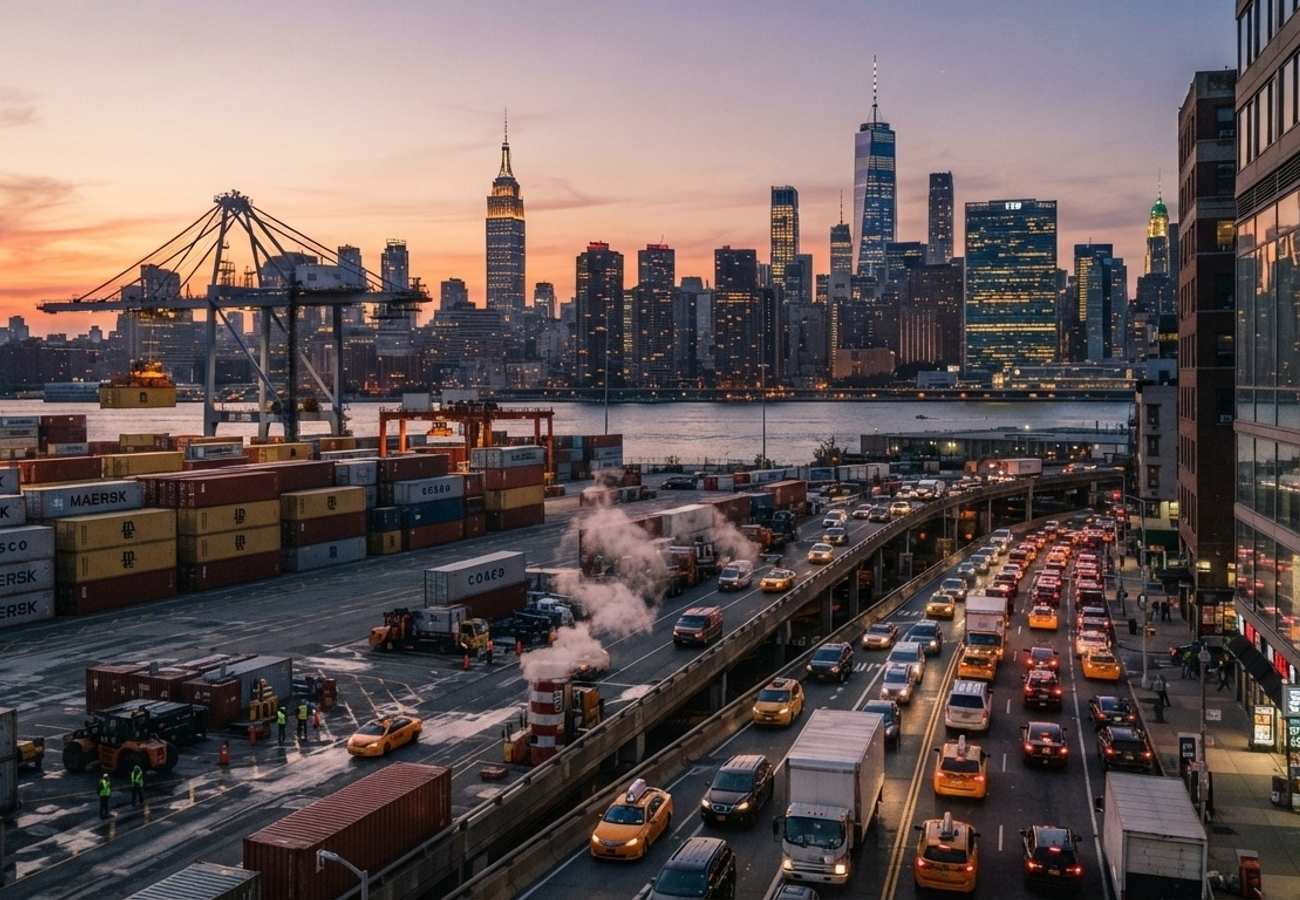
Image generated by AI
Major metropolitan centers across the United States, including New York City and Detroit, are grappling with sustained financial pressure as the lingering effects of Trump-era tariffs continue to drive up the cost of living and travel in 2026. These trade policies have created a ripple effect through supply chains, forcing households, corporations, and tourists to absorb significantly higher prices for essential goods and services.
The economic burden is not distributed evenly, as the impact varies based on a city's specific industrial base and its reliance on international trade. While the original intent of these tariffs was to bolster domestic production and reduce foreign dependency, the practical reality for many urban hubs has been a steady climb in operational expenses and consumer pricing.
Trade Policies Inflate Urban Operational Costs
The persistence of these tariffs has fundamentally altered the cost structure for several key industries. In many US cities, the price of imported machinery, steel, and electronics has surged, which in turn elevates the cost of everything from residential housing to hotel infrastructure.
For the hospitality sector, this manifests as increased capital expenditure. New hotel developments and the renovation of existing properties now require more expensive imported materials, which often leads to higher room rates for the end user. Similarly, airport expansion projects and urban transportation upgrades are facing budget strains due to the increased cost of specialized industrial components.
Beyond infrastructure, the daily experience of a traveler is changing. From the cost of a meal at a restaurant sourcing international ingredients to the price of retail goods in a Manhattan boutique, the "tariff tax" is being passed directly to the consumer.
Regional Economic Variations in Tariff Impact
Because the US economy is a patchwork of specialized hubs, the specific "pain points" of these tariffs differ by geography. Port cities deal with the immediate shock of import duties, while inland manufacturing centers struggle with the rising cost of raw materials.
The Retail Struggle in New York City
As one of the premier import markets globally, New York City is acutely sensitive to trade volatility. The city's vast retail network relies on a constant stream of goods arriving via East Coast ports. Tariffs on apparel, electronics, and home furnishings have forced retailers to raise prices to maintain margins. For tourists, this means that shopping and dining in the metropolitan area have become noticeably more expensive.
Logistics and Gateway Pressure in Los Angeles and Long Beach
The ports of Los Angeles and Long Beach serve as the primary gateways for Asian imports. This makes Southern California the first point of contact for tariff-related price hikes. Importers of furniture and consumer electronics have seen their overhead climb, which eventually trickles down to the local retail market and the logistics companies managing the flow of goods.
Supply Chain Friction in Chicago
Chicago's role as a national freight and distribution nexus means that it feels the pressure of tariffs across multiple sectors. When imported industrial equipment or construction materials increase in price, the cost of warehousing and distribution rises. This creates an indirect inflationary effect on travel services and hospitality within the city.
Automotive Costs in Detroit
In Detroit, the impact is centered on the complex automotive supply chain. Because vehicle production relies on a tight integration of parts from the US, Canada, and Mexico, tariffs on steel and aluminum have increased the cost of manufacturing. While the industry has attempted to optimize its supply chains, the baseline cost of production remains elevated.
Detailed Breakdown of City-Specific Tariff Impacts
The following data illustrates how different urban centers are experiencing the economic fallout of these trade policies based on their primary industries.
| U.S. City | Primary Economic Driver | Major Cost Impact |
|---|---|---|
| Detroit, Michigan | Auto manufacturing / Canada trade | Vehicle production, auto parts, manufacturing labor |
| Chicago, Illinois | National freight hub | Logistics, food, construction materials |
| New York City, New York | Largest import market | Retail, apparel, electronics, consumer prices |
| Los Angeles, California | Port of Los Angeles imports | Household goods, furniture, retail inflation |
| Long Beach, California | Pacific gateway | Shipping costs, container imports from Asia |
| Houston, Texas | Energy and industrial imports | Steel, petrochemicals, machinery |
| Seattle, Washington | Aerospace and Pacific trade | Aircraft supply chains, consumer goods |
| San Francisco, California | Technology imports | Semiconductors, hardware, electronics |
| Atlanta, Georgia | Distribution hub | Logistics, retail pricing, consumer goods |
| Miami, Florida | Latin American trade gateway | Imported food, household products, construction |
| Cleveland, Ohio | Steel manufacturing | Manufacturing input costs, metal tariffs |
| Pittsburgh, Pennsylvania | Industrial production | Fabrication costs, steel |
| Charlotte, North Carolina | Construction boom | Imported fixtures, appliances, housing materials |
| Phoenix, Arizona | Rapid housing growth | Steel, lumber, imported building materials |
| Las Vegas, Nevada | Construction-dependent economy | Commercial and hotel construction costs |
| Dallas, Texas | Manufacturing and distribution | Imported machinery, industrial equipment |
| Nashville, Tennessee | Auto manufacturing | Component costs, automotive supply chains |
| Kansas City, Missouri | Agriculture and logistics | Farm equipment, retaliatory tariff impacts |
| Minneapolis, Minnesota | Agricultural processing | Food production, machinery, export markets |
| Buffalo, New York | Canada border trade | Cross-border logistics and manufacturing |
The Long-Term Effect on the Visitor Economy
As the travel industry continues to evolve in the post-pandemic era, these economic headwinds are creating a new baseline for travel budgets. The "visitor economy" is particularly vulnerable because it relies on a combination of transport, lodging, and dining—all of which are susceptible to tariff-driven inflation.
When a hotel in Las Vegas pays more for imported steel and fixtures during a build-out, or a restaurant in Miami pays more for imported specialty foods, the cost is rarely absorbed by the business. Instead, it is reflected in the price of a hotel room or a dinner menu. This creates a challenging environment for budget-conscious travelers and corporate trip planners.
Why This Matters: The Real-World Impact
For the average traveler, this economic shift means that the "hidden costs" of a trip are rising. It is no longer just about the price of a plane ticket; it is about the inflated cost of the entire urban ecosystem.
From a logistical standpoint, this creates a volatile pricing environment. Travelers may find that prices in "gateway cities" (like LA or NYC) fluctuate more aggressively than in smaller markets because those cities are more directly tied to the volatility of international trade agreements.
Furthermore, for those traveling for business—particularly in sectors like automotive in Detroit or tech in San Francisco—the increased cost of doing business is leading to more streamlined corporate travel budgets. Companies are now forced to weigh the necessity of a trip against the rising cost of local services, potentially leading to a shift toward more virtual interactions or shorter, more concentrated itineraries.
The intersection of trade policy and urban tourism continues to redefine the cost of exploring America's greatest cities.
Related Travel Guides
Disclaimer
This article is for informational and educational purposes only. It does not constitute legal, financial, or professional advice. While we strive to provide accurate and up-to-date information, travel policies, regulations, and conditions change rapidly. Always verify information with official sources before making travel decisions. Nomad Lawyer makes no representations about the accuracy, reliability, completeness, or suitability of the information provided. Readers should consult qualified professionals for advice specific to their circumstances. The views expressed in this article are those of the author and do not necessarily reflect the views of Nomad Lawyer.
Raushan Kumar
Founder & Lead Developer
Full-stack developer with 11+ years of experience and a passionate traveller. Raushan built Nomad Lawyer from the ground up with a vision to create the best travel and law experience on the web.
Learn more about our team →