
Travel Sydney Begins: Singapore Airlines Claims New Airport First
Singapore Airlines launches inaugural flights at Sydney's new airport in March 2026, marking a strategic shift in Asia-Pacific aviation connectivity and competition.

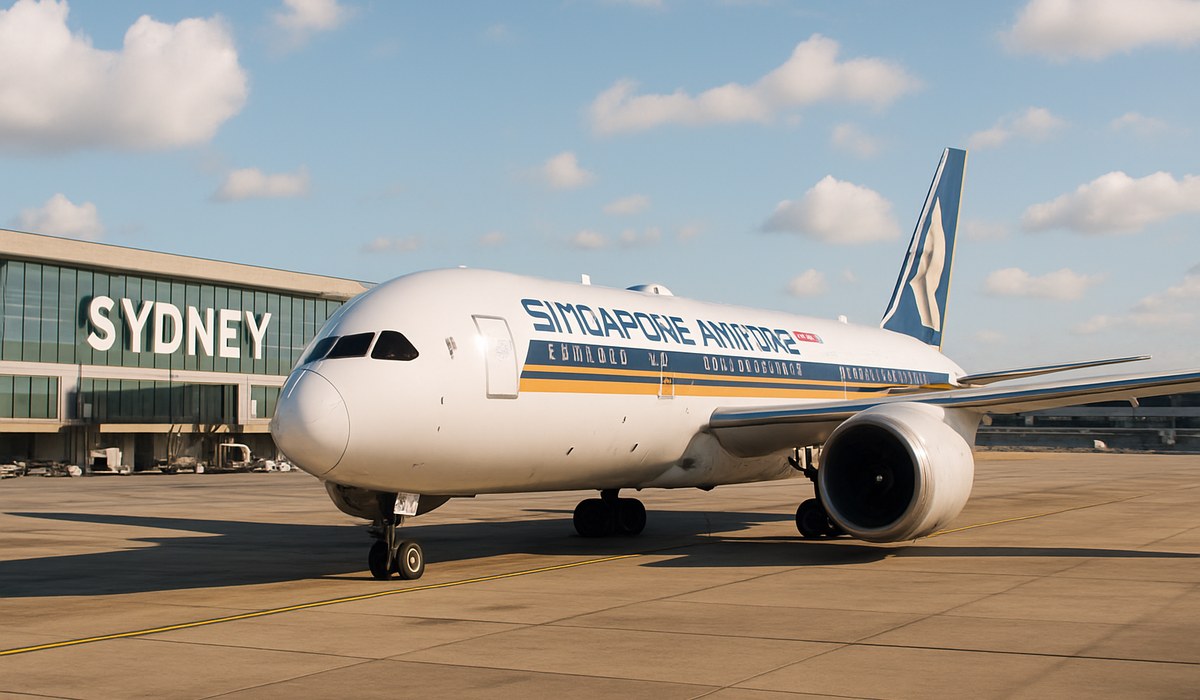
Image generated by AI
Quick Summary
- Singapore Airlines secures first-mover status at Sydney's newly opened airport gateway
- Strategic launch addresses congestion at existing Kingsford Smith International facility
- New routes expected to strengthen Asia-Pacific connectivity for business and leisure travelers
- Competing carriers face pressure to establish presence at expanded aviation infrastructure
When Singapore Airlines touches down at Sydney's newest aviation gateway, it won't just be another flight—it will signal a fundamental restructuring of how Asia's premium carriers compete for Australia's lucrative travel market. The carrier's strategic decision to inaugurate operations at the new facility positions it ahead of regional competitors scrambling for gate slots at one of the Southern Hemisphere's most significant infrastructure projects in decades.
The move comes as Sydney confronts severe capacity constraints at its existing Kingsford Smith International Airport, which has operated near maximum capacity during peak travel periods. Australia's aviation planners have long recognized the need for expanded infrastructure to accommodate growing passenger volumes, particularly as IATA's Asia-Pacific traffic forecasts{:target="_blank" rel="noopener noreferrer"} project sustained double-digit growth through the end of the decade.
Singapore Airlines Claims First-Mover Advantage at Sydney's New Gateway
Singapore Airlines has confirmed it will operate the inaugural commercial service at Sydney's new airport, securing a prestigious position that carries both symbolic and practical benefits. The carrier plans to deploy widebody aircraft on multiple daily frequencies connecting the new Sydney facility to its Changi Airport hub.
Aviation industry analysts note that first-mover advantage at major airport openings often translates into preferential gate assignments, terminal positioning, and enhanced visibility among travelers. Singapore Airlines' commitment to launch operations on day one demonstrates confidence in passenger demand and airport readiness.
The airline has not disclosed specific route frequencies or aircraft types for the initial service phase, though industry observers expect the carrier will deploy Airbus A350 or Boeing 787 equipment on primary Singapore-Sydney routes. Peak travel periods will likely see larger Boeing 777 aircraft operating into the new facility.
Passengers booking travel Sydney begins with Singapore Airlines can monitor inaugural flight schedules through real-time flight tracking data{:target="_blank" rel="noopener noreferrer"} platforms as the launch date approaches. The carrier has indicated that advance booking windows for flights serving the new airport will open approximately six months prior to commencement.
What the New Airport Means for Asia-Pacific Connectivity
The opening of Sydney's additional airport facility addresses critical infrastructure bottlenecks that have constrained growth across multiple international carriers. Existing terminal capacity at Kingsford Smith has forced airlines to accept suboptimal departure windows, limiting their ability to offer convenient connection times for passengers traveling between Asia and Australia.
Regional carriers have particularly felt the squeeze. Just as SriLankan Airlines' AI-powered revenue management system demonstrates how airlines are modernizing backend operations, physical infrastructure expansions like Sydney's new airport enable carriers to capitalize on technological improvements with expanded service offerings.
The new facility adds approximately 40 million annual passenger handling capacity to Sydney's aviation ecosystem. This expansion aligns with broader trends visible at global hospitality and travel industry innovations, where infrastructure modernization consistently emerges as a prerequisite for sustained growth.
Airport planners have incorporated design elements specifically intended to facilitate faster aircraft turnaround times and improved passenger flow. Terminal layouts feature separated arrival and departure streams, reducing congestion during peak periods when multiple widebody aircraft simultaneously process passengers.
Ground transportation links connecting the new airport to Sydney's central business district include dedicated rail service with journey times projected at 35 minutes. This compares favorably to the 45-55 minute commute from Kingsford Smith during non-peak periods, potentially influencing passenger preferences for flight departure points.
Route Network and Service Implications for Passengers
Singapore Airlines' launch at the new airport will likely trigger network adjustments affecting passengers across multiple markets. The carrier operates one of Asia's most extensive hub networks, connecting secondary cities throughout Southeast Asia to Australia via Singapore.
Industry sources suggest that Singapore Airlines may initially concentrate leisure-oriented services at the new facility while maintaining business-heavy routes at Kingsford Smith. This split-hub strategy would mirror approaches adopted by carriers at multi-airport metropolitan areas including London, Tokyo, and Bangkok.
Passengers traveling on connecting itineraries face potential complications during the transition period. Those booking journeys involving both Singapore Airlines flights and partner carriers operating from Kingsford Smith should allow extended connection times to account for inter-airport transfers.
Frequent flyers holding KrisFlyer elite status may find lounge access patterns shift as Singapore Airlines establishes premium facilities at the new terminal. The carrier has not announced specific plans for lounge square footage or amenity levels, though precedent suggests flagship lounges typically accompany major route launches.
Cargo operations represent another dimension of the expansion. Singapore Airlines operates an extensive freight network through its SIA Cargo division, and the new airport facility includes dedicated cargo handling infrastructure separate from passenger terminals.
Competitive Landscape: How Other Carriers Will Respond
Singapore Airlines' first-mover position places immediate pressure on competing carriers serving the Singapore-Sydney market. Qantas, Emirates, and Cathay Pacific all operate significant capacity between Asia and Australia, and each faces strategic decisions about when and how to establish presence at the new facility.
The competitive dynamics mirror broader sectoral shifts, similar to how cruise industry's major operational innovations have forced traditional players to adapt to changing consumer expectations and infrastructure capabilities.
Qantas holds a dominant position in the Australian domestic market and maintains extensive international partnerships through the Oneworld alliance. The carrier's response to Singapore Airlines' launch will significantly influence how quickly other international operators commit resources to the new airport.
Emirates operates multiple daily Airbus A380 flights between Dubai and Sydney, representing substantial seat capacity that currently flows through Kingsford Smith. The airline must weigh whether to split operations across both facilities or concentrate service at a single location.
Industry analysts predict that within 24 months of opening, the new Sydney airport will handle approximately 30 percent of international passenger volumes, with the distribution varying significantly by carrier and destination. Asian carriers generally show greater willingness to embrace new airport facilities compared to legacy carriers with established terminal investments.
Secondary Asian carriers including Vietnam Airlines, Garuda Indonesia, and Philippine Airlines view the expanded capacity as an opportunity to increase frequencies on routes that previously faced slot constraints. This increased competition should benefit passengers through additional flight options and potentially lower fares on price-sensitive routes.
Airline schedule planners typically require 12-18 months to secure necessary regulatory approvals for new route authorities and airport slot allocations. Carriers that delayed commitment to the new facility now face this timeline disadvantage relative to Singapore Airlines' early entry strategy.
FAQ: Singapore Airlines at Sydney's New Airport
When will Singapore Airlines begin operating flights at the new Sydney airport?
Singapore Airlines has confirmed it will launch inaugural service at Sydney's new airport in 2026, though specific dates have not been publicly announced. The carrier will be among the first international operators at the facility.
Will Singapore Airlines operate all Sydney flights from the new airport?
The airline has not disclosed whether it will consolidate all Sydney operations at the new facility or maintain service at both Kingsford Smith and the new airport. Passengers should verify their departure airport when booking.
How do I get between Sydney's airports for connecting flights?
A dedicated rail link connects the new airport to Sydney's central business district, with connections available to Kingsford Smith. Inter-airport ground transportation time should be estimated at 60-75 minutes during normal traffic conditions.
Will KrisFlyer miles and status benefits apply at the new airport?
Singapore Airlines has indicated that all existing frequent flyer program benefits, including mileage accrual and redemption, will apply to flights operating from the new Sydney facility. Lounge access will depend on facility completion timelines.
What aircraft will Singapore Airlines use on flights to the new airport?
While the carrier has not confirmed specific aircraft assignments, widebody jets including Airbus A350 and Boeing 787 aircraft typically serve Singapore-Sydney routes. Larger Boeing 777 equipment may operate during peak demand periods.
Related Articles:
- SriLankan Airlines Implements AI Revenue Management
- Global Travel Industry Innovations at Berlin Conference
- Cruise Sector Transformation Conference Highlights
Disclaimer
This article is for informational and educational purposes only. It does not constitute legal, financial, or professional advice. While we strive to provide accurate and up-to-date information, travel policies, regulations, and conditions change rapidly. Always verify information with official sources before making travel decisions. Nomad Lawyer makes no representations about the accuracy, reliability, completeness, or suitability of the information provided. Readers should consult qualified professionals for advice specific to their circumstances. The views expressed in this article are those of the author and do not necessarily reflect the views of Nomad Lawyer.
Preeti Gunjan
Contributor & Community Manager
A passionate traveller and community builder. Preeti helps grow the Nomad Lawyer community, fostering engagement and bringing the reader experience to life.
Learn more about our team →