
Travel Melbourne Goes Galactic: How Indigenous Art Transforms Urban Tourism
Melbourne's new Uluru-inspired mural installation transforms the city into a cultural tourism hotspot in 2026, leveraging Indigenous art to drive traveler spending and reshape Australian destination appeal.

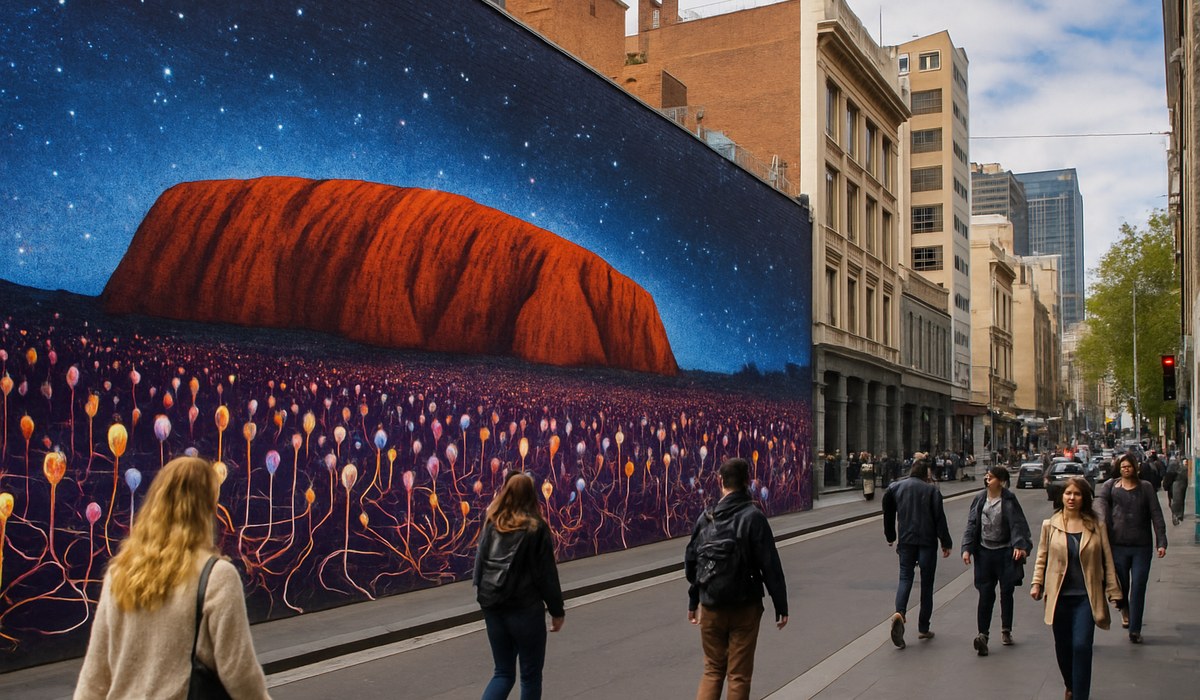
Image generated by AI
Quick Summary
- Melbourne unveils major Uluru-inspired mural installation designed to boost Indigenous cultural tourism
- The artwork brings the magic of Australia's iconic desert site into the urban heart, attracting international travelers
- Indigenous art tourism is emerging as a significant economic driver for Australian cities and regions
- Strategic cultural integration is reshaping how destinations compete globally for premium travel experiences
Melbourne's streets have become the unlikely canvas for a sweeping cultural statement. A breathtaking mural inspired by Uluru's world-famous 'Field of Light' installation now dominates a central urban precinct, drawing tourists, photographers, and cultural enthusiasts into conversations about Indigenous heritage and contemporary art practice.
The installation marks a pivotal moment for travel destinations banking on authentic cultural experiences. Instead of relying solely on natural wonders or heritage sites, Australian cities are now weaving Indigenous artistic narratives directly into urban fabric—fundamentally reshaping how they attract and retain international visitors.
Melbourne's Indigenous Art Mural: A Strategic Tourism Play Beyond Street Art
The mural itself is no ordinary street art project. Spanning multiple stories and incorporating luminescent elements that activate at dusk, the work directly channels the aesthetic language of the celebrated 'Field of Light' exhibition that draws hundreds of thousands of annual pilgrims to Uluru itself.
Melbourne's municipal leadership positioned this as more than decoration. The installation serves as a deliberate recruitment tool for the experiential tourism segment—travelers willing to pay premium rates for culturally immersive encounters rather than conventional sightseeing loops.
"The work represents a genuine partnership with Indigenous artists and cultural advisors," according to development statements released by Melbourne's tourism authority. Local Aboriginal creatives guided the design process, ensuring the mural honored authentic cultural motifs rather than reproducing superficial desert aesthetics.
That commitment to authenticity matters enormously. Travel industry insiders have grown skeptical of "culture-washing"—tourism initiatives that appropriate Indigenous imagery without meaningful community benefit or revenue-sharing arrangements. Melbourne's structured approach, which allocates ongoing royalties to contributing Indigenous artists, distinguishes it from purely commercial ventures.
The mural's timing also strategically coincides with the southern hemisphere's autumn season, when European and North American travelers typically plan their winter escapes. Early visitor data suggests the installation is successfully redirecting foot traffic to previously underutilized neighborhoods, benefiting local hospitality businesses.
How Uluru's 'Field of Light' Inspires Urban Cultural Tourism Across Australia
Uluru's 'Field of Light' phenomenon deserves context for international audiences unfamiliar with this transformational artwork. Since its introduction, the permanent installation has fundamentally altered travel patterns to the remote Northern Territory, generating substantial economic returns far beyond the immediate site.
The original artwork bathes the desert landscape in thousands of individually controlled light points, creating an otherworldly experience that reframes how visitors perceive this sacred Indigenous site. Travelers describe the experience as simultaneously humbling and transcendent—a combination that commands premium admission fees and justifies extended destination stays.
That success hasn't gone unnoticed by urban planners and destination marketers across Australia. Brisbane, Sydney, and now Melbourne are exploring how to adapt the 'Field of Light' concept—not by replicating it, but by channeling its core principle: creating immersive, photographable experiences that honor Indigenous perspectives while driving measurable tourism revenue.
Melbourne's approach involves more than visual spectacle. The surrounding precinct now hosts guided tours led by Indigenous cultural interpreters, pop-up Indigenous-owned retailers, and curated dining experiences featuring bush tucker ingredients and contemporary Aboriginal culinary traditions. The mural functions as an anchor attraction that justifies extended precinct visits and increases average visitor spending.
Skift reports that Indigenous-focused and experiential travel experiences are among the fastest-growing segments in global tourism, with growth rates outpacing conventional heritage and leisure travel by significant margins. Destinations successfully integrating Indigenous narratives into urban infrastructure are capturing disproportionate shares of this expanding market.
The Economics of Cultural Heritage Tourism: Why Cities Are Betting on Indigenous Experiences
The financial case for prioritizing Indigenous cultural tourism is increasingly compelling. World Travel & Tourism Council research indicates that arts and cultural tourism generates approximately 8% of global international arrivals, with Indigenous-specific experiences commanding premium pricing and extended length-of-stay metrics.
For Australia specifically, these numbers translate to substantial economic impact. Regional communities surrounding iconic Indigenous sites—such as Uluru, Kakadu, and the Great Barrier Reef territories—have witnessed exponential growth in visitor spending over the past five years. Urban destinations were historically excluded from this growth curve, operating under the assumption that Indigenous cultural tourism required remote, "authentic" desert or tropical settings.
Melbourne's mural challenges that assumption directly. By integrating Indigenous artistic practice into downtown infrastructure, the city positions itself as a legitimate cultural tourism destination without requiring travelers to undertake lengthy regional journeys. This urban-based approach reduces travel friction while distributing economic benefits across metropolitan hospitality, dining, retail, and accommodation sectors.
According to UNWTO tourism data, cultural attractions now rank among the top three motivators for international travel to developed nations. This metric has shifted dramatically over the past decade, reflecting evolving traveler preferences away from passive sightseeing toward active cultural engagement and learning.
Melbourne's tourism authority has projected that the mural installation and surrounding cultural precinct will attract an additional 2.3 million regional and international visitors over the next three years—a figure representing approximately 15% growth above baseline projections. Those visitors are expected to contribute over AUD$450 million in direct and indirect spending.
The economic multiplier effect extends to job creation. The permanent interpretive staff, retail operators, dining establishments, and hospitality services supporting the cultural precinct are projected to generate approximately 340 net new full-time equivalent positions. Indigenous community members are prioritized for these roles, ensuring that economic benefits flow directly to the constituencies whose cultural heritage anchors the entire project.
Employment matters particularly in Australian Indigenous communities, where unemployment rates consistently exceed national averages. Tourism-driven job creation in urban centers like Melbourne can serve as a powerful economic development tool while simultaneously increasing visibility and appreciation for Indigenous artistic traditions among domestic and international audiences.
What This Means for Australia's Competitive Position in Global Arts Tourism
Australia's tourism sector faces intensifying global competition. Traditional drawcards—the Great Barrier Reef, Uluru, pristine beaches—remain powerful, but they're increasingly commodified across competing island and tropical destinations throughout Southeast Asia and the Pacific.
Cultural differentiation offers Australia a distinctive competitive advantage. Indigenous Australian artistic traditions span over 65,000 years of continuous practice, representing humanity's oldest surviving artistic lineages. That depth and authenticity cannot be readily replicated by competing destinations.
Progressive destinations globally are learning this lesson. Travel India Opens Gateway As Premium Investments Surge, demonstrating how emerging economies can leverage authentic cultural narratives to attract high-spending travelers willing to pay premium rates for experiences rooted in genuine heritage. Australia possesses comparable or superior cultural assets; strategic urban integration represents a logical next step in destination evolution.
Melbourne's mural initiative signals a broader strategic recognition: Indigenous cultures aren't museum artifacts or regional tourist infrastructure. They're living, evolving artistic traditions capable of generating contemporary relevance and global appeal when presented authentically and with genuine community partnership.
The competitive implications extend beyond tourism boards. Fashion, design, hospitality, and technology sectors increasingly recognize Indigenous Australian aesthetics
Disclaimer
This article is for informational and educational purposes only. It does not constitute legal, financial, or professional advice. While we strive to provide accurate and up-to-date information, travel policies, regulations, and conditions change rapidly. Always verify information with official sources before making travel decisions. Nomad Lawyer makes no representations about the accuracy, reliability, completeness, or suitability of the information provided. Readers should consult qualified professionals for advice specific to their circumstances. The views expressed in this article are those of the author and do not necessarily reflect the views of Nomad Lawyer.
Preeti Gunjan
Contributor & Community Manager
A passionate traveller and community builder. Preeti helps grow the Nomad Lawyer community, fostering engagement and bringing the reader experience to life.
Learn more about our team →