
Travel Alaska Airlines and Hawaiian Airways Forge Global Leadership Strategy
Alaska Airlines and Hawaiian Airways appoint Lindsay-Rae McIntyre as People Strategy head, signaling aggressive global expansion and talent-driven operational transformation in March 2026.

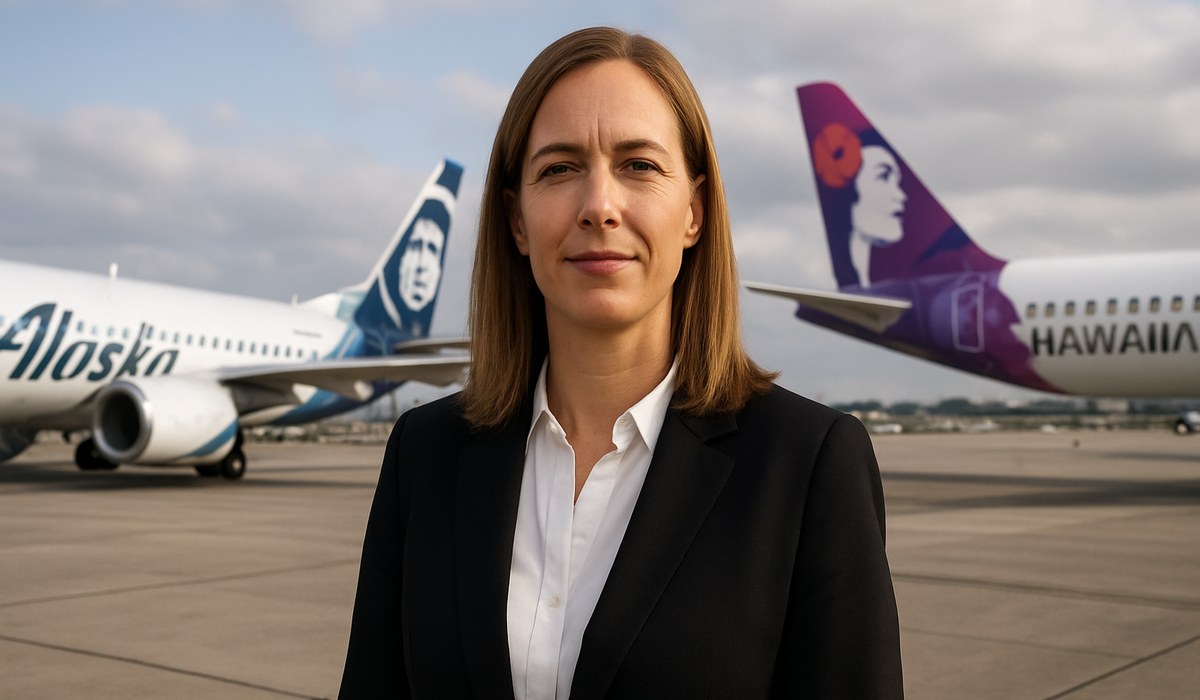
Image generated by AI
**> Quick Summary
- Alaska Airlines and Hawaiian Airways elevate human resources leadership to shape international growth strategy
- New People Strategy executive will oversee organizational structure across domestic and international operations
- Carrier consolidation positions combined entity to compete with major global network airlines
- Talent acquisition and retention framework designed to support aggressive route expansion plans**
Alaska Airlines and Hawaiian Airways are making bold moves to reshape their operational identity. The carriers have installed a new chief architect for their people-focused strategy, signaling that workforce development will drive their assault on global markets. This structural shift reveals how modern airline consolidation hinges not just on aircraft and routes, but on building organizational muscle that can deliver customer excellence at scale.
The appointment of Lindsay-Rae McIntyre to lead people strategy across both carriers represents a watershed moment for carriers seeking to transcend their regional roots. Her mandate extends across the United States and into international territories—a scope that reflects genuine ambition to compete with established network carriers on a continental and global stage.
Leadership Transition: What Lindsay-Rae McIntyre's Appointment Means for Airline Strategy
Lindsay-Rae McIntyre arrives at a inflection point for combined Alaska-Hawaiian operations. Her role transcends traditional human resources functions. She inherits responsibility for designing organizational architecture that bridges two distinct carrier cultures, harmonizes operational procedures, and attracts talent capable of executing a complex integration.
McIntyre's appointment signals that these carriers view people management as a competitive lever—not a cost center. Airlines operating thin margins cannot afford attrition spikes, training delays, or cultural friction during integration phases. Her team will shape how flight crews, ground personnel, customer service agents, and technical staff adapt to unified policies while maintaining the operational reliability customers depend on.
The timing matters. Both carriers have announced simultaneous fleet modernization initiatives and international route applications with aviation authorities. That operational crescendo requires synchronized hiring, accelerated training programs, and retention strategies that prevent seasoned personnel from departing to competitors. McIntyre's cross-functional mandate suggests she'll coordinate with operations, finance, and network planning—not merely staffing administrative roles.
Global Expansion Blueprint: Alaska and Hawaiian Airways Target International Markets
The carriers have signaled intentions to build presence in markets traditionally dominated by United Airlines, American Airlines, and Southwest Airlines. Their strategy involves leveraging Hawaii's geographic position as a Pacific gateway while expanding Alaska's footprint across North American transcontinental and transborder networks.
Recent regulatory filings indicate both carriers are pursuing new international routes. The destination list includes Mexico, the Caribbean, and preliminary discussions about Pacific rim connections. Such ambitions require compliance with international aviation frameworks—particularly IATA guidelines governing airline safety, scheduling, and interline agreements.
McIntyre's people strategy must address the demands of international operations. Crew scheduling becomes exponentially more complex across time zones. Regulatory requirements vary by destination nation. Customer service teams must support multilingual passenger bases. Ground handling at foreign airports demands trained, screened personnel who understand local labor laws and safety protocols.
Much like how Qatar Airways network expansion required building specialized teams for markets across Europe, Asia, and Africa, Alaska and Hawaiian Airways face similar infrastructure challenges. The carriers cannot simply transplant domestic procedures into Cancun or San Juan without deliberate organizational redesign.
Competitive positioning also drives this timing. The Pacific and Caribbean markets attract constant new entrant activity. Low-cost carriers probe for underserved routes. Established carriers defend premium segments. Alaska and Hawaiian Airways must move quickly to secure slot availability at congested airports and establish brand presence before market windows close.
People-First Operations: How Talent Strategy Drives Competitive Advantage
The underlying philosophy here merits examination. Alaska and Hawaiian Airways are betting that superior people strategy yields operational advantages competitors cannot quickly replicate.
Flight delays, cancellations, and service failures often trace to understaffing, inadequate training, or crew fatigue—human system breakdowns rather than mechanical problems. When Denver flight disruptions cascade through networks, the root cause frequently involves scheduling conflicts, crew duty violations, or insufficient turnaround time between flights. McIntyre's remit includes preventing such failures through proactive workforce planning.
Retention becomes particularly acute in pilot recruitment. Commercial pilots can choose among dozens of potential employers. Airlines offering superior scheduling, career progression, and quality-of-life benefits attract experience from competitors. McIntyre's initiatives likely include pilot retention programs, accelerated upgrades for qualified first officers, and flexible scheduling options that competing carriers haven't yet matched.
Ground personnel—baggage handlers, gate agents, maintenance technicians—also face poaching. Unionized positions offer contractual protections, but non-union roles remain vulnerable. Creative compensation packages, educational partnerships (such as aviation certifications or degree programs), and clear advancement pathways help retain experienced staff.
Customer service quality ultimately depends on employee engagement. An overtired gate agent delivers poor service. A demoralized ramp technician increases maintenance write-ups. Conversely, well-compensated, properly trained, respected employees become brand ambassadors who solve problems creatively and retain customers through superior interactions.
Network Growth & Regional Impact: New Routes and Market Penetration Plans
Alaska Airlines historically dominated Pacific Northwest markets. Hawaiian Airways held fortress positions in inter-island and mainland Hawaii traffic. The combined entity inherits overlapping strengths but also complementary gaps.
New route opportunities exist in underserved leisure destinations where neither carrier previously operated. Secondary cities like Cabo San Lucas, Aruba, and Cancun represent growth vectors. Emerging international hubs—such as those expanding in Mexico—offer connection opportunities that feed downstream traffic into US metropolitan areas.
Domestically, the carriers can rationalize duplicate routes, concentrate frequencies on profitable city pairs, and reallocate aircraft to open new destinations. Hub consolidation likely occurs in Seattle and Honolulu, with supporting focus on regional airports in California and the Southwest.
Such expansion requires compliance with FAA regulations governing domestic service, slot availability at congested airports, and antitrust review by the Department of Transportation. McIntyre's people strategy must align with these regulatory requirements—ensuring adequate crew training, safety compliance certifications, and operational readiness.
The competitive landscape includes carriers like Gatwick's new carrier announcements showing how secondary airlines are capturing growth in international leisure markets. Alaska and Hawaiian Airways cannot cede these opportunities to competitors moving faster.
Operational metrics tracked via real-time flight tracking demonstrate current network performance. On-time arrival percentages, completed flight rates, and average load factors reveal which routes generate revenue and which drain profitability. McIntyre's staffing decisions must align with these metrics—concentrating personnel resources on high-performing routes while addressing service failures on underperforming operations.
FAQ: Merger Integration, Timeline, and Passenger Impact
Q: When will the Alaska-Hawaiian Airways integration complete? No official completion timeline has been announced. Integrations of this scale typically span 24-36 months, with initial crew and operational consolidation beginning within the first 12 months. Regulatory approvals and antitrust clearance remain pending.
**Q: Will frequent flyer programs
Disclaimer
This article is for informational and educational purposes only. It does not constitute legal, financial, or professional advice. While we strive to provide accurate and up-to-date information, travel policies, regulations, and conditions change rapidly. Always verify information with official sources before making travel decisions. Nomad Lawyer makes no representations about the accuracy, reliability, completeness, or suitability of the information provided. Readers should consult qualified professionals for advice specific to their circumstances. The views expressed in this article are those of the author and do not necessarily reflect the views of Nomad Lawyer.
Kunal K Choudhary
Co-Founder & Contributor
A passionate traveller and tech enthusiast. Kunal contributes to the vision and growth of Nomad Lawyer, bringing fresh perspectives and driving the community forward.
Learn more about our team →