
Tradewind Airlines Cancels Six Flights at Luis Muñoz Marín International Airport, Disrupting Caribbean and US Routes in July 2026
Tradewind Airlines cancelled six flights at San Juan's Luis Muñoz Marín International Airport, disrupting regional connectivity across the Caribbean and US East Coast in July 2026.

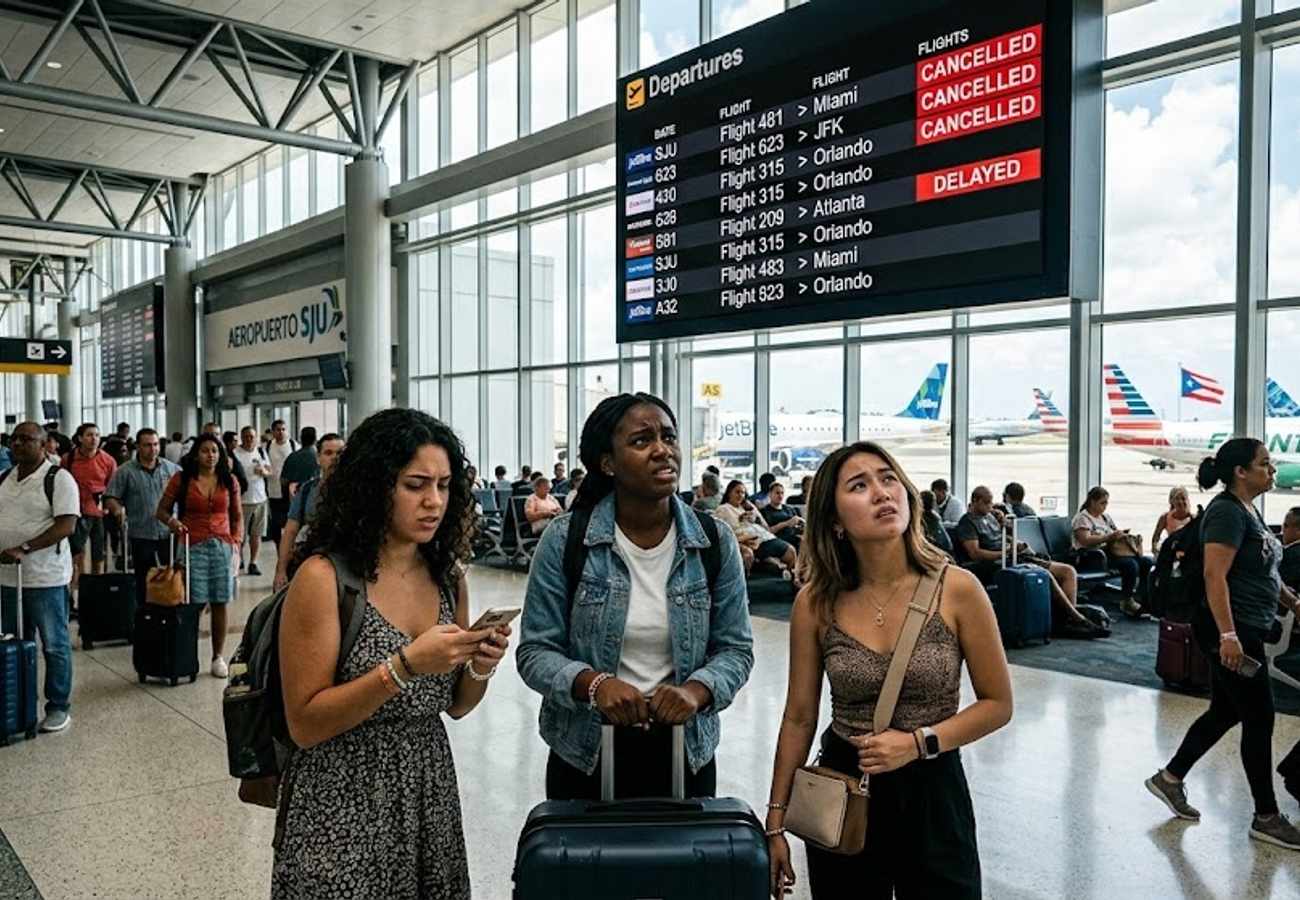
Image generated by AI
Tradewind Airlines cancelled six flights at Luis Muñoz Marín International Airport (SJU) on July 5, 2026, triggering operational strain across a regional network spanning the Caribbean and the US East Coast. The cancellations, concentrated at San Juan's primary gateway, coincided with 28 additional flight delays at the same airport, compounding disruption for passengers traveling during peak summer demand.
The impact extended well beyond Puerto Rico. Gustaf III Airport (SBH) in Saint Barthélemy recorded a combined six suspended flights, while delays rippled through major US hubs including John F. Kennedy International Airport (JFK), Baltimore/Washington International Airport (BWI), Newark Liberty International Airport (EWR), Chicago O'Hare International Airport (ORD), and Philadelphia International Airport (PHL). Regional island destinations across the US Virgin Islands and British Virgin Islands also reported schedule disruptions.
Flight Disruption Data
| Airport | Airline | Cancelled Flights | Delayed Flights |
|---|---|---|---|
| Luis Muñoz Marín International Airport (SJU) | Tradewind Airlines | 6 | 28 |
| Gustaf III Airport (SBH) | Tradewind Airlines | 6 | — |
Data sourced from FlightAware reveals that while cancellations clustered at SJU and SBH, the broader operational impact touched 25 cities across the Caribbean and the United States. Affected destinations included San Juan, Gustavia, Boston, Baltimore, Charlotte, Newark, Washington, Houston, New York City, Orlando, Chicago, Philadelphia, St. Louis, Punta Cana, Saint Thomas, Saint Croix, Mayagüez, Vieques, Tortola, Atlanta, Buffalo, White Plains, Miami, Tampa, Virgin Gorda, and Hartford.
Strategic Business Impact: Regional Connectivity Under Pressure
For a carrier like Tradewind Airlines, which operates niche regional routes connecting high-value leisure destinations, even a single day's cancellation wave carries outsized commercial consequences. The airline's network links luxury destinations like Saint Barthélemy with major US metropolitan areas, serving a premium traveler demographic that expects reliability and minimal friction.
The disruption at SJU places immediate pressure on connecting services and passenger assistance teams. During peak summer travel, rebooking options shrink as competing carriers operate near capacity. Passengers stranded at San Juan face limited alternatives, particularly those connecting to smaller Caribbean destinations like Vieques, Mayagüez, and Virgin Gorda where Tradewind's service may represent the only viable scheduled link.
The cancellations also strain interline agreements and partner relationships. Travelers booked on connecting itineraries through major US hubs — JFK, ORD, PHL — risk missing onward flights, triggering a cascade of rebooking requests across multiple carriers. This ripple effect increases operational costs and erodes schedule integrity across the broader regional aviation ecosystem.
Tourism Capacity and Market Competition
Puerto Rico's tourism sector depends heavily on reliable air connectivity, and SJU serves as the primary hub for Caribbean island-hopping routes. When a regional carrier like Tradewind cancels six flights in a single day, the tourism capacity impact extends beyond immediate passenger inconvenience. Hotels, resorts, and ground transfer operators in destinations like Saint Barthélemy and the British Virgin Islands absorb the cost of delayed arrivals and no-shows.
The competitive landscape compounds the issue. Tradewind occupies a specialized niche — offering scheduled service to destinations that larger carriers cannot profitably serve with mainline aircraft. When cancellations occur, passengers have few alternative carriers to turn to. This market dynamic means that Tradewind's operational reliability directly influences the accessibility of several Caribbean destinations.
Regional competitors may capture some displaced demand, but their networks do not fully overlap with Tradewind's route structure. The result is a temporary capacity gap that affects both leisure travelers and business passengers navigating the Caribbean corridor.
Operational Context: Why Six Cancellations Matter
Six cancelled flights may seem modest against the backdrop of a major international airport handling hundreds of daily movements. However, for a regional carrier operating a focused network, six cancellations represent a significant percentage of daily departures. The 28 accompanying delays at SJU further erode schedule reliability, creating a compounding effect that disrupts crew rotations, aircraft positioning, and passenger connections.
Regional airlines face unique operational challenges. Their aircraft — typically smaller turboprops or light jets operating into short-field destinations — are more sensitive to weather disruptions, maintenance requirements, and crew scheduling constraints. A single maintenance event or weather system can cascade through a tightly scheduled network, affecting routes across multiple countries and territories.
The concentration of cancellations at both SJU and SBH suggests a potential operational issue affecting Tradewind's core route structure between Puerto Rico and Saint Barthélemy. This corridor represents one of the airline's most commercially significant markets, linking San Juan's international gateway with one of the Caribbean's most exclusive leisure destinations.
Passenger Guidance: Navigating the Disruption
Travelers affected by the cancellations should take immediate action. Monitor email, SMS, and the airline's app for rebooking confirmations and schedule updates. Contact Tradewind Airlines directly — either at the airport service desk or via phone — to secure alternative arrangements.
Passengers should familiarize themselves with cancellation policies and potential compensation eligibility. While US domestic regulations do not mandate compensation for cancellations, airlines typically offer rebooking on the next available flight or, in some cases, refunds for unused segments.
Consider alternative routing through competing carriers or multi-modal options where available. Travelers heading to smaller Caribbean destinations should explore ferry services or regional charter operators as backup options, particularly during peak travel periods when rebooking availability is constrained.
Broader Implications for Caribbean Aviation
The July 5 disruption underscores a structural vulnerability in Caribbean aviation: heavy reliance on a small number of regional carriers for inter-island connectivity. When one carrier experiences operational difficulties, the impact spreads rapidly across multiple destinations, affecting tourism economies, business travel, and supply chains.
Airport authorities at SJU and SBH face the immediate challenge of managing displaced passengers while maintaining normal operations for other carriers. The strain on airport infrastructure — from gate availability to passenger assistance services — increases proportionally with the number of affected flights.
For the broader industry, the event highlights the need for diversified regional air service. Destinations that depend on a single carrier for primary connectivity face heightened risk during operational disruptions. Tourism boards and aviation authorities across the Caribbean should view this incident as a case study in the importance of cultivating multiple air service options to ensure resilience.
Looking Ahead
As Tradewind Airlines works to restore normal operations, the focus shifts to understanding the root cause of the cancellations and preventing recurrence. Passengers are advised to check real-time flight updates before departing for the airport, maintain contact with the airline, and prepare for possible schedule adjustments.
The disruption at Luis Muñoz Marín International Airport serves as a reminder that regional aviation networks — while efficient under normal conditions — remain fragile when operational stress concentrates at key nodes. For passengers, airlines, and destination stakeholders alike, flexibility and proactive communication remain the most effective tools for navigating unexpected schedule changes.
Six flights, twenty-eight delays, and a regional network stretched thin — the Caribbean's aviation resilience faces another test.
Related Travel Guides
Disclaimer
This article is for informational and educational purposes only. It does not constitute legal, financial, or professional advice. While we strive to provide accurate and up-to-date information, travel policies, regulations, and conditions change rapidly. Always verify information with official sources before making travel decisions. Nomad Lawyer makes no representations about the accuracy, reliability, completeness, or suitability of the information provided. Readers should consult qualified professionals for advice specific to their circumstances. The views expressed in this article are those of the author and do not necessarily reflect the views of Nomad Lawyer.
Preeti Gunjan
Contributor & Community Manager
A passionate traveller and community builder. Preeti helps grow the Nomad Lawyer community, fostering engagement and bringing the reader experience to life.
Learn more about our team →