
Tourism Boom Powers Uruguay's Economic Golden Age in 2026
Uruguay's tourism boom powers record growth as visitor arrivals exceed 3.6 million in 2025, surpassing the nation's 3.4 million population. Travel exports now rank among top foreign-exchange earners, positioning tourism as a structural economic pillar.

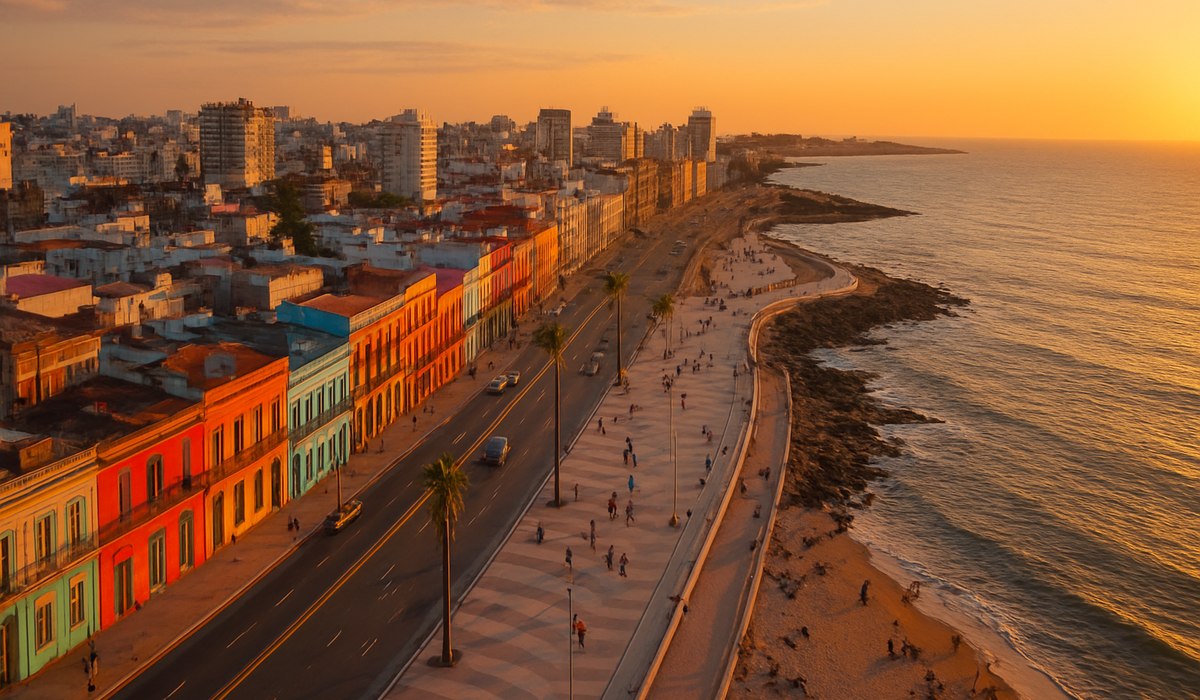
Image generated by AI
Uruguay Welcomes Record International Visitors, Reshaping Economic Future
Uruguay is experiencing unprecedented tourism momentum, with international arrivals now outpacing its entire resident population. In 2025, the South American nation welcomed over 3.6 million foreign visitors compared to its 3.4 million inhabitants—a watershed moment for the country's economy. This tourism boom powers structural changes across Uruguay's economic landscape, transforming travel from a seasonal sector into a top foreign-exchange generator. Travel exports reached approximately $2.04 billion in 2025, positioning tourism alongside traditional powerhouses like beef production and cellulose exports. For travelers and investors alike, this surge signals both opportunity and transformation in one of South America's most stable economies.
Record Visitor Numbers Surpass National Population
Uruguay has crossed a significant demographic milestone in international tourism. The country welcomed 3.6 million visitors in 2025, exceeding its resident population of 3.4 million for the first time at this scale. This metric places Uruguay among Latin America's most tourism-intensive markets on a per-capita basis.
Historical data reveals consistent growth momentum. Uruguay received 3.8 million visitors in 2023 and 3.3 million in 2024, demonstrating sustained recovery beyond pandemic-era disruptions. Regional observers attribute this climbing trajectory to Uruguay's reputation for safety, political stability, and high-income positioning within the South American tourism market.
The tourism boom powers growth particularly among affluent travelers seeking premium experiences. International hospitality data shows visitors to Punta del Este and Montevideo spend significantly above regional averages. This quality-over-quantity approach distinguishes Uruguay from competing destinations, attracting higher-spending demographic segments that generate substantial economic multiplier effects across hospitality, retail, and cultural sectors.
Tourism as a Top Foreign-Exchange Earner
Travel exports now rank as one of Uruguay's most vital foreign-exchange sources, competing directly with agricultural exports. The sector generated $2.04 billion in 2025, reflecting both volume growth and rising per-capita visitor spending across all destinations.
This tourism boom powers nearly half of Uruguay's incremental GDP growth when measuring travel exports and associated economic activity. Recent assessments indicate tourism's direct and indirect contribution represents a mid-single-digit share of total GDP output, but a substantially larger portion of year-on-year expansion. This outsized growth impact occurs because visitor spending permeates throughout the economy—hospitality, transportation, dining, retail, and entertainment all benefit from international arrivals.
The World Travel & Tourism Council projects sustained global tourism growth, positioning Uruguay advantageously within regional competition. Montevideo and provincial destinations benefit from this forecast, with infrastructure investments and policy support continuing to enhance competitiveness. Travel spending patterns show visitors allocate higher percentages to accommodation and dining in Uruguay compared to regional alternatives, generating robust returns for service-sector businesses.
Structural Economic Shift Beyond Pandemic Recovery
Uruguay's tourism expansion represents far more than pandemic recovery—it reflects fundamental economic restructuring. Government data and sector analyses confirm tourism has become embedded within the country's growth model rather than serving as temporary cyclical stimulus.
The tourism boom powers employment creation across 122,000 jobs linked directly to the sector, with over 25,000 businesses operating tourism-related services nationally. For a nation of 3.4 million, these figures demonstrate tourism's disproportionate economic weight. Seasonal employment surges during austral summer months, when coastal resorts, cruise ports, and rural lodges operate at peak capacity.
This employment concentration carries policy implications. Regional development strategies now prioritize tourism infrastructure in provincial areas beyond Montevideo. The thermal-coast region and Colonia department registered hundreds of thousands of arrivals in 2025, indicating successful geographic diversification. Infrastructure improvements in these secondary destinations—including transportation connectivity and accommodation modernization—sustain visitor growth while distributing economic benefits across broader territorial regions.
Regional Competitiveness and Per-Capita Impact
Uruguay's tourism intensity exceeds larger regional competitors when measured per capita. The country captures disproportionate visitor spending relative to its population size, reflecting premium positioning and targeted marketing toward high-income travelers.
Comparative regional analysis shows Uruguay attracts visitors with higher disposable incomes than competing South American destinations. Safety perceptions, English-language prevalence, and developed services infrastructure appeal to travelers prioritizing comfort and stability. This visitor profile generates superior economic returns per arrival—Punta del Este visitors spent approximately $1,200 per capita in 2025, substantially exceeding regional benchmarks.
The tourism boom powers differentiated regional positioning through infrastructure and governance. Uruguay's investment in digital services, tourism technology, and sustainable destination management distinguishes it from competitors. The UN World Tourism Organization recognizes Uruguay's tourism policies as models for sustainable growth, enhancing destination reputation among conscientious travelers. This positioning supports premium pricing and longer stays, multiplying economic impact beyond raw visitor volume metrics.
Key Data Table: Uruguay Tourism Performance Indicators
| Metric | 2023 | 2024 | 2025 | Status |
|---|---|---|---|---|
| Annual Visitors | 3.8M | 3.3M | 3.6M | Record growth resumption |
| Travel Exports Value | ~$1.8B | ~$1.9B | $2.04B | Top 4 export category |
| Direct Tourism Jobs | 115,000 | 118,000 | 122,000 | Consistent expansion |
| Tourism Businesses | 24,000 | 24,500 | 25,000+ | Service ecosystem growth |
| % GDP Growth Contribution | ~35% | ~42% | ~47% | Accelerating impact |
| Punta del Este Visitors | 810,000 | 845,000 | 877,000 | Highest single destination |
| Montevideo Visitors | 840,000 | 860,000 | 876,000 | Competitive concentration |
| Per-Capita Spending (Punta) | ~$1,050 | ~$1,120 | ~$1,200 | Premium positioning |
What This Means for Travelers
1. Enhanced Infrastructure and Services: The tourism boom powers continuous investment in accommodations, transportation, and attractions. Travelers benefit from modernized hotels, expanded flight connectivity, and improved ground services throughout Uruguay's coastal and interior destinations.
2. Seasonal Peak Periods: December through February represents austral summer peak season with highest visitor concentrations in Punta del Este and Montevideo. Budget-conscious travelers should consider shoulder seasons (October-November, March-April) for better availability and pricing while avoiding extreme crowding.
3. Premium Positioning Strategy: Uruguay actively targets higher-spending visitor segments, reflected in pricing power and service quality. Travelers expecting budget accommodation and street food bargains should adjust expectations—Uruguay positions itself as a premium Latin American destination comparable to Chile and Costa Rica.
4. Regional Connectivity: Growing visitor volumes support expanded airline routes and improved transportation networks. Direct flights from major hubs have increased, reducing travel friction for international arrivals. Travelers should monitor new flight announcements from global carriers seeking profitable Argentine, Brazilian, and Colombian connections.
5. Policy Stability and Safety: Economic expansion reinforces investment in security, tourism infrastructure, and regulatory environments. Travelers benefit from political stability, currency reliability, and institutional transparency that characterize Uruguay's governance relative to regional competitors.
Frequently Asked Questions
Q: Is Uruguay experiencing tourism overcrowding like other popular destinations? A: Punta del Este and Montevideo concentrate visitor arrivals during peak summer, creating congestion in top attractions. Secondary destinations including Colonia, the thermal region, and interior provinces offer less crowded alternatives with authentic experiences while contributing to tourism boom powers distributed economic development.
Q: What makes Uruguay attractive compared to Brazil, Argentina, or Chile? A: Uruguay's combination of safety reputation
Disclaimer
This article is for informational and educational purposes only. It does not constitute legal, financial, or professional advice. While we strive to provide accurate and up-to-date information, travel policies, regulations, and conditions change rapidly. Always verify information with official sources before making travel decisions. Nomad Lawyer makes no representations about the accuracy, reliability, completeness, or suitability of the information provided. Readers should consult qualified professionals for advice specific to their circumstances. The views expressed in this article are those of the author and do not necessarily reflect the views of Nomad Lawyer.
Raushan Kumar
Founder & Lead Developer
Full-stack developer with 11+ years of experience and a passionate traveller. Raushan built Nomad Lawyer from the ground up with a vision to create the best travel and law experience on the web.
Learn more about our team →