
Russia's Two-Seat Su-57D Stealth Fighter Marks Dramatic Shift in Fifth-Generation Combat Aircraft Design Philosophy
Breaking airline news and aviation industry updates for 2026.

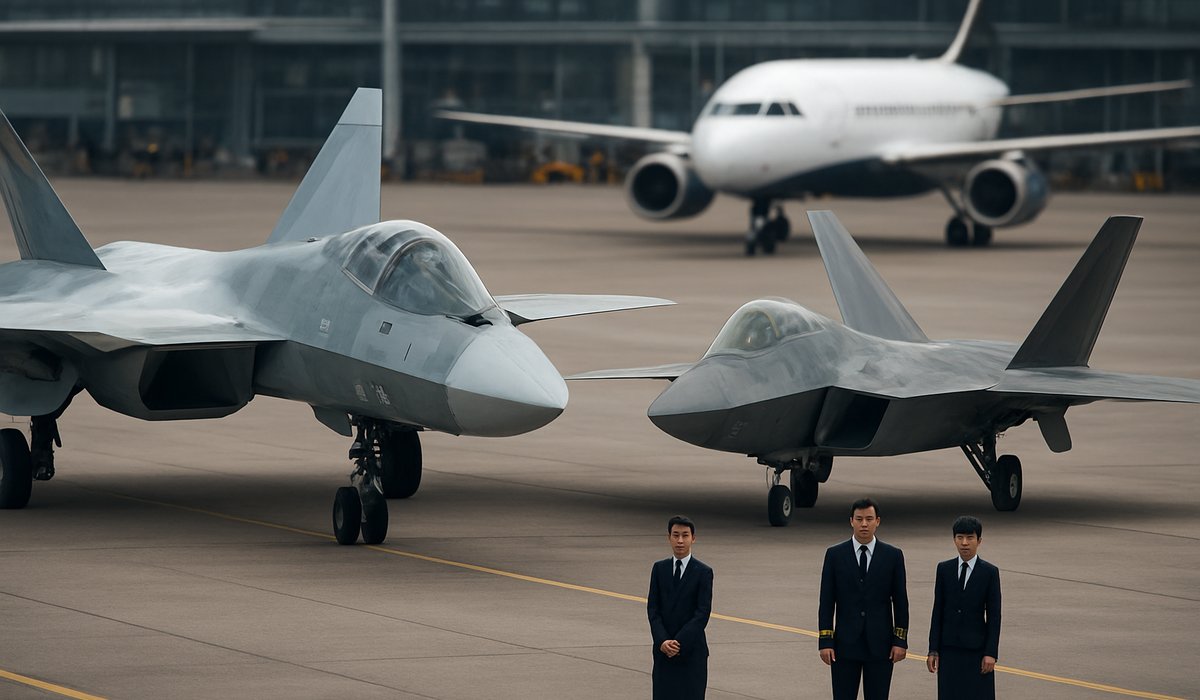
Image generated by AI
Russia's Two-Seat Su-57D Stealth Fighter Marks Dramatic Shift in Fifth-Generation Combat Aircraft Design Philosophy
Moscow diverges sharply from U.S. and Chinese approach with dual-cockpit variant of its advanced fighter jet
A New Era in Fighter Design Emerges
Russia has fundamentally challenged the prevailing design doctrine of modern stealth aviation by introducing a two-seat configuration for its Su-57D fighter jet, marking a decisive break from the single-pilot architecture that has defined fifth-generation combat aircraft since their inception. This strategic divergence signals deepening disagreements among the world's three stealth fighter-producing nations—the United States, China, and Russia—over how next-generation warplanes should be engineered and deployed.
The Exclusive Club of Fifth-Generation Producers
The global landscape of advanced tactical aviation remains extraordinarily limited. Only three superpowers currently field operational fifth-generation stealth fighters: the United States with its F-35 Lightning II and F-22 Raptor programs, China with the J-20, and Russia with the Su-57 platform. This exclusive circle represents the pinnacle of military aerospace technology, with each nation investing hundreds of billions of dollars to maintain competitive advantage in the skies.
Russia's Unconventional Approach
While the U.S. F-35 and F-22 variants, along with China's J-20 design family, have maintained single-pilot configurations as the standard operational model, Russia's decision to develop a two-seat Su-57D variant introduces unprecedented flexibility to its stealth fighter lineup. The dual-cockpit arrangement fundamentally alters the aircraft's operational capabilities, crew workload distribution, and mission scope.
Strategic Implications and Operational Advantages
The introduction of a second crew station in Russia's advanced fighter suggests Moscow prioritizes enhanced situational awareness, mission flexibility, and crew redundancy in its fifth-generation strategy. This contrasts sharply with Western and Chinese philosophy, which emphasizes pilot autonomy and advanced avionics integration to reduce crew requirements while maintaining combat effectiveness.
The ramifications extend beyond mere aircraft design: different architectural choices reflect distinct military doctrines, geopolitical strategies, and assumptions about future air combat scenarios. Russia's two-seat approach may indicate preferences for enhanced command-and-control capabilities, electronic warfare coordination, or tactical flexibility in contested airspace environments.
The Broader Competitive Landscape
This design divergence underscores how the three leading aerospace powers are pursuing fundamentally different paths within the fifth-generation framework. As these aircraft mature and see expanded deployment, their operational advantages and disadvantages will become increasingly evident to military analysts and allied nations making future procurement decisions.
The question now facing defense planners worldwide is whether Russia's unconventional two-seat configuration represents genuine operational superiority or a strategic miscalculation in an era demanding lightweight, highly autonomous combat systems.
FAQ: Fifth-Generation Fighter Aircraft Design
What are fifth-generation fighter jets? Fifth-generation fighters represent the most technologically advanced military aircraft, featuring stealth capabilities, advanced avionics, sensor fusion, and supersonic performance. Only the U.S., China, and Russia currently produce operational examples.
How does Russia's Su-57D differ from the U.S. F-35? The Su-57D features dual-cockpit configuration, while the F-35 maintains single-pilot design. This affects crew roles, aircraft weight, and operational flexibility significantly.
Why would Russia choose a two-seat design? Dual-cockpit arrangements enhance situational awareness, distribute crew workload, enable specialized mission roles (weapons officer/pilot separation), and provide redundancy in high-threat environments.
Which approach is superior: single or dual-seat fighters? Neither is objectively superior—each reflects different operational philosophies. Single-seat designs prioritize autonomy and simplicity; dual-seat variants emphasize crew capability and mission flexibility.
Will the U.S. or China develop two-seat fifth-generation variants? Currently, both nations show no indication of pursuing dual-cockpit fifth-generation designs, suggesting confidence in their single-pilot automation strategies.
Related Travel Guides
External Resources
Disclaimer
This article is for informational and educational purposes only. It does not constitute legal, financial, or professional advice. While we strive to provide accurate and up-to-date information, travel policies, regulations, and conditions change rapidly. Always verify information with official sources before making travel decisions. Nomad Lawyer makes no representations about the accuracy, reliability, completeness, or suitability of the information provided. Readers should consult qualified professionals for advice specific to their circumstances. The views expressed in this article are those of the author and do not necessarily reflect the views of Nomad Lawyer.
Preeti Gunjan
Contributor & Community Manager
A passionate traveller and community builder. Preeti helps grow the Nomad Lawyer community, fostering engagement and bringing the reader experience to life.
Learn more about our team →