
Why Airbus Quietly Ended the A380: The Superjumbo's Unexpected Decline
Breaking airline news and aviation industry updates for 2026.

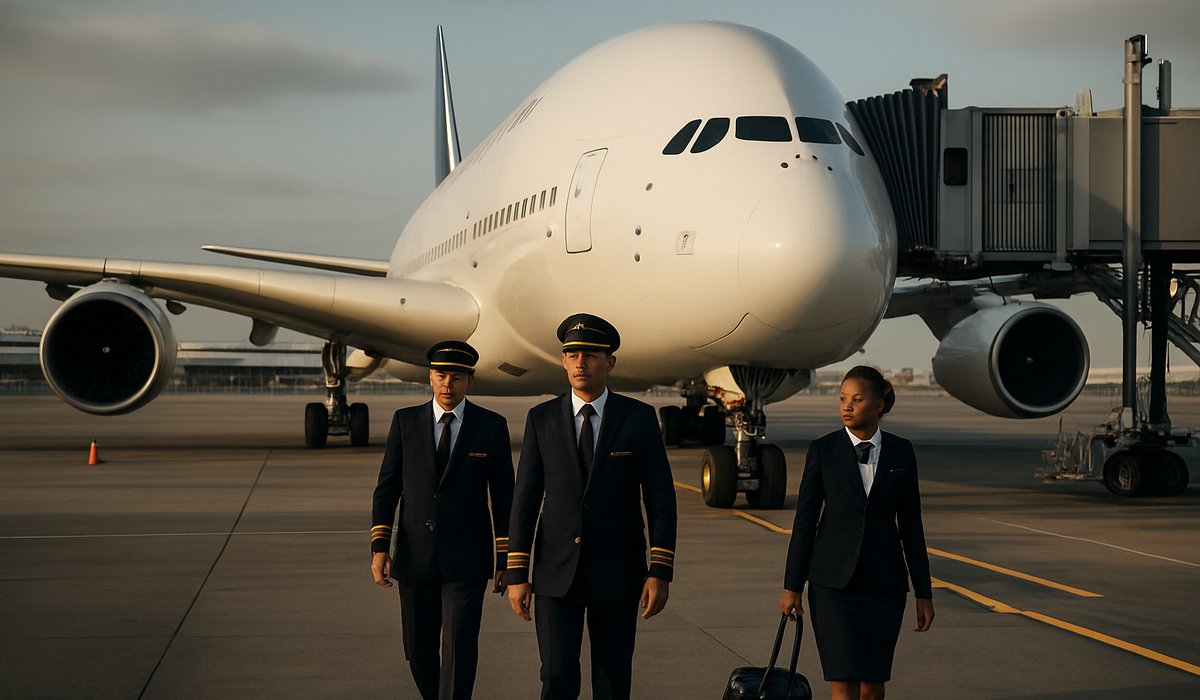
Image generated by AI
Why Airbus Quietly Ended the A380: The Superjumbo's Unexpected Decline
The aviation industry's most ambitious aircraft program fell victim to shifting market demands, fuel economics, and a fundamental change in how airlines operate globally
The End of an Era
Nearly two decades after its maiden flight in 2005, the Airbus A380—once hailed as the aircraft that would revolutionize long-haul travel—made its final commercial delivery in December 2021 when the last Superjumbo rolled off the production line directly to Emirates. The discontinuation of what was arguably aviation's most ambitious engineering feat represents a seismic shift in how the industry approaches fleet strategy and passenger capacity.
The full-deck double-decker aircraft carried more than 300 million passengers across over 800,000 flights since its commercial debut with Singapore Airlines in 2007, cementing its legacy in the skies. Yet despite these impressive metrics, the four-engine giant could not overcome the economic and operational headwinds that ultimately sealed its fate.
Market Forces Trump Ambition
The A380's demise tells a broader story about aviation's fundamental transformation over the past two decades. While manufacturers once believed the future belonged to ultra-high-capacity aircraft that could accommodate over 500 passengers per flight, airlines increasingly recognized that smaller, twin-engine, wide-body aircraft offered superior economics and operational flexibility.
Modern jets like the Boeing 787 Dreamliner and Airbus A350 proved far more efficient, consuming significantly less fuel per passenger while requiring smaller crews and lower maintenance costs. These twin-engine competitors delivered comparable revenue potential with dramatically reduced operating expenses—a calculation that airline accountants couldn't ignore amid volatile jet fuel prices and margin pressures.
The Economics Don't Work
The A380's fundamental problem was unyielding: the aircraft required consistently full or near-full passenger loads to justify its enormous operational footprint. This made the Superjumbo vulnerable to demand fluctuations, route changes, and the emerging trend toward point-to-point connectivity rather than hub-and-spoke networks.
Additionally, only a limited number of airports worldwide possessed the infrastructure—sufficiently lengthy runways, robust ground support facilities, and terminal capacity—to accommodate the aircraft's size, restricting its deployment flexibility and route networks.
What Comes Next
The A380's retirement underscores how technological capability alone cannot guarantee commercial success. Despite its engineering prowess, the aircraft became a cautionary tale about misreading market evolution—a reminder that aviation's future belongs not to the biggest aircraft, but to those offering the most efficient balance of capacity, cost, and operational versatility.
FAQ: Understanding the A380's Discontinuation
Why did airlines stop ordering the Airbus A380? Airlines shifted toward smaller, twin-engine wide-body aircraft like the Boeing 787 and Airbus A350, which offered superior fuel efficiency per passenger, lower operating costs, and greater flexibility in route deployment compared to the four-engine A380.
How many A380s were actually produced? Airbus manufactured 254 A380 aircraft before ceasing production in December 2021, with the final delivery going to Emirates.
Is the A380 still flying commercially? Yes, several airlines including Emirates, Singapore Airlines, British Airways, and Lufthansa continue operating A380s on premium long-haul routes, though the fleet is gradually shrinking.
What was the A380's original design purpose? The A380 was conceived as a next-generation super-jumbo capable of carrying over 500 passengers on ultra-long-haul routes while serving as the flagship aircraft for major international carriers.
Did fuel prices affect the A380's viability? Absolutely. Volatile jet fuel costs made the A380's four-engine configuration increasingly uneconomical, particularly when competing aircraft achieved comparable revenue with significantly lower fuel consumption and operational overhead.
Related Travel Guides
Flight Delay Compensation Guide 2026
Understanding Airline Route Changes
Airport Security Process Updated (2026)
External Resources
Disclaimer
This article is for informational and educational purposes only. It does not constitute legal, financial, or professional advice. While we strive to provide accurate and up-to-date information, travel policies, regulations, and conditions change rapidly. Always verify information with official sources before making travel decisions. Nomad Lawyer makes no representations about the accuracy, reliability, completeness, or suitability of the information provided. Readers should consult qualified professionals for advice specific to their circumstances. The views expressed in this article are those of the author and do not necessarily reflect the views of Nomad Lawyer.
Kunal K Choudhary
Co-Founder & Contributor
A passionate traveller and tech enthusiast. Kunal contributes to the vision and growth of Nomad Lawyer, bringing fresh perspectives and driving the community forward.
Learn more about our team →